Last Updated on October 28, 2026
If a hair test panel includes benzodiazepines, Xanax, Valium, Klonopin and Ativan can all be picked up, and the usual look-back is about 90 days. Passing comes down to three things: whether you are actually on the panel, how much drug is in the first inch and a half of your hair, and whether any cleansing you do is matched to your real use history. Below we explain how the test works, what the published research says about washing out benzos, and how to document a prescription if a result comes back positive.
TL;DR
- Standard 10-panel and 12-panel hair tests screen for benzodiazepines, and detection generally reaches back about 90 days.
- Lab research on homemade hair treatments shows very uneven results for benzos: one study saw a 97% drop for clonazepam but only 43% for diazepam.
- Dyeing, bleaching or shaving is not a dependable fix. Large-sample data found no meaningful difference in positive rates for treated hair.
- If you have a valid prescription, tell the Medical Review Officer (MRO) and get your prescriber involved. That is the one route that can turn a positive into a reported negative.
- If you do not have a prescription and the test is days away, a method matched to your use history, such as Mike’s Macujo Method, is built for exactly that situation.
Table of Contents
- Will benzos show up on a hair follicle test?
- How benzodiazepines get into hair
- What changes how much benzo ends up in your hair
- How labs test for benzos
- What research says about cleansing benzos from hair
- Your options, honestly compared
- If you have a prescription
- Our perspective on benzo hair tests
- Getting ready if your test is close
- How Macujo can help
- FAQ
- Sources
Will benzos show up on a hair follicle test?
Yes, if the panel includes them. Benzodiazepines such as Xanax, Valium, Klonopin and Ativan are screened for on standard 10-panel and 12-panel hair tests, and are typically detectable for up to 90 days after use. Panels differ by lab. One large hair testing laboratory, USDTL, lists 5-, 13- and 18-panel options, and benzodiazepines can be part of them. So the first practical step is to ask your employer or the collection site which panel is ordered.
A few points that surprise people:
- Employment tests are not federally regulated like DOT tests. Under 49 CFR Part 40, only urine and oral fluid specimens are authorized for DOT-regulated testing, so hair testing is not used there. Private employers choose hair on their own.
- Benzos are not one drug. The class includes short-acting and long-acting compounds, and labs target specific parent drugs and metabolites.
- One-time use can register. The detection window describes how far back hair can reach, not how much you must have taken.
For a deeper look at lab cutoffs and what a panel actually reports, see our guide on benzodiazepines in hair tests.
How benzodiazepines get into hair
Drugs reach hair mostly through the blood supply to the follicle, but that is not the only route. Researchers describe two main pathways, the hair bulb and the upper dermis zone, and which dominates depends on the drug’s properties. A 2025 review notes that incorporation at the bulb continues for up to two weeks, and that drugs can typically be detected in the shaft after a couple of days, sometimes up to 10.
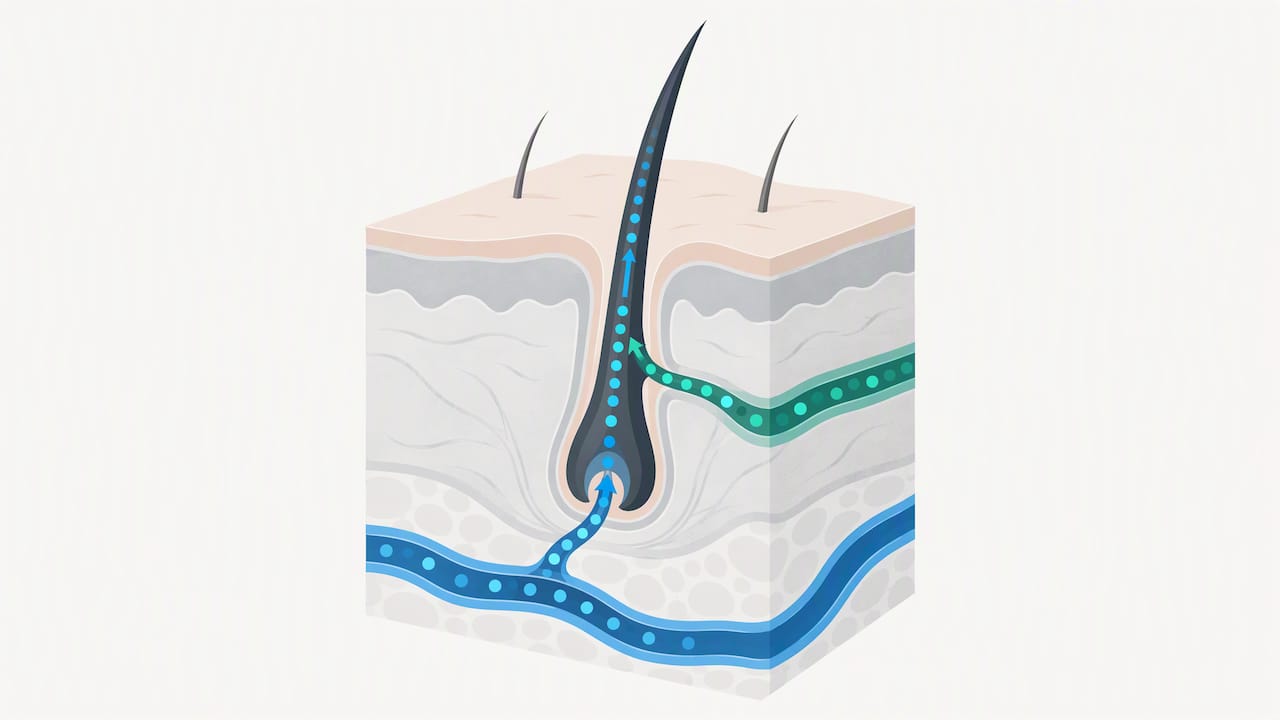
That lag has a practical meaning. Use in the last week or so before collection may not yet be in the 1.5-inch segment a lab cuts. It does not mean recent use is safe to ignore: urine and oral fluid tests cover that short window, and some employers run both. Our comparison of hair versus urine tests at work explains where each one leaves gaps.
Why the 90-day window is an approximation
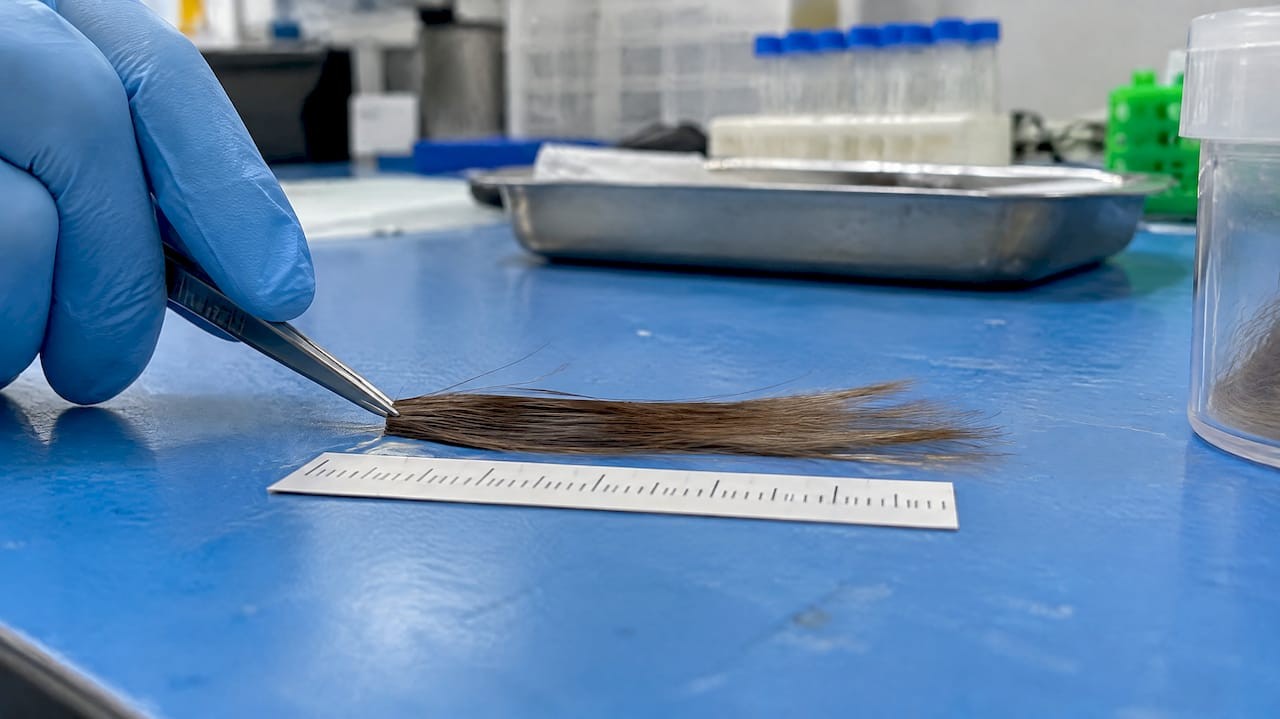
Hair grows at an average of 0.3 to 0.5 mm per day, or roughly 0.9 to 1.5 cm a month. A standard test takes about the first 1.5 inches closest to the scalp, which is where the “90 days” figure comes from. Individual growth rates vary, so the real window can be shorter or longer. If your hair is long or your use was older, our page on what happens when 90 days isn’t enough walks through the timeline, and how long hair affects a test covers length specifically.
What changes how much benzo ends up in your hair
Two people taking the same dose can produce very different results. The factors the research points to:
- Dose and frequency. Daily use leaves more drug along the shaft than occasional use. Reviews of hair testing note that the window and concentration vary with dose, frequency and body composition.
- Hair color. Pigmentation matters. A SAMHSA-hosted literature review describes dark hair often holding higher concentrations than lighter hair for the same dose.
- Which drug. Compounds differ in how readily they bind to hair, so the same cleansing step can affect two benzos very differently, as the study below shows.
- Washing and cosmetic treatment. A 2025 report found that hair dyes and frequent exposure to water, such as daily washing, can influence concentrations.
How labs test for benzos
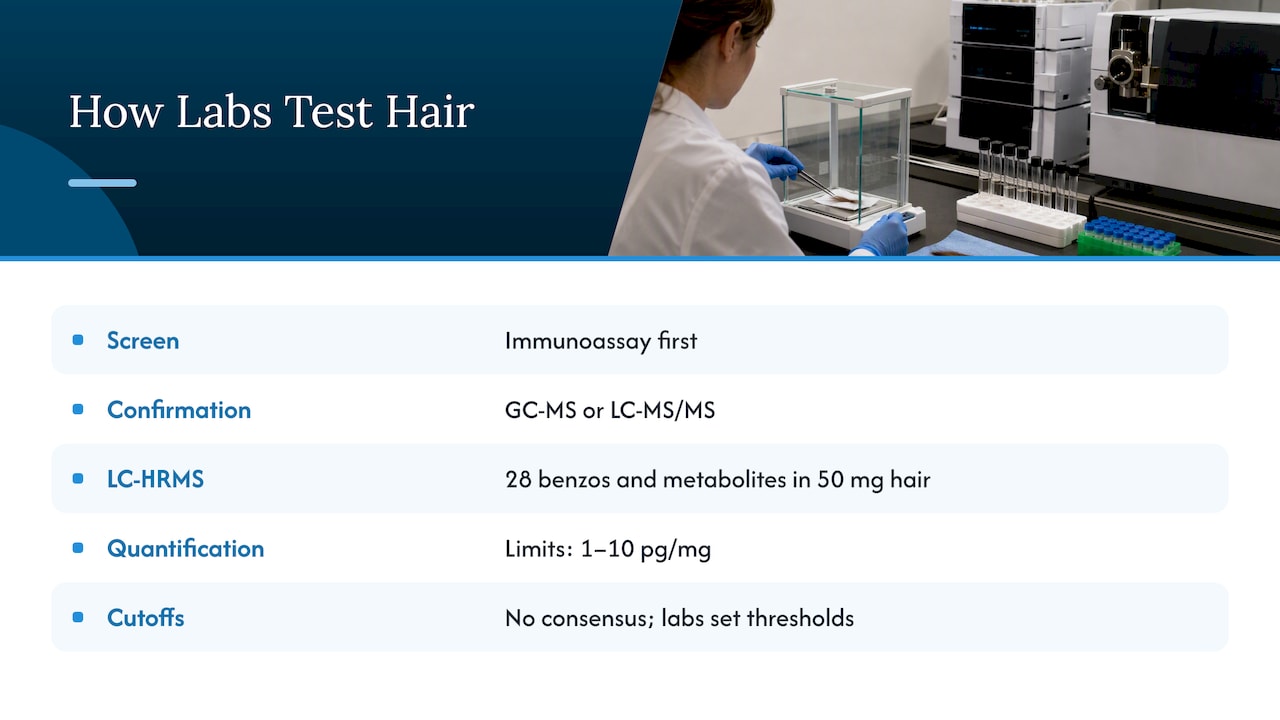
Most labs run an immunoassay screen first. Positives are then confirmed with a more specific method: GC-MS or LC-MS/MS. Modern methods are sensitive. A validated LC-HRMS method could identify and quantify 28 benzodiazepines and metabolites in 50 mg of hair, with limits of quantification between 1 and 10 pg/mg.
One more detail worth knowing: scientists have noted no consensus cutoff concentration for benzodiazepines in hair, and that concentrations vary considerably. In practice, each lab sets its own thresholds. That is why “I passed at one lab” stories from forums do not transfer well to your test.
What research says about cleansing benzos from hair
The most useful peer-reviewed data comes from a Mestria et al. study of homemade hair treatments. It reported that one alkaline-based treatment reduced clonazepam in hair by 97% and diazepam by 43%, and the authors said more work is needed on benzodiazepines in particular.
Read that carefully:
- The effect depends on the drug. A treatment that nearly clears one benzo can leave more than half of another.
- Partial reduction is not passing. A 43% drop can still leave a result above a lab’s cutoff if the starting level was high.
- Do-it-yourself recipes are the weak link. The study tested homemade treatments. Results from a random mix of household products do not tell you what will happen to your hair.
That is also why we do not tell anyone a single wash will handle a benzo exposure. The number of washes should reflect what you used, when, and how often.
What about dyeing, bleaching or shaving?
Hair dye is a popular rumor. A 2014 analysis of more than 10,000 samples by Ronald Agius found no significant difference in positive rates between cosmetically treated and untreated hair. Dyed or bleached hair is not automatically useless to a lab. Our page on dyed hair and hair drug tests goes into what treatment can and cannot do, and why we do not recommend relying on it.
Shaving is not a loophole either. Labs can collect from other sites, and body hair reflects a longer period. See body hair drug tests and eyebrow hair tests for what that means, or our article on whether a shaved head helps.
Your options, honestly compared
| Approach | What it depends on | Main risk |
|---|---|---|
| Abstain and wait | About 90 days of no use, longer if hair is long | Test date is usually sooner than that |
| Dye, bleach or shave | Little evidence it changes outcomes | Wasted time, and body hair can be sampled instead |
| Homemade recipes | Variable by drug, as the 97% versus 43% results show | Inconsistent results, possible hair damage |
| Matched, step-by-step cleansing method | Following every step and the required number of washes | Skipping steps or using the wrong product |
| Prescription documentation with the MRO | A valid prescription and a prescriber who responds | Needs to be raised after a positive, not ignored |
Abstinence is the only approach that is certain, because new hair grows in clean. Most people who search this are not given 90 days, which is where the other rows matter.
If you have a prescription
A benzodiazepine taken as prescribed is a different situation from misuse, and it should be handled openly. In MRO-reviewed testing, a positive is reviewed before it is reported to an employer. The DOT’s employee notice describes the process for its covered tests: the MRO interviews the employee, and if a legitimate medical explanation is established, the result is reported as negative. The same guidance says the employee is responsible for facilitating contact between the MRO and the prescribing physician.
DOT rules do not cover hair testing, and a private employer’s policy may differ, so ask HR how your employer handles prescriptions. What to do in practice:
- Keep your pharmacy label or a printout of your prescription handy.
- Tell your prescriber a test is coming so they can answer the MRO quickly.
- Do not stop a benzodiazepine abruptly on your own. Withdrawal from this drug class can be dangerous, so talk to your prescriber before changing a dose.
If a result seems wrong, ask about the lab’s confirmation data. Researchers have shown that metabolite-to-drug ratios can help distinguish external contamination from ingestion, which is a legitimate question to raise with the MRO.
Our perspective on benzo hair tests
We have helped people prepare for hair tests since about 1999, and benzo questions come in regularly. Our view is simple: the panel, the timing and the drug decide the plan, so the plan has to be built around them.
The old Macujo Method was designed mainly for low-to-moderate THC exposure, and it only masks temporarily. We do not use it as the answer for heavier exposure. Since 2018, the standard is Mike’s Macujo Method, a nine-step process developed for high THC levels and other drugs and alcohol. It must be done with authentic Macujo Aloe Rid® Shampoo, and the number of washes is set by our Required Washes Calculator from the substance, the date of last use and how often you used in the previous 90 days. When every required wash and direction is completed correctly, we report a success rate better than 99%, and the hair stays clean unless drugs or alcohol are used again.
Two cautions from experience. First, shortcuts are how people fail: stopping a wash early or swapping in a different shampoo breaks the method. Second, if you hold a valid prescription, document it with the MRO instead of trying to hide it. We would rather you have the right paperwork than a stressful surprise.
— MIchael
Getting ready if your test is close
Before buying anything, do these in order:
- Find out the panel and the specimen. Ask whether it is a hair test, which panel, and whether other specimens are collected.
- Write down your use history. Which drug, the date of last use, and how often you used in the past 90 days. Be honest, because the wash count depends on it.
- Check your timeline. Count days to collection. If your last use is old and your hair is short, your situation differs from someone with recent daily use.
- Choose a method that matches. Do not mix random products into a plan.
- Plan for the collection day. Follow instructions exactly through to the sample.
A general overview of the process is in our guide all about hair drug testing, and how far back a hair test goes covers the look-back question.
How Macujo can help
If you need cleansing support for a coming test, our Macujo Aloe Rid Old Formula Shampoo is published at $100 to $150. Mike’s Macujo Method relies on authentic Macujo Aloe Rid® Shampoo, and the Required Washes Calculator tells you how many washes your history calls for.
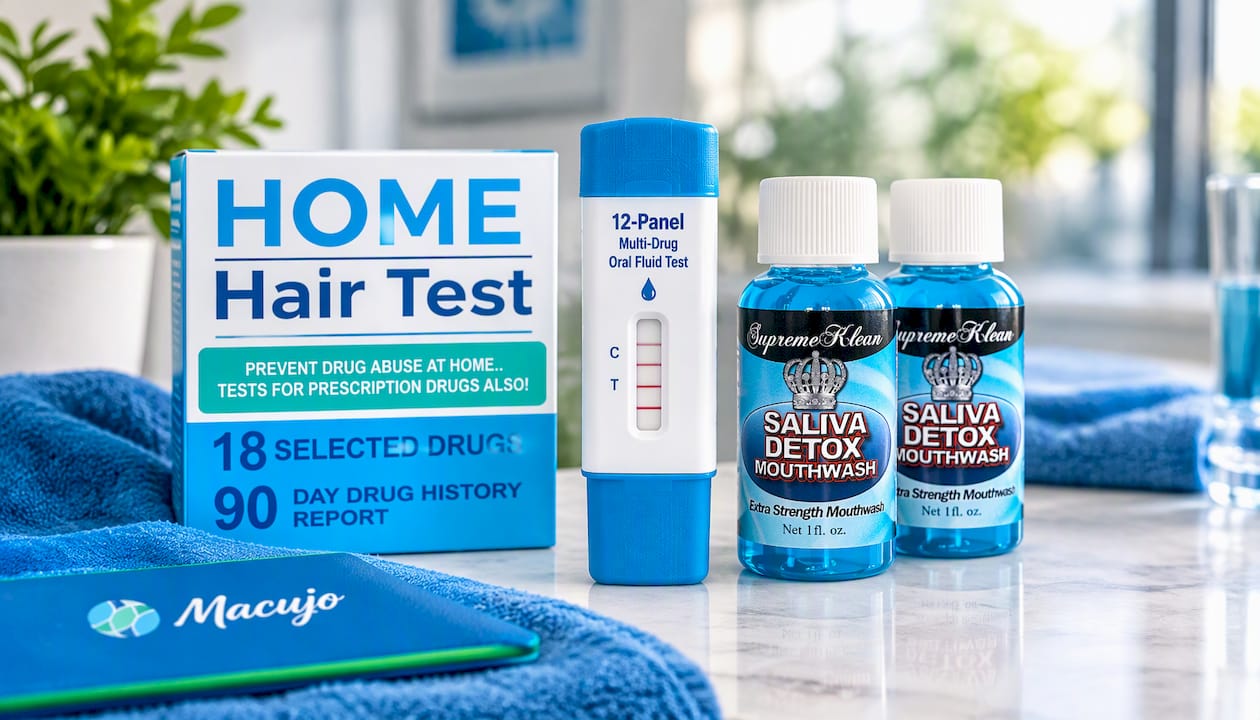
If your case is complicated, such as a mix of substances, a prescription alongside other use, or a tight timeline, the Afterhours Personal Consultation is $100 and lets you talk it through by phone with an expert. We also sell a home hair test kit if you want to check where you stand, and urine and saliva products on our main site for tests that use those specimens.
FAQ
Does one Xanax show up on a hair test?
It can. Benzodiazepines are generally detectable in hair for up to 90 days after use, and labs use sensitive confirmation methods that measure in picograms per milligram. Whether a single dose crosses a given lab’s cutoff depends on the dose, your hair and the lab. Because cutoffs differ, there is no universal answer.
How long do benzos stay in hair?
Typically up to 90 days for a standard 1.5-inch sample. Hair grows about 0.9 to 1.5 cm a month, so a longer sample or body hair can reflect a longer period. Use in the last week or so may not yet have reached the portion that is cut.
Does a 12-panel test include benzodiazepines?
Standard 10-panel and 12-panel hair tests do screen for benzodiazepines, though panels vary by lab and employer. Ask the collection site which drugs are on yours. Do not assume that a smaller panel leaves them out.
What happens if my hair test is positive for a prescribed benzo?
In MRO-reviewed testing, the MRO contacts you before a result goes to your employer. You provide your prescription information and your prescriber confirms it. If a legitimate medical explanation is established, the result can be reported as negative. Policies for private employers vary, so check yours.
Can hair dye or bleach help me pass?
The evidence does not support it. A large study of over 10,000 samples found no significant difference in positive rates between treated and untreated hair. Treat it as an unreliable shortcut.
Sources
- Benzos Hair Follicle Test, DrugPanels
- Hair Drug Testing, USDTL
- DOT 49 CFR Part 40, Section 40.210
- DOT Drug Testing: Part 40 Employee Notice
- Hair pigmentation literature review, SAMHSA
- Review on Toxicology Testing in Hair, Journal of Applied Laboratory Medicine
- Hair testing for investigating intake and use history
- Shima et al. 2025, Forensic Toxicology
- Simultaneous LC-HRMS determination of 28 benzodiazepines
- Large scale consumption monitoring of benzodiazepines and z-drugs by hair analysis
- Hair analysis: Assessment of homemade hair treatment
- Utility of coloured hair for the detection of drugs and alcohol
- A Systematic Review of Metabolite-to-Drug Ratios