Last Updated on August 12, 2026
Key Takeaways:
- A hair follicle test is usually a 90-day benchmark because labs often collect 1.5 inches of head hair, but the real question is what markers remain in the specific sample taken on test day.
- Your actual detection risk changes with hair length, body hair versus scalp hair, growth rate, use frequency, and even hair characteristics like melanin, so the same timeline does not apply equally to everyone.
- Ordinary shampooing and last-minute fixes do not remove markers inside the hair shaft, which is why the article points readers to Mike’s Macujo Method as a structured preparation plan when a test deadline is close.
"Ninety days" is technically accurate and practically incomplete. That figure comes from one specific measurement: a standard lab collection of about 1.5 inches of head hair, converted to time using average scalp growth rates. Change the sample length, the hair type, or the collection site, and the window shifts accordingly. What the lab evaluates is not the last three months of your life. It is the specific centimeters of hair removed from your scalp that day.
Hair type, growth rate, usage history, and the section of hair sampled all shape what a test can actually detect. These are the factors worth understanding before an employment test, and they are exactly what the sections below address. Mike’s Macujo Method, paired with hair cleansing products formulated for drug testing, gives you a credible, structured path forward.
What Does the 90-Day Hair Follicle Test Window Really Mean?
That "90-day" figure is a benchmark shaped by biology, and the details behind it are specific enough to matter to your situation. The questions below unpack exactly what it measures.
How far back can a hair follicle drug test detect use?
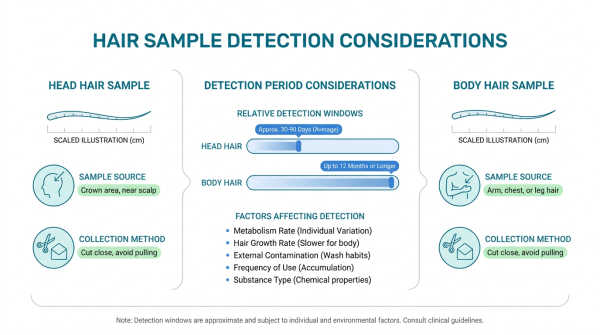
Head hair grows roughly half an inch per month. Labs collect about 1.5 inches from the scalp, which maps to roughly 90 days of growth history. Anything deposited in the hair shaft during that time can potentially be detected, placing the practical window at about three months for most people.
Is the 90-day hair follicle test window a fixed rule or a benchmark?
It's a benchmark shaped by how samples are collected. Federal workplace drug testing guidelines set standards for collection procedures. But the actual lookback is tied to the length of hair taken, not a calendar rule. For employment tests, the window is largely the same across employers. The hair sample length determines it, not the employer's preference.
Why do labs use about 1.5 inches of head hair?
Because that length maps to about 90 days based on average growth rates. The sample is cut from the root outward, meaning the segment closest to the scalp reflects the most recent period of use. This is why sample length matters more than any date on a calendar.
Can a single use from months ago still show up?
Yes, if it happened within the timeframe covered by the sample length. Even occasional exposure can leave markers in the hair shaft. How reliably standard cut-offs detect it depends on frequency and dose, which is why preparation matters regardless of how infrequent the use was.
Does washing your hair the morning of the test change anything?
Ordinary washing does not remove what is already bound inside the hair shaft. Surface cleanliness on test day has no effect on the detection window, which is set by the length of hair collected. This is why a structured cleansing method matters far more than a last-minute rinse.
How Do Hair Growth Rate, Sample Length, and Body Hair Change the Detection Period?
Hair grows at a consistent, measurable rate, and labs use that consistency to map chemical history onto a physical strand. The questions below show how those mechanics shift depending on which hair is collected and where it comes from.
How does hair growth rate determine how far back a test can detect use?
Head hair grows roughly 0.4 mm per day, which works out to about half an inch per month. Labs typically collect 1.5 inches of scalp hair, mapping that length to approximately 90 days of history. The detection window is literally measured in hair length, not time alone.
Does a shorter head hair sample mean a shorter lookback?
Generally, yes. If a collector takes less than 1.5 inches, the window narrows proportionally. Research confirms that insufficient sample length reduces timeline resolution and can affect what the lab can reliably detect. Shorter hair means less recorded history in the strand itself.
What happens when body hair is used instead of head hair?
Body hair grows significantly slower and spends longer in a dormant phase than scalp hair. That irregular growth cycle makes precise timeline assignment far harder for any drug marker found in the sample, a limitation that federal guidelines on body hair collection explicitly recognize. Practically speaking, body hair can reflect a longer and less predictable history than scalp hair of the same length.
Can shaving your head prevent a hair follicle test?
It does not prevent testing. It shifts it. Collectors are trained to move to body hair when head hair is unavailable or too short, and one in three tests already uses a body hair sample. Macujo's own guidance notes that buzzing body hair short before the test can be a smarter move than shaving the head, since it gives collectors less body hair to work with without triggering suspicion.
Which sample type gives a clearer picture of recent versus older use?
Scalp hair is the more reliable timeline. Its consistent growth rate means recent use appears closer to the root and older use farther from it. Body hair's variable dormancy makes segmental analysis far less precise, so the distinction between last month and six months ago becomes genuinely difficult to establish from body hair alone.
What Factors Affect Hair Test Results, and What Helps Before the Test?
The 90-day window tells you what a lab is looking for. It does not tell you what a lab will find in your hair specifically. Melanin concentration, hair texture, frequency of use, and dosage all shape what remains detectable at the strand level. Two people with identical use histories can walk out of the same testing center with different results. That is the variable the calendar cannot account for, and it is exactly why preparation needs to be as specific as your situation.
Does how often you used affect whether markers show up in the hair?
Yes, frequency and dose both matter. Research published on NIH shows that standard commercial hair tests can miss low-frequency or low-dose use while still detecting regular exposure reliably. A single occasion and heavy routine use do not carry equal detection risk, even within the same time window.
Do hair color, texture, or melanin levels influence results?
They can. Medical News Today notes that melanin levels in hair affect how drug compounds bind to the strand. Darker, coarser hair tends to retain more drug markers than lighter or finer hair. This means two people with identical use histories can face meaningfully different detection outcomes.
Can bleaching, dyeing, or regular shampooing clear drug markers on their own?
Not reliably enough to count on. Cosmetic treatments like bleaching can degrade some drug compounds, but Labcorp's testing standards and confirmatory lab analysis are designed to detect markers even in chemically processed hair. Shampooing every day alone does not reach deep enough into the hair shaft where those markers are stored.
What separates a generic detox shampoo from a structured cleansing method?
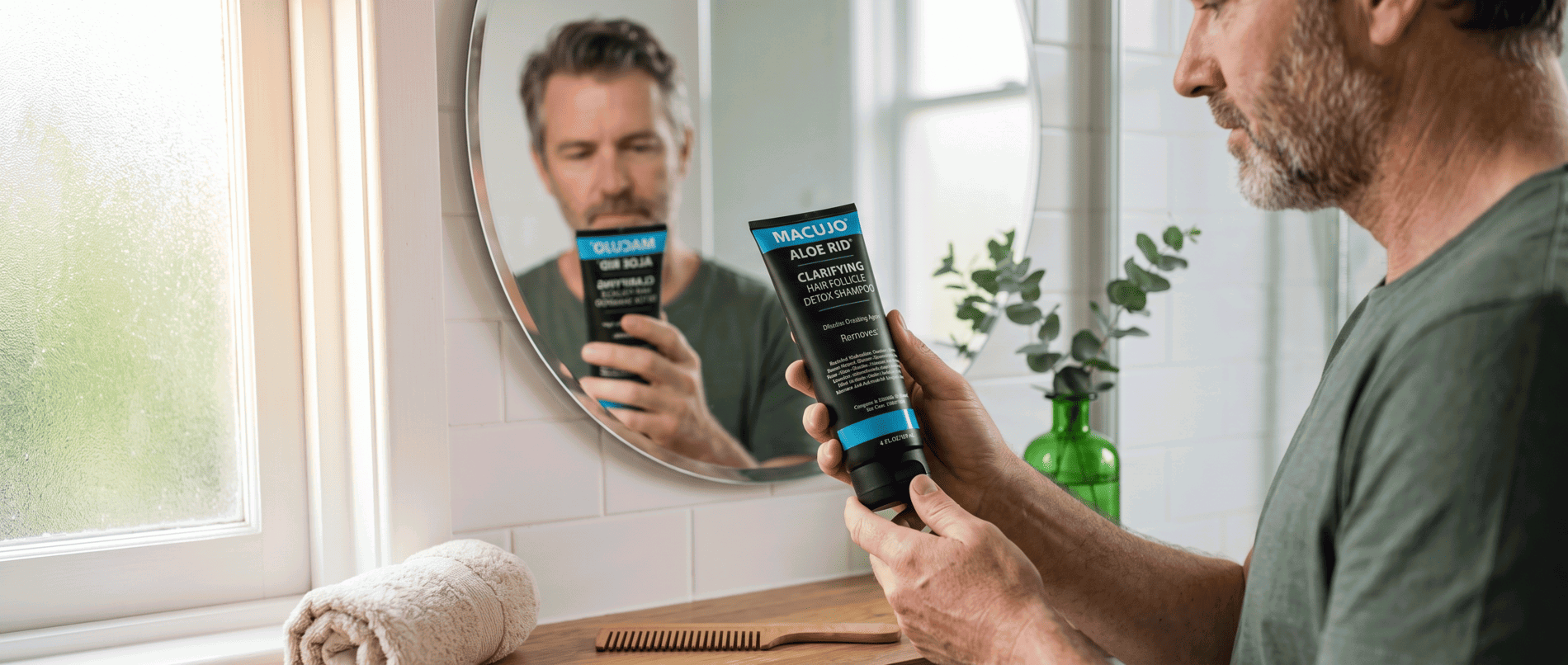
A generic shampoo cleans the surface. The markers being tested for are not on the surface; they are bound inside the hair shaft, where ordinary washing cannot reach. Mike’s Macujo Method was built around that specific reality, pairing Macujo Aloe Rid® Shampoo with targeted cleansing agents in a precise multi-step protocol designed to address the strand where those markers actually live.
When time is short, what cleansing approach is actually worth focusing on?
For anyone with a test deadline approaching, a protocol built for drug testing is a far more credible path than improvised alternatives. Mike’s Macujo Method is backed by over 20 years of real-world use and pairs Macujo Aloe Rid® Shampoo (verified for authenticity) with step-by-step guidance and unlimited expert support, so you are not left guessing under pressure.
What Is the Best Next Step if a Hair Test Is Coming Up Soon?
The 90-day window is a useful benchmark, but what the lab actually tests is the proximal hair sample: roughly the 1.5 inches closest to your scalp. That segment holds the most recent history, and every variable covered above, from melanin levels to use frequency to hair texture, determines what is stored there. A structured cleansing method addresses those strands directly. A calendar date does not.
Mike’s Macujo Method is that plan. Built around Macujo Aloe Rid® Shampoo — verified for authenticity — and finished with Zydot Ultra Clean Shampoo, the method comes with step-by-step instructions and unlimited expert support. If you want a clearer picture before test day, the Home Hair Test Kit screens for 18 drugs at home. When the stakes are real, explore Macujo's hair detox products for drug testing and start your preparation with a method backed by more than 20 years of results.