Last Updated on October 3, 2026
Dyed or chemically treated hair can change measured drug concentrations but does not automatically make a hair drug test invalid or always produce a negative result. The outcome depends on treatment type (bleach causes more loss than permanent dye, which causes more loss than temporary color), the chemistry of the drug involved, how much natural melanin the hair contains, and the specific lab procedures used to analyze the sample.
TL;DR:
- Bleaching can reduce drug concentrations in hair by up to 60%, which may cause borderline positives to turn negative, especially with low initial levels.
- Dyes and treatments influence detection odds differently depending on drug type, with darker hair sometimes showing higher drug levels after dyeing.
- Laboratories use wash steps and metabolite analysis to distinguish between external contamination and true drug use, which is crucial for treated or borderline samples.
- Frequent bleaching or heavy use are the main factors that significantly impact test results, while occasional dyeing often causes minimal change.
- Honest disclosure of recent cosmetic treatments improves interpretation accuracy, and alternative testing methods like urine or oral fluid tests avoid treatment variables.
Table of Contents
- How hair drug testing works: collection, window, and lab cutoffs
- How bleaching, dyeing, and perming change measured drug concentrations
- How labs interpret treated hair without losing test validity
- When cosmetic treatments actually change the outcome
- What to do before a test if you have treated hair
- What the research actually supports and where it falls short
- Why evidence beats shortcuts when your job is on the line
- Where Macujo fits if you want a guided approach
- FAQ
- Sources
How hair drug testing works: collection, window, and lab cutoffs
A standard hair follicle test uses a scalp sample, usually collected close to the vertex where growth rate is most consistent. A segment of 3.9 centimeters, measured from the scalp, is generally treated as representing about 90 days of growth, which is why hair testing is marketed as a longer detection window than urine or saliva. When scalp hair is not available in sufficient length, collectors may use body hair, though body hair grows at a different and less predictable rate, which makes the detection window harder to pin down.
Drugs reach the hair shaft primarily through the bloodstream during growth, where they bind to melanin and other proteins inside the follicle. Sweat and sebum can also deposit trace amounts onto the hair’s surface, and external contamination from smoke, powder, or secondhand contact is a separate concern that labs try to rule out. This distinction between internal incorporation and external deposit is central to how a result gets interpreted, particularly for treated hair.
Laboratories typically run an initial immunoassay screen, followed by confirmation testing on any presumptive positive using more specific methods such as mass spectrometry. Confirmation looks not just for the parent drug but for metabolites, which are compounds the body produces only after a substance is actually metabolized. A sample that shows parent drug but no corresponding metabolite is more likely to reflect surface contamination than ingestion, which is part of why metabolite analysis matters so much for borderline or treated samples.
Before extraction, labs usually wash the hair sample and sometimes test the wash solution itself. If drug residue appears in the wash but not in the digested hair extract, that pattern points toward external exposure rather than use. This wash step, combined with cutoff concentrations set for each drug class, is the primary safeguard against both false positives from contamination and false negatives from a sample that was deliberately or accidentally stripped of its analytes before collection.
How bleaching, dyeing, and perming change measured drug concentrations
The research on cosmetic treatment and hair testing splits into two useful categories: large population studies that look at positivity rates across real-world samples, and controlled laboratory experiments that measure concentration changes under known conditions. Both matter, and they do not always point in the same direction.
A large in vivo study examining 10,514 authentic hair samples, split between 9,488 untreated samples and 1,026 cosmetically treated samples including ethyl glucuronide testing, found that positivity rates did not differ significantly between the two groups for the drugs evaluated. Treated hair often showed lower concentration distributions for many substances, but the treatment was not enough, on its own, to flip a positive result to negative at the population level.
Controlled experimental studies tell a more pointed story about what happens inside a single sample. Earlier controlled research on cosmetic treatment and drug testing reports that bleaching in particular can cut measured drug concentrations substantially, with several analytes showing mean decreases in the range of 40% to 60%.
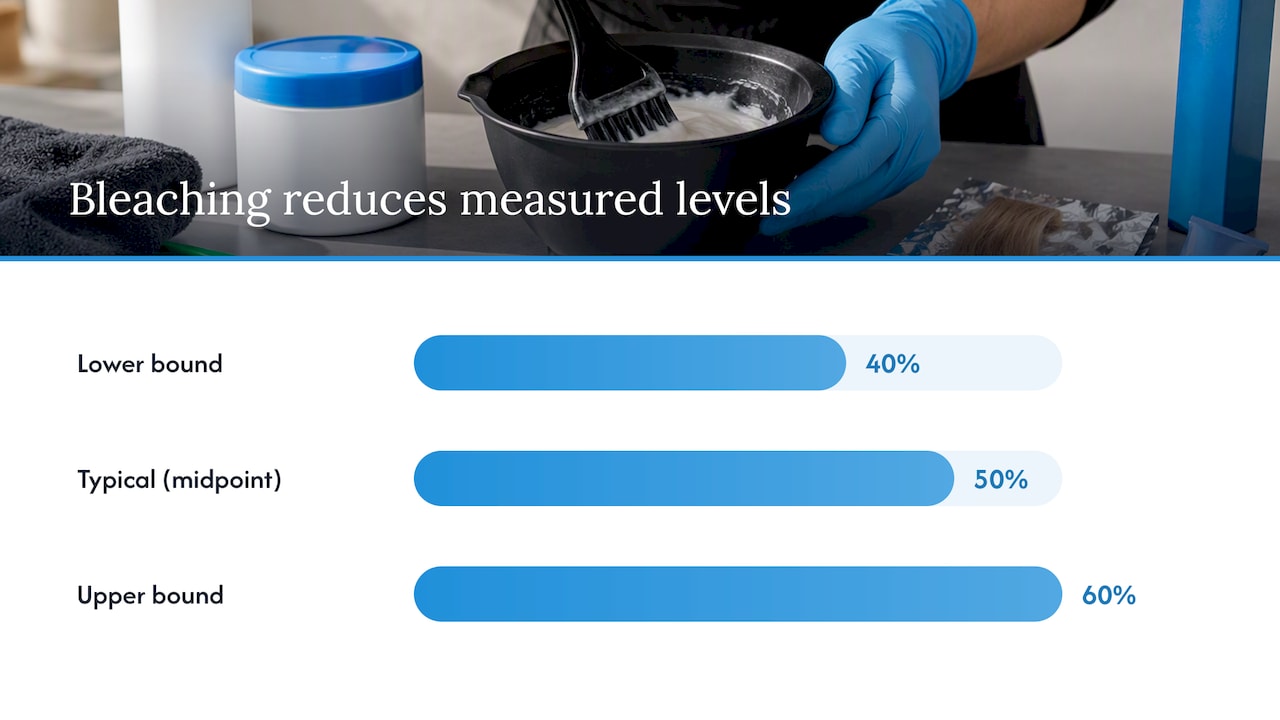
A 40% to 60% drop in measured concentration is large enough to push a sample that was already near the cutoff into negative territory, even though it would have screened positive untouched, according to controlled treatment studies.
Not every drug responds the same way to the same treatment, and hair color itself introduces another variable. A 2024 epidemiologic study of 328 people found that self-reported past-year hair dyeing was associated with higher odds of detecting cocaine and MDMA, with an adjusted odds ratio of 3.75 for cocaine and 3.05 for MDMA, while blond hair showed lower cocaine concentrations than brown hair at comparable exposure. That pattern suggests dyeing can sometimes coincide with higher detection for certain drugs, likely because darker synthetic pigments or the dyeing process itself interacts differently with basic drug compounds than natural melanin does.
Patterns differ by drug class:
- Cocaine and its metabolite benzoylecgonine bind strongly to melanin, so natural hair color and bleaching both influence measured levels, sometimes in opposite directions depending on the study.
- Amphetamines and MDMA show similar melanin-dependent binding, which is part of why the 2024 study found elevated detection odds tied to dyeing history.
- THC metabolites tend to be present in hair at much lower absolute concentrations than stimulants, making them more vulnerable to being pushed below cutoff by aggressive treatment.
- Opioids show variable effects across studies, with severity of bleaching damage generally correlating with greater analyte loss regardless of drug class.
The common thread is that treatment severity, not treatment type alone, drives how much concentration is lost, and that population-level positivity rates can mask individual cases where a borderline sample tipped into a negative.
How labs interpret treated hair without losing test validity
Cosmetic treatment does not automatically disqualify a hair sample, largely because laboratories have built interpretive safeguards specifically for this situation. The Society of Hair Testing’s 2021 consensus document recommends documenting any chemical or physical hair treatment at the time of collection, using validated wash and decontamination procedures before extraction, and interpreting results in context rather than applying one blanket rule to every dyed or bleached sample.
Standard practice at most accredited labs includes:
- Washing the hair sample with a solvent before extraction and testing that wash separately for drug residue.
- Comparing parent drug levels in the extract against metabolite levels to distinguish ingestion from surface contact.
- Recording any reported cosmetic treatment on the chain-of-custody paperwork so a reviewing toxicologist has that context during interpretation.
- Applying melanin-aware judgment when comparing concentrations across donors of different natural hair color, since binding affinity is not uniform.
If parent drug shows up only in the wash extract and not in the digested hair itself, or if expected metabolites are absent, that combination suggests external contamination rather than use, according to SoHT guidance. Laboratory and clinical guidance summarized by agencies including SAMHSA and the National Institute of Justice echoes this approach, noting that collectors should be told about recent dyeing or bleaching and that routine cosmetic treatment does not always change the reportable category on its own.
Borderline concentrations near the cutoff are where this interpretive layer matters most. A sample that screens positive but sits close to the confirmation threshold may prompt a second look at wash data, metabolite ratios, or documented treatment history before a lab finalizes the result. That extra scrutiny is what keeps a dyed or bleached sample from being either automatically dismissed or automatically trusted.
When cosmetic treatments actually change the outcome
Not every dye job or bleach session meaningfully affects a test result, and the deciding factor is usually how much drug was in the hair to begin with. Heavy or frequent use tends to deposit enough drug that even a 40% to 60% reduction from bleaching still leaves a detectable amount above cutoff. Light, infrequent, or borderline exposure is a different story: the same percentage loss can be the difference between a positive and a negative.
A few patterns show up consistently across the research:
- Single dye jobs with semi-permanent or temporary color tend to cause the smallest concentration changes.
- Permanent dye with ammonia or peroxide causes more disruption to the hair shaft than semi-permanent color, leading to moderate analyte loss.
- Bleaching, especially repeated bleaching, causes the largest documented reductions and is the treatment most likely to pull a borderline sample below cutoff.
- THC metabolites, already present at lower baseline concentrations than stimulants, are more easily pushed below detection by any of these treatments than cocaine or amphetamines tend to be.
Someone with a single moderate exposure and a history of repeated bleaching carries meaningfully higher risk of a false negative than someone with the same exposure and no chemical treatment at all. The inverse is also true: someone with heavy, ongoing use is unlikely to test negative from hair dye alone, regardless of how aggressive the treatment.
Pro Tip: If you have a documented medical or cosmetic reason for recent bleaching, mention it to the collector before the sample is taken. It becomes part of the record a lab can weigh if your result comes back borderline.
What to do before a test if you have treated hair
Honesty with the collector is the single most useful thing a donor can control. Most collection protocols include a space to note recent chemical treatment, and that documentation becomes part of the context a reviewing toxicologist uses if the result lands near a cutoff.
- Tell the collector about any dyeing, bleaching, or perming done in the collection window, even if it seems minor.
- Ask whether body hair is an acceptable alternative if your scalp hair has been heavily treated or is too short to sample.
- Consider that oral fluid or urine testing, while covering a much shorter detection window, avoids the cosmetic-treatment variable entirely and may be offered as an alternate specimen in some testing programs.
- Treat detox shampoos and one-off home remedies with skepticism. Consumer health guidance notes there are usually no special pre-test washing restrictions, but that advertised miracle products are not guaranteed to reverse an existing result.
- If you want to know where you stand before a real test, a home hair test kit run early enough to act on the result is more useful than guessing.
Readers managing nonstandard hairstyles, including dreadlocks, face additional collection and preparation challenges worth understanding ahead of a scheduled test. For anyone considering a last-minute bleach attempt specifically to influence a result, the evidence on bleaching and hair testing is worth reading before relying on it.
What the research actually supports and where it falls short
The honest summary is that no single study settles the question for every donor. The SoHT consensus is explicit that there is no universal objective test that can definitively prove a sample was manipulated to defeat testing, which is why documentation and contextual interpretation carry so much weight.
- Large-population studies show treated hair does not reliably produce lower positivity rates overall, even though individual concentrations often drop.
- Controlled experiments show that severity of treatment, especially repeated bleaching, is what drives the largest concentration losses.
- Natural hair color and melanin content remain confounding variables that labs account for rather than ignore.
- None of this amounts to a guaranteed method for beating a test, and treating it that way misreads what the studies actually measured.
For readers who want a structured, test-specific approach rather than guesswork, Required-washes calculators and guided methods can be built around the donor’s actual drug use history, timeline, and frequency, which is a different approach than relying on cosmetic treatment alone.
Why evidence beats shortcuts when your job is on the line
I will not pretend this topic has a clean yes-or-no answer, because the research does not support one. Bleaching can lower measured concentrations, dyeing can sometimes coincide with different detection patterns depending on the drug, and none of it reliably overrides a strong exposure history. What I can say is that donors do better when they work from documented evidence and a structured plan rather than a rumor about what dye supposedly does.
— MIchael
Where Macujo fits if you want a guided approach
If you are weighing your options before a scheduled test, Macujo’s Home Hair Test kit lets you check your status in advance instead of guessing. The Afterhours Personal Consultation, priced at $100, connects you directly with Mike for a plan based on your own use history rather than generic advice.
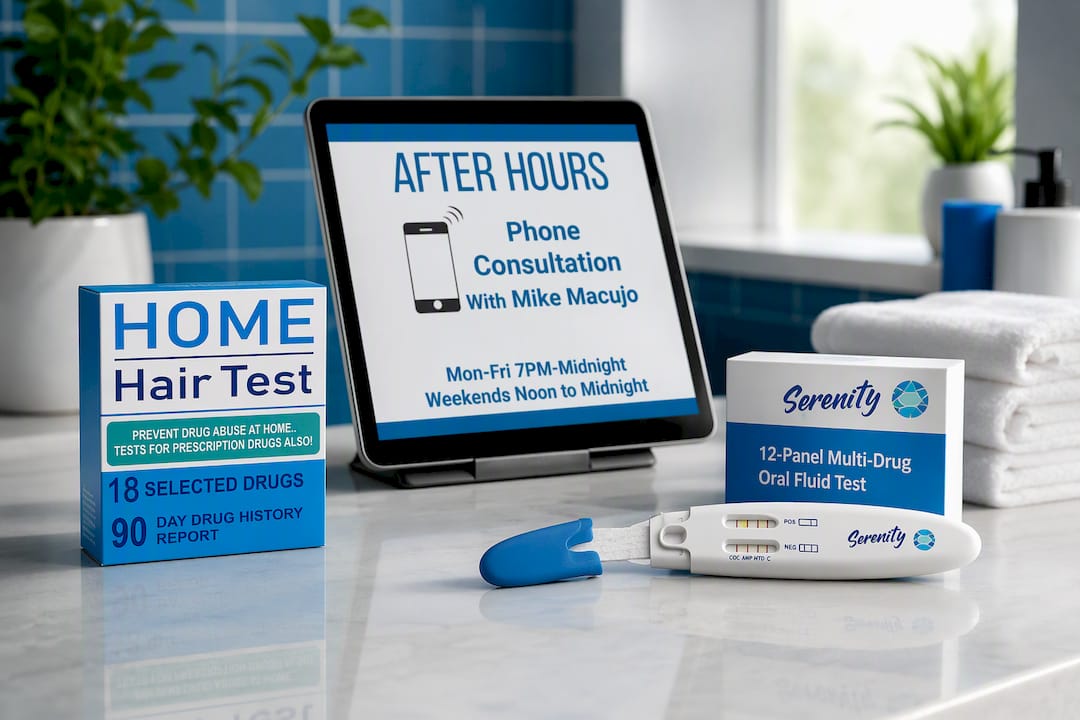
For situations where hair testing is not the method in play, the 12-Panel Multi-Drug Oral Fluid Test covers a shorter window without the cosmetic-treatment variables discussed above. Macujo also stocks Aloe Rid Old Formula Shampoo and resells hair, urine, and saliva test products for readers who want to check their status before committing to a full consultation.
FAQ
Does dyeing hair affect hair drug tests?
Dyeing can lower measured drug concentrations in hair, but a large study of over 10,000 samples found treated and untreated hair did not differ significantly in overall positivity rates. The effect depends on the dye type, the drug involved, and how close the original concentration was to the cutoff.
What can throw off a hair follicle test?
Heavy bleaching is the treatment most likely to reduce measured drug levels, with controlled studies reporting mean decreases of 40% to 60% for several analytes. External contamination from smoke or secondhand contact can also complicate results, which is why labs test wash solutions and metabolites separately from the hair extract.
How long until you can pass a hair drug test?
Hair testing typically covers roughly 90 days of growth, based on a standard 3.9 centimeter segment measured from the scalp, so clearing a test depends mainly on abstaining long enough for that window to grow out untainted. No cosmetic treatment reliably shortens that biological timeline, which is why a home hair test kit run in advance is more informative than guessing.
Does hair dye damage the follicle?
Dye and bleach affect the hair shaft itself rather than the follicle structure under the scalp, which is why new growth still reflects actual drug exposure regardless of past treatments. Repeated bleaching can weaken and strip the existing hair shaft, which is part of why it shows the largest concentration losses in controlled research.
Sources
- Influence of the cosmetic treatment of hair on drug testing (PubMed)
- Epidemiologic study on hair color, dyeing and drug detection (PMC)
- SoHT consensus on drugs of abuse testing in hair (SoHT, 2021)
- Influence of the cosmetic treatment of hair on drug testing (controlled study, PubMed)