Last Updated on October 24, 2026
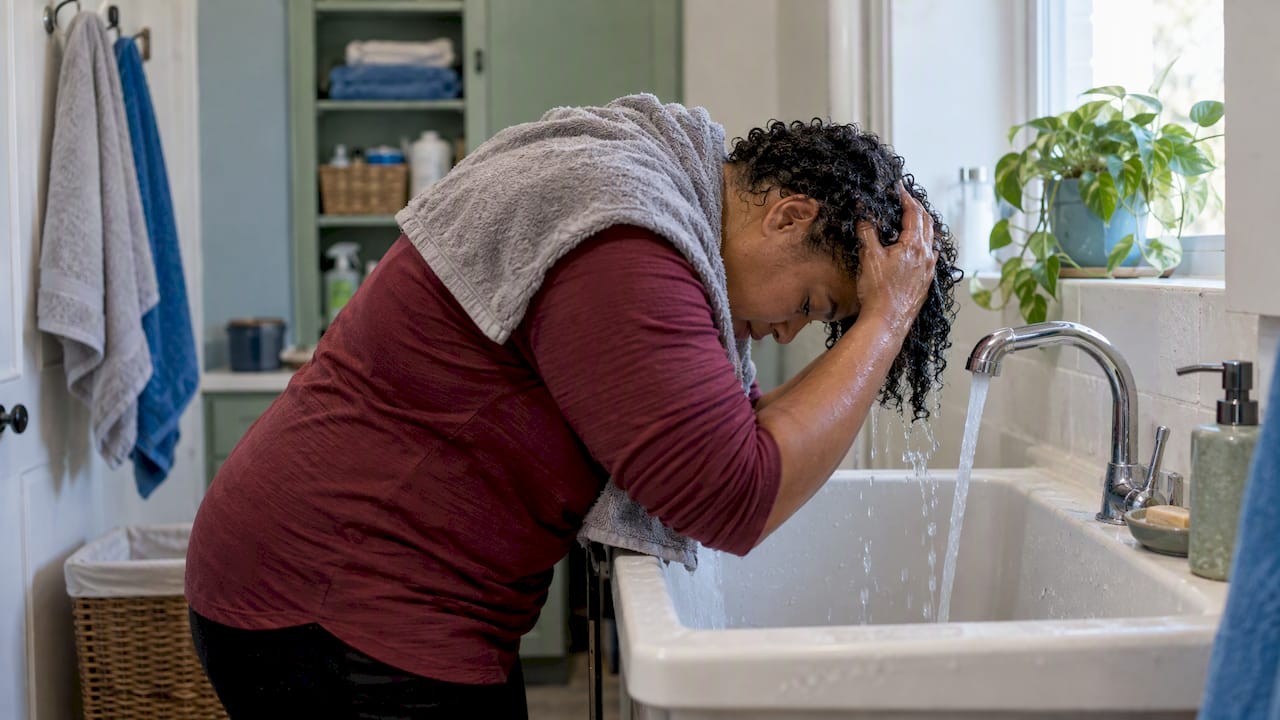
Washing your hair before a hair drug test only matters if the washing is the right kind. An ordinary shampoo session removes surface residue, smoke and oils. It does not reliably remove drug that has been taken up into the hair shaft after use. If you have a test coming, the useful questions are what you used, when you last used it, how often you used it in the past 90 days, and how many washes that history calls for.
This guide explains how a lab treats your sample, why a normal wash falls short, what changes after exposure to smoke, and how we at Macujo work out the number of washes a person needs.
TL;DR
- A hair test looks back about 90 days, so one shampoo the night before is not a plan.
- Labs already wash samples to remove external contamination such as secondhand smoke. Drug taken in by use is a different matter.
- The number of washes depends on the substance, the date of last use and how often you used in the previous 90 days.
- Mike’s Macujo Method is a nine-step process built around authentic Macujo Aloe Rid® Shampoo, and our calculator gives your wash count.
- Hair tests are costly and increasingly common, so a failed one can cost you a job offer. Start early.
Table of Contents
- What a hair test actually measures
- What the lab already does to your hair
- Does a regular shampoo help?
- Washing hair after smoking
- How many washes do you need?
- Our perspective
- A realistic timeline before your test
- Get your plan from us
- Special cases that change the plan
- What forensic research says about the limits
- FAQ
- Sources
What a hair test actually measures
A hair follicle test uses a small sample cut close to the scalp. It is designed to show drug use over roughly 90 days, using about 1.5 inches of hair taken near the root, according to Testing.com. If scalp hair is not available, body hair can be used, and that can reflect a longer window than 90 days. We cover that case in our piece on the window for body hair drug tests.
This is why employers like it. Urine and oral fluid tests catch a window of a few days. Hair shows a pattern. Quest Diagnostics has said that the 90-day lookback makes hair analysis more reliable than saliva or urine tests and harder to fake. If you want the full comparison, read our hair vs. urine test breakdown.
The stakes are real. The same report says about 19.1% of workers tested positive by hair in 2025, up from 13.1% in 2021. Marijuana drove most of that: 15.1% of all hair tests were positive for it in 2025, against 9.5% in 2021. A test costs an employer a lot too: $200 to $300 per hair test against about $50 for a standard urine screen. Employers who pay that much usually are not flexible about a positive.
What the lab already does to your hair
Before analysis, laboratories run multi-step washing protocols meant to strip away external contamination, so that smoke in the air or a hand that touched a substance does not produce a false positive. Testing.com describes these protocols and notes that harsh chemical treatments, such as bleaching, may reduce the concentration of analytes detected.
The lab wash matters for you in two ways:
- If your worry is only environmental exposure, the lab is already built to handle it.
- If your worry is actual use, the lab wash is not what removes it. Drugs taken in by use are carried by the blood into the growing hair and become bound inside it.
Research backs this. A forensic study on decontamination in undamaged versus damaged hair found that substances incorporated by ingestion are strongly bound to hair, and that loss can occur when aggressive decontamination is applied, especially in highly damaged or porous hair. In plain terms: gentle washing barely touches what is inside, and the methods that do reduce levels are the ones that work on the hair structure itself.
Does a regular shampoo help?
A regular shampoo will clean your hair. It will not do the job you are worried about. Here is how the common approaches compare.
| Approach | What it does | What it can’t do |
|---|---|---|
| One wash with everyday shampoo | Removes oils, product, smoke odor | Doesn’t address drug bound inside the hair |
| Clarifying or dandruff shampoo, several times | Strips more surface residue | No set count, no tie to your use history |
| Bleach or dye | Can lower drug levels, but damages hair | Unpredictable, and the hair may look treated to a lab (see our page on dyed hair and hair drug tests) |
| A structured method with a matched shampoo and a wash count | Follows a defined process built around your substance and history | Doesn’t work if steps are skipped or use resumes |
If you are comparing shampoos in general, our guide to the best shampoo for a hair follicle test goes through what to look for.
Washing hair after smoking
People often ask about washing after smoking. There are two very different situations here.
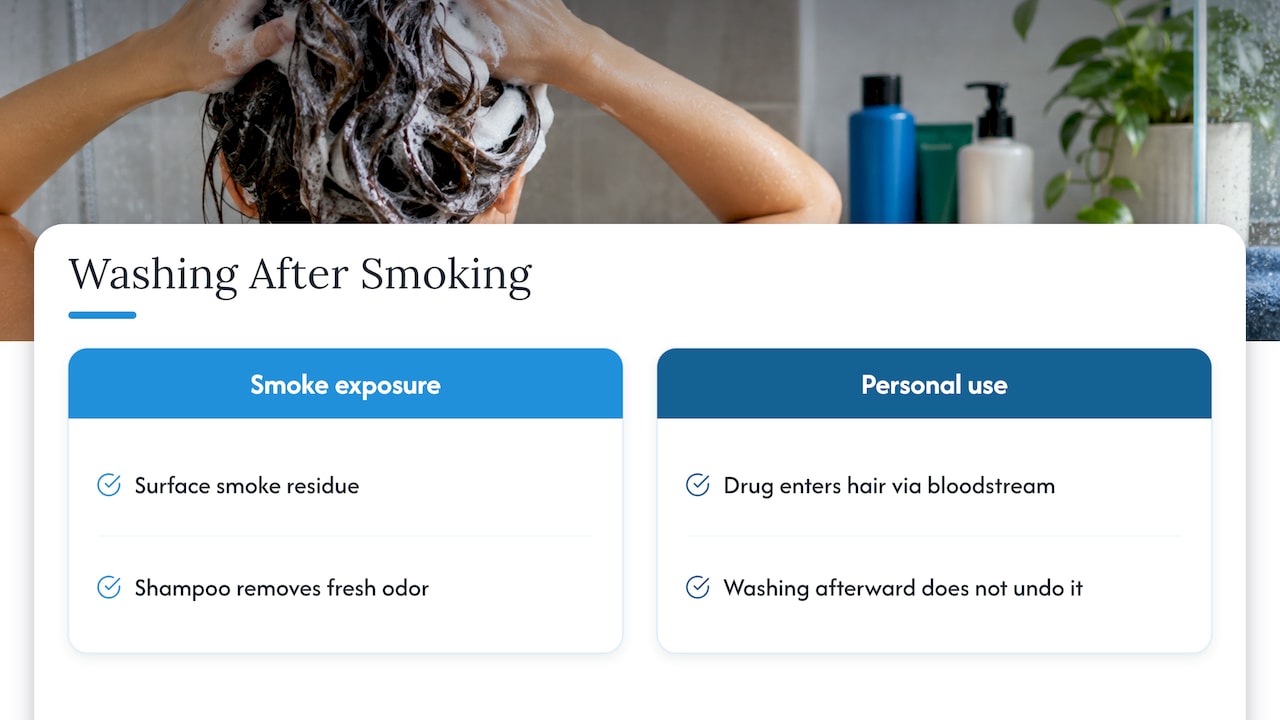
You were around smoke. Smoke clings to hair and clothes. Nicotine and odor can build up in the hair shafts after secondhand smoke, and shampooing is the standard remedy. Washing and changing clothes usually removes fresh smoke odor after a short exposure. That is surface contamination, and a lab’s own wash is designed for it.
You smoked or used yourself. Here, washing right afterward is a different story. The drug reaches the hair from the inside, through the bloodstream, and it is bound in. A shower after smoking does not undo that, and the exposure only needs to be recent enough to be in the 90-day window. How a recent single use shows up is a separate question we explore in why 90 days isn’t always the whole picture.
So the honest answer to “will washing after smoking protect me” is: it protects you from false positives caused by environment, and it does nothing about your own use.
How many washes do you need?
There is no universal number. Anyone who gives you one without asking questions is guessing. Three things set the count:
- The substance. THC behaves differently from cocaine, opiates, amphetamines or alcohol markers. Our page on what drugs show on a hair follicle test covers the common panels.
- The date of last use. Hair grows slowly, so the time since your last use affects what sits near the root.
- How often you used in the previous 90 days. Occasional use and daily use are different problems.
These are exactly the three inputs that Mike’s Macujo Required Washes Calculator asks for. It returns the number of washes for Mike’s Macujo Method, so you aren’t picking a number by feel.
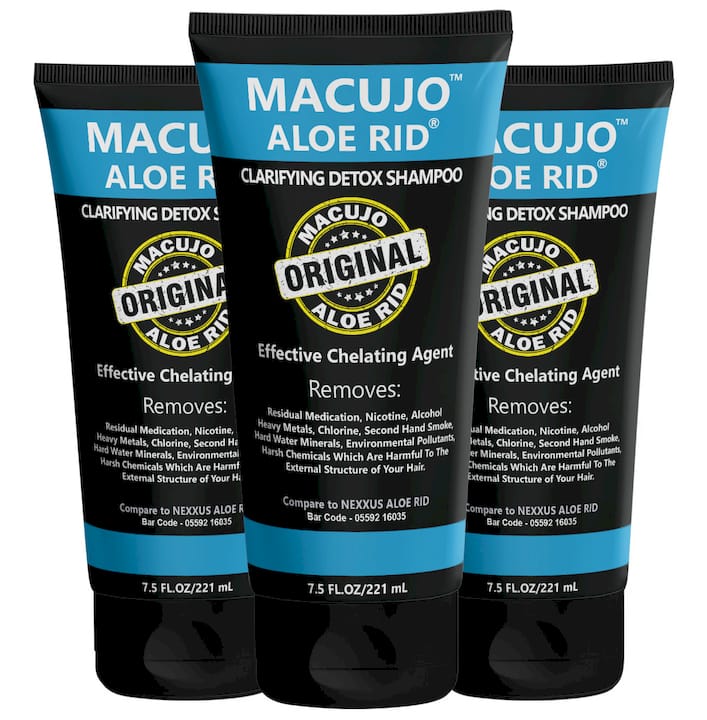
Aloe Rid and the number of washes
People also search for how many washes Aloe Rid takes. The answer depends on the person, not on the bottle. Under Mike’s Macujo Method, the required number comes from the calculator, and every wash has to be done in full with authentic Macujo Aloe Rid® Shampoo, following the directions. The old Macujo Method, which we developed first, was designed mainly for low-to-moderate THC exposure and gave temporary masking. We estimate its success rate at about 90% for moderate THC. Mike’s Macujo Method came in 2018 for high THC levels and other drugs and alcohol.
Our perspective
We have been helping people prepare for hair tests since about 1999, and the same mistakes come up again and again.
The first is treating the test as a one-night problem. Hair testing reaches back 90 days, so a last-minute scramble with whatever shampoo is in the cabinet is the weakest option. The second is guessing the count. People either wash far too little because they hope for the best, or they do random extra washing and damage their hair for no benefit. That is why we built the calculator around your own history, not a fixed number.
The third is mixing methods. Our nine-step process in Mike’s Macujo Method is designed to be done as written, with authentic Macujo Aloe Rid® Shampoo. When every required wash and direction is completed correctly, we report a success rate of better than 99%, and the hair stays clean unless drugs or alcohol are used again. That last part matters. The method is not a license to resume use before a retest. If a test is still ahead, you stay clear of the substance.
We also believe in talking to people. Many customers arrive scared and short on time. A phone call to sort out the substance, the dates and the schedule saves more trouble than any article, which is why we offer personal consultations, including after-hours.
— MIchael
A realistic timeline before your test
The more notice you have, the easier it is. A workable order of operations:
- Stop use immediately. New use adds new drug to new hair.
- Run the calculator. Enter the substance, the date of last use and your use frequency over the previous 90 days.
- Order the right product early. Shipping delays and sold-out items are the most avoidable problems.
- Read the directions fully before the first wash. Skipped steps are the usual reason a method fails.
- Schedule the washes so the last one falls close to your test, following the method’s instructions.
- Don’t bleach, dye or treat the hair on the side. It adds a variable and can look unusual on a lab’s sample. Our step-by-step preparation timeline lays out the full schedule.
Get your plan from us
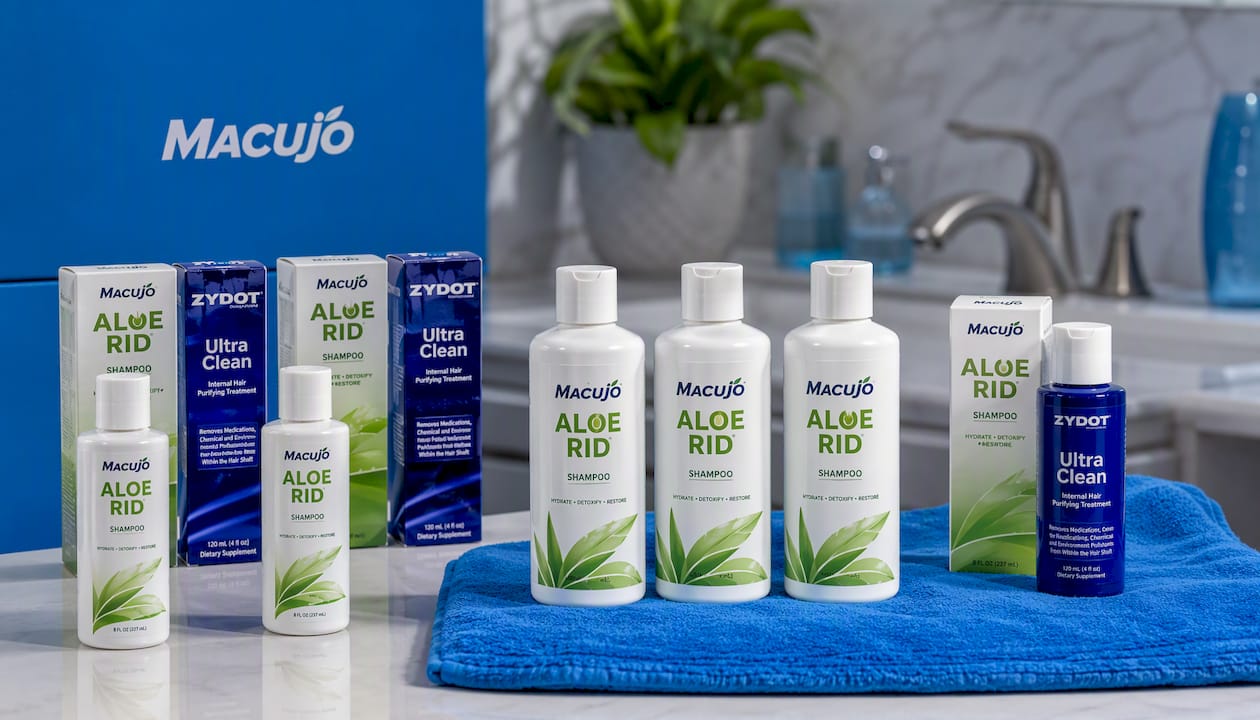
If your test is coming up, start with the calculator and the product that goes with it. We sell Macujo Aloe Rid Old Formula Shampoo at $100 to $150 depending on the product, and you can browse the full Macujo Aloe Rid shampoo range. Not sure which size or set fits your wash count? Book an Afterhours Personal Consultation for $100 and talk through your substance, dates and schedule with an expert. You can also see everything, including hair, urine and saliva test products, at macujo.com.
Special cases that change the plan
Body hair. If you have no scalp hair, a lab may use body hair, which can show a longer window. That changes the planning, so read our page on body hair drug tests.
Dyed or bleached hair. Bleaching can lower drug levels, but results are inconsistent and the hair is damaged. Don’t treat it as a safe shortcut. Our dyed hair page explains the trade-offs.
DOT and transportation jobs. Hair testing is common for large carriers, but federal rules are specific. Positive hair results cannot be reported to the FMCSA Drug & Alcohol Clearinghouse, which leaves fleets in a legal gray zone. Check our DOT hair follicle testing policy for 2026 for pre-employment rules.
Already failed. A failed hair test is not always the end. The 90-day window works both ways, and our guide on what to do after a failed hair test covers verifying and retesting.
What forensic research says about the limits
It is worth being straight about the science. Researchers note that drugs incorporated through ingestion are held in the keratin matrix and that aggressive cleansing can reduce detected levels but rarely removes them completely, as the decontamination study indicates. Labs also run confirmatory mass spectrometry after screening. That is why casual attempts, such as a quick wash or a drink-based product, tend to be unreliable against a hair test, and why we insist on a defined process matched to your history rather than a one-size trick.
FAQ
Can I just wash my hair the night before a drug test?
A single wash will clean the surface, but a hair test covers about 90 days of use. One wash cannot be expected to change what is bound inside the hair. If you have used, you need a method with a set number of washes, not a last-night rinse.
Does washing hair after smoking help on a test?
It helps if you were only exposed to smoke, because shampooing removes odor and surface residue and labs wash samples for external contamination anyway. It does not remove drug from your own use. That reaches the hair through the blood and stays bound.
How many washes do I need for a hair test?
It depends on the substance, the date of your last use and how often you used in the previous 90 days. Mike’s Macujo Required Washes Calculator uses those three inputs to give the number for Mike’s Macujo Method. We don’t recommend picking a number on your own.
How many washes does Aloe Rid take?
There is no single count. For Mike’s Macujo Method, the calculator sets the number for your history, and each wash must be completed as directed with authentic Macujo Aloe Rid® Shampoo. If you want help interpreting the result, you can book a personal consultation.
How much does a hair drug test cost?
Hair follicle tests typically cost between $200 and $300 in the United States as of 2025, compared with about $50 for a standard urine screen, according to DOT Driver Files. That cost is part of why employers who pay for it take results seriously.
Sources
- Hair Follicle Drug Test: How It Works and What It Detects | Testing.com
- Working under the influence: 1 in 5 workers test positive for drugs | The Washington Times
- Hair Follicle Drug Testing In Trucking: What Fleets Need To Know In 2025 | DOT Driver Files
- Evaluation of decontamination procedures for drug testing in undamaged versus damaged hair | PubMed
- Getting rid of the smell of smoke: Cleaning tips and more | Medical News Today