Last Updated on October 23, 2026
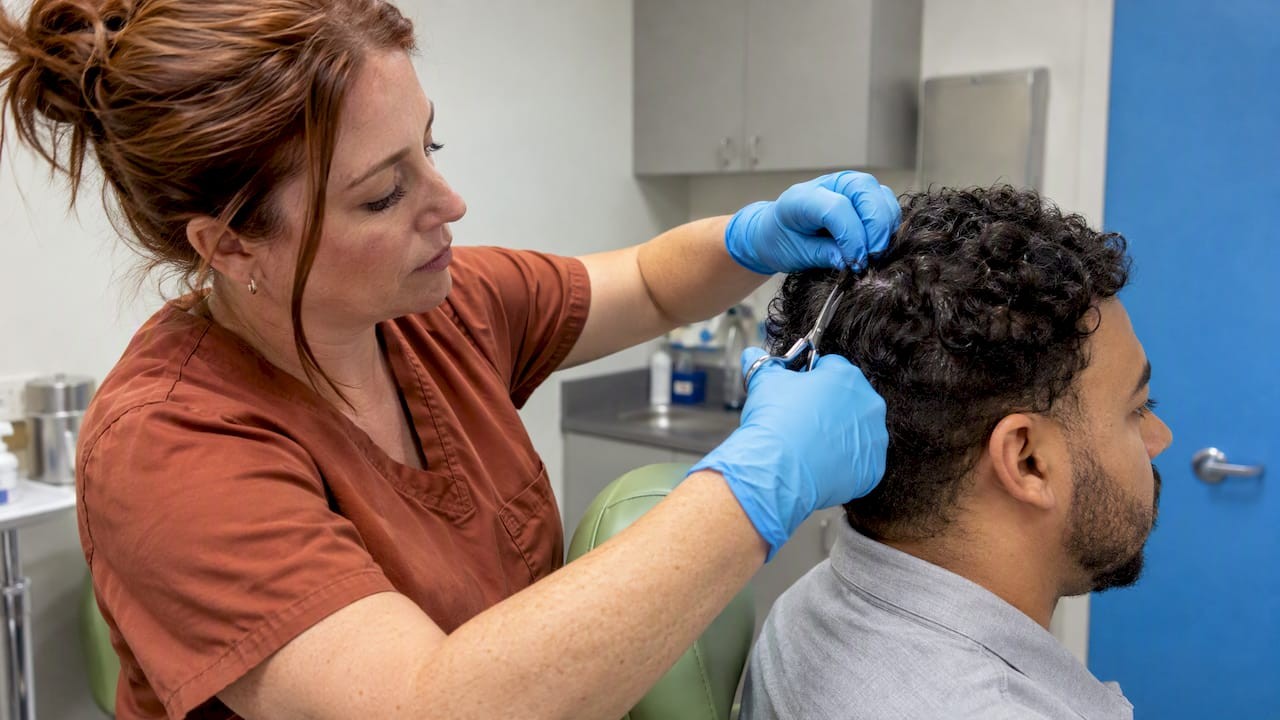
A fentanyl hair test checks a small sample of hair for fentanyl and its metabolite, norfentanyl, and it typically reflects about the last 90 days. It is not part of every hair test. An employer has to order it, either as a standalone test or as part of an expanded opioid or synthetic opioid panel. It also cannot see the last week or two before collection.
This guide covers what the test looks for, how far back it reaches, why a standard panel can miss fentanyl, and what changed in 2025. It also covers what you can and cannot do if a test is coming.
TL;DR
- A hair test can detect fentanyl only if the lab includes it. A standard five-panel test was not built to find it.
- A 1.5-inch sample near the scalp represents roughly 90 days of history. Very recent use usually has not reached the sample yet.
- Federal workplace urine testing added fentanyl and norfentanyl on July 7, 2025. More private employers are asking about it.
- Fentanyl test strips check drugs before use. They are not a way to test your own body or hair.
- If you have a test date, find out which panel and which specimen it uses before you decide anything else.
Table of Contents
- What a fentanyl hair test actually measures
- Does a standard hair follicle test include fentanyl?
- How far back can a hair test see fentanyl?
- What changed in 2025 for workplace testing
- Why hair results for fentanyl are harder to interpret
- Fentanyl test strips are not a hair test
- Our perspective at Macujo
- If you have a test coming: a practical plan
- How Macujo can help
- FAQ
- Sources
What a fentanyl hair test actually measures
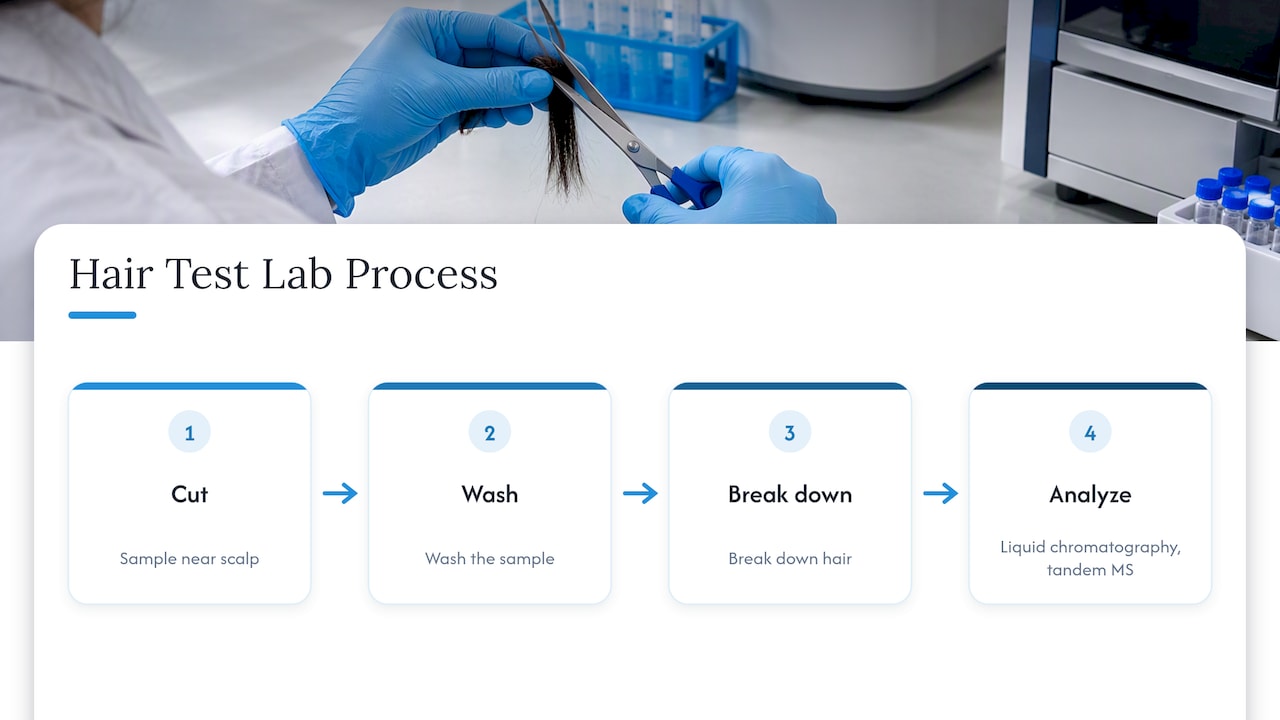
Hair is a record. When a drug circulates in your blood, small amounts end up in the growing hair shaft. A lab cuts a sample close to the scalp, washes it, breaks it down, and runs it through sensitive instruments, usually liquid chromatography with tandem mass spectrometry. The target is typically fentanyl itself and norfentanyl, its main metabolite.
The Better Life Recovery overview notes that fentanyl and norfentanyl are incorporated into the hair shaft at rates tied to systemic exposure. A lab, not a store-bought kit, makes the final call. If you want a plain-language walk through the process, our explainer on how hair drug testing actually works covers collection, washing and confirmation.
Labs do offer this. Quest Diagnostics, for example, says its hair testing includes synthetic opioids such as fentanyl and methadone. That tells you the capability exists in commercial workplace testing. It does not tell you your employer ordered it.
Does a standard hair follicle test include fentanyl?
Usually not by default. The common question is whether a hair follicle test for the usual panel will show fentanyl. In most cases it won’t, because fentanyl is a synthetic opioid with a chemical structure unlike morphine or codeine. A traditional opiate screen looks for those, and fentanyl slips past it.
That is why the employer’s order matters. Typical hair panels cover:
- Marijuana metabolite (THC-COOH)
- Cocaine and its metabolites
- Opiates such as codeine, morphine and 6-MAM
- Amphetamines, including methamphetamine and MDMA
- PCP
Fentanyl is an add-on. You may see it written as “fentanyl,” “synthetic opioids,” or “expanded opioid panel.” If you are not sure what your test includes, ask the company that scheduled it, or the HR contact, which panel code or drug list applies. You are entitled to ask what is being tested in many workplace settings, and the answer saves a lot of guessing.
A 2025 study in the Journal of Analytical Toxicology looked at fentanyl in hair from court-ordered testing and noted that, as of December 2024, many of those programs still did not include fentanyl in their panels. The gap between what is possible and what is routinely ordered is real, and it is closing.
How far back can a hair test see fentanyl?
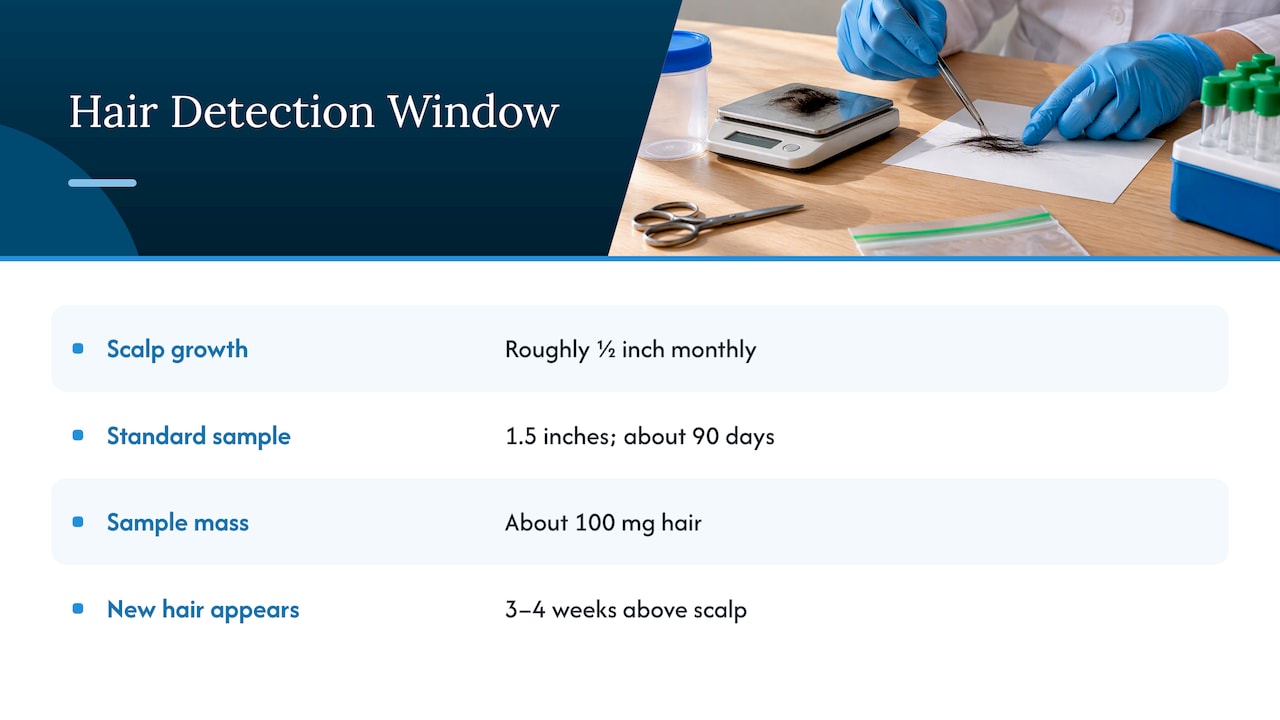
The usual answer is about 90 days, and it comes from simple arithmetic. Scalp hair grows roughly half an inch a month, so a 1.5-inch segment cut at the scalp covers about three months. LegalClarity’s summary of workplace panels describes the same standard sample, about 100 milligrams of hair.
Two cautions keep that number honest.
The window has a blind spot at the front. Hair that has just formed is still under the skin. It generally takes around three to four weeks for a substance to be incorporated and appear above the scalp, so use in the last week or two is likely to go undetected by a standard sample. That is the main reason hair is often paired with urine in workplace programs. Our comparison of hair vs. urine tests at work explains how the two complement each other.
The window can stretch. If your hair is longer or the lab takes a longer segment, the sample can reach further back. Some opioid test descriptions cite windows up to 12 months depending on hair length, though routine employment testing uses the 1.5-inch standard. Body hair has its own rules, which we cover in body hair drug test windows. If you want the broader picture beyond fentanyl, see our hair drug test timeline guide.
Quick reference
| Question | Typical answer |
|---|---|
| Standard sample | 1.5 inches of scalp hair, about 100 mg |
| Look-back period | About 90 days |
| Blind spot | Roughly the most recent 1 to 2 weeks |
| Main analytes | Fentanyl and norfentanyl |
| Who decides if it is tested | The employer or program ordering the panel |
What changed in 2025 for workplace testing
On January 16, 2025, the Department of Health and Human Services published revised guidelines. It added fentanyl to the urine and oral fluid panels and norfentanyl to the urine panel. SAMHSA confirms the effective date of July 7, 2025. The urine cutoff is 1 ng/mL for both the initial and confirmatory tests.
Two points matter for you.
First, that rule governs federal workplace programs and federally regulated testing, and it addresses urine and oral fluid. It is not a hair rule. Federal programs have not set hair testing for fentanyl in that update.
Second, private employers follow their own policies. Many borrow from federal practice, so the change has a ripple effect. A company that never tested for fentanyl before may now ask its lab for it, in urine or in hair. If you work in transportation or another federally regulated field, the urine rule applies to you directly.
Why hair results for fentanyl are harder to interpret
Hair analysis is sensitive, but it is not simple. Forensic literature warns about several limits.
- No universal reference range. Researchers note that there is no quantitative range that cleanly separates passive exposure from active use.
- No standard cutoff for habitual versus occasional use. The National Institute of Justice points out that hair color, metabolism and chemical damage change how much of a drug is retained, so interpretation is often case by case.
- External contamination. Substances in the environment can settle on the hair shaft. Labs use washing and extraction procedures to tell surface deposit from internal incorporation.
- Cosmetic treatment. Bleaching and dyeing can alter drug levels. Our page on bleach and dyed hair in drug tests explains what we know and where the limits are.
A preliminary study of real hair samples from fentanyl cases makes the same point: interpreting positive findings requires care, and a single number rarely tells the whole story. If a result looks wrong, you can usually request a review of the lab’s process. Ask the employer or the testing company what the dispute procedure is, and speak with an employment attorney if a job is at stake.
Fentanyl test strips are not a hair test
People searching this topic often land on test strips. They are a different tool for a different job. Strips are made to check powders, pills or liquids for fentanyl before someone uses them, and the guidance from New York’s OASAS says plainly that they are for drug checking, not for testing a person’s own specimen. The same guidance warns about false positives when a sample contains high concentrations of methamphetamine, MDMA or diphenhydramine.
So a strip cannot tell you what a hair lab will find. It also cannot tell you whether your hair would test positive. If you or someone you know uses street drugs, fentanyl contamination is a genuine overdose risk, and local harm reduction programs or a doctor can help with safer-use supplies and treatment options. If you are concerned about opioid dependence, SAMHSA’s national helpline at 1-800-662-4357 is free and confidential.
Our perspective at Macujo
We have helped people prepare for hair follicle tests since about 1999, and the questions we get have shifted. Ten years ago nearly everyone asked about marijuana. Now we hear more about opioids, methamphetamine and expanded panels, and people are often unsure what their test will even look for.
Our honest view has three parts.
Find out the panel first. Nobody should spend money or energy on a test they have misunderstood. If fentanyl is not on the order, the answer to your question is different than if it is.
Timing and history decide most outcomes. Which substance, when you last used, and how often you used over the previous 90 days drive the preparation that makes sense. That is why Mike’s Macujo Method uses a required-washes calculator built on exactly those inputs rather than a one-size-fits-all routine.
We stay careful about what we promise. Mike’s Macujo Method, introduced in 2018, is a nine-step process built around authentic Macujo Aloe Rid® Shampoo. We report a success rate better than 99% when every required wash and direction is completed correctly, and the hair stays clean unless drugs or alcohol are used again. That figure applies to our method as written. Fentanyl-specific questions, including how your own history fits, are best handled in a direct conversation instead of a guess, which is one reason we offer personal consultations.
If you also use or have used other substances, the same logic applies to each. Our guides on methamphetamine hair test detection and benzodiazepines in hair tests show how timelines and lab cutoffs differ by drug.
— MIchael
If you have a test coming: a practical plan
- Confirm the specimen and the panel. Ask whether it is hair, urine or oral fluid, and whether fentanyl or synthetic opioids are on the list.
- Count back 90 days. Mark your last use and your pattern of use in that period. Be realistic about frequency, since heavier history means a longer road.
- Remember the blind spot. Use in the final one to two weeks may not show in a standard hair sample, but urine or oral fluid may catch it. Do not assume that a hair-only test is the only one you will face.
- Check your hair. Length, dye or bleach, and whether the lab might use body hair all change the picture.
- Understand the cutoffs. Labs report against set thresholds, and our page on hair test cutoff levels explains what those numbers mean.
- Get tailored guidance. A general article cannot weigh your exact history. A one-on-one conversation can.
If you need the full overview of preparation, our science-backed guide to passing a hair follicle drug test lays out a preparation timeline.
How Macujo can help
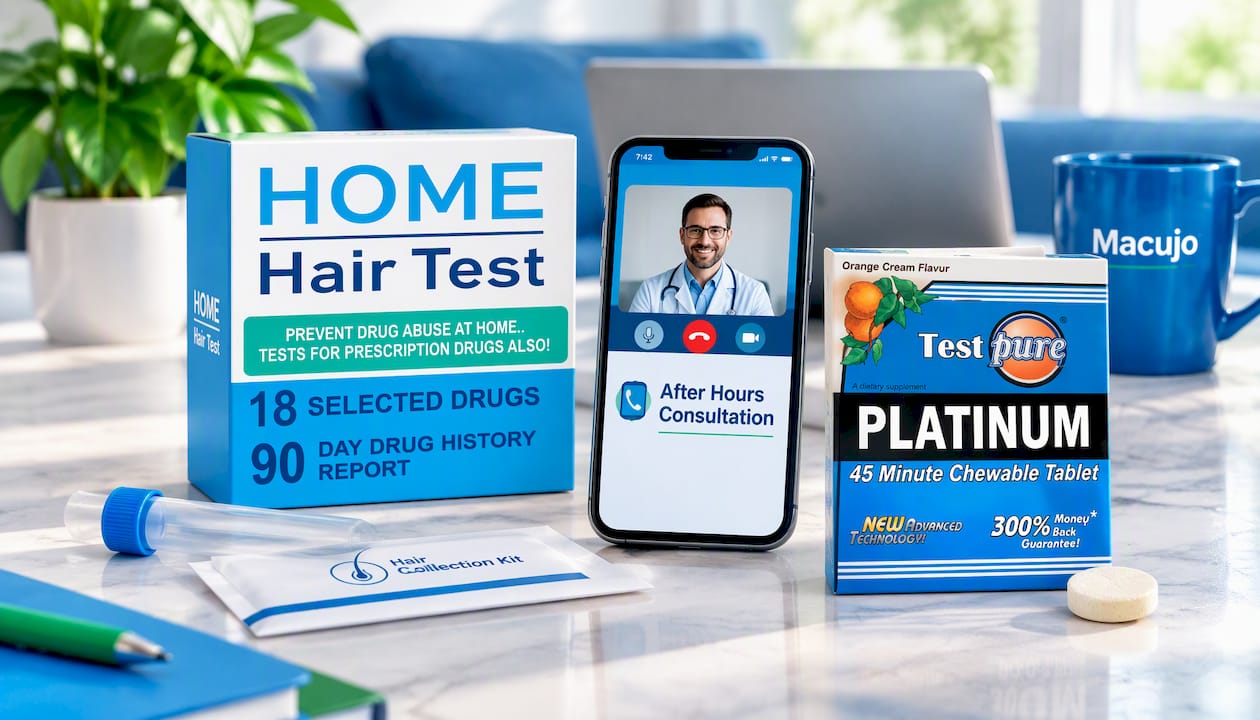
If your test is close and you want a plan matched to your situation, our Afterhours Personal Consultation is a one-off $100 phone session with an expert, available outside regular business hours. It suits people who have a date, a history they are unsure how to weigh, and questions a web page cannot answer.
Our Macujo Aloe Rid Old Formula Shampoo line is priced from $100 to $150. We also carry hair, urine and saliva test products if you want to understand which kind of test you are facing. Our Home Hair Test kit is listed on the shop for those who want a kit in hand.
FAQ
Does a hair follicle test test for fentanyl?
Only if the lab was asked to include it. Standard panels were designed around traditional drugs, and fentanyl needs a specific or expanded opioid test. Commercial labs do offer hair testing for fentanyl, so it is worth asking the testing company exactly what is on your panel.
How long does fentanyl show up in hair?
A standard 1.5-inch sample reflects about 90 days of history. Use in the last week or two before collection often has not grown out of the scalp yet. Longer hair samples can reach further back.
What can show up as fentanyl on a drug test?
Fentanyl and norfentanyl are the targets. False positives are discussed mostly in connection with test strips, which can react to high levels of substances like methamphetamine, MDMA or diphenhydramine. In hair, external contamination is a known concern, and labs use washing procedures to address it. If a result seems wrong, ask for confirmatory testing and the lab’s dispute process.
Can fentanyl test strips check my own hair or urine?
No. Strips are made to check drugs before use, not human specimens, and the New York OASAS guidance says they are not valid for self-testing. A clinical or workplace lab test is the only reliable route.
Is fentanyl on the standard 10-panel test?
Usually not. It can be added as a standalone or expanded test. Since July 7, 2025, federal workplace urine panels include it, so employers who follow federal practice may add it.
Sources
- Federal Register: Mandatory Guidelines for Federal Workplace Drug Testing Programs, Authorized Testing Panels
- SAMHSA: FAQs About Federal Workplace Drug Testing
- LegalClarity: Standard Workplace Drug Testing Panels Explained
- Better Life Recovery: Fentanyl Drug Test Detection Times
- Quest Diagnostics: Hair testing FAQs
- Journal of Analytical Toxicology: Fentanyl in hair from court-ordered testing
- PMC: Hair testing in the forensic field
- National Institute of Justice: Detecting Fentanyl Use Through Court-Ordered Mandatory Drug Testing
- PMC: Interpretation of Positive Testing for Fentanyl in Real Hair Samples
- New York OASAS: Fentanyl Test Strip Guidance