Last Updated on October 20, 2026
The U.S. military does not run a routine hair drug test. Service members, recruits and reservists are tested by urinalysis, and as of this writing hair, sweat and oral fluid testing is still waiting on approvals and updated federal guidelines. If you searched for an Army or Navy hair test, you probably want one of two things: to know what the military will test you with, or to prepare for a hair test from a civilian employer, contractor or agency. This guide covers both.
TL;DR
- The Department of Defense relies on urinalysis, not hair follicle testing, for entrants and active-duty personnel. DVIDS reported that hair, sweat and saliva testing still needed approval.
- Hair covers up to about 90 days, but the military prizes urinalysis for its legal defensibility and standardization across commands.
- Hair testing still matters for veterans, contractors and civilians applying for jobs. Many employers choose it for its long lookback.
- If a hair test is on your calendar, the number of washes you need depends on the substance, your last use and how often you used it. Guessing is the usual way people fail.
Table of Contents
- What the military uses instead of a hair test
- Why the military hasn’t adopted hair testing
- Hair vs. urine: the practical differences
- Where a “military hair test” can still show up
- Our perspective: preparation beats guesswork
- How to prepare when a hair test is scheduled
- Prepare with Macujo
- What to remember if you are in the service
- FAQ
- Sources
What the military uses instead of a hair test
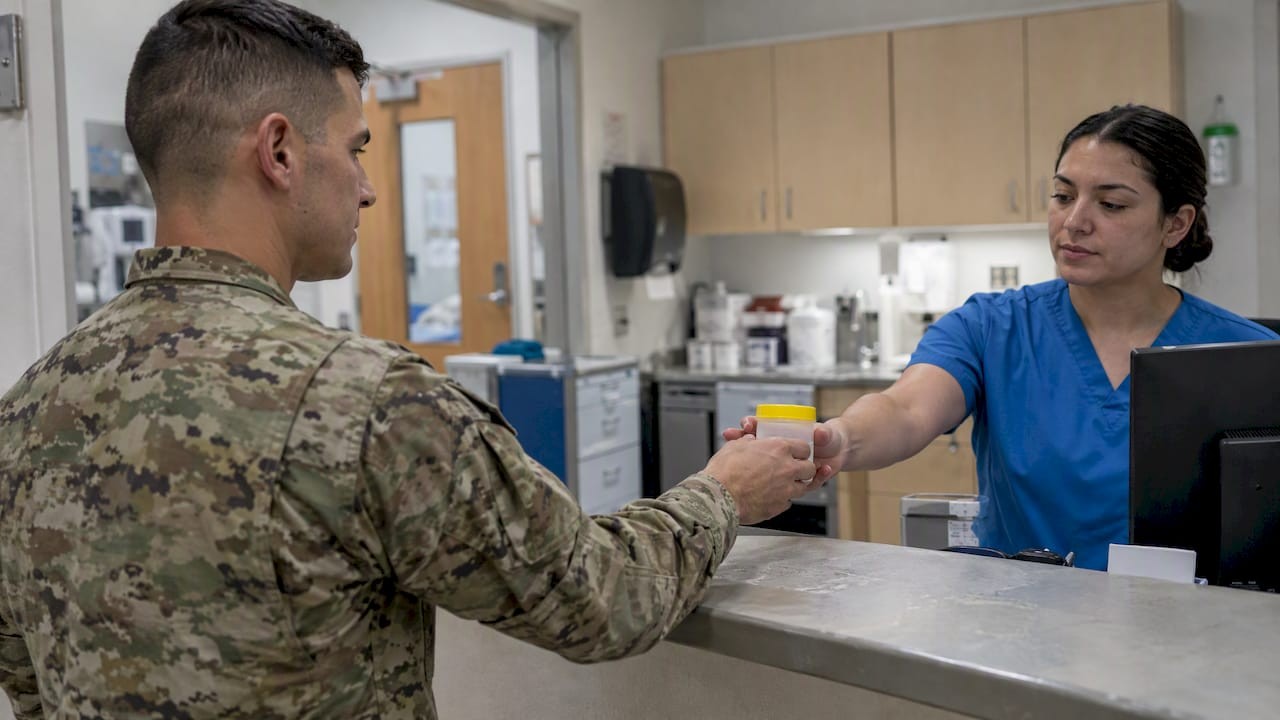
DoD drug testing is built around urine. The Navy’s own drug lab FAQ says the two Navy drug screening laboratories test roughly 2.5 million specimens a year from Navy and Marine Corps active duty, recruit and reserve members, among others.
The process runs in two stages:
- Screening. A fast immunoassay flags samples that may contain a drug.
- Confirmation. Presumptive positives are rechecked with a more specific method, gas chromatography-mass spectrometry (GC-MS) or liquid chromatography-tandem mass spectrometry (LC-MS/MS).
The same Navy FAQ says negative results are typically reported within four days and positives take about six. The governing document is DoD Instruction 1010.16, which sets technical procedures for the Military Personnel Drug Abuse Testing Program. The Army has also modernized collection: its Client Collection System puts a two-dimensional bar code label on each specimen bottle.
Testing is frequent and unpredictable. Service members can be tested at entry, randomly, and under several legal categories such as commander-directed or probable-cause testing. The Navy’s history of its screening program traces how this approach grew from the Vietnam era into annual random testing for all active-duty personnel.
What the panel covers
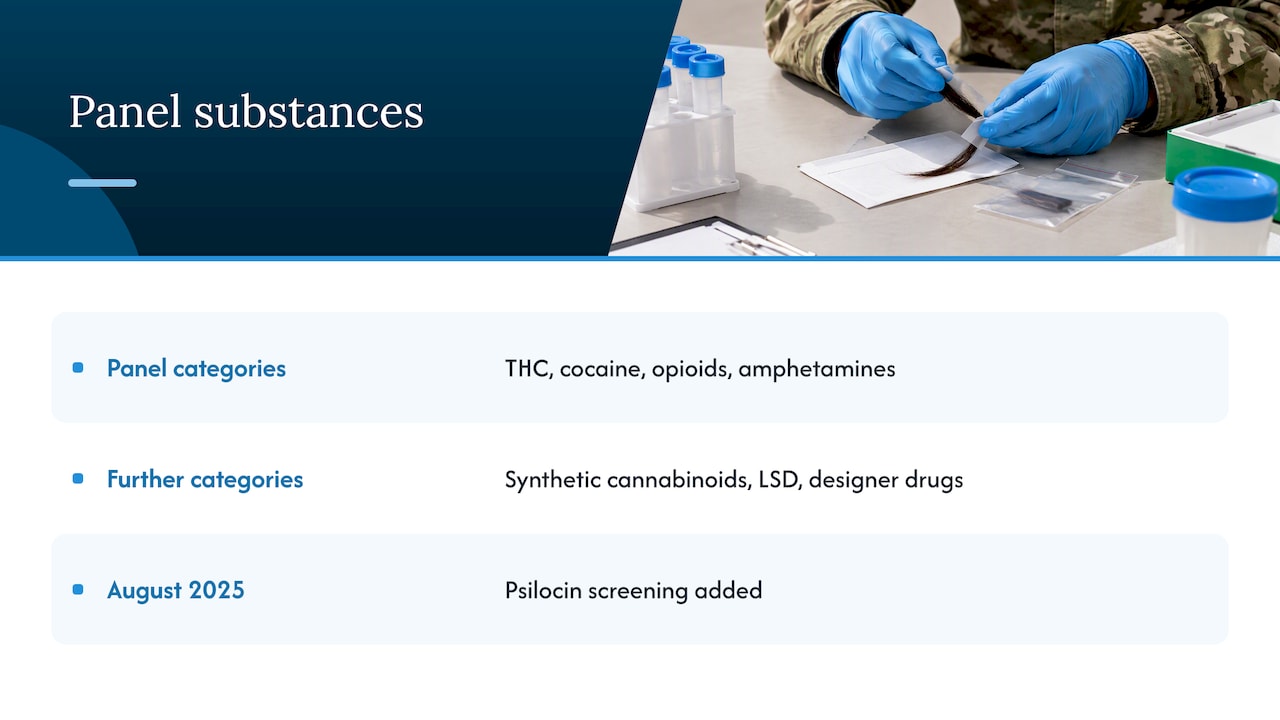
The panel is broad: THC, cocaine, opioids, amphetamines, synthetic cannabinoids, LSD and designer drugs. It also changes. A memo issued in August 2025 added screening for psilocin, the active compound in psilocybin mushrooms, and Military.com reported the policy shortly after. Psilocin is a good example of why hair keeps coming up: it clears urine fast but can persist in hair for a long time.
Why the military hasn’t adopted hair testing
Hair has a real advantage. It reaches back about 90 days instead of days. So why hasn’t DoD switched? Three reasons show up in the public record.
Legal defensibility. Military positives can end in an administrative separation board or a court-martial. Every step from collection to confirmation has to be documented. DVIDS describes DoD’s reliance on certified forensic laboratories rather than field-style devices for that reason.
Standardization. Urinalysis can be run the same way at commands worldwide. A senior Navy history piece makes the point that this consistency is a core strength of the urine program.
Scientific caveats. Federal guidance on hair has long wrestled with a few problems:
- Telling ingestion from external contamination. Even after washing, some externally deposited drug can remain, so some labs apply a mathematical wash factor. This is covered in the HHS/SAMHSA hair testing guidelines.
- Hair color bias. Drugs such as cocaine and methamphetamine bind more strongly to melanin-rich, darker hair, so two people with identical exposure can get different results (same document).
- Limits of segmental analysis. Cutting hair into sections to map use over time is generally not recommended for workplace testing, because sweat and sebum can carry drugs along the whole shaft (same document).
The contamination problem has reached court. The research behind this article points to Thompson v. Civil Service Commission, where hair testing was found insufficiently reliable as the sole evidence for termination.
Hair vs. urine: the practical differences
| Urinalysis (military standard) | Hair follicle test | |
|---|---|---|
| Typical lookback | Days, depending on the drug | Up to about 90 days |
| Recent use | Detectable fairly quickly | Takes roughly a week or more to show in hair |
| Used by DoD for service members | Yes | Not as a mandatory program |
| Federal DOT drug testing | Yes | Not allowed to satisfy DOT requirements |
| Main weakness | Short window | Contamination and hair color questions |
The lag on recent use is why people sometimes assume hair is easy to beat. It isn’t a safe bet. We cover the gap in hair vs. urine tests at work, and the details of the window in our hair drug test timeline guide.
Where a “military hair test” can still show up
The military itself aside, hair testing appears in places close to it:
- Defense contractors and private employers. Many private employers choose hair for pre-employment screening because of the long lookback. Their policy, not DoD’s, governs.
- Law enforcement and civil service. Some agencies use hair for applicants. We break down police department hair follicle policies and USPS hair follicle policy separately, because the rules differ.
- Transportation. Federal DOT testing does not accept hair. Our page on DOT hair follicle testing policy explains what that means for applicants whose company tests hair on its own.
- Possible future change. DVIDS reported that DoD and other federal agencies may eventually be able to add hair, sweat and saliva testing after approvals. Nothing in what we reviewed shows that has happened for the military as a whole.
So if you are a service member, plan for urinalysis. If you are leaving service, applying to a contractor, or heading into a civilian job that tests hair, plan for a hair test.
Our perspective: preparation beats guesswork
We have helped people prepare for hair follicle tests since about 1999, and the pattern is consistent. People rarely fail because the test is mysterious. They fail because they assumed a number: three washes, one shampoo, a few days of avoidance.
Here is how we see it.
A hair test measures what is in the shaft, not how you feel. A heavy user with a long history has a different problem than someone who used once last month. That is why we built the Required Washes Calculator around three inputs: the substance, the date of last use and how often you used in the previous 90 days.
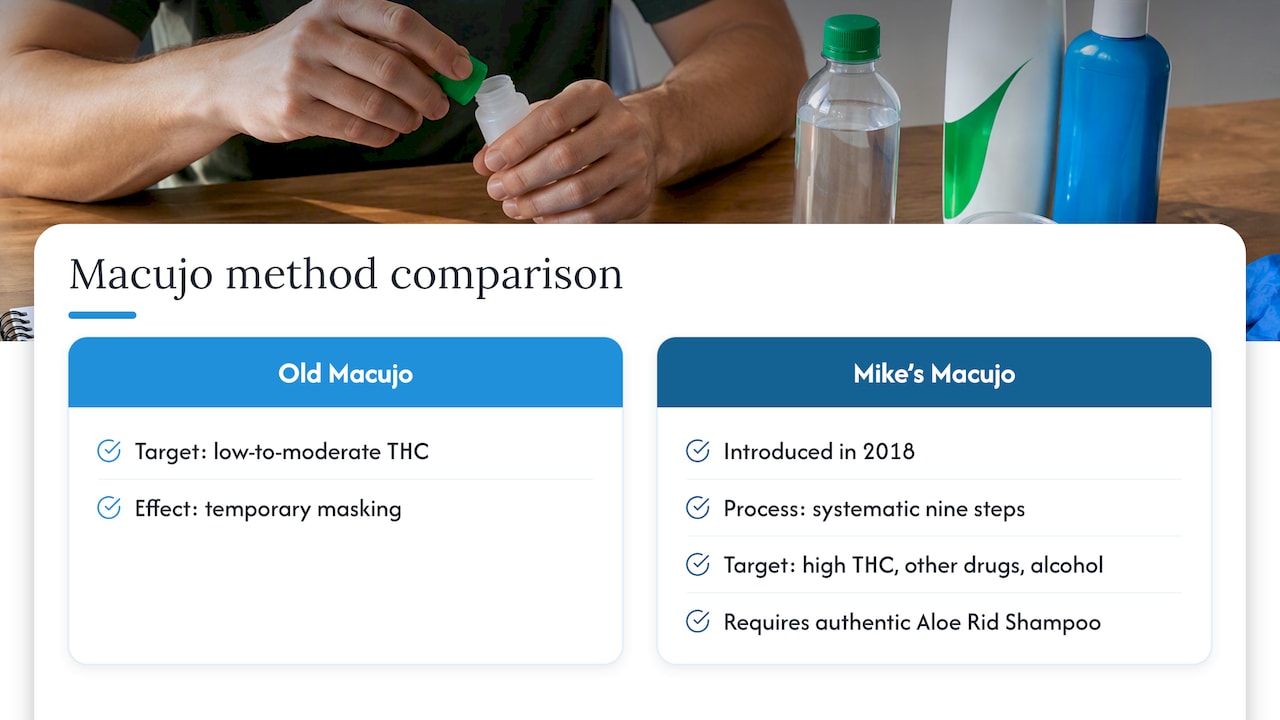
Method matters. Our old Macujo Method was designed mainly for low-to-moderate THC exposure and gave only temporary masking. Mike’s Macujo Method, introduced in 2018, is a systematic nine-step process developed for high THC levels and for other drugs and alcohol. It has to be done with authentic Macujo Aloe Rid Shampoo, and we report a success rate better than 99% when every required wash and direction is completed correctly. The hair stays clean unless you use again.
We are not the right tool for every test. A hair method does nothing for a urinalysis, and we will say so on the phone. If your employer tests urine or saliva, we sell test kits for those as well, but a hair shampoo is not a fix.
Be careful with shortcuts. Shaving everything, for example, is not a clever workaround. The military.com story of a U-2 pilot dismissed for shaving his entire body to avoid a drug test shows how it can end. If body hair is the sample, read our page on the window for body hair drug tests and the one on eyebrow hair tests before you decide anything.
— MIchael
How to prepare when a hair test is scheduled
- Find out the test type. Ask the employer or the collection site whether it is hair, urine or saliva. Do not assume. Military and DOT programs use urine, and many private employers choose hair.
- Count your days. Hair is generally described as covering up to about 90 days, so your last use and your frequency over that stretch drive your risk.
- Consider a home check. A home hair test kit lets you see where you stand before the real collection. We explain how hair drug testing actually works if you want the lab side.
- Calculate the washes. Use the required-washes calculator rather than a round number from a forum.
- Follow every direction. A skipped wash is the single most common reason a careful plan fails.
- Stop using. Cleansing addresses what is in the hair now. New use brings it back.
If you already got a positive hair result, do not panic. Our guide on a failed hair test walks through using the 90-day window to verify and retest.
Prepare with Macujo
If your test is a hair follicle test, we offer two ways in.
- Macujo Aloe Rid Old Formula Shampoo, listed at 100 to 150 USD, depending on the product. It is the shampoo Mike’s Macujo Method requires.
- Afterhours Personal Consultation, 100 USD one-off. You talk by phone with an expert about your substance, timing and test date, so your plan fits your situation. Customers also get ongoing support.
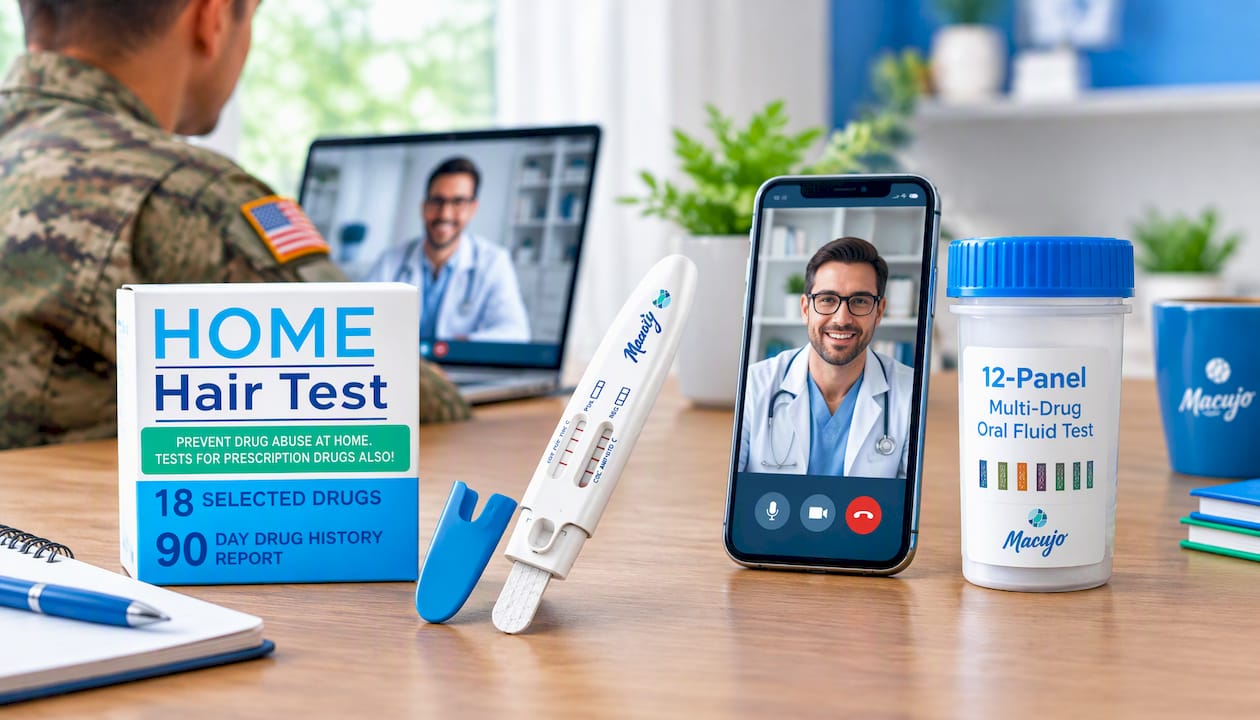
If your employer tests urine or saliva, look at our urine and saliva test products on the Macujo homepage, including a 12-panel oral fluid saliva test. More articles are in the Macujo blog.
What to remember if you are in the service
Three points, since the stakes are higher.
- Urine is the test. Hair products will not change a urinalysis, and we do not claim they will.
- Legal questions need a legal professional. If you have a positive military result, talk to a military defense attorney or your installation’s legal assistance office about retesting and your rights. Drug lab procedures, chain of custody and cutoff levels can all be relevant, and the Army’s urinalysis cutoff level overview explains how samples below cutoff are reported negative.
- Know the policy. Use of illegal drugs is grounds for separation under DoD policy, which says testing exists to deter drug abuse. Read the instruction rather than relying on rumor.
FAQ
Does the Army drug test with hair follicles?
Not as a routine program. Army and other DoD testing relies on urinalysis processed at certified labs. Hair, sweat and oral fluid testing have been discussed for years but still needed formal approval, according to DVIDS reporting.
How long does a military drug test take to come back?
The Navy’s lab FAQ says negative results are typically reported within four days and positive results in about six. Your command may take longer to act on them.
Does military testing cover newer substances?
Yes, the panel is updated. In 2025 the Pentagon added psilocin screening, as Military.com reported. Check current policy with your command, because lists change.
Can a hair test be wrong?
It can be questioned. Federal guidance notes that external contamination and hair color can complicate interpretation, and a court has found hair testing insufficient as the only evidence for termination. If you disagree with a result, our failed hair test guide covers verifying and retesting.
Sources
- DVIDS: New Drug Screening Procedures Await Approval
- Navy Drug Testing Questions & Answers
- DoD Instruction 1010.16
- U.S. Army: New Drug Testing Collection System
- Navy Medicine: A Short History of the U.S. Navy Drug Screening Program
- Military.com: Pentagon to Begin Screening for Magic Mushroom Use
- HHS/SAMHSA Hair Testing Guidelines
- Military.com: U-2 Pilot Dismissed for Shaving His Entire Body
- Army Trial Judiciary: Urinalysis cut-off levels