Last Updated on October 23, 2026
A hair drug test is accurate at confirming that a drug was in the hair sample, and much less reliable at telling a lab how, when or how much of it got there. Confirmatory lab methods are precise. The weak points are the sample itself: external contamination, hair color, cosmetic treatment, and a blind spot for use in the last week or so. If you face a hair test for a job, those weak points decide whether the result reflects what you actually did.
TL;DR
- Lab analysis is analytically strong. The accuracy problems come from the hair, not the instrument: contamination, melanin, and treatments change what the lab sees.
- One primary care study found specificity above 90% for all drugs, but hair caught only about half of self-reported marijuana users.
- Hair tests miss very recent use, usually the last 5 to 10 days, and cannot show dose or exact timing.
- A positive result is not always a clean verdict on drug use, and a negative is not always proof of abstinence.
- If you have a test coming, your exposure history, last-use date and hair condition matter more than any general claim about accuracy.
Table of Contents
- How a hair test works, and why it has two stages
- What the numbers say about sensitivity and specificity
- Where false positives come from
- Where false negatives come from
- Hair, urine and saliva compared
- Our perspective at Macujo
- What to do if you have a hair test coming
- Work with us before test day
- If you already tested positive
- FAQ
- Sources
How a hair test works, and why it has two stages
Most workplace hair tests analyze about 1.5 inches of scalp hair cut close to the skin. Hair grows roughly half an inch a month, so that length represents about 90 days, according to this breakdown of the 90-day window. We cover the mechanics in more detail in how hair drug testing actually works.
Testing happens in two steps:
- Screen. An immunoassay (ELISA) flags samples that may contain a drug or metabolite above a set threshold. It is fast and cheap, and it is only preliminary.
- Confirmation. A positive screen goes to liquid chromatography with tandem mass spectrometry (LC-MS/MS), which identifies the specific compound at very low concentrations.
The confirmation stage is why lab reports often sound unassailable. A review of hair testing notes that positive immunoassay results should be followed by a confirmatory method to reduce inaccurate results. A legal guide on hair follicle testing in New York makes the same distinction: confirmatory LC-MS/MS is analytically accurate, yet hair testing stays vulnerable to outside factors that distort findings.
That gap is the heart of the topic. Accuracy of the machine is not the same as accuracy of the conclusion.
What the numbers say about sensitivity and specificity
Two terms matter. Specificity is how often a test correctly clears people who did not use. Sensitivity is how often it correctly catches people who did.
A study of primary care patients by Gryczynski and colleagues compared hair results to self-reported use. Specificity at standard laboratory cut-offs exceeded 90% for every drug. Sensitivity was low: hair identified 52.3% of self-disclosed marijuana users, 65.2% of cocaine users, 24.2% of amphetamine users and 2.9% of opioid users. Overall agreement with self-report was 57.5% for marijuana and 86.5% for cocaine.
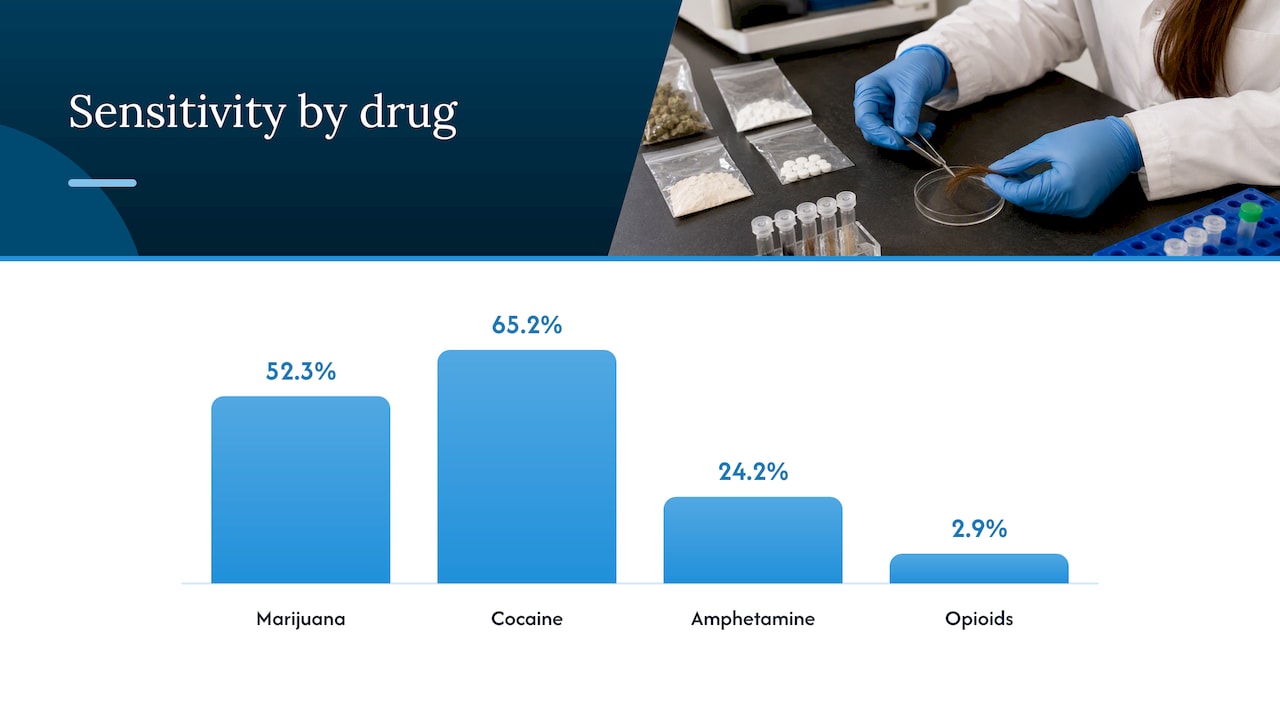
Two cautions apply. The participants were moderate-risk patients, not a job-applicant pool, and self-report is itself imperfect. Still, the pattern is useful: hair testing is better at avoiding false alarms than at catching every instance of use, and it performs differently by drug. Marijuana is the one that most often slips under the thresholds, which is why people with light or infrequent use sometimes test negative and people with heavy use almost never do.
Toxicologists also point out that cutoffs are a tuning decision. Labs balance catching exposure against avoiding costly false-positive confirmations, and the balance point is not identical everywhere. The Society of Hair Testing publishes recommended cutoffs, but as the testing.com overview notes, cutoff values are not standard in all laboratories.
Where false positives come from
External contamination
The biggest scientific objection to hair testing is that drugs can reach the hair from outside the body. Smoke, residue on surfaces and sweat can all deposit material on the shaft. A study on external cocaine contamination found cocaine above 1 ng/mg could remain detectable in hair up to 10 weeks after a single external contamination event, even after standard washing procedures. The authors concluded that current decontamination methods often cannot reliably separate contact from ingestion.
This is why a recent forensic review argues hair analysis is best seen as a screening tool for exposure, not a definitive test of consumption. The National Institute of Justice’s hair analysis report adds that hair results are qualitative indicators and cannot reliably establish the exact time or amount of ingestion.
Practical meaning: if you live or work around smoke or drug residue, a positive does not automatically mean you used. Proving otherwise is hard, which is a real problem for the person holding the result.
Hair color and melanin
Drugs bind differently to different hair. A 2025 review in the Journal of Applied Laboratory Medicine reports that cocaine and certain opiates bind more strongly to eumelanin, which is concentrated in dark hair. In one study cited there, black hair showed a 7-fold higher codeine concentration than brown hair, and 14 to 15 times that of blonde or red hair, at identical dosages.
The same literature describes legal challenges. In a First Circuit case, ten Black plaintiffs challenged the Boston Police Department’s hair testing program, seven of them former officers fired after testing positive for cocaine. If you have dark or coarse hair, a given exposure may produce a higher reading than it would on someone else.
Cosmetic treatment
Bleaching, dyeing and relaxers damage the hair shaft. An older study of cosmetic treatment found these products are strong bases that damage hair, and the research summary we use reports drug concentrations falling by roughly 40 to 60% after treatment. That effect varies a lot, and heavy users can still test positive. Do not treat a dye job as a plan.
Where false negatives come from
The recent-use blind spot. Drugs take days to show up above the scalp. Hair tests typically do not detect use in the past 5 to 10 days, as one detection guide explains, and a fentanyl testing overview says the same about acute or very recent use. That is why employers sometimes pair hair with urine. We compare the two in hair vs. urine tests at work.
Low-dose or occasional use. The Gryczynski data above show how often light marijuana use goes unflagged. Hair is a better tool for repeated use over weeks than for a single event.
Hair that is not scalp hair. If you have little or no head hair, labs can use body hair, which reflects a different and less predictable window. See our notes on body hair drug tests.
Hair, urine and saliva compared
| Feature | Hair | Urine | Saliva |
|---|---|---|---|
| Typical detection window | About 90 days | Days to a few weeks, depending on drug | Short, recent use |
| Catches use in the last week | Usually not | Yes | Yes |
| Easy to adulterate | Hard | Easier | Moderate |
| Main accuracy risks | Contamination, melanin, treatments | Dilution, timing | Short window |
| Dose and timing information | Limited | Limited | Limited |
This table is a simplified summary of the sources above and common testing practice, not a lab specification. Quest Diagnostics-style marketing claims that hair finds more positives than urine are generally true in the sense that a longer window catches more history, and a 2025 review of forensic populations says similar things, but a longer window is not the same as a more precise one.
Our perspective at Macujo
We have worked on hair tests since about 1999, and the accuracy debate looks different from where we sit. The public argument is usually framed as “the test is perfect” against “the test is junk.” Neither matches what we see.
The lab is rarely the problem. What decides outcomes is what is physically in and on the hair on collection day. That depends on your substance, your date of last use, and how often you used in the previous 90 days. Hair is also not uniform. Two people with the same history can read differently.
That is why we built our approach around the individual rather than a one-size answer. Mike’s Macujo Method, introduced in 2018, is a nine-step process designed for high THC levels and other drugs and alcohol, and it is meant to be done with authentic Macujo Aloe Rid Shampoo. The number of washes comes from Mike’s Macujo Required Washes Calculator, which uses the substance, the date of last use and the frequency of use in the past 90 days. When every required wash and direction is completed correctly, we report a success rate better than 99%, and the hair stays clean unless drugs or alcohol are used again. That is our reported figure, not an independent study, and it applies to following the method fully.
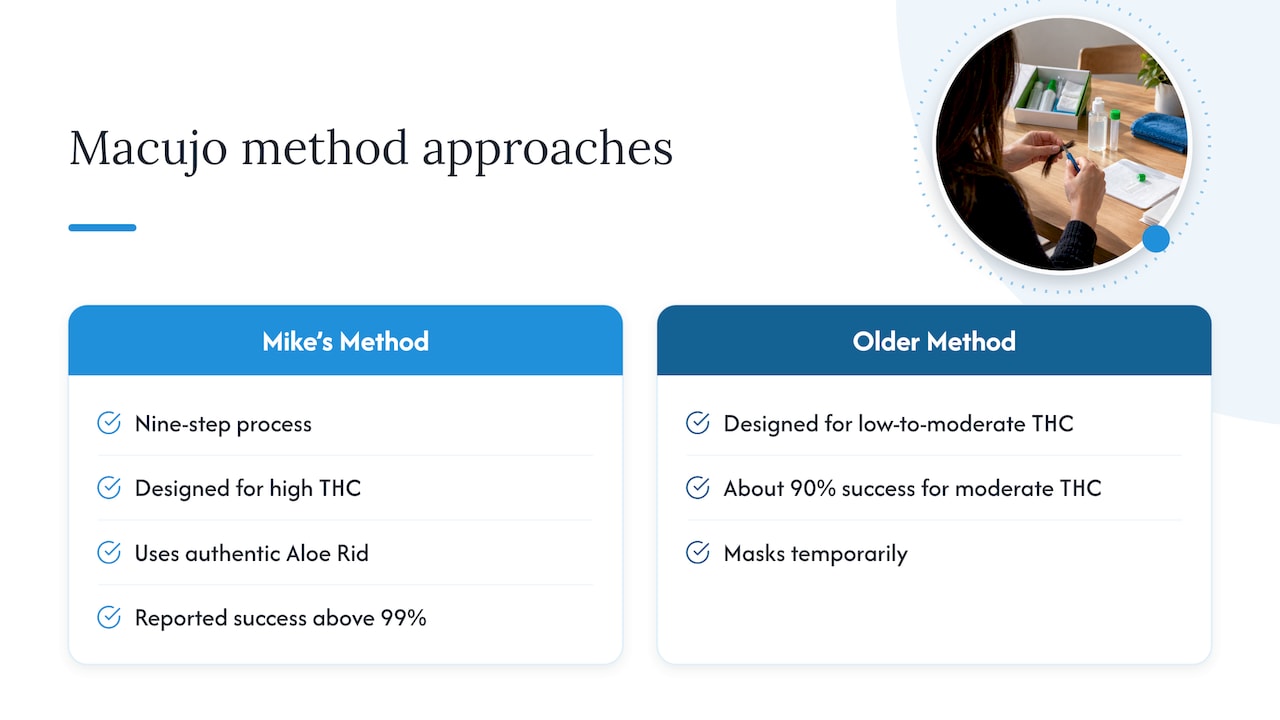
We also keep the older Macujo Method separate in our own minds. It was designed mainly for low-to-moderate THC exposure, we estimate about 90% success for moderate THC, and it only masks temporarily. Mixing the two up is the most common mistake we see.
Our honest advice on accuracy: do not rely on the idea that a lab will catch its own error. Confirmation tells you the compound was present. It does not tell you why. If you are worried, act on the part you control, which is the state of your hair and the timeline.
— MIchael
What to do if you have a hair test coming
- Pin down your timeline. Write down your last use and how often you used in the past 90 days. Our guide on the hair drug test timeline explains what to do when 90 days is not enough.
- Check your hair length. Only the 1.5 inches nearest the scalp are usually cut. If your hair is long, see when long hair actually matters.
- Know which substance is involved. Cutoffs, binding and detection differ by drug. Methamphetamine, for instance, has its own pattern, covered in our methamphetamine hair test timeline.
- Skip shortcuts based on dye or bleach. The effect is variable and unreliable for heavy exposure.
- Get the washes right. Use the required washes calculator and follow each direction. Our guide to passing a hair follicle test lays out the preparation timeline.
- Ask for help early. Questions about your own history are easier to sort out before collection than after.
Work with us before test day
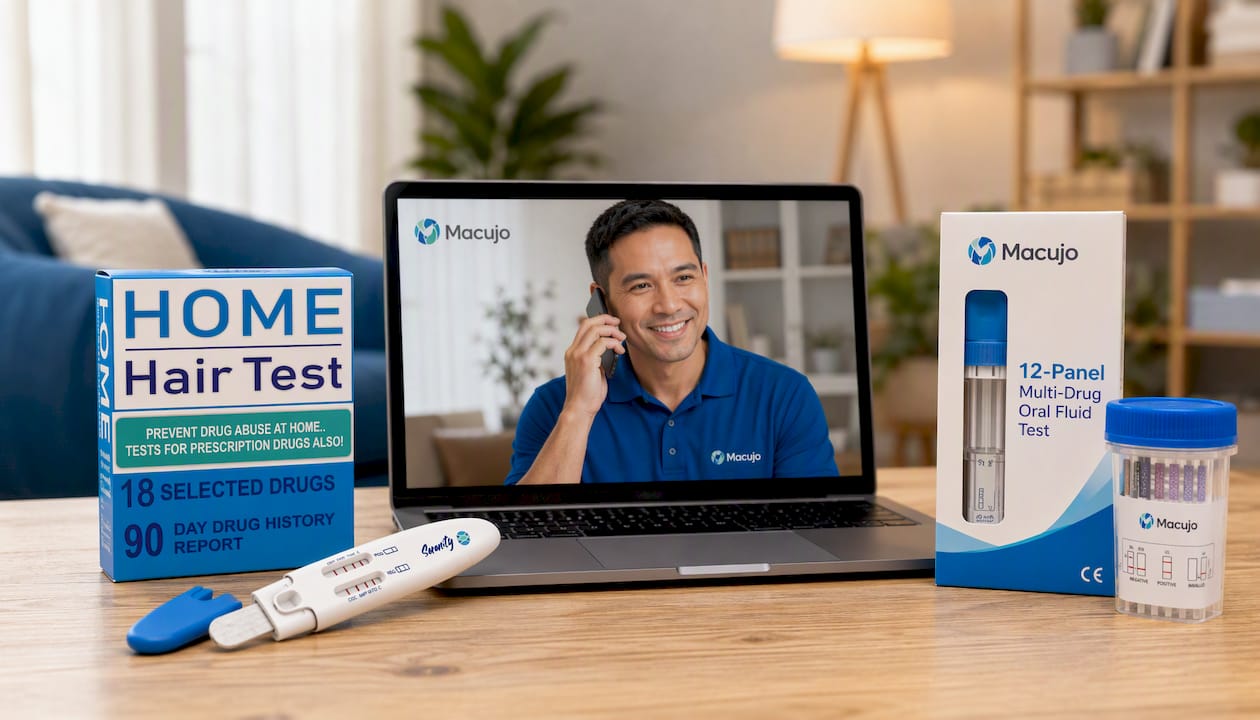
If your test is close, our Macujo Aloe Rid Old Formula Shampoo is listed at $100 to $150 depending on the option, and you can see it on our hair products page. If you want someone to go through your substance, last-use date and 90-day history with you, the Afterhours Personal Consultation is $100. We also carry hair test kits and urine and saliva test products if you want to check where you stand first.
If you already tested positive
A positive is not necessarily the end. Because of the contamination, melanin and treatment issues above, there are real grounds to question a result in some cases, and many employers allow a retest or a review. Request the lab report, find out which compound and concentration were reported, and ask about the retest options. Our page on a failed hair test and the 90-day window walks through verifying and retesting. If the result affects your job, a lawyer who handles employment or drug-testing disputes in your state can tell you what rights you have, since rules differ by state and employer.
FAQ
Can a hair drug test be wrong?
Yes. The confirmation step is analytically strong, but the sample can carry drug from outside the body, and melanin and cosmetic treatment change concentrations. The external contamination research shows washing may not remove all of it. Hair can also miss use, especially low-level marijuana use.
What throws off a hair follicle test?
External contamination, hair color, bleaching or dyeing, and the timing of use all affect results. Use in the last 5 to 10 days usually does not show yet. Body hair, if used instead of scalp hair, reflects a different window.
How long does it take for hair to be clean for a drug test?
A standard test looks back about 90 days, so a full growth cycle covers the sampled 1.5 inches. In practice it depends on your substance, how much you used and what hair is cut. Our timeline guide goes through the cases.
Is hair testing more accurate than urine testing?
It covers a longer period and is harder to cheat, so it flags more people. That is not the same as being more precise. Urine catches very recent use that hair misses, which is why some employers use both.
Sources
- Hair drug testing results and self-reported drug use (Gryczynski et al.)
- Review on Toxicology Testing in Hair, Journal of Applied Laboratory Medicine
- Hair testing for drugs of abuse: external cocaine contamination and false positives
- The forensic limits of hair drug testing
- Hair Analysis for Drugs of Abuse: Final Report, National Institute of Justice
- Influence of the cosmetic treatment of hair on drug testing
- How Long Does THC Stay in Hair Follicle Test?
- Optimization of screening cutoffs in hair testing
- Hair Follicle Drug Test overview, testing.com
- Hair Follicle Drug Testing: Rights and Action Plan in New York
- Fentanyl drug test detection times
- First Circuit decision on hair testing and disparate impact