Last Updated on October 26, 2026
To pass a hair test for amphetamines, you need to know what the lab actually measures, how far back it looks, and whether anything you do to your hair can change that. A standard test covers roughly the last 90 days. Research on products that claim to beat it is mixed at best. A systematic cleansing process matched to your own use history is the approach we have used with customers since about 1999. Below we explain the science first, then the practical steps.
TL;DR
- A standard hair test uses the first 1.5 inches of head hair, which represents about 90 days of history, plus a short delay before newly used drug reaches the surface.
- Only the hair shaft is tested, not the follicle. Collection is observed and the lab washes the sample before analysis.
- Peer-reviewed work shows that some treatments lower amphetamine-type drug levels in hair, but the evidence for commercial products is disputed. No one can honestly promise a result.
- Your last use date, how often you used in the past 90 days, and your hair length all change what you face. Work these out before you choose a plan.
- If a result looks wrong, ask about the medical review step and any prescription you hold before you do anything else.
Table of Contents
- What an amphetamine hair test actually measures
- How the lab collects and tests your hair
- Is there a proven way to pass?
- What can change a result
- Our perspective: why a calculated process beats a guess
- A practical plan for the weeks before your test
- Get help with your own situation
- If you think a result is wrong
- FAQ
- Sources
What an amphetamine hair test actually measures
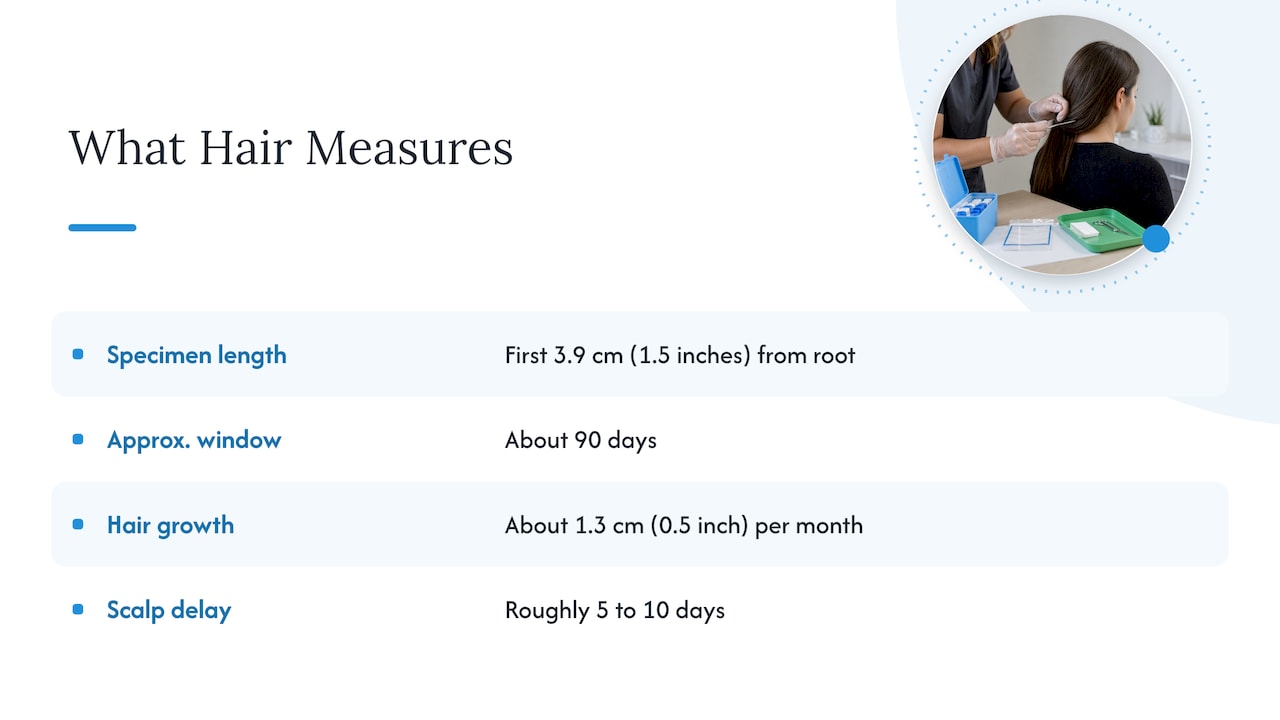
A hair test does not look for impairment. It looks for drug and metabolite molecules that traveled through the blood into the growing hair and stayed there. Quest Diagnostics explains that a standard head-hair specimen is the first 3.9 cm (1.5 inches) from the root, which represents approximately 90 days because head hair grows about 1.3 cm (0.5 inch) per month.
Two details matter for amphetamine users.
The window is approximate. The same source notes a delay of roughly 5 to 10 days before drug-containing hair reaches the scalp surface. That means use in the last week or so may not show in hair at all, which is why employers often pair hair tests with urine. We cover that gap in our guide to hair versus urine tests at work.
It is not a diary. The window does not pin down individual use dates. A lab cannot say “you used on a Tuesday in August.” It can say that the drug was present in hair at or above a cutoff level.
Methamphetamine and amphetamine are the drugs most people mean in this search. Methamphetamine is partly metabolized to amphetamine, so a lab looks for both. For a closer look at timelines for methamphetamine specifically, see our page on the methamphetamine hair test timeline.
How the lab collects and tests your hair
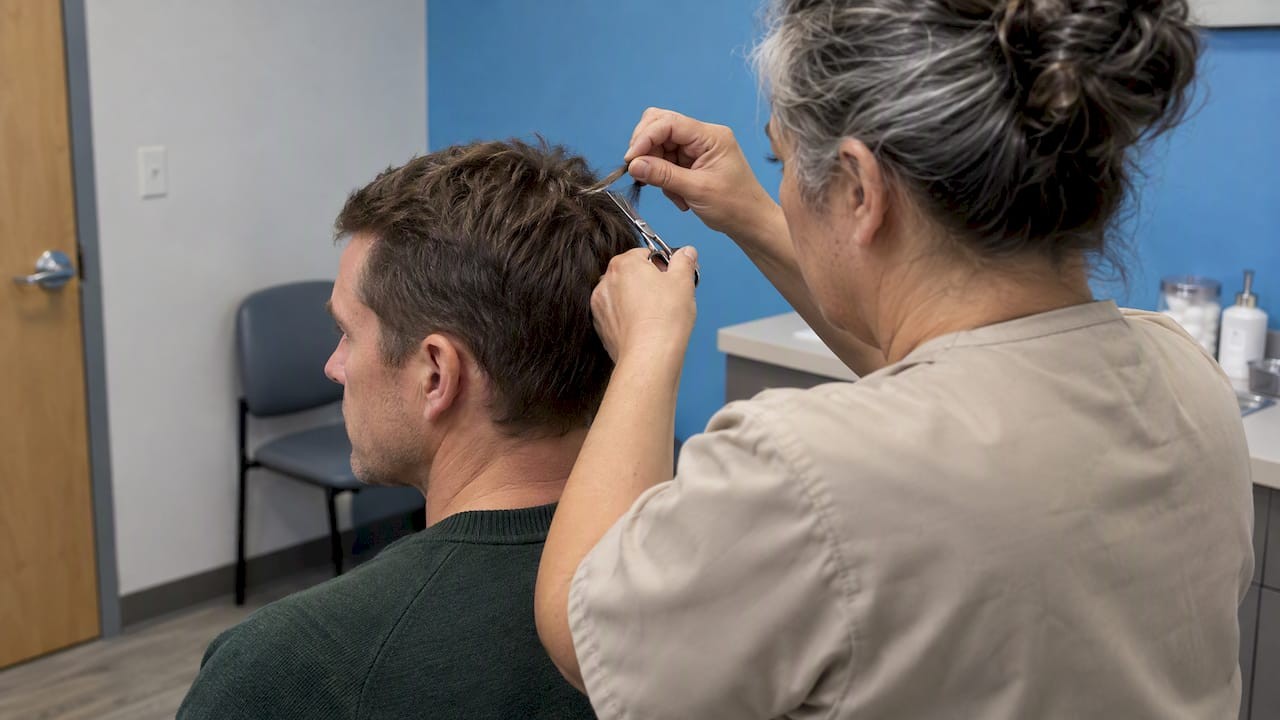
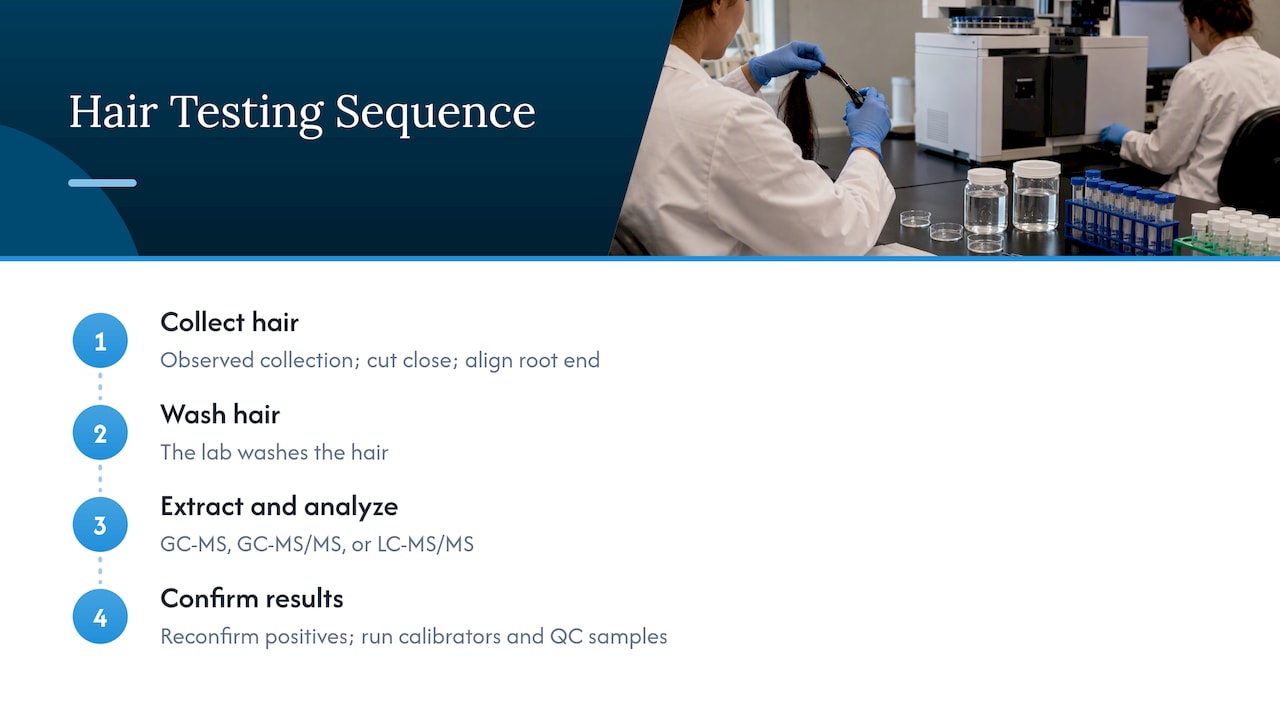
Knowing the process removes a lot of myths. According to Quest’s description, hair is collected under direct observation and cut as close to the scalp as possible. The aligned root end is used, and only the shaft above the scalp, not the follicle, is tested. The lab then washes the hair, extracts the drugs, and analyzes them by GC-MS, GC-MS/MS, or LC-MS/MS. Presumptive positives are reconfirmed, and calibrators and quality-control samples run alongside.
The phrase “hair follicle test” is a misnomer. Quest says routine collection tests the shaft, not the follicle, because true follicle sampling would require plucking. That is why people ask whether shaving works. It generally does not help in practice: if head hair is unavailable, collectors can move to body hair, which has its own timeline. We explain that in our body hair guide.
For a fuller walk-through, our article on how hair drug testing works covers collection, washing and confirmation in plain language.
What the lab’s own wash step means for you
Labs wash hair before extraction to remove surface contamination. That is why a positive is meant to reflect drug taken into the body, not drug that landed on the outside. Metabolite analysis helps here too: a peer-reviewed review notes that parent-drug detection raises contamination concerns and discusses metabolites as a way to better support interpretation of intake, including for amphetamines.
The practical point: a basic rinse before the test will not get you anywhere. The lab already does one.
Is there a proven way to pass?
Honestly, the evidence is split, and you should hear both sides.
A 2017 peer-reviewed review found the evidence for commercial products marketed to evade hair testing is mixed but, when source quality is considered, generally disputes their efficacy. It adds that apparent successes may come from cutoffs, light or infrequent use, or interpretation issues rather than the product.
On the other side, a 2023 experimental study found that selected homemade treatments reduced drug concentrations in treated hair, with mean decreases of up to 76% for methamphetamine and 80% for MDMA. A mean decrease is not the same as a negative result. If your starting level is high, a 76% reduction can still leave you above the cutoff. If it is low, it may put you under.
Put those together and you get the real picture:
| Factor | Helps your chances | Hurts your chances |
|---|---|---|
| Use pattern | One-off or light use | Daily or heavy use |
| Time since last use | Many weeks | Days |
| Hair treatment | Prior bleaching or dyeing may lower levels | Untreated, healthy hair holds drug well |
| Method | Repeated, structured cleansing matched to exposure | One-time rinse or a single product |
| Hair length | Short hair with little history | Full 1.5 inches of history |
No checklist makes this guaranteed. Anyone who promises 100% is selling you certainty the research does not support.
What can change a result
A 2025 review in the Journal of Applied Laboratory Medicine lists many things that affect how a hair result is read: collection site and completeness, growth variability, hair color, contamination, decontamination, extraction and cosmetic treatment, among others. The same review reports that collectors left an average of 0.8 cm of hair on the scalp, ranging from 0.1 to 3 cm, so the cut end may not be the true time zero.
That helps explain why two people with similar use can get different results. Hair color matters too, because drug binds more readily in darker, melanin-rich hair.
Cosmetic treatments
A 2023 review in Clinical Biochemistry states that bleaching, dyeing, chemical straightening, perming, ultraviolet exposure and other treatments can reduce concentrations or increase leaching. It also says the size of the effect depends on drug stability, starting concentration, the hair matrix and structural damage. And it says no standardized routine workflow reliably detects every cosmetic or cleansing treatment.
Two cautions follow. First, damaged hair is not a free pass: treatment effects are unpredictable, and a lab may note signs of alteration. Second, do not stack harsh chemicals on your own. Our page on dyed hair and hair drug tests goes through what bleach can and cannot do.
Hair length
If your hair is longer than 1.5 inches, the lab typically takes the section nearest the scalp. Long hair does not extend the standard window, though it can matter if collection is unusual. See when long hair actually affects a drug test.
Our perspective: why a calculated process beats a guess
We are Macujo, and we have helped people prepare for hair tests since approximately 1999. Over that time we have learned what separates people who walk in confident from people who guess.
The biggest mistake we see is treating every test the same. A person who used once, six weeks ago, faces a very different situation from someone who used heavily for three months and last used ten days ago. A single shampoo bottle and a hopeful attitude does not fit both.
That is why Mike’s Macujo Method, introduced in 2018, is a systematic nine-step process. It must be completed with authentic Macujo Aloe Rid® Shampoo, and the number of required washes comes from Mike’s Macujo Required Washes Calculator. The calculator uses three inputs: the substance, the date of last use, and how often you used during the previous 90 days. When every required wash and direction is completed correctly, we report a success rate better than 99%, and the hair stays clean unless drugs or alcohol are used again.
We want to be plain about two things. That figure is our own reported result for people who follow the method completely, not a result from independent trials. And it is not the same as the old Macujo Method, which was designed primarily for low-to-moderate THC exposure and gave only temporary masking, with an estimated success rate around 90% for moderate THC. If you see the older method described online, it is not the current standard.
Independent research is more cautious than we are about the category as a whole, and you should know that before you spend money. Our view is that the cautious findings are one more reason to follow a structured method exactly rather than improvise. Skipping washes, changing products, or washing on the wrong schedule is where most failures come from.
— MIchael
A practical plan for the weeks before your test
- Confirm the test type. Ask the employer or collection site whether it is hair, urine, saliva or a combination. A hair test alone will not catch last-week use because of the surface delay, but a urine test will. Read about that gap before you decide.
- Write down your history. Note the substance, the date of last use, and how often you used in the past 90 days. Be honest with yourself: the plan is only as good as the inputs.
- Check your hair. Measure the length at the crown. Note any bleach, dye or perm. These change both the risk and the approach.
- Get your wash count. Enter your details into the required-washes calculator rather than picking a number from a forum.
- Complete every step on schedule. Partial completion is the usual cause of a failed attempt.
- Stop using. Any new use after cleansing puts drug back in new hair growth.
- Think about timeline limits. If your last use was very recent or heavy, read when 90 days isn’t enough and talk to someone about options such as rescheduling where possible.
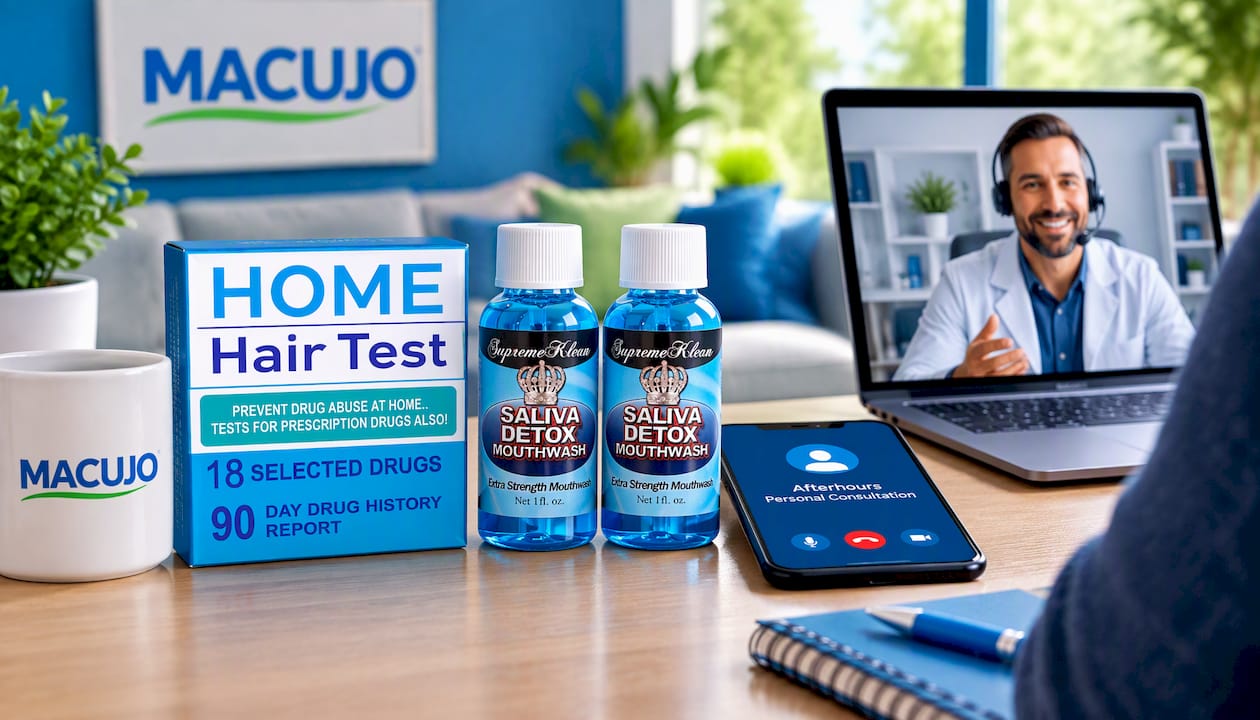
If you are not sure whether you are at risk at all, a home hair test kit can give you a read on your own sample before the official one.
Get help with your own situation
General guidance only goes so far. Our Aloe Rid shampoo line is listed at 100 to 150 USD depending on the product, and the Macujo Aloe Rid Old Formula Shampoo page shows what is available. If your history is complicated, such as heavy use, recent use, treated hair, or a test coming up fast, our Afterhours Personal Consultation is 100 USD one-off and puts you on the phone with an expert who can walk through your numbers. We also stock urine and saliva test products on the Macujo home page if your employer may use more than one specimen.
If you think a result is wrong
This is the part most guides skip. Hair results are not infallible, and there are legitimate reasons a result may not mean what you think.
Prescription amphetamines. Medications for ADHD or other conditions can produce a positive on standard panels. In a typical workplace process, a laboratory confirms a presumptive positive and a Medical Review Officer contacts you first. According to one HR compliance explainer, the MRO review lets you present your prescription so the result can be reclassified. Bring your prescription details and pharmacy record to that call, and answer the MRO’s call promptly, because it comes before the employer hears anything.
Interpretation limits. The Society of Hair Testing’s 2023 consensus supports standardized collection, analysis and interpretation rather than treating hair concentration as a direct measure of dose. If your result is borderline or does not match your history, ask the MRO about the cutoff used and whether metabolite criteria were applied.
Process questions. Ask who collected the sample, how much hair was taken, and whether the chain of custody was documented. For an employment dispute, an employment attorney in your state is the right professional to see, since rules differ by state and by whether the test is federally mandated.
FAQ
How long do amphetamines stay detectable in hair?
A standard 1.5-inch head-hair sample reflects about 90 days of history, after a delay of roughly 5 to 10 days before newly used drug reaches the surface. The window is approximate, and the lab cannot give exact use dates. Our methamphetamine timeline page looks at what one study found at the 90-day mark.
Is there a way to bypass a hair follicle test?
The published evidence is mixed. A 2017 review generally disputes commercial products, while a 2023 experiment found some treatments cut methamphetamine levels by up to 76% on average. Results depend on your starting level, the cutoff and the method. Nobody can guarantee an outcome.
What can throw off a hair test?
Collection site, hair color, growth rate, contamination, cosmetic treatment and the lab’s own cutoffs all affect how a result is read. Bleaching and dyeing can lower drug levels, but the size of the effect varies. A valid prescription can also explain a positive and is handled at the medical review step.
Does shaving or using short hair help?
It does not erase your history in a predictable way. Collectors may use body hair if head hair is unavailable, and body hair can reflect a longer period. Our guide to body hair testing explains the differences.
Sources
- Hair testing FAQ, Quest Diagnostics
- Hair drug screening facts and information, Quest Diagnostics
- Drugs in hair. Part I. Metabolisms of major drug classes
- Hair analysis for the detection of drug use: is there evidence for products that evade it? (2017)
- Hair analysis: assessment of homemade hair treatment (2023)
- Review on toxicology testing in hair, Journal of Applied Laboratory Medicine (2025)
- Advances in testing for sample manipulation, Clinical Biochemistry (2023)
- Society of Hair Testing consensus on general recommendations (2023)
- Consequences of a failed drug test: options for employers