Last Updated on October 22, 2026
People who search “hair test success rate” usually mean one of two things: how often a hair drug test correctly catches drug use, or how often a person who prepares for one passes. The honest answer to the first is “quite often, for regular use, and much less for a single recent use.” The answer to the second depends on the substance, how recently and how often you used, and whether every step of a method was done correctly. We cover both below, including our own numbers and where they come from.
TL;DR
- A hair test is built to catch repeated use over roughly the past 90 days, not a single use or use in the last week.
- Lab hair analysis is a two-step process (screen, then confirmation), but it is not perfect: environmental contamination, hair color and cosmetic treatment can all affect results.
- Success claims for any cleansing product are hard to verify independently, because people who fail rarely report back online.
- Our reported success rate for Mike’s Macujo Method is better than 99% when every required wash and direction is completed correctly. The old Macujo Method was about 90% for moderate THC and was only temporary masking.
- Your number of required washes depends on substance, date of last use and frequency over the previous 90 days. Calculate it before you buy anything.
Table of Contents
- What “success rate” means for a hair test
- How accurate is a hair drug test?
- Hair versus urine: which catches more?
- Why passing rates are so hard to verify
- The Macujo success rates, explained
- What actually moves your odds
- Our perspective on success rates
- If you have a hair test coming up
- Getting the right kit or talking to us
- Frequently asked questions
- Sources
What “success rate” means for a hair test
There are two separate questions hiding in this keyword.
Test accuracy. How reliably does the laboratory identify drug use that actually happened? Researchers measure this with sensitivity (how many true users the test catches) and specificity (how many non-users it correctly clears). SAMHSA’s guide to clinical drug testing explains both measures and notes that laboratory tests and point-of-care tests are evaluated for reliability this way.
Passing rate. How often does a person who is facing a test come out negative? That depends on the person, not only the test. It is also the figure most prone to hype, which is why we treat it separately further down.
How accurate is a hair drug test?
Hair analysis is a forensic procedure, not a quick screen. According to SAMHSA, it involves breaking down the hair matrix to release entrapped drug compounds, so it can only be done in a specialized laboratory. There are no valid point-of-collection hair kits that give an immediate result.
Most labs use two steps. A rapid immunoassay screen comes first, and any positive is retested with a confirmatory method such as gas chromatography-mass spectrometry. If the confirmation does not support the screen, the result is reported negative. That design makes false positives from the lab chemistry uncommon.
The weak points are elsewhere:
- Recent use. Drug metabolites need time to reach the hair shaft as it grows from the scalp. SAMHSA notes hair is not suited to detecting use within about the last 7 to 10 days. Someone who used yesterday can test negative on hair and positive on urine.
- Quantity and timing. Drug concentration in hair does not map neatly onto how much was used, because sweat, growth rate and metabolism vary between people. A hair result shows a broad pattern, not an exact date or dose.
- External contamination. Drugs in the environment can settle on hair. Labs wash samples, but they cannot always tell environmental exposure from ingestion.
- Hair characteristics. Melanin content and cosmetic treatment matter. Cocaine binds more readily to darker hair, and bleaching can reduce drug content while damaging the hair.
So a hair test is strong at what it is designed for. SAMHSA describes it as most suited to detecting chronic or frequent use over a long period, and the standard window is about 90 days, corresponding to roughly 1.5 inches of hair at about half an inch per month.
What the 90-day window means in practice
If your hair is cut to 1.5 inches near the scalp, the lab is reading about three months of history. Shorter hair means a shorter window. Longer hair does not usually extend the analysis, because most labs test only the segment closest to the scalp. For a deeper look at timelines, including cases where 90 days is not the full picture, see our guide on when 90 days isn’t enough for a hair drug test timeline.
Hair versus urine: which catches more?
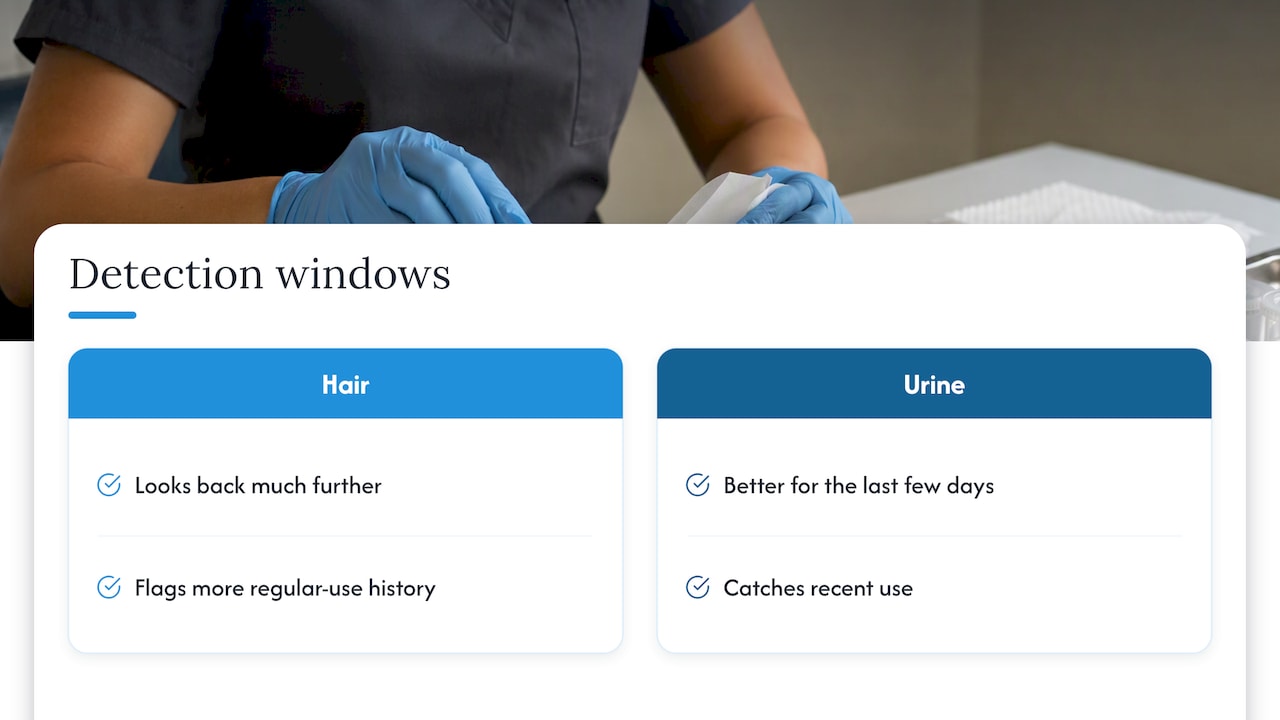
Hair tests look back much further than urine, so for the same population they tend to flag more people with a history of regular use. Urine, in contrast, is better at catching use in the last few days. Employers who want both pictures sometimes run both. We compare the two in Hair vs. urine tests at work, including why recent use can slip through a hair test.
One point trips up many applicants working in regulated jobs. Federal workplace testing under the Department of Transportation does not use hair. DOT rules authorize urine and oral fluid specimens only. A private employer can still choose a hair test for its own screening, which is why many job applicants meet one. Our page on the DOT hair follicle testing policy goes through the pre-employment details.
Why passing rates are so hard to verify
Search any forum and you will see confident claims that some shampoo or routine “works every time.” Treat those with caution. A 2017 review in Human Psychopharmacology on whether hair analysis can be evaded points out that it is problematic to establish effectiveness from user feedback alone, because some drug use goes undetected anyway, with no method involved.
There is also a selection effect. A person who passes is happy to post. A person who fails is far less likely to come back and say so. Any success figure built from reviews will therefore look better than reality, whoever publishes it.
This applies to us too. When we quote a success rate, you should know what it is and what it is not:
- It is our reported rate for customers who completed the method.
- It is not the result of an independent clinical trial.
- It depends on following every required wash and direction.
That is the context we think a number like this needs.
The Macujo success rates, explained
Two methods carry our name, and they are not the same.
| Old Macujo Method | Mike’s Macujo Method | |
|---|---|---|
| Introduced | Original method, in use since about 1999 | 2018 |
| Designed for | Low to moderate THC exposure | High THC levels, plus other drugs and alcohol |
| Reported success | About 90% estimated for moderate THC | Better than 99% when every required wash and direction is followed |
| Effect | Temporary masking | Hair stays clean unless drugs or alcohol are used again |
| Wash count | Fixed routine | Set by the Required Washes Calculator |
Mike’s Macujo Method is a systematic nine-step process that must be done with authentic Macujo Aloe Rid® Shampoo. The figure is conditional by design. If a wash is skipped, shortened or done with a different product, the 99% figure no longer describes your situation.
The old method was always meant for lighter exposure. It is why people who search for the “Macujo method success rate” sometimes find confusing numbers: a figure of about 90% belongs to the older, temporary approach for moderate THC, while the better-than-99% figure belongs to the 2018 method.
What actually moves your odds
Whether you use our method or not, these factors decide how a hair test goes.
- Substance. THC, cocaine, opioids, amphetamines and alcohol markers behave differently in hair. Heavy cocaine use, for example, is a different problem from occasional THC.
- Date of last use. Recent use is less likely to show on a hair test at all, but it will show in the weeks that follow as hair grows out.
- Frequency over the previous 90 days. This is the main driver of how much is in the hair. Daily use is not the same as a few uses.
- Hair color and treatment. Darker hair can hold more of some drugs. Bleach and dye change the picture and can damage the strand.
- Following the directions exactly. Cleansing methods fail most often through shortcuts, not through the product.
Our Required Washes Calculator takes the first three factors, the substance, the date of last use and frequency of use during the previous 90 days, and returns the number of washes for Mike’s Macujo Method. Guessing the wash count is the most common mistake we see.
Our perspective on success rates
We have been helping people prepare for hair follicle tests since about 1999, and the pattern is consistent. People ask “what is the success rate?” when the better question is “what is the success rate for someone in my exact position?” A light, infrequent user and a heavy daily user are not facing the same test, even though the lab report looks the same.
That is why we built Mike’s Macujo Method around a calculator rather than a one-size routine. The 2018 method came from seeing the old method fall short for high THC levels and for other drugs and alcohol. We would rather tell you the old method was only temporary masking than let you rely on it for a heavy-use case.
We also think you should be skeptical of anyone, us included, who offers a perfect-sounding number with no conditions. Our figure is better than 99% when every required wash and direction is done correctly, and we say it that way on purpose. If you are unsure about your case, call us. Our consultations exist so you do not have to guess.
— MIchael
If you have a hair test coming up
Here is a sensible order of operations.
- Find out the test type and date. Confirm it is a hair test and not urine or saliva. Ask the employer or collection site what they require, such as the hair length and where it is taken.
- Work out your 90-day history honestly. Substance, last use and frequency are what the calculator needs.
- Run the calculator to get your required number of washes.
- Get the right product and read the instructions fully. Mike’s Macujo Method requires authentic Macujo Aloe Rid® Shampoo. Look-alikes are not the same thing.
- Complete every step on schedule. Do not drop washes because your hair looks or feels fine.
- Avoid further use. The hair stays clean only unless drugs or alcohol are used again.
For the complete walk-through, see how to pass a hair drug test every single time. If you want to understand the lab side first, our pages on how hair drug testing actually works and all about hair drug testing cover it in plain language.
Body hair and edge cases
If you have little or no head hair, labs may accept body hair, but it grows differently and timelines are less clear. That is covered in our article on eyebrow hair drug tests.
If you already failed
A failed hair result is not necessarily the end. The 90-day window and the option to retest matter, and we explain how to verify a result and plan a retest in what to do after a failed hair test.
Getting the right kit or talking to us
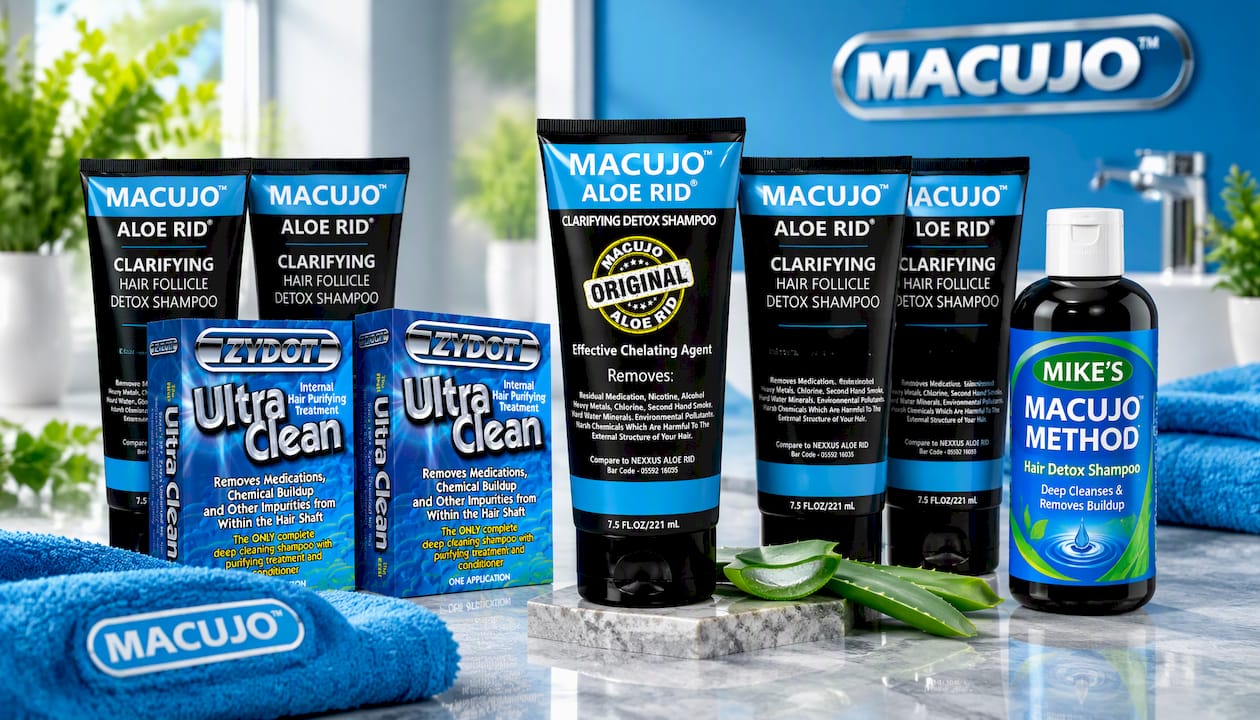
If you have a test coming up, the quickest way to turn a general success rate into a plan for your case is to start with our kit and the calculator. Our current Mike’s Macujo Method product is the Macujo Aloe Rid 7.5oz with Zydot Ultra Clean Shampoo, and a two-set version is available for larger needs. Our Macujo Aloe Rid Old Formula Shampoo is listed at $100 to $150.
If you would rather talk it through, the Afterhours Personal Consultation is $100 and puts you on the phone with our experts when your situation does not fit a simple answer. We also stock test kits and detox products for urine and saliva tests through our shop.
Frequently asked questions
How reliable are hair tests?
Hair tests are reliable for detecting repeated drug use over roughly the past 90 days, and labs confirm screening positives with a second method. They are less reliable for single or very recent use, and external contamination or hair characteristics can affect results. They are not designed to pinpoint an exact date or dose.
How far back can a hair drug test detect?
Most labs analyze about 1.5 inches of hair closest to the scalp, which corresponds to about 90 days. Longer hair could in theory hold a longer history, but standard employment tests usually stop at the 90-day segment. Use from the last week or so may not show yet.
What is the Macujo method success rate?
We report better than 99% for Mike’s Macujo Method when every required wash and direction is completed correctly with authentic Macujo Aloe Rid® Shampoo. The older Macujo Method had an estimated success rate of about 90% for moderate THC and was only temporary masking. Neither figure is an independent clinical trial result.
Can a hair test give a false negative?
Yes. Recent use may not have reached the hair yet, and hair color, treatment and body hair can change what a lab finds. A negative hair result therefore does not prove there was no use, which is also why hair tests and urine tests can disagree.
Does the DOT use hair tests?
No. Under federal DOT rules, only urine and oral fluid specimens are authorized. Hair testing is something private employers choose for their own policies.
Sources
- Clinical Drug Testing in Primary Care, SAMHSA
- Hair analysis for the detection of drug use: is there potential for evasion? Human Psychopharmacology
- DOT 49 CFR Part 40, Section 40.210
- Hair follicle drug test: how it works, what to expect, and accuracy, Medical News Today