Last Updated on September 23, 2026
Abstinence and time are the only dependable way to pass a saliva drug test. Nothing else guarantees it. Short-notice oral cleaning and a correctly timed detox mouthwash can lower surface residue and help in borderline cases, but they’re not a fix. Collectors watch the swab go into your mouth, and labs confirm results with LC-MS/MS, so masking attempts that get flagged can be treated the same as a positive.
TL;DR:
- Staying clean for at least 12 hours, avoiding mouth residue buildup, and timing surface rinses precisely improve chances of passing a saliva drug test.
- Detox mouthwashes and natural saliva stimulation work temporarily and must be used within their labeled peak windows for effectiveness.
- Detection windows for substances in saliva range from five to 48 hours, with heavy use extending the upper limits, especially for THC and methamphetamine.
- Attempts to adulterate samples with bleach, peroxide, or food myths can backfire, as collection protocols flag tissue damage or suspicious items as refusals or positives.
- Honest communication and proper pre-test hygiene are safer than aggressive hacks, especially for legal or employment-related testing situations.
Table of Contents
- How a Saliva Drug Test Works, From Swab to Lab Result
- How Long Do Drugs Stay Detectable in Saliva?
- What Actually Changes Your Saliva Test Result?
- Your Hour-by-Hour Plan Before a Saliva Swab Test
- Where Mouthwashes, Gums, and Self-Test Kits Actually Fit
- Why Bleach, Peroxide, and “Home Remedy” Hacks Backfire
- Publisher Background and When to Call for Help
- Legal and Workplace Consequences You Should Know Before Testing
- Common Myths About Saliva Detox, Debunked
- A Straight Answer on Safety and Honesty
- Get Ready for Your Saliva Test With Products Built for the Task
- Sources
- FAQ
How a Saliva Drug Test Works, From Swab to Lab Result
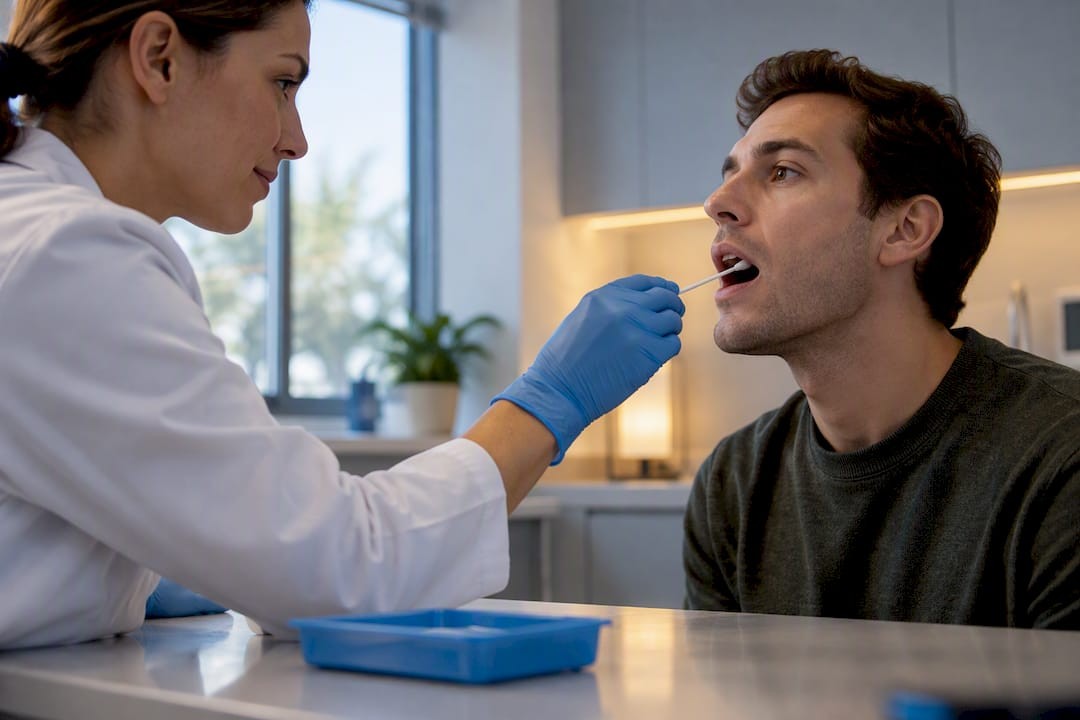
A saliva (oral fluid) test starts with a collector, not a machine. The collector places an absorbent pad or swab against your cheek, gumline, or under your tongue and asks you to keep it there while saliva soaks in. This happens under direct observation, and Labcorp’s collection protocol requires a mandatory wait period, typically around 10 minutes, along with built-in sample-adequacy indicators that confirm you’ve provided enough fluid before the swab is sealed.
That 10-minute wait matters more than most people realize. It exists specifically to let fresh saliva regenerate after you’ve had a chance to rinse your mouth right before the test, which is exactly the window a detox mouthwash needs to survive.
Once collected, the sample usually goes through two stages:
- Point-of-collection screening gives a quick preliminary result, sometimes in minutes, using immunoassay strips.
- Laboratory confirmation with LC-MS/MS follows for any non-negative screen, and this method is far harder to fool than a rapid test, according to a review of oral fluid testing methods.
Oral fluid testing exists to catch recent use, not a history of use. Drugs show up in saliva mainly through local deposition in the mouth after use, plus some transfer from the bloodstream, which is why detection windows run in hours rather than the days or months you’d see with urine or hair testing. That short window is the whole reason people search for last-minute saliva detox methods in the first place.
How Long Do Drugs Stay Detectable in Saliva?
Detection windows in saliva are short compared to other test types, but they vary a lot by drug and by how much and how often you use. Oral fluid testing research puts most substances in a 5 to 48 hour window, versus 1 to 7 days for urine and up to 90 days for hair follicle testing.
| Substance | Occasional Use | Heavy or Daily Use |
|---|---|---|
| THC (marijuana) | Within about one day | Possibly longer with heavy use |
| Cocaine | 5 to 48 hours | Up to 48 hours |
| Amphetamines | 5 to 48 hours | Up to 48 hours |
| Methamphetamine | Within about one to one-and-a-half days | Possibly longer with heavy use |
| Opioids | 5 to 48 hours | Up to 48 hours |
| Benzodiazepines | 5 to 48 hours | Up to 72 hours |
| Alcohol | 12 to 5 to 48 hours | Up to 5 to 48 hours |
These are estimated ranges, not fixed cutoffs. Heavy or chronic use pushes detection toward the longer end of each range because more of the drug and its metabolites accumulate in oral tissue and saliva glands over repeated use.
The device itself also changes the effective window. A test with a lower cutoff level (say, 20 ng/mL versus 50 ng/mL for THC) will flag lower concentrations, which functionally extends how long it can catch you. This is one reason two people with similar use patterns can get different results on different test panels. It’s also why nobody can promise you an exact “safe” hour. The best you can do is treat the upper end of these ranges as your real deadline.
What Actually Changes Your Saliva Test Result?
Some factors you can influence in the hours before a test. Others you can’t, and pretending otherwise wastes time you don’t have.
Controllable factors:
- Saliva flow rate, since more dilute saliva can lower detectable concentration
- Residue sitting on your tongue, cheeks, and gumline, which is often the single biggest source of a positive
- Recent food and drink, particularly anything acidic, oily, or high in fat that clings to oral surfaces
- Smoking or vaping right before the test, which redeposits drug residue directly onto the tissue being swabbed
Factors outside your control:
- Mouth trauma or bleeding gums, which can alter fluid composition and sometimes trigger a retest
- Secondhand smoke exposure in enclosed spaces
- Certain prescription medications that can affect saliva production or trigger a legitimate positive on a screen
Collectors are trained to notice red flags: unusual mouth odor, visible residue, items being placed in the mouth, or repeated failed sample-adequacy checks. A flagged sample doesn’t just get you a retest. Depending on the employer or agency’s policy, it can trigger a direct observation retest, a switch to a different test type, or escalation as a suspected refusal. That’s a meaningfully worse outcome than a straightforward negative, so anything that draws attention during collection works against you even if the swab itself had come back clean.
Your Hour-by-Hour Plan Before a Saliva Swab Test
If you have advance notice, use every hour you’ve got. This is not a guarantee. It’s damage control aimed at reducing surface residue in the mouth, which is the main thing a saliva test actually measures.
- 12+ hours out: stop everything. No more use, no more exposure to smoke. Every hour that passes now works in your favor because it’s the only variable with real, sourced backing behind it.
- 12+ hours out: hydrate on a steady cadence. Aim for roughly one glass of water per hour rather than chugging a large amount at once, which just gets you frequent bathroom trips without meaningfully changing oral residue.
- 12+ hours out: start a real oral hygiene routine. Brush your teeth, tongue, and the inside of your cheeks, not just your teeth. Floss along the gumline where the swab actually gets placed.
- 8 to 4 hours out: repeat the deep clean. Brush again, focusing on the tongue’s surface and the pockets between your gums and cheeks, since that’s precisely where collectors swab.
- 8 to 4 hours out: chew sugar-free gum or sour candy. This stimulates saliva production, which naturally flushes the mouth with fresh fluid. Xylitol gum works well and has the side benefit of not drying out your mouth the way some products do.
- 8 to 4 hours out: eat a normal, balanced meal. Skip anything heavily oily or acidic that lingers on oral surfaces, and avoid anything that dries your mouth out, including excess caffeine.
- 2 hours out: do a final plain water rinse. Swish thoroughly and spit, focusing on your gumline and under your tongue.
- 30 to 60 minutes out: use a detox mouthwash only within its labeled peak window. Research on oral fluid adulterants suggests these products work mainly by rinsing away surface residue rather than chemically neutralizing anything, so timing it exactly per the label matters more than the brand you choose.
- 30 minutes out: avoid alcohol-based mouthwash. Alcohol dries oral tissue, which can reduce saliva flow right when you want it highest, and it can also leave a smell that draws a collector’s attention.
- 30 minutes out: no food, gum, or colored drinks. Sample-adequacy checks and visible residue are exactly what collectors are trained to catch during that final stretch.
Pro Tip: Timing is the whole game with a rinse. The mandatory pre-collection wait period exists specifically so any product used too early gets diluted out by newly produced saliva, which is why a mouthwash used two hours ahead does almost nothing useful. If you want a real read on where you stand before your appointment, run an at-home oral fluid screening kit the hour before to check your own status rather than guessing.
Where Mouthwashes, Gums, and Self-Test Kits Actually Fit
Every product in this category does one of two jobs: it clears surface residue from oral tissue, or it tells you what a lab is likely to find before you’re actually sitting in the collection chair. Neither job is magic, and understanding which is which keeps you from wasting your last hour on the wrong step.
Detox mouthwashes and specialty rinses work by flushing the mouth, not by breaking down drug compounds chemically. A review of common adulterants found their real effect is dilution and rinsing, which is why timing use inside the product’s stated peak window matters more than which brand sits on the shelf.
- (2 Pack) Supreme Klean Saliva Detox Mouthwash is built for that final pre-test window. Use it per the label in the 30 to 60 minute stretch before collection, not hours ahead, since its effect is temporary and tied to fresh oral clearing.
- Xylitol gum or sour candy stimulates natural saliva flow in the hours leading up to a test, supporting the mouthwash rather than replacing it.
Home test kits and official lab collection aren’t interchangeable. A rapid home screen uses the same basic immunoassay technology as a point-of-collection test, but it lacks the confirmatory step a lab runs on a non-negative result. Treat a clean home test as useful information, not a certificate.
Why Bleach, Peroxide, and “Home Remedy” Hacks Backfire
Most saliva detox shortcuts circulating online range from useless to genuinely dangerous, and the ones that feel aggressive are usually the riskiest.
- Hydrogen peroxide and bleach irritate and inflame oral tissue, and collection protocols include checks for unusual pH, odor, or visible tissue damage that can flag a sample as adulterated rather than simply diluted.
- Regular mouthwash and casual rinsing don’t outperform plain water by much, since adulterant studies show most products work through the same basic rinsing mechanism regardless of marketing claims.
- Poppy seed and food myths that apply to urine testing don’t translate to saliva. Oral fluid detects drug residue in the mouth itself, not metabolic byproducts from something you ate.
Federal collection guidance treats attempts to adulterate a sample, or items found in a donor’s mouth during collection, as grounds for a refusal-to-test determination. In most employment and legal contexts, a refusal carries the same consequences as a confirmed positive, sometimes worse, because it also raises suspicion of deliberate concealment.
Publisher Background and When to Call for Help
The company behind this guidance has years of experience helping people prepare for drug tests, including through methods developed for hair cleansing. That background in hair testing carries over into how Macujo approaches saliva testing: with realistic expectations, not miracle claims.
For oral fluid tests specifically, Macujo offers detox mouthwash, an at-home screening kit, and a detox drink through its saliva test product line. These products handle the mechanical side, cleaning surfaces and giving you a pre-check reading.
When the stakes are higher (court-ordered testing, probation, or a job offer riding on the result), a scripted checklist stops being enough. That’s when a paid consultation with someone who’s walked through hundreds of these situations is worth the cost.
Legal and Workplace Consequences You Should Know Before Testing
Saliva testing has become common in safety-sensitive industries, roadside impairment checks, and pre-employment screening because it’s fast, cheap, and directly observed. That directness is also what makes it legally different from a urine test in practice.
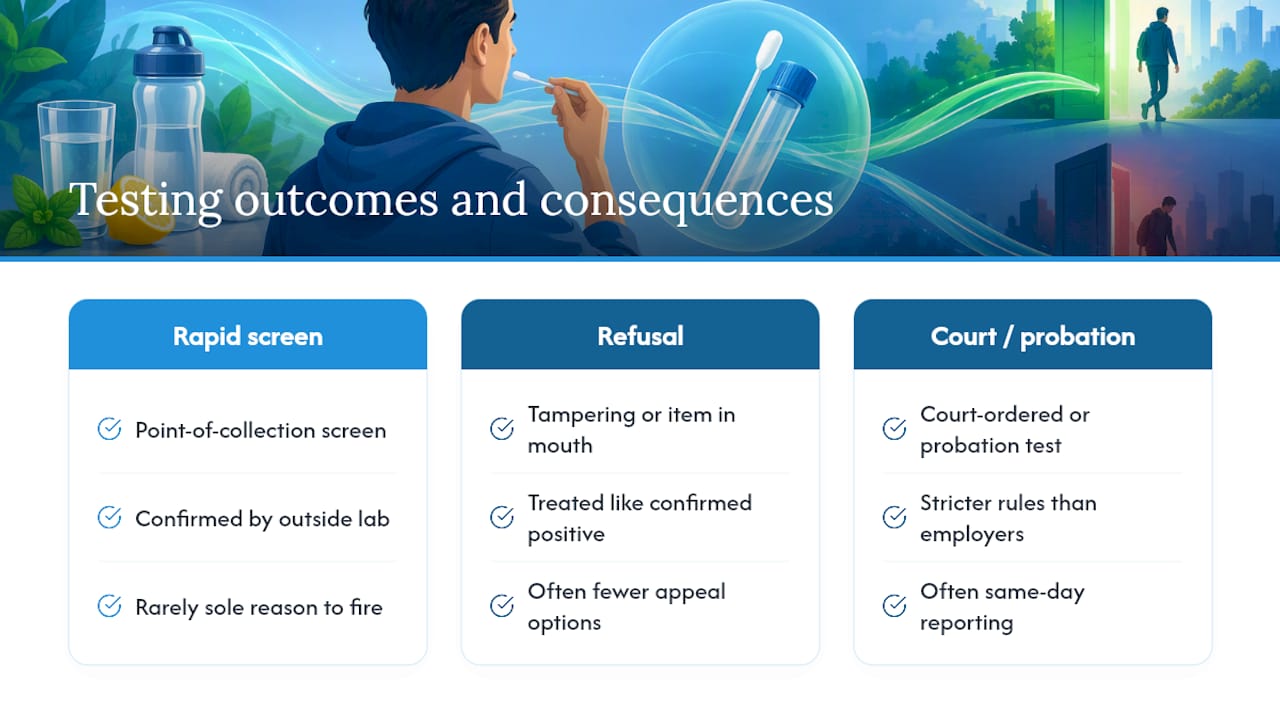
Employers generally set their own policies on what happens after a non-negative result, but most follow a similar structure: a point-of-collection screen gets confirmed by an outside lab before any adverse action is taken. A single rapid screen alone typically isn’t enough to fire or reject a candidate under most workplace drug testing policies, precisely because confirmation testing exists as a safeguard against false positives.
Refusal-to-test policies are where things get harsher. If a collector documents tampering, an item found in your mouth, or repeated failure to provide an adequate sample, many employers and testing programs treat that the same as a confirmed positive, sometimes with fewer appeal options than a lab result would carry. Court-ordered and probation testing tends to follow even stricter rules, often with same-day reporting to a supervising officer or judge.
Union contracts, state law, and individual company policy all affect what recourse you have after a positive or refused test, so the details vary by situation more than most online guides admit. If a test result could affect your job, custody arrangement, or legal standing, treat the stakes as real and plan your timeline around the actual detection window for what you used, not around a rumor you saw somewhere.
Common Myths About Saliva Detox, Debunked
The idea that a specific food or drink can chemically erase drug traces from saliva is the most persistent myth out there, and it’s simply not how oral fluid testing works. Detox teas, cranberry juice, and vinegar shots are urine-detox folklore that got copied over to saliva without anyone checking whether the mechanism even applies. Saliva tests pick up residue sitting in oral tissue and recent bloodstream transfer, not something your kidneys are filtering out.
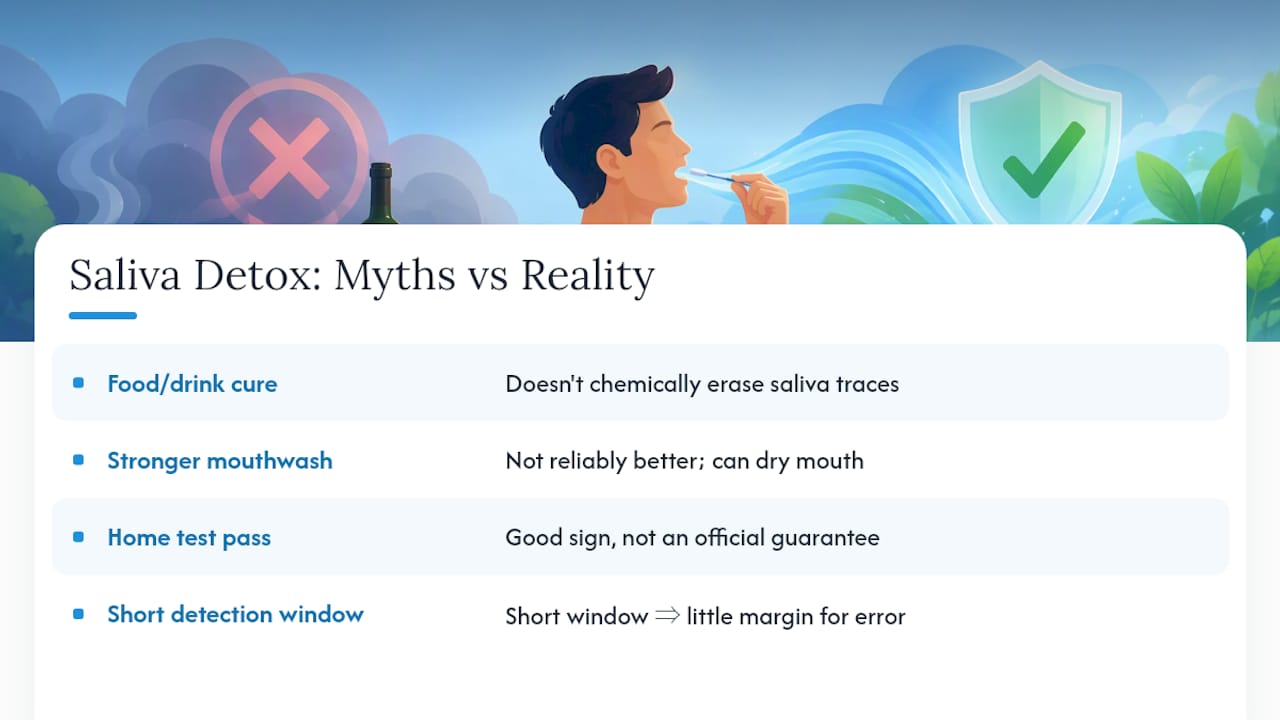
Another common belief is that a stronger mouthwash always works better. In reality, studies on oral fluid adulterants found that most products, regardless of how aggressive their marketing sounds, work through the same basic rinsing action. An alcohol-heavy mouthwash can actually backfire by drying out your mouth and reducing the saliva flow you want working in your favor.
People also assume that if they pass a home test kit, they’re guaranteed to pass the official one. Home kits use similar screening technology, but timing, storage, and slight formulation differences mean a home negative is a good sign, not a certainty.
Finally, there’s a persistent belief that saliva tests are “easy to beat” because the window is short. That short window cuts both ways. It also means there’s very little margin for error if your last use was more recent than you’re telling yourself it was.
A Straight Answer on Safety and Honesty
If you’re reading this with a test tomorrow and real anxiety about it, that’s understandable. But the safest path is also the most boring one: clean thoroughly, hydrate steadily, time any rinse exactly to its labeled window, and skip anything involving bleach or peroxide. Aggressive hacks tend to create the exact red flags collectors are trained to catch.
If the test is court-ordered or tied to probation, talk to whoever oversees your case before you improvise anything. Medical review officers and testing programs generally respond better to honesty about a missed deadline than to a flagged, adulterated sample. A cover-up that gets caught is almost always worse than the truth would have been.
— Michael
Get Ready for Your Saliva Test With Products Built for the Task
Macujo built its saliva test lineup around the same realistic-expectations approach it applies to hair testing: know what a product can and can’t do, then use it correctly. The (2 Pack) Supreme Klean Saliva Detox Mouthwash is designed for that final 30 to 60 minute window before collection, when a thorough rinse actually has a shot at reducing surface residue.
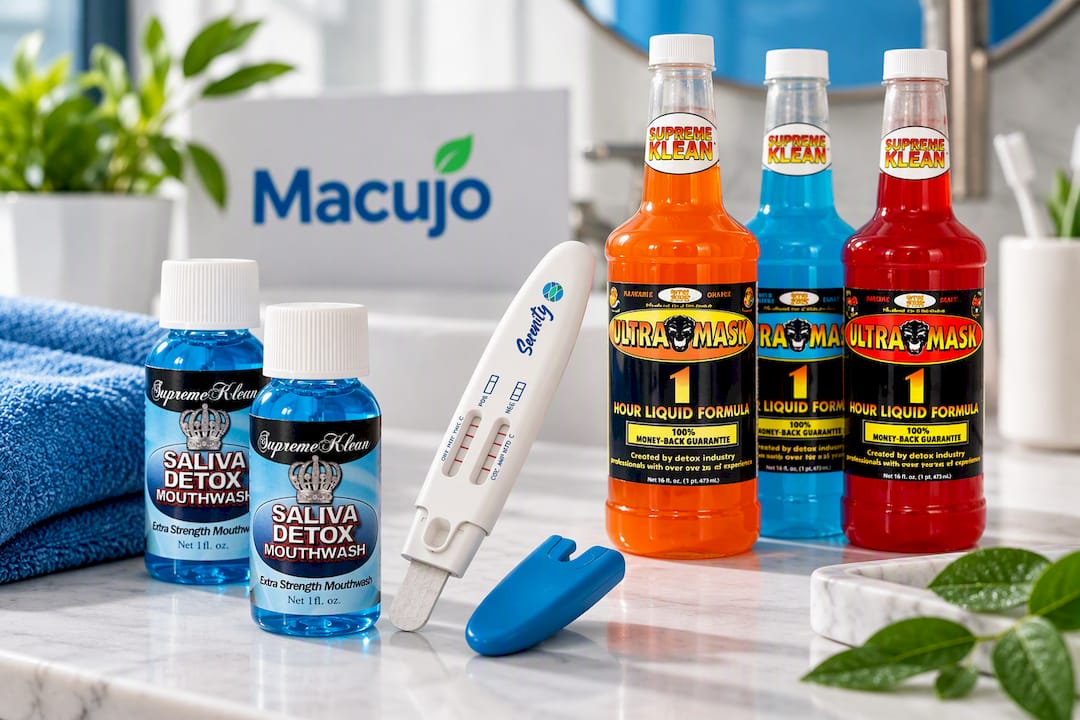
Before you walk into an official collection, check where you actually stand with the 12-Panel Multi-Drug Oral Fluid Test Saliva Drug Test, an at-home kit that gives you a real read instead of a guess. For readers who want a broader approach alongside oral hygiene and hydration, the Supreme Klean Ultra Mask Detox Drink is available as well, with realistic label-based expectations rather than promises. And if your situation involves a court date, probation, or a job offer with no room for error, book an Afterhours Personal Consultation and talk through your exact timeline and use history with someone who handles these cases regularly. Browse the full saliva test product line to see what fits your timeline before your appointment.
Sources
For deeper detail beyond this guide, review the PubMed overview of oral fluid detection windows, the PMC review of oral fluid testing methods, SAMHSA’s federal collection handbook, Labcorp’s collection process, and the Cleveland Clinic’s oral drug test overview. Lab confirmation via LC-MS/MS remains the accepted standard for any non-negative screen.
- PubMed: Detection windows and oral fluid testing overview
- Drug testing in oral fluid: review of methods and applications (PMC)
- HHS / SAMHSA: Oral fluid specimen collection handbook (federal guidance)
- Labcorp: Oral fluid drug testing overview and collection process
FAQ
How Long Do You Need to Be Clean for a Saliva Drug Test?
Most substances clear oral fluid within 5 to 48 hours of last use, though heavy or daily use can push that closer to 72 hours for drugs like THC or methamphetamine. The safest approach is treating the longer end of the range as your real deadline rather than the shortest estimate you’ve seen online.
What Is the Best Detox Mouthwash to Use Before a Saliva Drug Test?
The (2 Pack) Supreme Klean Saliva Detox Mouthwash is built specifically for the 30 to 60 minute window before oral fluid collection, when a targeted rinse has the best chance of clearing surface residue. Timing matters more than brand, since any rinse used too early gets diluted out by fresh saliva during the mandatory wait period.
Can a Saliva Test Detect Drug Use From Days Earlier?
Generally no. Oral fluid testing targets recent use through local residue and recent bloodstream transfer, which is why its window runs in hours rather than the days-to-months window seen with urine or hair testing.
What Happens if a Collector Suspects Tampering?
Federal collection guidance treats visible adulteration attempts or items found in the donor’s mouth as grounds for a refusal-to-test determination, which many employers and legal contexts treat the same as a confirmed positive. That’s why aggressive hacks carry more downside than a straightforward result would.
Are At-Home Saliva Test Kits Accurate?
At-home kits like the 12-Panel Multi-Drug Oral Fluid Test Saliva Drug Test use similar screening technology to point-of-collection tests and give a realistic read on where you stand. They don’t replace lab confirmation with LC-MS/MS, but a clean home result is a reasonably good sign before an official appointment.