Last Updated on October 29, 2026
Methamphetamine is detectable in a hair follicle test, usually for about 90 days after use and sometimes longer in heavy users. Whether you can pass depends on how much you used, how recently, and how your hair is cleansed before the sample is cut. Time is the only fully reliable fix. If you don’t have it, a structured, test-specific wash protocol is the realistic option, and it comes with no guarantee.
This guide explains what the lab actually measures, how long meth lingers, what the research says about hair treatments, and how to decide what to do with the days you have left.
TL;DR
- Hair tests detect methamphetamine, amphetamine, MDMA and MDA, with a window of up to about 90 days.
- Heavy, long-term use can stay positive past 90 days. One study followed chronic users to 153 days.
- Bleach, homemade recipes and generic shampoos give inconsistent results, and none of them is a sure thing in published research.
- Mike’s Macujo Method sets the number of washes from your substance, last-use date and 90-day frequency, and it is built around Macujo Aloe Rid® Shampoo.
- If you tested positive and believe it is wrong, ask about the lab’s confirmation method and cutoff, and talk to a lawyer or your employer’s medical review officer.
Table of Contents
- Can meth be detected in a hair follicle test?
- How the lab reads your hair
- How long does meth stay in hair?
- Can you change the result? What research shows
- What we recommend, based on your timeline
- Our perspective: why we built the method around exposure
- Preparing for a meth hair test with Macujo
- If you think the result is wrong
- FAQ
- Sources
Can meth be detected in a hair follicle test?
Yes. Quest Diagnostics states that hair testing provides up to a 90-day drug-use history and can detect amphetamine, methamphetamine, MDMA and MDA. Most employer hair panels (5-panel, 10-panel, and larger) include the amphetamine class, so meth is almost always on the list.
Here is what makes hair different from urine. Urine mostly shows what you used in the last few days. Hair holds a longer record, so a single weekend three weeks ago can show up when a urine test would be clean. We cover that contrast in more depth in hair vs. urine tests at work.
How the lab reads your hair
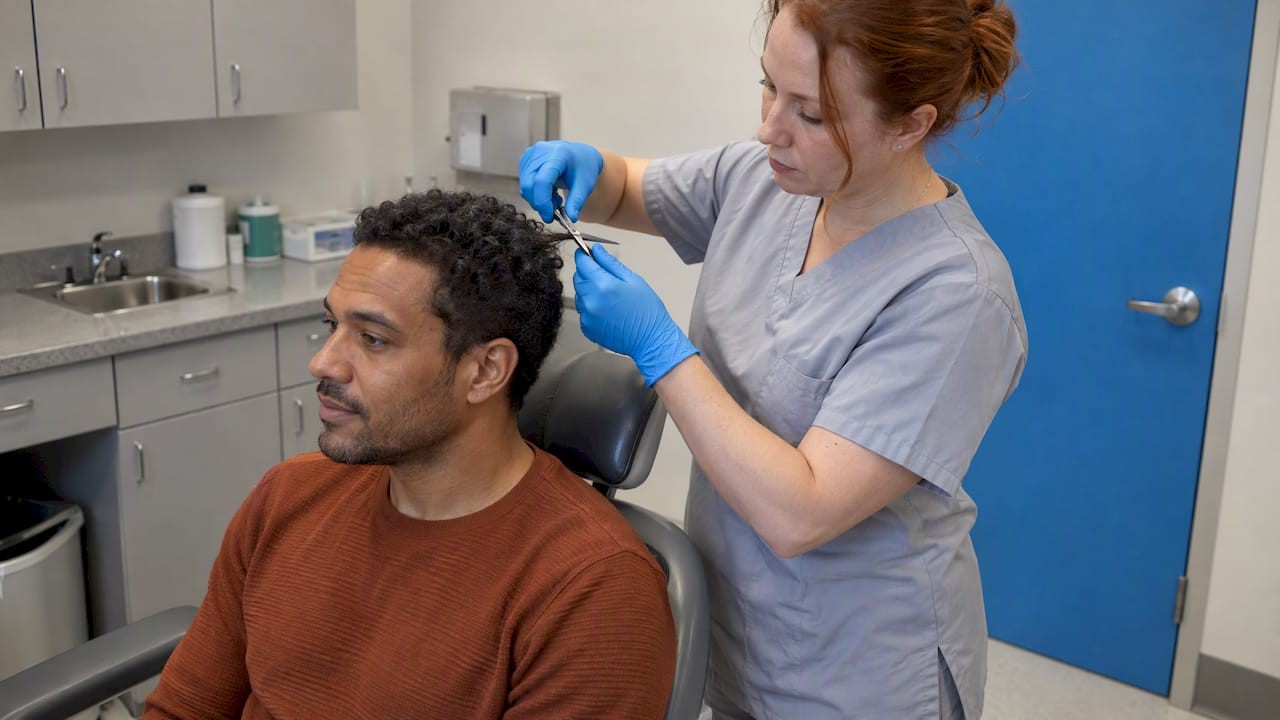
The collector usually cuts about 1.5 inches of hair from close to the scalp at the back of the head. Because hair grows roughly a centimeter a month, HHS noted in its federal workplace drug testing guidelines that head hair grows about 1 centimeter per month on average, so a 0.5 to 1.0 inch specimen represents a detection window of 30 to 60 days. A longer cut reaches further back. If you want the details on length, see our page on when long hair affects a drug test.
Two things about timing surprise people:
- A delay before first detection. According to a 2025 review in the Journal of Applied Laboratory Medicine, drugs reach the hair bulb within about 30 minutes of ingestion, but it typically takes several days to 10 days for that segment to grow above the scalp where it can be collected. So use in the last week often isn’t in the sample, which is why recent use can slip through a hair test.
- Body hair is an option. If you have little or no head hair, collectors can take body hair, which reflects a different, often longer, window.
Screening, confirmation and cutoffs
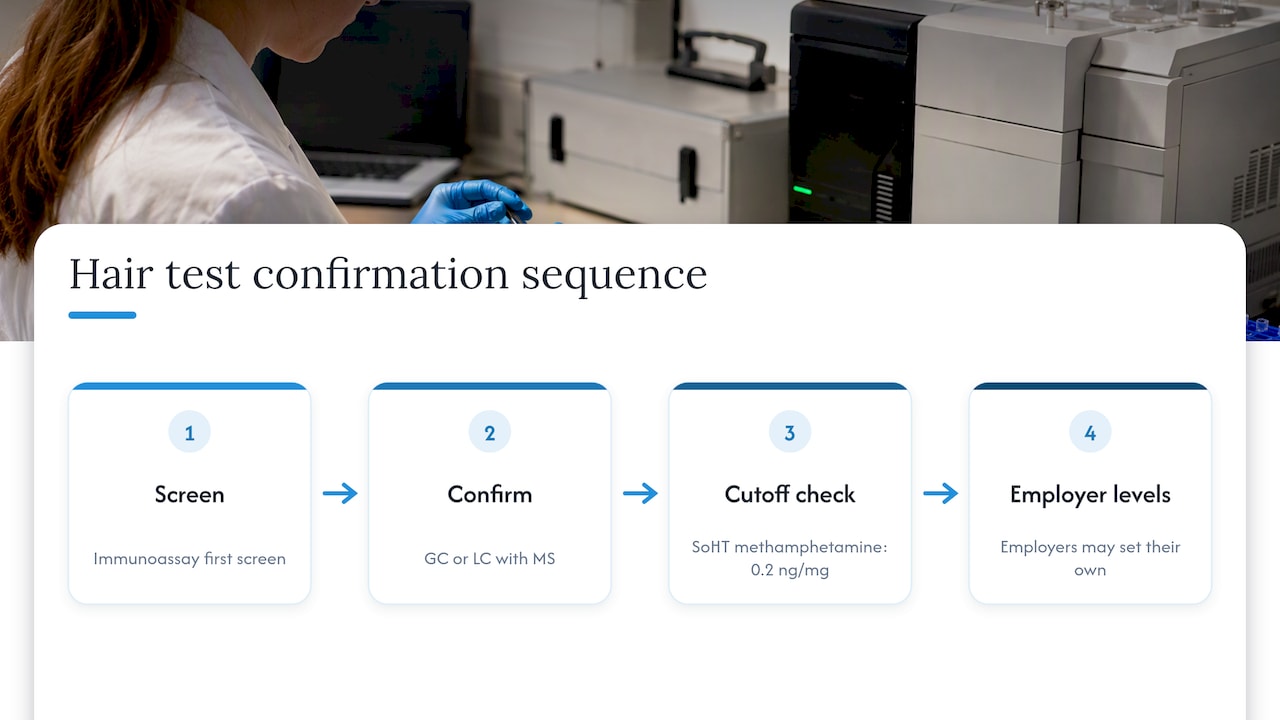
A first screen is typically an immunoassay. Researchers at Maastricht University note that screening results alone are not enough for reliable legal decisions and must be confirmed with gas or liquid chromatography with mass spectrometry. A positive is declared only if the confirmed level exceeds a cutoff. The UNODC guidance cites a Society of Hair Testing confirmation cutoff of 0.2 ng/mg for methamphetamine. Employers can set their own levels, so see what hair test cutoff levels mean.
How long does meth stay in hair?
The common answer is 90 days. The honest answer is “about 90 days, longer if you used heavily.”
A study of chronic methamphetamine users in Thailand found that most remained positive for up to about 90 days of abstinence. About 16% were still positive at 120 days, and everyone tested negative after 153 days. The authors concluded that, with a margin of safety, chronic users should test negative after six months of claimed abstinence.
| Your situation | What the evidence suggests |
|---|---|
| One-time or occasional use, last use over 90 days ago | Most likely negative, though not guaranteed |
| Regular use that stopped 60 to 90 days ago | Could still be positive; depends on dose and hair length |
| Chronic heavy use that stopped 90 to 150 days ago | Some users remained positive past 90 days in the study above |
| Use in the last 7 to 10 days | May not yet be in the cut sample, but can appear on a later test |
Other factors move these numbers. The same academic review notes that white hair incorporates almost no drug compared with pigmented hair, and Maastricht researchers list hair color and texture, sample location, growth rate and storage as factors that affect interpretation. Individual growth rates vary, so 90 days is a guide, not a promise. Our pages on the methamphetamine hair test timeline and when 90 days isn’t enough go further.
Can you change the result? What research shows
This is the question people actually search, and the evidence is mixed. Anyone who promises a sure thing is overselling.
Why washing is hard to evaluate
Meth that is inside the hair shaft behaves differently from meth sitting on its surface. Labs wash samples before analysis to remove external contamination, but the National Institute of Justice notes those washing procedures are not standardized. A 2019 forensic study found that decontamination solvents following Society of Hair Testing guidelines could not completely remove external methamphetamine contamination. Put simply, removing meth from hair is difficult, and it is difficult for the lab too.
Bleach, heat and home recipes
HHS lists cosmetic treatments and hygiene as factors that may confound hair results, and researchers confirm that bleaching or heat can remove analytes from hair. A study of homemade cleansing treatments found that all of the tested treatments lowered drug concentrations, but to different extents depending on the substance.
That is partial, not complete. Lowering a level and dropping below a cutoff are different things, especially for a heavy user whose starting level is far above it. Bleaching also has practical costs: damaged hair, and a lab or collector who notices unusual treatment. Our page on dyed and bleached hair and drug tests explains how that plays out.
What shaves and “quick fixes” do
Shaving your head may not help. Collectors can take body hair instead, and a refusal or an unusually short sample can be treated as a failed test by many employers. Check your employer’s policy before you decide.
What we recommend, based on your timeline
There are three honest paths.
- You have 90 days or more, and use was light. Stop and wait. This costs nothing and is the most reliable option.
- You used heavily or recently, and the test is soon. Waiting is not an option, so a test-specific wash protocol is the realistic route. The key is matching the effort to your actual exposure, not doing a generic number of washes.
- You have not used, but fear a false positive. Keep records of any prescriptions. Some medications can produce amphetamine-class results at screening, which is why confirmation testing matters.
Our perspective: why we built the method around exposure
We have helped people prepare for hair follicle tests since about 1999, and the pattern we see most is the same: people under-prepare because they use a one-size-fits-all routine. Meth and THC, light use and daily use, last use 10 days ago or 80 days ago, are very different problems.
That is why Mike’s Macujo Method, introduced in 2018, is a nine-step process that starts with a calculation. Mike’s Macujo Required Washes Calculator uses the substance, the date of last use and how often you used in the previous 90 days to set how many washes you need. The method must be done with authentic Macujo Aloe Rid® Shampoo. When every required wash and direction is followed correctly, we report a success rate of better than 99%, and the hair stays clean unless drugs or alcohol are used again.
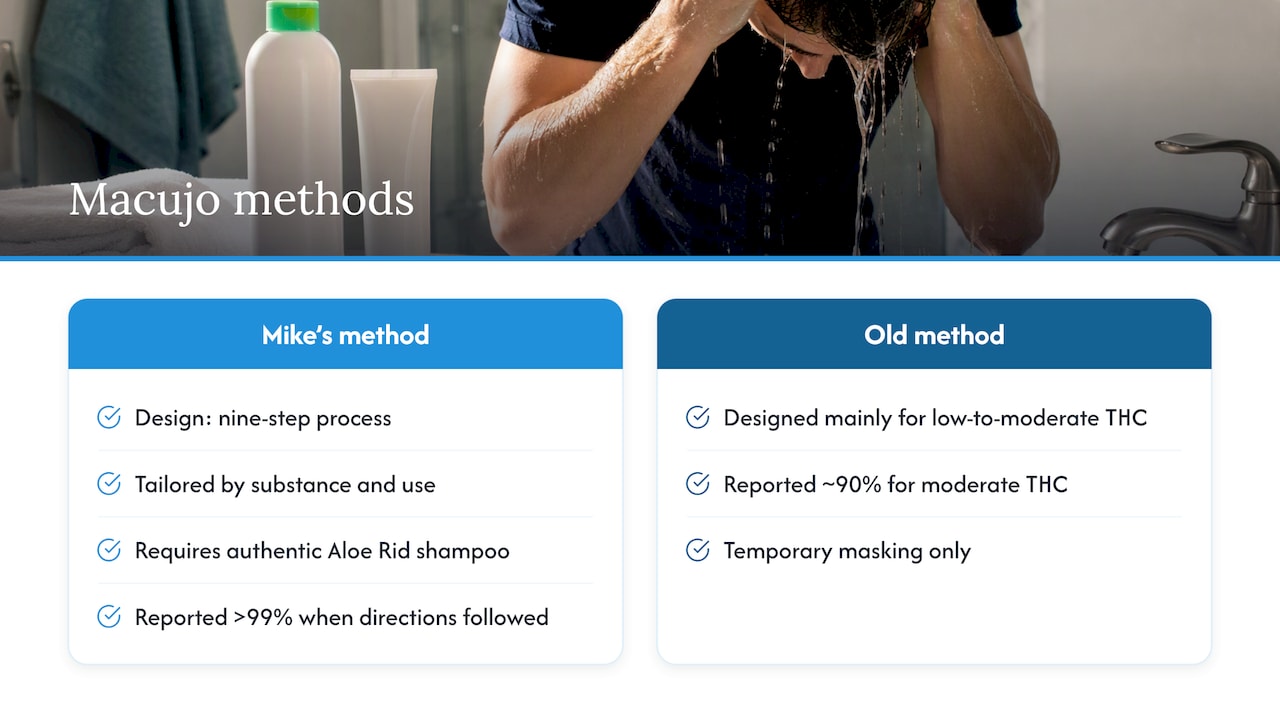
The old Macujo Method was designed mainly for low-to-moderate THC exposure, with an estimated success rate of about 90% for moderate THC, and it offered only temporary masking. Do not confuse the two. Skipping washes, swapping in another shampoo or rushing the steps is how people fail, and that is a point we repeat on every consultation.
We are also direct about limits. Published studies show that results from cleansing hair are variable, and those figures are our own reporting on our method, not a lab’s guarantee for your hair. If you are unsure whether your situation is realistic, we’d rather tell you before you spend money.
— MIchael
Preparing for a meth hair test with Macujo
If your test is close and you used meth, start with the required-washes calculation and follow every step in order. Macujo Aloe Rid Old Formula Shampoo is the shampoo the method requires, and it is priced between $100 and $150. If you want someone to check your plan against your history, our Afterhours Personal Consultation is $100, and it is a phone call with an expert who knows the method.
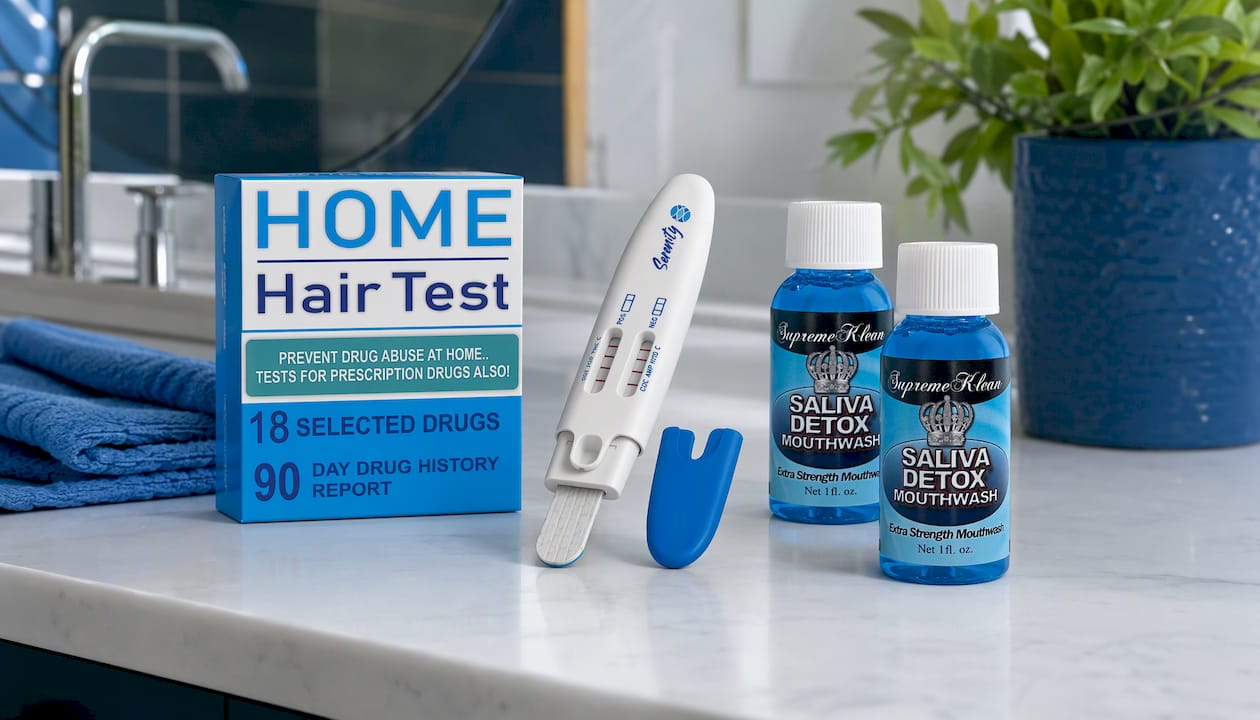
You can also verify where you stand before the real test with a home hair test kit. If your job screen is a larger panel, read about how to prepare for a 12-panel hair test. For a broader overview of drugs and detection windows, see how long drugs stay in your hair and our study on 90-day positives.
If you think the result is wrong
Hair results are not as clear-cut as they sound. The Maastricht review explains that analytes can arrive in hair through systemic exposure, contaminated atmospheres, sweat or physical contact, so telling use from exposure is hard. NIJ-funded researchers describe separating drug use from environmental contamination as a core challenge, and some suggest analyzing metabolites rather than parent drugs to improve accuracy.
If you tested positive and believe it is wrong:
- Ask for the confirmation method and the reported level against the cutoff.
- Ask to speak to the medical review officer, who handles the result for most employer programs, and disclose any prescriptions.
- If the job or your legal standing is at risk, consult an employment or criminal defense attorney in your state.
If you are struggling with meth use itself, SAMHSA’s National Helpline offers free, confidential, 24/7 treatment referral and information in English and Spanish.
FAQ
Can meth be detected in a hair follicle test?
Yes. Hair tests detect methamphetamine, amphetamine, MDMA and MDA, covering up to about 90 days. Use in the last week or so may not show yet, because the hair has to grow out of the scalp first.
Can you pass a hair drug test after using meth?
Sometimes, but it depends on the amount, the timing and what you do to the hair. Waiting past the detection window is the most reliable route. Cleansing can lower levels, though research shows results vary, so a plan based on your own use history matters.
How long do I need to be clean to pass a hair follicle test for meth?
For light use, about 90 days is the usual benchmark. For chronic heavy use, one study saw some people positive at 120 days and all negative by 153, so six months is the safer assumption.
Will shaving my head help?
Not reliably. Collectors can take body hair instead, and showing up with no head hair can raise questions with your employer. Check the testing policy first.
What is the best hair detox for drug tests?
There is no single answer for every drug and every person. We recommend the method that matches your substance and history. For meth, that is Mike’s Macujo Method with Macujo Aloe Rid® Shampoo, using the number of washes the calculator gives you.
Sources
- Hair Drug Screening Facts & Information, Quest Diagnostics
- Duration of detection of methamphetamine in hair after abstinence
- Mandatory Guidelines for Federal Workplace Drug Testing Programs, Federal Register
- Review on Toxicology Testing in Hair, Journal of Applied Laboratory Medicine
- The interpretation of hair analysis for drugs and drug metabolites, Maastricht University
- Detecting Drugs in Hair: Is It Drug Use or Environmental Contamination?, NIJ
- Guidelines for testing drugs under international control in hair, sweat and oral fluid, UNODC
- A systematic investigation of forensic hair decontamination procedures
- Assessment of homemade hair treatment effects on drug concentrations, PubMed
- SAMHSA National Helpline