Last Updated on October 30, 2026
Yes, a hair drug test can detect ketamine. Major U.S. labs include ketamine and its metabolite norketamine on their hair panels, and a standard sample reflects roughly the last 90 days. If you used ketamine in that window and a hair test is coming, the honest plan is to know exactly what the lab measures, work out how much of your exposure sits in the hair it will cut, and get test-specific guidance early. Short windows and vague advice are what make people fail.
This guide covers what the test looks for, how far back it reaches, where hair testing is unreliable, and what to do if you think a result is wrong.
TL;DR
- Hair panels at U.S. labs can include ketamine and norketamine, and a 1.5-inch scalp sample covers about 3 months.
- Stopping use does not clear the hair already grown. Past use stays in the strand until that length is cut or washed out.
- Results depend on each lab’s cutoff. There is no national standard for expanded panels, so the same specimen can read differently in different labs.
- Hair color, bleaching, dyeing, and washing habits change measured levels, but none of these is a reliable plan on its own.
- If a result looks wrong, ask for the confirmation data and talk to the Medical Review Officer (MRO) right away.
Table of Contents
- Can a hair test detect ketamine?
- How far back does a ketamine hair test look?
- How the lab collects and tests the sample
- What hair testing can and cannot tell an employer
- What actually helps before a ketamine hair test
- Our perspective on ketamine and hair cleansing
- Get a plan built around your test
- If you think a result is wrong
- Related substances people ask about
- FAQ
- Sources
Can a hair test detect ketamine?
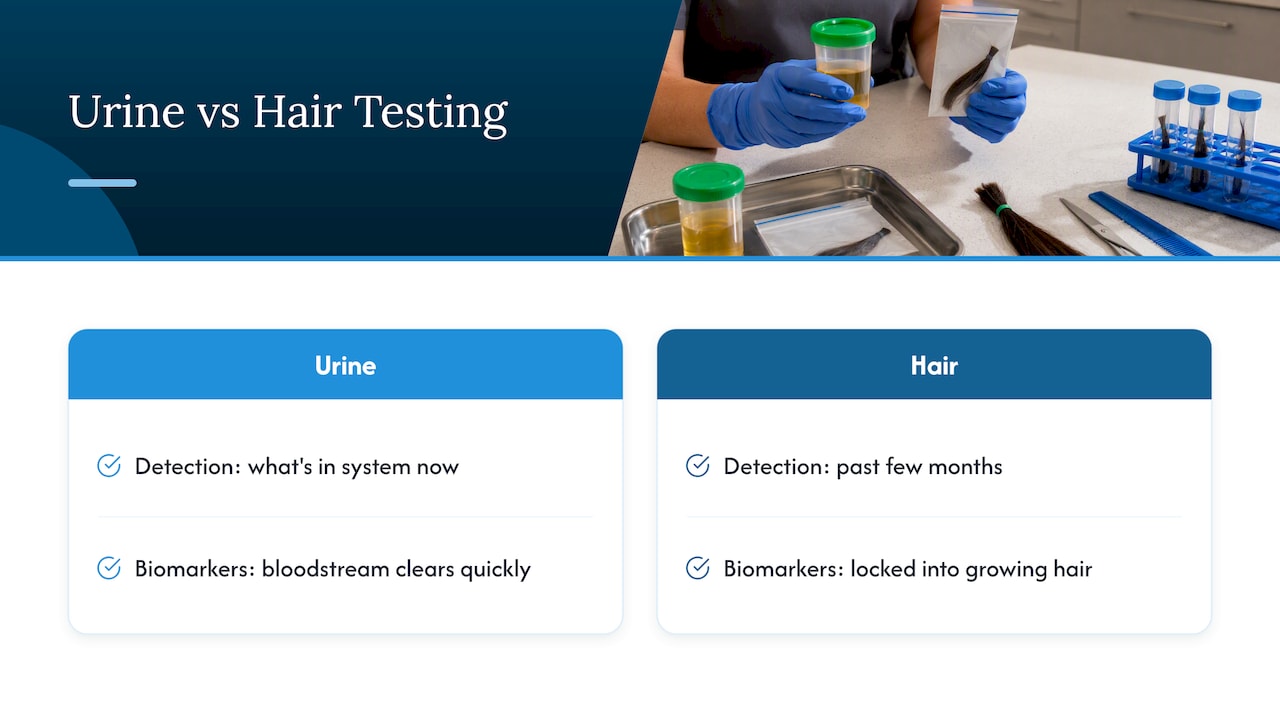
It can. USDTL, a U.S. hair-testing laboratory, lists ketamine and norketamine in its hair panel and explains that hair traps biomarkers in the growing fiber, which gives a long-term history of use rather than a snapshot.
That is the key difference from urine. Urine tells an employer what is in your system now. Hair tells them what circulated in your body over the past few months. Ketamine leaves the bloodstream quickly, but the drug and its metabolites that reach the follicle through blood supply get locked into the hair shaft as it grows.
Not every employer orders ketamine, though. Standard five-panel hair tests used for pre-employment typically look for marijuana, cocaine, opiates, amphetamines, and PCP. Ketamine usually appears on expanded panels, in treatment-monitoring programs, in professional health monitoring, and in some legal or custody cases. Before you plan anything, find out which panel you are actually facing. Ask the employer or the collection site for the panel name, not just “a hair test.”
If you want the general mechanics first, our walkthrough on how hair drug testing actually works covers collection, screening, and confirmation in plain terms.
How far back does a ketamine hair test look?
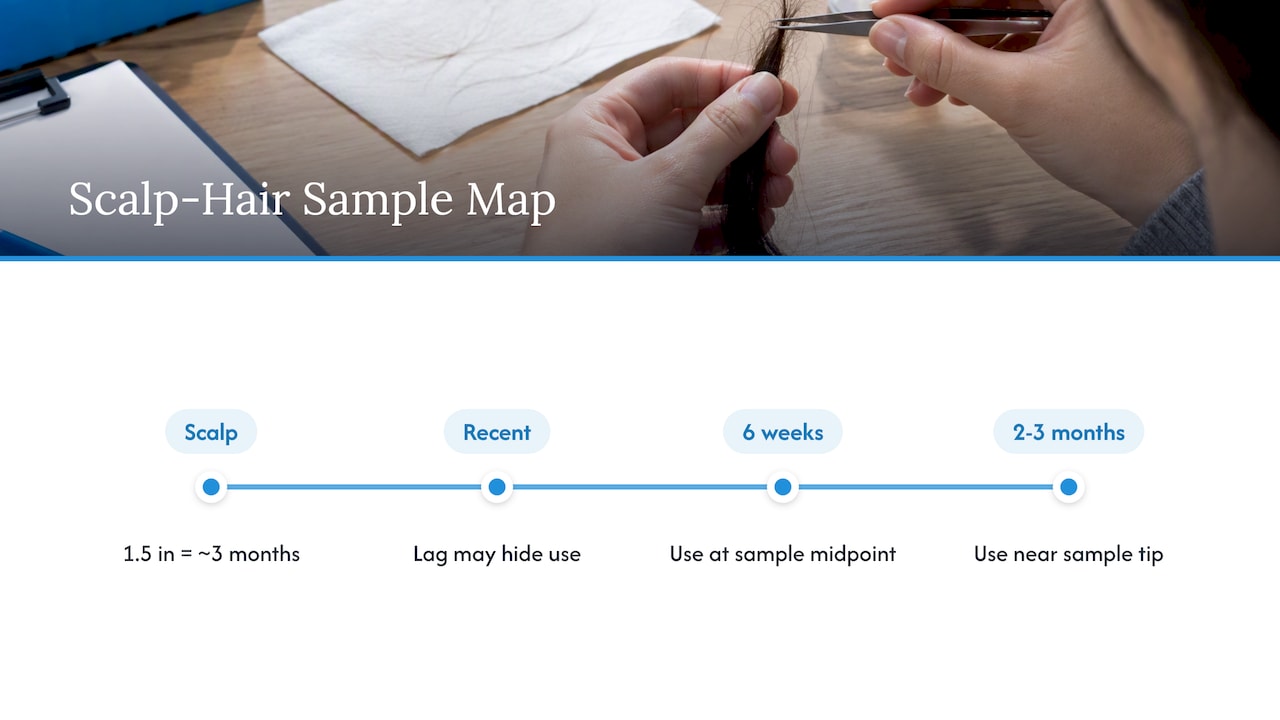
For scalp hair, a sample of the 1.5 inches closest to the scalp provides up to approximately a 3-month detection window. That is the number most U.S. employers and labs work from.
Two things follow from that.
Time since last use matters less than people think. Hair grows around half an inch per month on average, and the drug needs several days to show up in hair above the scalp. So a very recent single use might not appear in a 1.5-inch sample, while use six weeks ago will sit in the middle of it. Use from two or three months ago sits near the tip of the sample and may be at the edge of what the lab sees.
The window can run longer than 90 days. A 2023 French case report found ketamine still detectable in hair more than four months after treatment ended, while norketamine was not detected in that case. One case is not a rule, but it shows that a longer or slower-growing sample can reach further back than the textbook number. We cover this problem in detail in when 90 days isn’t enough for a hair drug test timeline.
What if you have short hair or no scalp hair?
Labs can collect body hair when scalp hair is too short or absent. Body hair generally grows more slowly, so it can represent a longer period. If an employer asks for body hair after you shaved your head, expect a longer look-back, not a shorter one. Shaving right before a test is also commonly noticed and often leads to a body-hair collection, so it is not a clean workaround.
How the lab collects and tests the sample
Knowing the process shows you where results can differ.
USDTL describes a scalp sample of about 200 strands, 1.5 inches long, roughly the size of a #2 pencil. About 100 mg is ideal, and 150 mg is recommended for some tests, such as alcohol markers, add-ons, or panels above 10 drugs. The collector cuts hair close to the scalp from the back of the head, and the lab tests the portion closest to the root.
Testing runs in two stages: an initial screen, then confirmation on anything that screens non-negative. Confirmation by LC-MS/MS is highly sensitive and can measure at the femtogram level. That means a confirmed result is not a fuzzy guess. It also means trace amounts matter, which is why the cutoff set by the lab becomes the deciding line.
Cutoffs decide the outcome
Levels below a lab’s calibrated cutoff are reported as negative, even if some drug is present. The same source notes that there is no national standard for cutoffs or confirmation levels on expanded panels, so a specimen can be positive at one lab and negative at another.
For a sense of scale, a UK lab publishes a ketamine reporting cutoff of 0.2 ng/mg for hair samples received after 22 March 2024. That is a UK figure and a U.S. lab may set its own, so ask the lab handling your test for its cutoff rather than assuming. Our article on hair test cutoff levels and what the numbers mean explains how to read these figures.
What hair testing can and cannot tell an employer
Hair testing is less exact than many people assume, and it helps to know the limits.
A 2025 review in the Journal of Applied Laboratory Medicine states that hair results can be affected by pigmentation, cosmetic treatments, and contamination, and that the concentration of a drug in hair does not strongly track the dose taken. The same review observes that without reference intervals and attention to individual variability, drawing definitive conclusions from hair results is hard. In practice, that means a lab can say a substance was present above a cutoff, but it cannot reliably say how much you used or on which day.
Researchers in Japan add that hair dyeing, daily washing, and pigment content can change drug concentrations and how they are distributed along the strand.
What does that mean for you?
- Dark, coarse hair tends to bind more of certain drugs than light hair. Two people with identical use can end up with different results.
- Chemical treatment such as bleaching can lower measured levels. We lay out the numbers in our piece on dyed hair and hair drug tests.
- Frequent washing removes some surface contamination and can alter distribution, but the drug incorporated inside the shaft is a different matter.
None of this is a loophole you can count on. It is the reason one-size-fits-all advice fails.
What actually helps before a ketamine hair test
Here is the sequence we would walk through with someone who has a test scheduled.
- Stop using right now. Every new day of use adds drug to hair that has not grown out yet. Nothing downstream works if exposure continues.
- Confirm the test. Which drugs are on the panel, which lab runs it, and when is the collection? Ketamine may not be on a basic employment panel at all.
- Count your exposure honestly. The last time you used, how often during the previous 90 days, and how heavy. A single use two months ago is a very different situation from weekly use up to last week.
- Work out the timeline. How many days do you have before collection? That determines what is realistic and what is not.
- Choose a method matched to the substance. Generic home remedies, such as vinegar rinses or dish soap, are the most common reason people fail. They are not built for a specific drug or exposure level.
- Follow the directions exactly. If you use a structured hair-cleansing process, skipping washes or shortcuts is the usual cause of a failed outcome.
- Keep hair as it is. Do not shave on the day, and do not make last-minute changes that look unusual to a collector.
If you are still weighing your options, the all about hair drug testing guide is a good place to check your assumptions.
Our perspective on ketamine and hair cleansing
We have helped people prepare for hair follicle tests since about 1999, and the pattern we see is consistent: people who fail rarely fail because the lab is magical. They fail because they guessed. They guessed their window, they guessed their method, and they guessed how many washes were enough.
That is why we built a required-washes calculator into Mike’s Macujo Method. It asks for the substance involved, the date of last use, and how often you used during the previous 90 days, and it returns the number of washes that match your history. The method itself is a systematic nine-step process, introduced in 2018, and it has to be completed with authentic Macujo Aloe Rid Shampoo. When every required wash and direction is completed correctly, we report a success rate better than 99%, and the hair stays clean unless drugs or alcohol are used again.
We will also be direct about what we do not claim. Hair testing outcomes depend on the lab, the panel, and your own hair. No honest provider can promise a result from a webpage. That is the reason we offer one-to-one consultation: tell us your situation, the test, and the timeline, and we will tell you plainly where you stand, including when the answer is that you need more time.
— MIchael
Get a plan built around your test
If your test is close and you used ketamine in the past 90 days, do not rely on forum recipes. Our Macujo Aloe Rid shampoo is listed at $100 to $150, and a personal after-hours consultation is $100. Mike’s team will review your substance, last use, and frequency, then explain how many washes your situation calls for and how to sequence them before collection. Support does not end at checkout, since consultation and phone support are part of how we work.
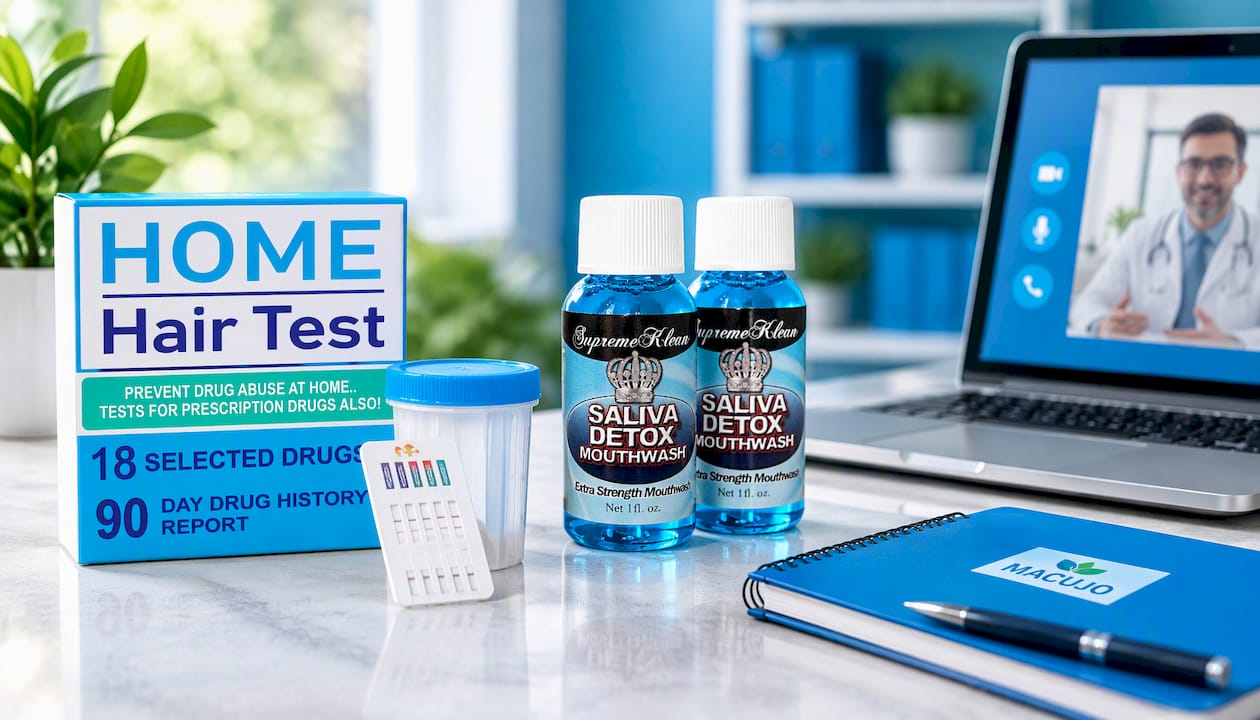
Want to know what to expect on the call first? Read what a hair drug test consultation involves. If you are not sure your hair will even be sampled, a home hair test kit can help you check your own situation before you commit to a plan.
If you think a result is wrong
A non-negative screen is not the same as a verified positive. Here is what to do if the result does not match your history.
- Find out the stage. Ask whether this is a screening result or a confirmed result from LC-MS/MS or GC-MS.
- Talk to the MRO. For workplace tests, a Medical Review Officer reviews confirmed results for legitimate explanations before they go to the employer. Ketamine is a prescription anesthetic and is used in medically supervised treatment, so documentation matters. Gather prescriptions, clinic records, or procedure notes.
- Ask for lab details. Request the cutoff used, the confirmation method, and the reported concentration. Because there is no national standard for expanded-panel cutoffs, what counts as positive depends on the lab.
- Use the time you have. A hair test reflects the past 90 days, so a repeat test can be informative. Our guide on a failed hair test and the 90 day window to verify and retest goes through the steps.
- Get legal advice if employment is on the line. For job loss, license issues, or custody, an employment or health-law attorney in your state can tell you what rights you have and what deadlines apply.
The 2025 review we cited earlier is worth keeping in mind here: since hair concentration does not reliably reflect dose, a single number should not be treated as proof of how much or how recently someone used.
Related substances people ask about
If your panel includes other drugs, the timelines and cutoffs differ. We have separate breakdowns for benzodiazepines in hair tests, the methamphetamine hair test timeline, and the MDMA hair test. Each shows how a 1.5-inch sample maps to roughly 90 days and where that assumption can break.
FAQ
Does a standard employment hair test include ketamine?
Usually not. Common pre-employment hair panels cover marijuana, cocaine, opiates, amphetamines, and PCP. Ketamine tends to appear on expanded panels, monitoring programs, or legal cases. Ask the employer or collection site which panel applies to you.
How long is ketamine detectable in hair?
A 1.5-inch scalp sample covers up to about three months, according to USDTL. A published French case found ketamine in hair more than four months after treatment stopped, so longer or slower-growing hair can reach further back.
Can I pass a ketamine hair test by just stopping use?
Stopping prevents new exposure, but it does not remove ketamine already in the hair you have grown. That hair is what gets cut and tested. Whether it matters depends on your last use, how often you used, and the lab’s cutoff for the panel.
Can bleaching or dyeing my hair beat the test?
Treatments can lower measured levels, and reviews note that cosmetic treatment affects results. But the effect varies by person and treatment, and it is not a dependable plan. Damaged hair can also draw attention at collection.
What if I used ketamine under medical supervision?
Tell the MRO and provide records from your prescriber or clinic. A confirmed result goes through MRO review precisely so legitimate medical use can be separated from non-medical use.
Sources
- Hair Drug Testing, USDTL
- The duration of ketamine detection in hair after treatment cessation, Drug Testing and Analysis (2023)
- Critical Reporting Limits for hair drug testing, Cellmark
- Review on Toxicology Testing in Hair, Journal of Applied Laboratory Medicine (2025)
- Hair testing for investigating intake and use history, PubMed Central