Last Updated on September 21, 2026
Yes, kratom’s active alkaloid, mitragynine, can be detected in hair, but only through specialized laboratory testing. Standard workplace drug panels and immunoassays don’t screen for it, so a routine hair test will come back clean regardless of use. Detecting kratom requires targeted LC-MS/MS or UPLC-MS/MS testing, run by a small number of forensic toxicology labs equipped to isolate mitragynine at trace concentrations.
TL;DR:
- Kratom’s mitragynine can be detected in hair only through specialized LC-MS/MS or UPLC-MS/MS testing, as standard drug panels do not screen for it.
- Hair testing for kratom reflects approximately 90 days of use, but factors like dose, hair type, cosmetic treatments, and growth rate can alter this window.
- Confirming a positive result requires requesting specific concentration data, method details, and decontamination steps from the lab, as no universal cutoff exists.
- Kratom hair tests are usually ordered by forensic or specialty labs and are more costly and time-consuming than standard urine or saliva screens.
- A routine hair follicle test will not reveal kratom use unless the lab specifically runs a mitragynine assay dedicated to detecting it.
Table of Contents
- What Is a Kratom Hair Test and How Do Labs Run One?
- How Long Does Kratom Stay Detectable in Hair?
- Where Can You Get a Kratom Hair Test, and What Does It Cost?
- How Should You Read a Positive or Negative Kratom Result?
- What Should You Do If You’re Facing a Kratom Hair Test?
- A Specialist’s Take on Rare Analyte Testing
- Ways to Prepare Before a Hair or Saliva Test
- Sources
- FAQ
What Is a Kratom Hair Test and How Do Labs Run One?
Labs detect mitragynine using liquid chromatography tandem mass spectrometry (LC-MS/MS) or its faster cousin, ultra-performance liquid chromatography tandem mass spectrometry (UPLC-MS/MS). These methods separate compounds by chemical properties, then identify them by mass, which is precise enough to catch alkaloids present in tiny amounts. Mitragynine is the primary target because it shows up far more consistently in hair than 7-hydroxymitragynine, which is often absent or below detection limits even in confirmed kratom users.
Sample prep matters as much as the instrument. A properly run test involves:
- Washing the hair multiple times to strip external residue before extraction
- Pulverizing or cutting the sample to release alkaloids trapped in the keratin
- Segmenting the hair shaft into sections to build a rough usage timeline
- Running the extract through the LC-MS/MS or UPLC-MS/MS system against a calibrated standard
Validated methods report limits of detection in the low picogram-per-milligram range, a threshold sensitive enough to catch typical user concentrations. One peer-reviewed LC-MS/MS validation confirmed this sensitivity while applying the method to real hair samples. If you want a broader primer on how hair drug testing actually works at the lab level, that mechanism applies here too, just aimed at a different molecule.
How Long Does Kratom Stay Detectable in Hair?
Hair testing generally captures roughly 90 days of history from a standard 1.5 inch sample taken close to the scalp, the same window used for detecting other substances like THC. Kratom-specific research on this exact window is thinner than for cannabis or opioids, so treat 90 days as a reasonable estimate rather than a guarantee.
Several variables push that number around:
- Dose and frequency: heavier, more frequent use tends to leave higher, more detectable concentrations
- Hair pigmentation: darker, coarser hair often binds more alkaloid than lighter or finer hair
- Cosmetic treatments: bleaching, perming, and repeated coloring can degrade alkaloid content and shorten the effective window
- Growth rate: hair grows at different speeds across the scalp and between individuals, which shifts the timeline slightly
- Segment length: shorter segments narrow the window to weeks, longer segments broaden it
Segmental analysis, cutting the hair into sections and testing each one separately, lets a lab build something closer to a timeline. A positive near the scalp-proximal segment suggests recent use, while a positive further down the shaft points to use months earlier, assuming growth rate is factored in correctly.
Where Can You Get a Kratom Hair Test, and What Does It Cost?
Not every hair testing service offers this. Mitragynine testing sits outside standard drug panels, so you’re generally looking at a forensic toxicology lab or a specialty testing provider rather than a walk-in clinic. USDTL, for instance, has publicly announced a keratinized specimen test built specifically for kratom in hair and nail samples, a sign of how niche this testing still is.
Getting one typically means going through:
- A physician or treatment provider who orders it as part of a clinical workup
- A specialty toxicology lab that accepts direct or third-party referrals
- An employer or legal representative arranging testing through a forensic lab for a specific case
Expect higher cost and longer turnaround than urine or saliva screening. Standard drug panels are built for volume and speed; kratom-specific hair assays are lower-volume, higher-precision work, and the price and wait time reflect that.
How Should You Read a Positive or Negative Kratom Result?
There’s no universally agreed cutoff concentration for mitragynine, unlike THC or cocaine metabolites, which have established reporting thresholds across most labs. Because of that, reputable labs report the actual concentration in picograms per milligram along with the method used, rather than a simple pass or fail. That detail matters more than it sounds like it should.
Contamination is the other wrinkle. Hair sitting in a room where kratom is smoked, brewed, or handled can pick up external residue that mimics ingestion. Rigorous multi-wash decontamination before extraction is what separates a real positive from an environmental false one, and lower-quality labs sometimes skip steps here.
- Ask whether the lab performed multi-wash decontamination before extraction
- Ask for the specific method (LC-MS/MS or UPLC-MS/MS) and its LOD/LOQ figures
- Ask whether segmental analysis was done, and over what length
- Request chain-of-custody documentation if the result affects employment, legal, or clinical decisions
Pro Tip: If a result carries real consequences, don’t accept a bare positive or negative. Call the lab and ask for the concentration, the method name, and the LOD/LOQ. A number without context is close to meaningless.
What Should You Do If You’re Facing a Kratom Hair Test?
Before anything else, find out which assay the lab actually runs. Plenty of “hair drug tests” marketed broadly don’t include mitragynine at all, so confirming the lab’s specific panel saves time and money before you commit to anything.
A short checklist worth working through:
- Confirm the exact substances the panel covers, not just “hair drug test” as a category
- Ask directly whether mitragynine and 7-hydroxymitragynine are included
- Request the lab’s LOD/LOQ and decontamination process in writing if the stakes are high
- Decide whether you need a confirmatory lab test or just a preparation consultation
Macujo built its Required Washes Calculator and Mike’s Macujo Method around this kind of decision making, factoring in substance, last use date, and frequency over the prior 90 days to help someone figure out where they actually stand. It’s a preparation and consultation tool, not a substitute for a lab’s confirmatory result when a specific legal or clinical outcome is riding on the answer.
A Specialist’s Take on Rare Analyte Testing
Kratom cases are some of the trickiest hair-testing scenarios out there, precisely because so few labs run the assay and so few people understand what a picogram-per-milligram figure actually means. The biggest mistake I see is treating any hair test result as a flat yes or no. Ask the lab for its method and its numbers. If real consequences are on the line, get a confirmatory test from a lab that actually validates for mitragynine, and talk to someone who has handled these edge cases before guessing at what a result means.
— MIchael
Ways to Prepare Before a Hair or Saliva Test
Macujo built its reputation on treating hair follicle testing as a science problem, not a guessing game, and that same precision carries over to how you prepare before an official test. If you want a read on where you stand before committing to a lab appointment, the Home Hair Test kit gives you a private self-check first.
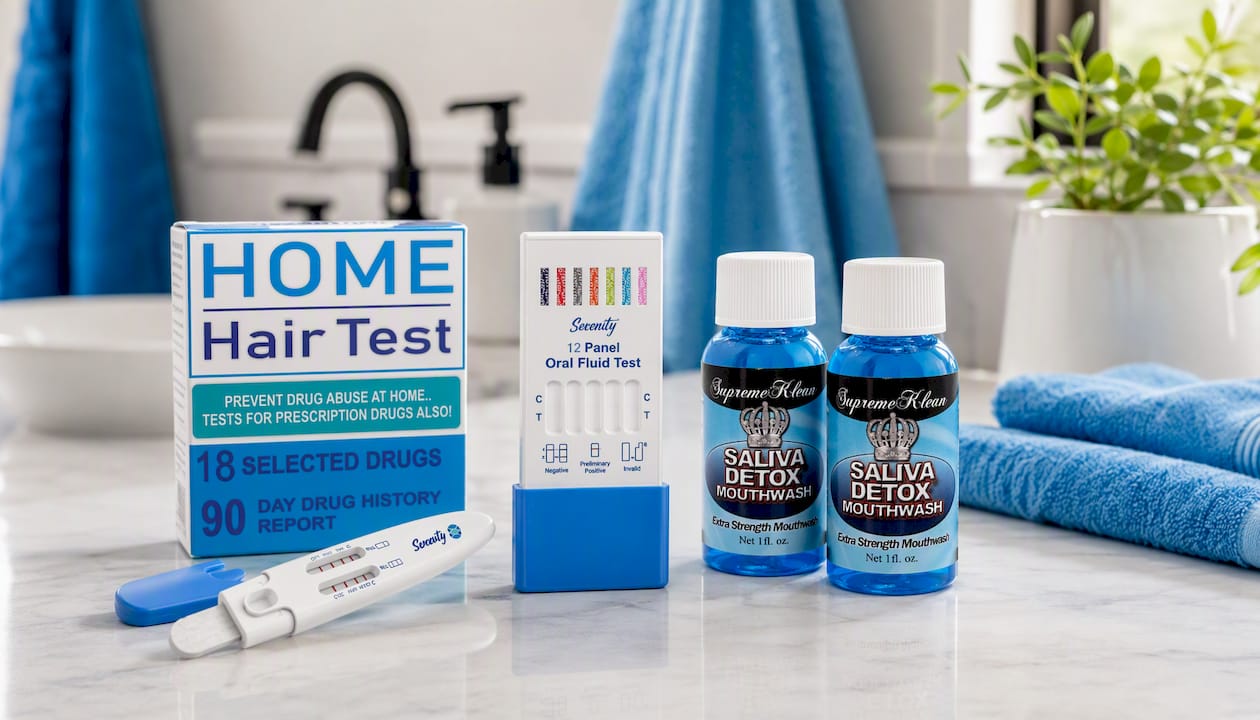
For situations involving saliva screening, the 12-Panel Multi-Drug Oral Fluid Test offers a fast preliminary check, and the Supreme Klean Saliva Detox Mouthwash is built for readers preparing specifically for an oral fluid test. None of these substitute for a lab-run kratom hair assay when mitragynine detection is the actual question, but they’re useful for self-screening and general preparation ahead of employment or clinical testing. If your situation is complicated, timing is tight, or the stakes are high, book an Afterhours Personal Consultation and talk through your specific numbers with someone who does this daily.
Sources
- PMCID article on kratom testing challenges
- LC–MS/MS method for mitragynine and 7-hydroxymitragynine in hair (Journal of Analytical Toxicology)
FAQ
Will Kratom Show Up on a Hair Follicle Test?
Only if the lab specifically runs a mitragynine assay. Standard hair follicle panels used for employment screening don’t test for kratom, so a routine hair test won’t catch it even with regular use.
How Long Does Kratom Stay in Hair?
A standard 1.5 inch hair sample generally reflects around 90 days of history, similar to other substances detected in hair, though kratom-specific research on this exact window is still limited. Dosage, hair type, and cosmetic treatments can shift that timeline shorter or longer.
How Long Do I Need to Be Clean to Pass a Hair Follicle Test?
It depends entirely on which substance the panel screens for and your usage history over the prior 90 days. Tools like Mike’s Required Washes Calculator factor in the specific substance, last use date, and frequency to estimate what’s realistically needed.
Does Kratom Show Up as an Opiate on a Drug Test?
No. Kratom’s mitragynine works on opioid receptors but is chemically distinct from opiates like morphine or codeine, so standard opiate immunoassays don’t flag it. Detecting it requires a dedicated mitragynine assay, not a generic opiate panel.