Last Updated on November 11, 2026
If you searched “heat styling hair test” because a hair drug test is coming up, here is the short answer: heat from a flat iron, curling iron or blow dryer is not a dependable way to change a hair drug test result. Research shows heat can shift the levels of some substances in hair, but the direction and size of the change vary by drug and by hair. If you only wanted to know what temperature is safe for your hair type, the quizzes from hair-care brands are built for that. The rest of this guide covers the drug-test side.
TL;DR
- Hair tests look back about 90 days using a 1.5-inch sample cut at the scalp, so a styling session the night before does not reset that window.
- A 2025 review found heat from a straightener can change concentrations of certain substances, but it lowers some and raises others, so the effect is not predictable.
- Chemical straightening and certain products reduced drug levels in lab studies, yet those studies also show wide variation from sample to sample.
- Our approach is Mike’s Macujo Method: nine steps, authentic Macujo Aloe Rid® Shampoo, and a wash count set by your own use history.
- If your test is close, a personal consultation is the fastest way to turn your dates into a plan.
Table of Contents
- What a hair drug test actually measures
- What the research says about heat and drug levels
- Why heat is the wrong tool for a test date
- What to do if your test is coming
- Old method versus Mike’s Macujo Method
- Our perspective
- Get a plan built for your test
- A word on workplace rules
- FAQ
- Sources
What a hair drug test actually measures
A hair test does not look at the surface of your hair the way a styling quiz does. Labcorp explains that drugs and their metabolites reach the hair matrix from the bloodstream after use. The collector cuts about 100 milligrams of hair, roughly 90 to 120 strands, at the scalp. The sample goes into foil, gets chain of custody paperwork, and ships to the lab.
The lab screens first by immunoassay. Presumptive positives are confirmed by mass spectrometry. According to the same Labcorp page, negative results are generally ready 48 to 72 hours after the lab receives the sample, and confirmations usually take about 72 more hours.
The standard 1.5-inch sample covers about 90 days. Labcorp’s list of what the panel can detect includes marijuana metabolite, cocaine and its metabolites, opiates, oxycodone-class drugs, amphetamines and PCP. Drugs.com’s medically reviewed guidance says the same: most hair tests pick up heavy or regular use over about the past three months.
Two details matter for the heat question:
- The drug is not only on the surface. A 2025 review in the Journal of Applied Laboratory Medicine describes diffusion from the blood supply, incorporation while the hair grows, and deposition through sebum and sweat.
- External contact also counts. The same review lists smoke, dust, aerosols, powders and dirty surfaces as routes onto the hair.
So a test result is a mix of what came in from inside and what may have settled on the outside. Heat touches both, in ways that are hard to predict.
What the research says about heat and drug levels
The 2025 review reports that thermal degradation from a hair straightener can influence detection by changing the concentrations of specific analytes. Among the examples: decreases in GHB, cocaine and cocaethylene, and increases in cannabinol. Changes in THC and related compounds depended on hair color.
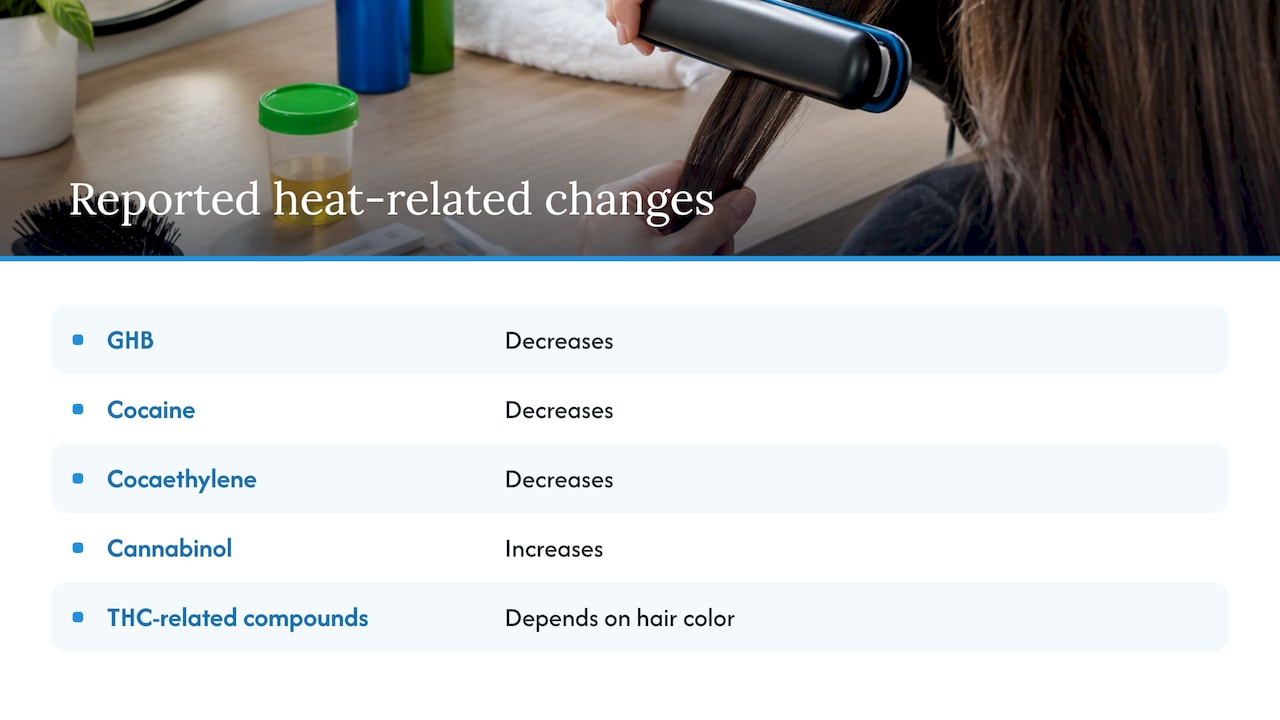
Read that twice. Heat does not act like an eraser. It can lower one marker and raise another in the same head of hair. A lab that confirms by mass spectrometry looks at specific compounds against specific cutoffs, so an unpredictable shift is not a plan.
Cuypers and Flanagan’s 2018 interpretation paper adds that bleaching or heat treatment may remove analytes before the sample is collected. “May” is the operative word. Nothing in these papers gives a temperature, a number of passes or a result you can count on.
Chemical straightening is a different thing
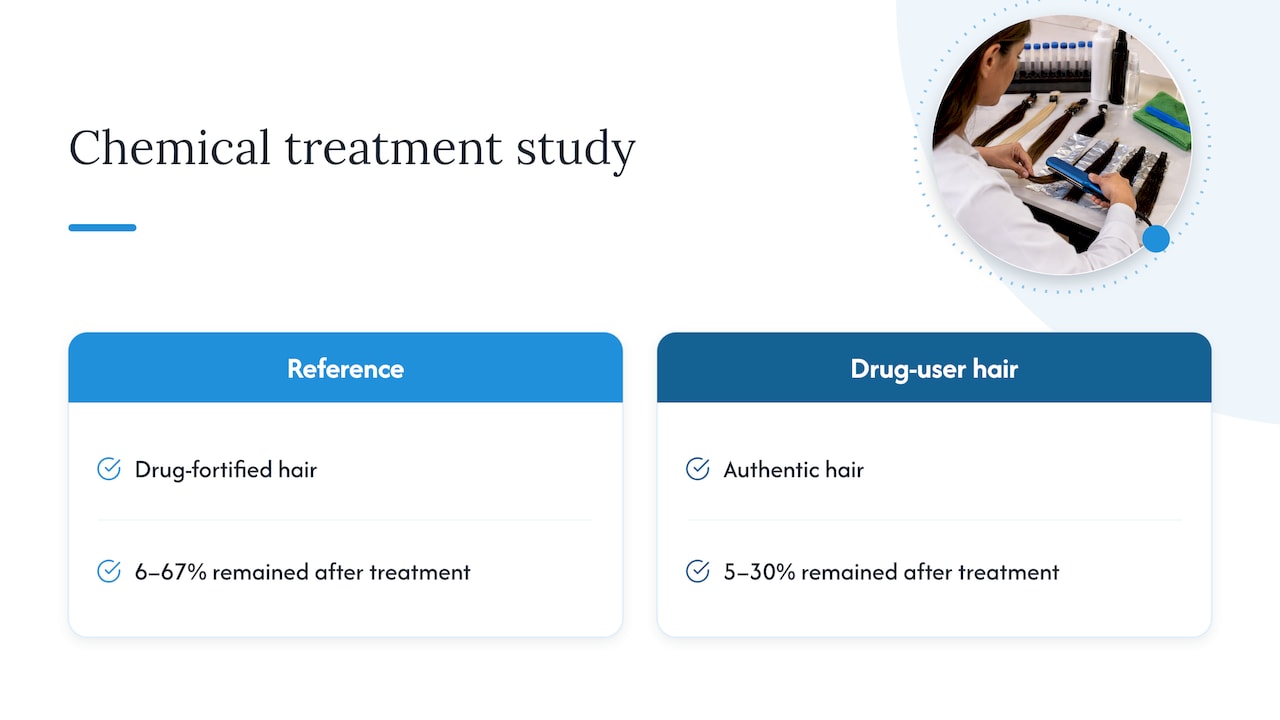
Heat tools and chemical relaxers get lumped together online, but the studies treat them separately. A 2014 NIST study applied a relaxer in vitro to drug-fortified hair and to hair from established drug users. It found 6 to 67% of the original concentration remained in the reference material groups after one treatment, and only 5 to 30% in authentic drug-user hair.
That is a wide range. It also describes a lab experiment on hair, not a promise about any individual’s test. Chemical treatment also changes your hair’s texture and condition, which is a real cost if you were not planning it.
Shampoos and household products
Two studies are worth knowing because they show how much results vary:
- Bertges et al. (2022) tested 54 THC-positive hair samples. Mean THC dropped 52% after one commercial shampoo, 65% after a disinfectant and 58% after vodka. Some samples fell to non-detectable, and others did not.
- An Italian study published in 2023 reported mean decreases of up to 90% for cocaine and 60% for THC after certain homemade treatments.
The lesson is not that anything works. It is that the outcome depends on what you do, how often, and on the hair itself. An average reduction of 52% still leaves heavy users above a cutoff. That is why a structured process with a defined number of washes beats improvising with whatever is in the cabinet.
Why heat is the wrong tool for a test date
You do not control which compounds move. The review’s own examples show some substances going down while others go up. For a THC test, an increase in a related compound is the opposite of what you want.
Hair grows, and the sample comes from the root end. Your 1.5-inch sample reflects new growth at the scalp, which no styling tool reaches in any meaningful way. For more on how the window works and when 90 days is not the whole story, see our hair drug test timeline guide.
Heat also does nothing for the second problem: the external-contamination question. The National Institute of Justice notes that telling use apart from environmental contamination is the central analytical challenge, and that wash procedures are not standardized. Heat does not address that.
Finally, there is the hair itself. Flat-ironing at high temperatures on dry hair is a known source of damage, and brittle hair is no help when you need a clean, easily collected sample. Whatever you decide, do not add a damaging step you cannot justify.
What to do if your test is coming
Start with facts, not a styling hack.
1. Pin down your numbers
You need three things: the substance, the date of last use, and how often you used in the previous 90 days. Those are exactly the inputs our Required Washes Calculator uses. Mike’s Macujo Method sets the wash count from them, so a heavy user and an occasional one get different instructions.
2. Know your panel
A standard five-panel hair test is not the same as a broader one. If you were told it is a 12-panel, read how to prepare for a 12 panel hair test. If benzodiazepines are involved, lab cutoffs differ, and this benzodiazepine hair test guide explains how. Body hair can reach back much further; see the body hair test window.
3. Follow one method completely
The most common mistake is mixing methods: a few washes of one product, a heat session, a vodka rinse. Our method is a nine-step process built around authentic Macujo Aloe Rid® Shampoo, and it works as designed only when every required wash and every direction is completed. Our reported success rate is better than 99% when that happens, and the hair stays clean unless drugs or alcohol are used again.
4. Keep styling simple around the test
While you follow the method, treat your hair gently. Skip new chemical treatments and anything that adds products or residue you cannot account for. If you were going to style anyway, use ordinary, moderate settings and clean hair, and do not treat styling as part of the process.
5. Plan for the lab timeline
Results can take a few days, and a presumptive positive gets a second confirmation step. If a result comes back wrong, the review process usually runs through a medical review officer. Vault Health notes that an MRO typically calls when there is an issue, which gives you a chance to respond. Our guide on verifying and retesting after a failed hair test walks through the options.
Old method versus Mike’s Macujo Method
People still find the older instructions online, so the difference is worth stating plainly.
| Old Macujo Method | Mike’s Macujo Method | |
|---|---|---|
| Introduced | Original, in use since about 1999 | 2018 |
| Designed for | Low to moderate THC exposure | High THC levels and other drugs and alcohol |
| Estimated success | About 90% for moderate THC | Better than 99% when every wash and direction is completed correctly |
| Result type | Temporary masking | Hair stays clean unless drugs or alcohol are used again |
| Wash count | General | Set by the calculator from substance, last use and 90-day frequency |
If you are a heavy user, or your last use was recent, the calculator-based approach is built for your case. You can read the full walkthrough in our science-backed guide to passing a hair follicle drug test.
Our perspective
We have helped people prepare for hair follicle tests since about 1999, and the question we hear most often is some version of “can I just do something fast?” Heat is the usual guess. A hot iron feels like it should burn something off.
The published research says the picture is more complicated. Heat can lower some compounds and raise others. A study that shows a 50% average drop is also telling you that results scatter. Nobody should stake a job on an average.
That is why Mike built the 2018 method around a count, not a feeling. The required number of washes comes from your substance, your date of last use and how often you used in the prior 90 days. Authentic Aloe Rid® Shampoo, nine steps, every direction followed. When people complete it as written, we see it work, and the hair stays clean afterward unless they use again.
If you are unsure about your dates or your panel, call us. Talking it through is part of what we do, and we would rather spend twenty minutes getting your plan right than have you guess.
MIchael
Get a plan built for your test
You have two ways to get started. The first is the shampoo itself. We carry the Macujo Aloe Rid Old Formula Shampoo, priced at $100 to $150, and a bundle of Aloe Rid with Zydot Ultra Clean. The second is a conversation. The Afterhours Personal Consultation is $100 and lets you go through your dates, panel and timing with an expert, including evenings when most people are free to talk.
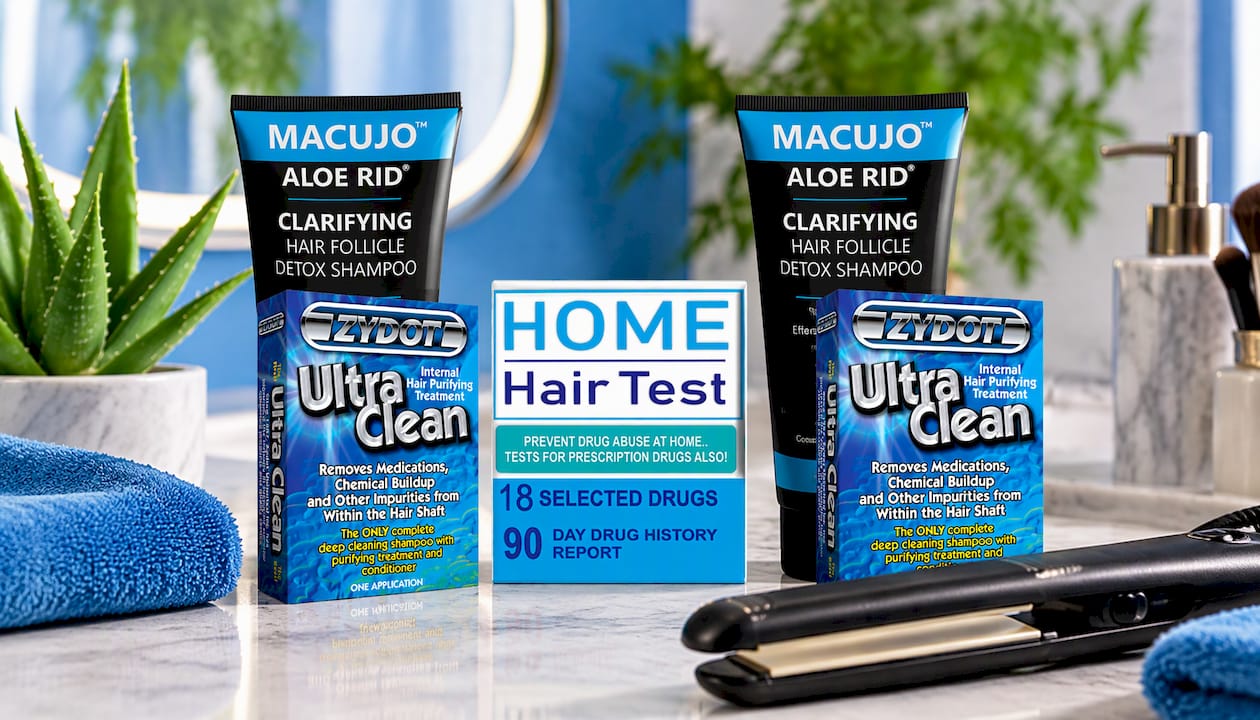
Not sure what to ask? Our list of consultation questions to ask before a hair test helps, and the hair drug test consultation overview explains what happens on the call. If you want to check your hair first, we also stock a home hair test kit.
A word on workplace rules
Hair testing is common in private-sector hiring but is not a federal workplace standard. The 2023 Federal Register revision of the urine testing guidelines, effective February 1, 2024, noted that no federal agencies were testing hair or oral-fluid specimens at the time. Your employer’s policy and the lab it uses decide your panel, so ask which test you are getting. If the employer also uses urine, this comparison of hair and urine tests explains why recent use can show up differently on each.
FAQ
Does flat ironing my hair affect a hair drug test?
It can change concentrations of some substances, according to a 2025 review, but the changes go in different directions depending on the drug and hair color. That makes heat unreliable for a test date. A defined, test-specific method is a better foundation.
Can a blow dryer or curling iron remove drugs from hair?
No published evidence we know of shows a blow dryer or curling iron reliably doing that. The research on heat concerns thermal degradation of specific compounds, and it also shows increases in some. Your sample is cut at the scalp, where styling tools have the least effect.
How far back does a hair test look?
About 90 days for a standard 1.5-inch sample, per Labcorp. Body hair can cover a longer period, and our timeline guide covers when 90 days is not the full story.
How many washes do I need?
It depends on the substance, your date of last use and how often you used in the previous 90 days. Mike’s Macujo Required Washes Calculator takes those three inputs and gives your count, and a consultation can confirm it.
Sources
- Hair Follicle Drug Testing: Process & Benefits, Labcorp
- How far back does a hair follicle test detect drugs?, Drugs.com
- Review on Toxicology Testing in Hair, Journal of Applied Laboratory Medicine
- The interpretation of hair analysis for drugs and drug metabolites, PubMed
- Influence of Chemical Straightening on the Stability of Drugs of Abuse in Hair, NIST
- Manipulation of THC Hair Concentrations by Commercially Available Products, PMC
- Hair analysis: Assessment of homemade hair treatment effects on drug concentrations, Drug Testing and Analysis
- Detecting Drugs in Hair: Is It Drug Use or Environmental Contamination?, NIJ
- Facts and Questions for anyone participating in employment screening, Vault Health
- Federal Register, Mandatory Guidelines for Federal Workplace Drug Testing Programs, 2023