Last Updated on September 26, 2026
A DOT drug test follows federal rules under 49 CFR Part 40 and applies only to safety-sensitive transportation workers, using a fixed five-panel urine process with mandated custody forms, certified labs, and Medical Review Officer review. A non-DOT test is whatever the employer decides. State law and internal policy govern it, and the employer chooses the panel, the specimen type, and the consequences. Mixing the two up is where most compliance mistakes start.
TL;DR:
- DOT testing strictly applies to safety-sensitive transportation workers and follows federal rules, including a fixed five-drug urine panel and mandatory custody procedures.
- Non-DOT testing is employer-driven, allowing for broader panels, variable specimen types like hair and saliva, and less rigorous control procedures.
- A positive DOT result results in immediate removal from safety duties, mandatory SAP evaluation, and extended unannounced follow-up testing; non-DOT consequences are employer-specific.
- DOT mandates urine collection and a chain-of-custody form, while non-DOT programs can use urine, hair, saliva, or oral fluid without federal supervision.
- Combining DOT and non-DOT testing procedures is a compliance risk, as specimens and forms must remain fully separate, with different protocols and authorities governing each.
Table of Contents
- Dot Vs Non Dot: A Quick Side-By-Side Comparison
- Who Actually Needs DOT Testing?
- What Substances Get Tested, and With What Specimen?
- How DOT Collections Work, Step by Step
- What Happens After a Positive Result
- Keeping DOT and Non-DOT Programs Separate
- Where Hair and Saliva Testing Fit Into Non-DOT Screening
- Why Compliance Beats Convenience Every Time
- Preparing for a Non-DOT Hair, Saliva, or Home Screening
- Where to Verify the Rules Yourself
- Sources
- FAQ
Dot Vs Non Dot: A Quick Side-By-Side Comparison
The gap between these two testing categories isn’t subtle once you see it laid out. DOT testing exists because Congress and the DOT ODAPC decided that anyone operating a bus, plane, train, pipeline, or commercial vehicle needs a standardized, tamper-resistant screening process. Non-DOT testing exists because employers want some level of assurance about drug use, but they’re not bound by a single federal rulebook.
Here’s the breakdown that matters most when you’re trying to figure out which category applies to a given test:
- Coverage: DOT applies to safety-sensitive transportation roles (CDL drivers, pilots, rail workers, transit employees, pipeline workers, certain maritime crew). Non-DOT applies to everyone else, or to DOT-covered workers tested for reasons outside the federal mandate.
- Panel: DOT tests a fixed five-drug panel. Non-DOT panels can be narrower or far broader, often 10 or 12 panels covering additional prescription and synthetic drugs.
- Specimen type: DOT requires urine. Non-DOT programs can use urine, hair, saliva, or oral fluid.
- Controls: DOT mandates the Federal Custody and Control Form (CCF), certified collectors, and MRO review. Non-DOT programs can adopt these voluntarily but aren’t required to.
Who Actually Needs DOT Testing?
DOT testing isn’t optional once your job qualifies as “safety-sensitive” under one of the agencies that fall under the Department of Transportation umbrella. That covers FMCSA (commercial truck and bus drivers), FAA (pilots and certain aviation crew), FRA (railroad employees), FTA (transit workers), PHMSA (pipeline operators), and the Coast Guard (certain maritime roles). If your role touches any of these categories and involves operating equipment, ensuring safety, or direct passenger responsibility, DOT rules apply to you.
The specific situations that trigger a required test include:
- Pre-employment testing before you can perform any safety-sensitive function.
- Random testing, pulled from a pool at rates set by DOT agencies and administered without advance notice.
- Post-accident testing following qualifying accidents.
- Reasonable suspicion testing, based on observed behavior documented by a trained supervisor.
- Return-to-duty testing after a violation, before resuming safety-sensitive work.
- Follow-up testing, a series of unannounced tests over a period set by a Substance Abuse Professional.
Small employers who can’t run their own random pool typically join a testing consortium, sharing a shuffled pool with other companies. This satisfies the FMCSA’s random testing rules without requiring an in-house program.
What Substances Get Tested, and With What Specimen?
DOT’s drug panel hasn’t changed in structure for years: it tests for marijuana, cocaine, amphetamines and methamphetamines, opiates, and phencyclidine (PCP). That’s the entire list. Part 40 fixes it, and no DOT-regulated employer can add or subtract from it on their own.
Specimen type is where things get more layered. DOT testing today still requires urine collection. DOT authorized oral fluid testing in a 2023 rule change, but actual implementation depends on HHS-certified laboratories being available and operational, so employers need to verify current certification status before treating oral fluid as a valid DOT option rather than assuming it’s already live everywhere.
Non-DOT programs face no such restriction. Employers routinely choose:
- Urine, for cost and familiarity
- Hair testing, for its longer detection window (often 90 days versus days for urine)
- Oral fluid or saliva, for observed collection and faster turnaround
- Broader panels covering synthetic opioids, benzodiazepines, or other substances DOT doesn’t test for
Pro Tip: If you’re a CDL driver wondering whether marijuana use will show up differently on a company’s non-DOT test versus your DOT test, check the 5-panel breakdown first. THC metabolite cutoffs and detection windows vary by specimen type and by whether the employer added it to a non-DOT panel at all.
How DOT Collections Work, Step by Step
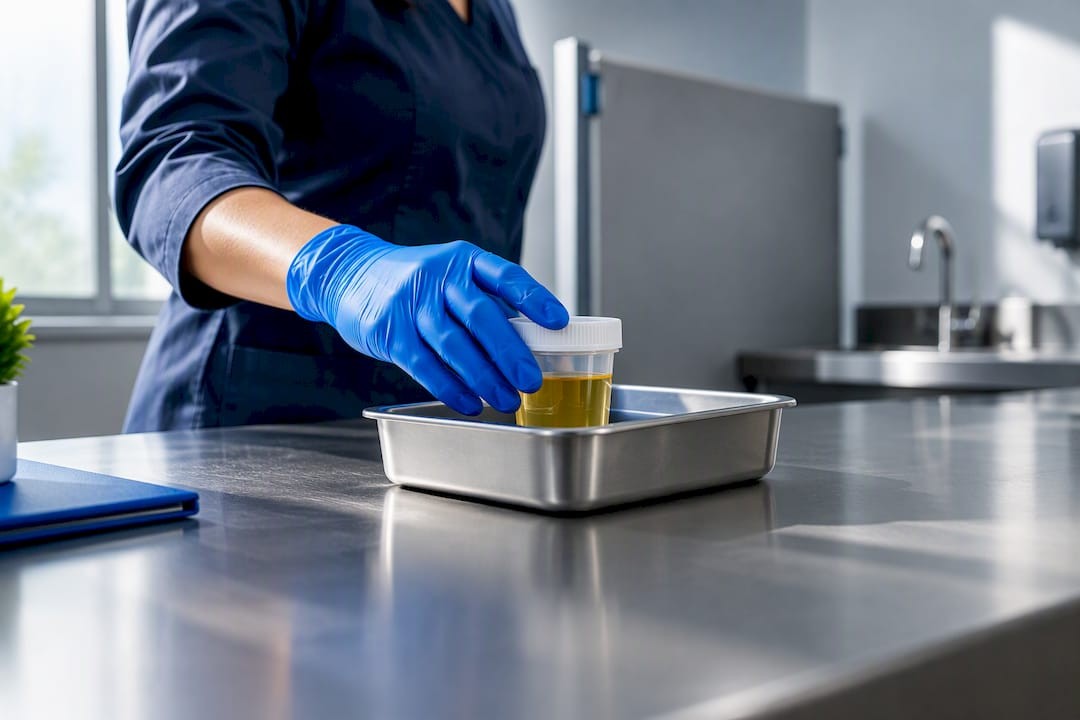
The procedural weight behind a DOT test is what separates it from a routine workplace screen. Every DOT collection uses the Federal Drug Testing Custody and Control Form (CCF), a chain-of-custody document that can never be substituted with a generic form, and it cannot be used for non-DOT collections either. Using the wrong form invalidates the process on either side.
Beyond the paperwork, DOT collections require:
- A certified collector trained specifically on DOT protocols
- Temperature strip verification on the specimen within four minutes of collection
- A split specimen (two vials, one held in reserve for potential retesting)
- Testing at a SAMHSA-certified laboratory
- Review of any non-negative result by a Medical Review Officer before it’s reported to the employer
The MRO exists as a legally required checkpoint. A physician trained in substance abuse review contacts the donor, checks for valid medical explanations (a legitimate prescription, for instance), and only then verifies a result as positive. Non-DOT programs skip this step by default, though many employers voluntarily mirror DOT’s custody and MRO procedures anyway because it makes a positive result far harder to challenge in court or arbitration.
What Happens After a Positive Result
The fallout from a verified DOT positive looks nothing like what happens after most non-DOT positives, and the difference catches people off guard more often than it should.
Under DOT rules:
- The employee is immediately removed from any safety-sensitive function, no exceptions
- A Substance Abuse Professional (SAP) evaluation is required before any return to duty
- The employee must complete SAP-recommended treatment and pass a return-to-duty test
- Follow-up testing continues, unannounced, for an extended period as recommended by a Substance Abuse Professional prior to return to safety-sensitive duties
Under non-DOT programs, the employer decides everything. That might mean immediate termination, a last-chance agreement, mandatory referral to an employee assistance program, or nothing at all beyond a documented warning, depending on company policy and applicable state law.
One detail trips up a lot of drivers: a negative non-DOT test does not erase or override a verified DOT positive. The DOT result stands as the controlling record for that safety-sensitive role regardless of what a later, separate test shows.
Keeping DOT and Non-DOT Programs Separate
Federal rules under Part 40 require DOT and non-DOT specimens, forms, and testing pools to stay fully separate. An employer can’t collect a specimen on a DOT form and later decide to process it as a non-DOT test, or vice versa. The two systems simply don’t overlap, by design.
For employers running mixed workforces, here’s a workable compliance sequence:
- Confirm which employees fall under DOT authority before designing any testing program.
- Keep DOT and non-DOT random pools administratively separate, whether managed in-house or through a consortium.
- Train collectors and supervisors on which form and protocol applies to each collection.
- Document every test with the correct authority cited, DOT or company policy, never both.
| Factor | DOT Program | Non-DOT Program |
|---|---|---|
| Governing authority | 49 CFR Part 40 | Employer policy / state law |
| Specimen | Urine (oral fluid pending certification) | Urine, hair, saliva, oral fluid |
| Form required | Federal CCF | Employer-chosen form |
| MRO review | Mandatory | Optional |
CDL drivers performing safety-sensitive functions for multiple DOT-regulated employers must be counted in random pools according to FMCSA’s coverage rules, which is a detail smaller trucking companies sometimes miss when a driver splits time between carriers.
Where Hair and Saliva Testing Fit Into Non-DOT Screening
DOT testing runs almost entirely on urine right now, which leaves hair and saliva squarely in non-DOT territory. Employers running their own screening programs, landlords, sports leagues, and individuals facing a company-mandated pre-employment or random non-DOT check are the ones actually dealing with hair follicle or oral fluid tests day to day.
Macujo has worked in this space since 1999, building hair-cleansing methods and product lines around exactly this kind of screening. A specialized method, introduced in 2018, uses a multi-step process built around a specific shampoo formula, with washes calculated individually through a required washes calculator based on substance, last use date, and frequency over the prior 90 days:
- Home hair test kits let you check status before a scheduled non-DOT screen
- Saliva detox products address oral fluid tests specifically
- Personalized consultation covers cases that don’t fit a standard template
None of this applies to DOT-mandated urine collections, which follow federal chain-of-custody rules no product can substitute for. Always follow the procedure your employer or testing authority actually orders.
Why Compliance Beats Convenience Every Time
The employers who get burned aren’t usually the ones running sloppy tests. They’re the ones who ordered the wrong test for the situation, used a non-DOT form for a DOT-covered driver, or skipped documentation because “it seemed obvious” who needed what. Confirming testing authority before every single collection sounds tedious. It’s also the single cheapest insurance a company has against a wrongful termination claim.
My advice to HR teams running non-DOT programs: borrow DOT’s playbook even when you don’t have to. An MRO review, a real chain-of-custody form, a trained collector. None of it is required outside DOT rules, but all of it makes a positive result far harder to overturn later.
— MIchael
Preparing for a Non-DOT Hair, Saliva, or Home Screening
If you’re facing a non-DOT hair or saliva test rather than a DOT-mandated urine collection, you have options DOT-covered drivers simply don’t get. Macujo has built its entire catalog around lawful, test-specific preparation for exactly these situations, backed by a method that’s been refined since 1999.
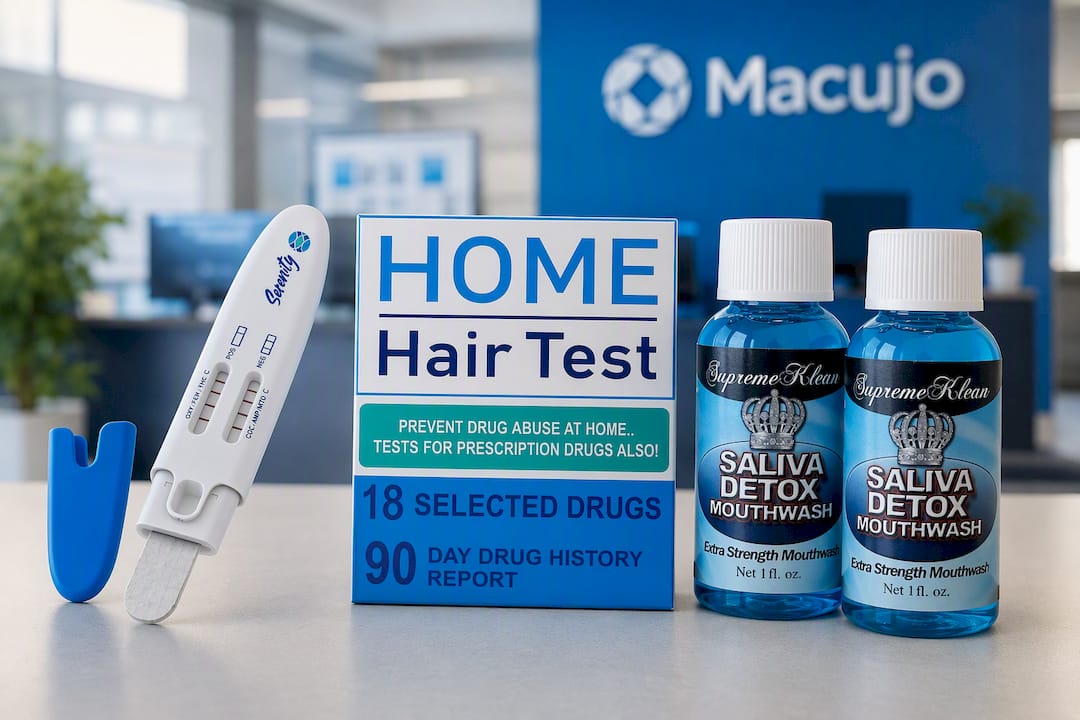
For readers dealing with an upcoming non-DOT screen, the relevant lineup includes:
- The Home Hair Test kit, for checking your own status before a scheduled hair screen
- The 12-Panel oral fluid test, for at-home saliva screening
- Supreme Klean Saliva Detox Mouthwash, built specifically for oral fluid tests
- Macujo Aloe Rid Old Formula Shampoo, priced between $100 and $150, the foundation of Mike’s Macujo Method
- An Afterhours Personal Consultation at $100, for one-on-one guidance on your specific timeline and substance history
These products address non-DOT and personal pre-test preparation. They are not a substitute for any DOT-mandated collection procedure, which must follow federal chain-of-custody rules regardless of what you do beforehand. If a non-DOT hair or saliva test is what’s actually on your calendar, visit the Macujo shop to get the required-washes calculation and product combination that matches your situation.
Where to Verify the Rules Yourself
- Part 40 Appendix E covers lab reporting and MIS requirements for DOT programs.
- FMCSA’s random testing page details pool management and consortium rules.
- SAMHSA’s drug-free workplace FAQs explain how Mandatory Guidelines apply outside DOT-specific programs.
Sources
- 49 CFR Part 40 — DOT Office of Drug & Alcohol Policy and Compliance (ODAPC)
- Random testing — FMCSA
- SAMHSA — Drug-free workplace FAQs
FAQ
What Is the Difference Between DOT and Non-DOT Testing?
DOT testing follows 49 CFR Part 40 and applies only to safety-sensitive transportation employees, using a fixed five-panel urine test with mandatory custody forms and MRO review. Non-DOT testing is set entirely by employer policy and state law, with flexible panels and specimen types including hair and saliva.
Which Is More Serious, a DOT or Non-DOT Drug Test?
A DOT positive carries heavier federal consequences: immediate removal from safety-sensitive duty, a required SAP evaluation, and a formal return-to-duty process before resuming work. Non-DOT consequences depend entirely on employer policy and can range from a warning to termination.
What Does It Mean if a Drug Test Is Non-DOT?
It means the test isn’t governed by federal DOT regulations. The employer sets the panel, the specimen type, and the consequences, subject only to state law and their own written policy rather than Part 40.
What 5 Drugs Does DOT Test For?
DOT’s fixed panel covers marijuana, cocaine, amphetamines and methamphetamines, opiates, and PCP. This list applies uniformly across every DOT agency and cannot be modified by individual employers.