Last Updated on October 19, 2026
Most detox shampoos are built from the same few parts: a strong cleansing surfactant, a chelating agent or mild acid, and a handful of botanical extracts that mostly sell the label. The surfactant does the heavy lifting on buildup. The plant extracts are largely there for marketing and scent. And for a hair follicle drug test, no ingredient list on its own settles the question, because what matters is where the drug sits in the hair, not what is on the bottle.
Below we go through each ingredient family, what it does, what to avoid on a sensitive scalp, and what the research says when the goal is a drug screen rather than a cosmetic reset.
TL;DR
- Detox or clarifying shampoos rely mainly on anionic surfactants such as sodium lauryl sulfate (SLS) and sodium laureth sulfate (SLES), often paired with chelators like citric acid.
- Charcoal, ginger, peppermint, tea tree and apple cider vinegar are common add-ins. They support the “detox” story but are not what removes product buildup.
- Ingredients that remove styling residue are not proven to remove drugs built into the hair shaft, and the FDA treats these products as cosmetics.
- Harsh formulas used too often can irritate the scalp and damage hair, and damaged hair can draw lab scrutiny.
- If you have a real hair test coming, the right wash count for your situation matters more than any single ingredient.
Table of Contents
- What a detox shampoo is actually made of
- Surfactants: the real cleaning power
- Chelating agents and acids
- Absorbents, exfoliants and botanicals
- Ingredients to be careful with
- Do detox shampoo ingredients work on a hair drug test?
- What this means if you have a hair test coming
- Our perspective: ingredients are only half the picture
- How to choose a clarifying shampoo for ordinary use
- Where Macujo fits
- FAQ
- Sources
What a detox shampoo is actually made of
Open any bottle sold as a “detox,” “clarifying” or “deep cleansing” shampoo and the ingredient list sorts into five jobs:
- Surfactants lift oil, sebum and product residue off the hair.
- Chelating agents and acids bind minerals and adjust pH.
- Absorbents and exfoliants such as charcoal or salt grab buildup on the scalp.
- Botanical extracts and oils add scent, a “natural” story and some conditioning.
- Preservatives, thickeners and fragrance keep the formula stable and pleasant.
The product pages that rank for this topic show the pattern clearly. One lists charcoal, vitamin E, ginger and peppermint oil as its key ingredients. Another uses ginger, rosemary, lemongrass, white willow bark, hibiscus and ginseng in a water base before reaching its surfactant. Another leans on desert-derived extracts such as moringa and prickly pear seed oil. The extracts differ. The cleansing engine underneath usually does not.
Surfactants: the real cleaning power
The ingredient doing the work in a clarifying shampoo is the surfactant. Anionic surfactants like SLS and SLES are the most common primary cleansers in clarifying formulas because they foam well and strip oil and residue effectively.
You will see these on labels:
| Ingredient | What it does | Watch for |
|---|---|---|
| Sodium lauryl sulfate (SLS) | Strong cleanser and foamer | Dryness, scalp irritation |
| Sodium laureth sulfate (SLES) | Similar cleansing, slightly milder | Dryness with frequent use |
| Ammonium laureth sulfate, TEA lauryl sulfate | Sulfate cousins with similar action | Same as above |
| Sodium C14-16 olefin sulfonate | Cleanser with high foam | Can be stripping |
| Sodium lauroyl sarcosinate, disodium laureth sulfosuccinate | Milder, often marketed as sulfate-free | Still cleansing, still drying if overused |
| Cocamidopropyl betaine | Secondary surfactant that softens harshness and boosts lather | Rarely a problem, but a known allergen for some |
“Sulfate-free” does not mean gentle. A sulfate-free clarifier still has to remove oil and residue, so it still contains a real cleanser. It simply uses a different one.
Chelating agents and acids
Hard water leaves minerals on hair, and swimming pools leave metals. Chelators bind those ions so they rinse out. Look for:
- Citric acid, which also lowers pH.
- Tetrasodium glutamate diacetate or disodium EDTA, common chelators in clarifiers.
- Glycolic acid or salicylic acid, used in scalp-focused formulas to loosen flakes and buildup at the root.
- Apple cider vinegar, a mild acid that appears in many “natural” versions.
These ingredients help with mineral and product buildup. They are a sensible part of a cosmetic clarifier. They are not a mechanism for pulling anything out of the inner structure of the hair.
Absorbents, exfoliants and botanicals
Activated charcoal binds oil and surface grime. It is gritty to rinse and can leave a dull feel on dry hair. Salt, sugar or microgrits work as physical scrubs on the scalp. Clay does a similar job to charcoal.
Botanicals are the long tail of the label: tea tree oil for a clean tingle, peppermint and eucalyptus for cooling, ginger and ginseng for the “stimulating” claim, witch hazel for astringency, coconut water or aloe for slip and moisture. Some are pleasant and do soothe. None of them are the reason a clarifier cleans.
Ingredients to be careful with
If you have a dry, color-treated, curly or sensitive-scalp situation, read the label for these:
- High-percentage sulfates first on the list after water.
- Strong alkaline ingredients such as sodium hydroxide used to adjust pH. High pH raises the cuticle and can leave hair rough.
- Menthol, peppermint or eucalyptus in large amounts if your scalp stings easily.
- Fragrance (listed as parfum, limonene, linalool) if you react to scent.
- Frequent use of any clarifier. Most are meant for occasional resets, not daily washing.
The FDA notes that products marketed as hair cleansing or detox treatments are regulated as cosmetics, which means they are not required to be proven safe or effective before sale, and the agency has looked into reports of hair loss, breakage and scalp irritation tied to certain cleansing products. Patch test anything new, and see a dermatologist if irritation does not settle.
Do detox shampoo ingredients work on a hair drug test?
This is where the cosmetic story and the testing reality part ways, and it is the question behind most searches like this one.
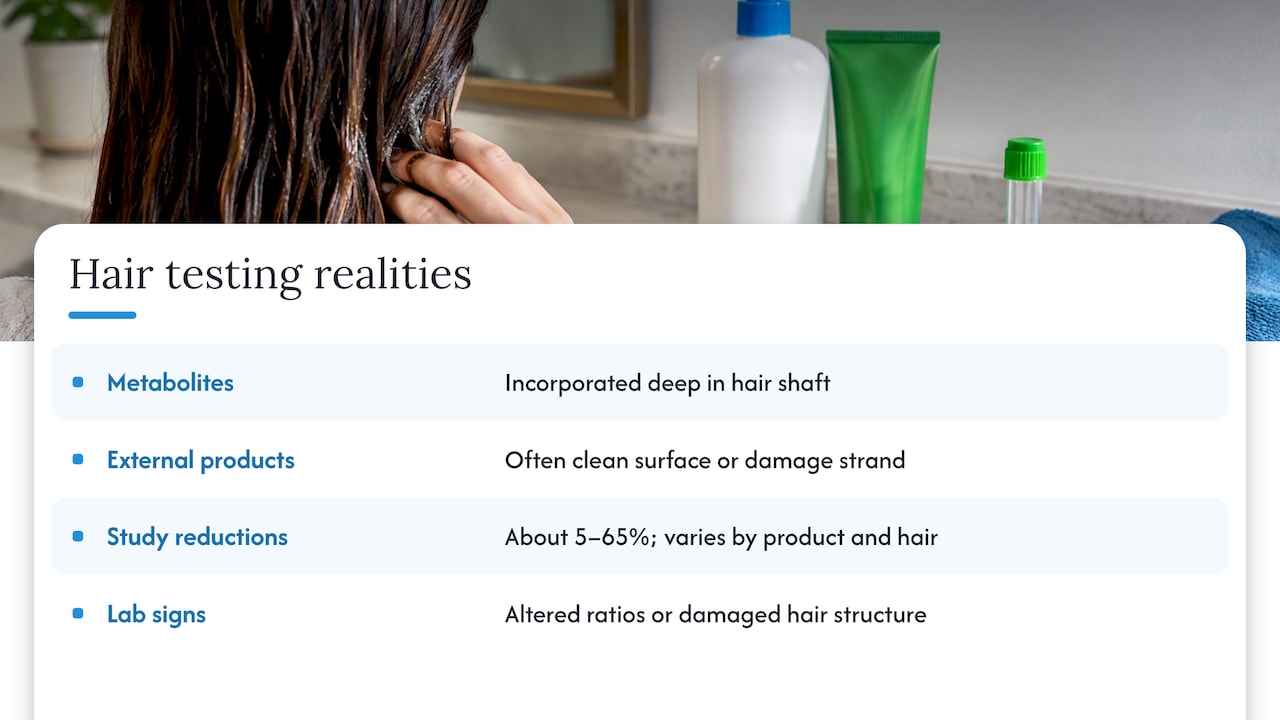
A drug test on hair does not look for residue on the surface. Drug metabolites are incorporated into the hair as it grows, deep in the shaft, so external products often only clean the surface or chemically damage the strand. The same review notes that cleansing shampoos reduce concentrations by widely varying amounts and that labs can sometimes spot signs of manipulation, such as altered metabolite ratios or damaged hair structure.
Studies on commercial products agree on the variability. A study of THC manipulation with everyday and internet-advertised products found reductions ranging from about 5% to 65% depending on substance, product and individual hair, with no product consistently dropping results below detection for everyone.
So a surfactant that strips sebum well is not automatically a surfactant that strips drug metabolites from the cortex. Anything that claims otherwise from the ingredient list alone is making a claim the label cannot support. That is the honest limit of any ingredient-based argument, and it applies to a generic drugstore clarifier as much as to a specialty product.
Why harsh treatments can backfire
Labs wash hair samples before analysis to separate environmental contamination from true consumption. Research on cosmetic treatments and cocaine contamination in hair shows that treatments like bleaching change how hair takes up and holds drugs, and aggressive treatment can damage the keratin structure in a way an examiner may notice. Overdoing a strong clarifier leaves you with brittle hair and no guarantee of a lower result.
Hair care can also work in the other direction. Toxicology guidance points out that some hair treatments can make hair more susceptible to external contamination, which matters if you are around drug residue environmentally.
What this means if you have a hair test coming
First, know what kind of test you face. Hair testing is not authorized in federal workplace programs, which are limited to urine and, where permitted, oral fluid, but private employers can choose hair analysis for pre-employment screening. If your job is federally regulated, our guide to the DOT hair follicle testing policy explains where hair testing does and does not apply.
Second, understand the window. Hair tests generally reflect about 90 days of use, but there is a short lag after consumption before a drug shows in hair. Our comparison of hair versus urine tests at work covers how recent use can slip through even when the longer window is clean.
Third, do not count on shortcuts:
- A shaved head does not avoid the test, because labs can collect body hair instead, and body hair can reflect a longer period.
- Bleaching and dyeing change drug levels but carry their own risks, as we explain in dyed hair and hair drug tests.
- Textured and locked hair presents its own issues, covered in passing a hair follicle test with dreadlocks.
Our perspective: ingredients are only half the picture
We have been helping people prepare for hair follicle tests since around 1999, and the first thing we tell anyone is that the ingredient list is the least useful way to judge a product. A bottle full of charcoal, peppermint and ginger tells you how it will feel in the shower. It tells you nothing about how it will behave against a specific substance, a specific amount of use and a specific number of days since last use.
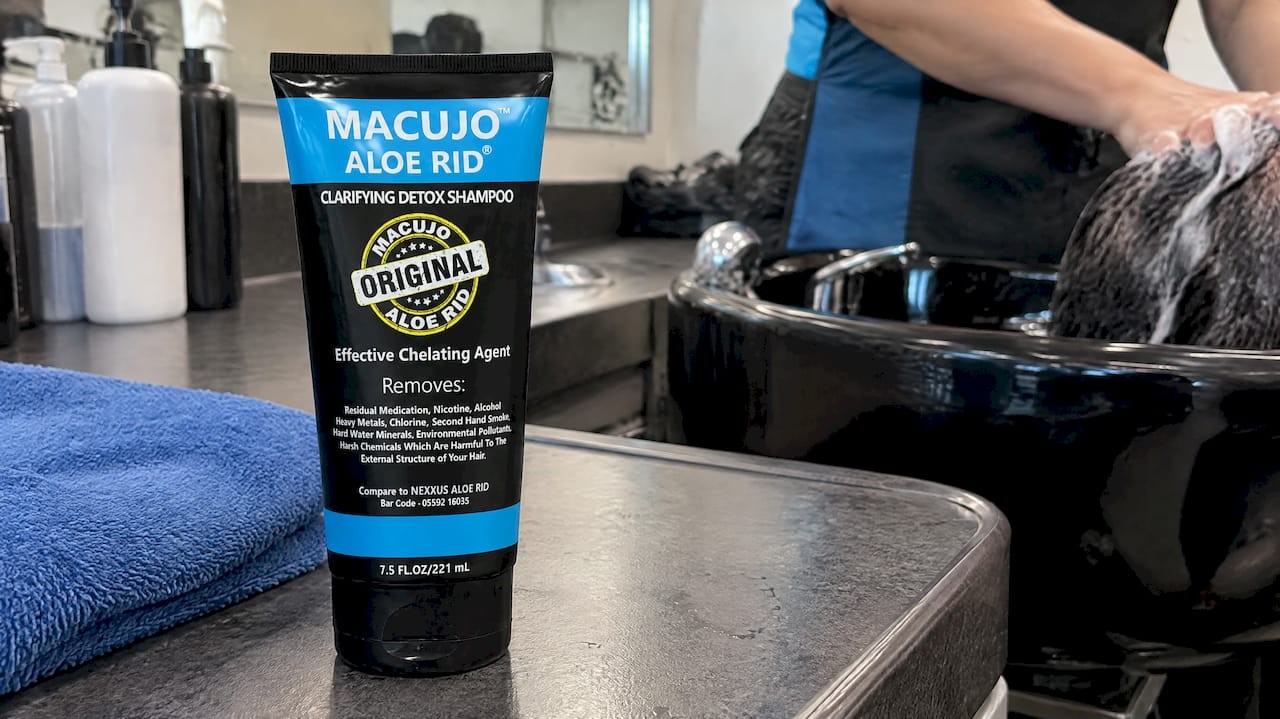
That is why our current approach, Mike’s Macujo Method, is built around a nine-step process rather than a single product. It was introduced in 2018 for high THC levels and other drugs and alcohol, and it must be completed with authentic Macujo Aloe Rid® Shampoo. How many washes you need is not a guess: Mike’s Macujo Required Washes Calculator works it out from the substance, the date of last use and how often you used during the previous 90 days. When every required wash and direction is followed correctly, we report a success rate better than 99%, and the hair stays clean unless drugs or alcohol are used again.
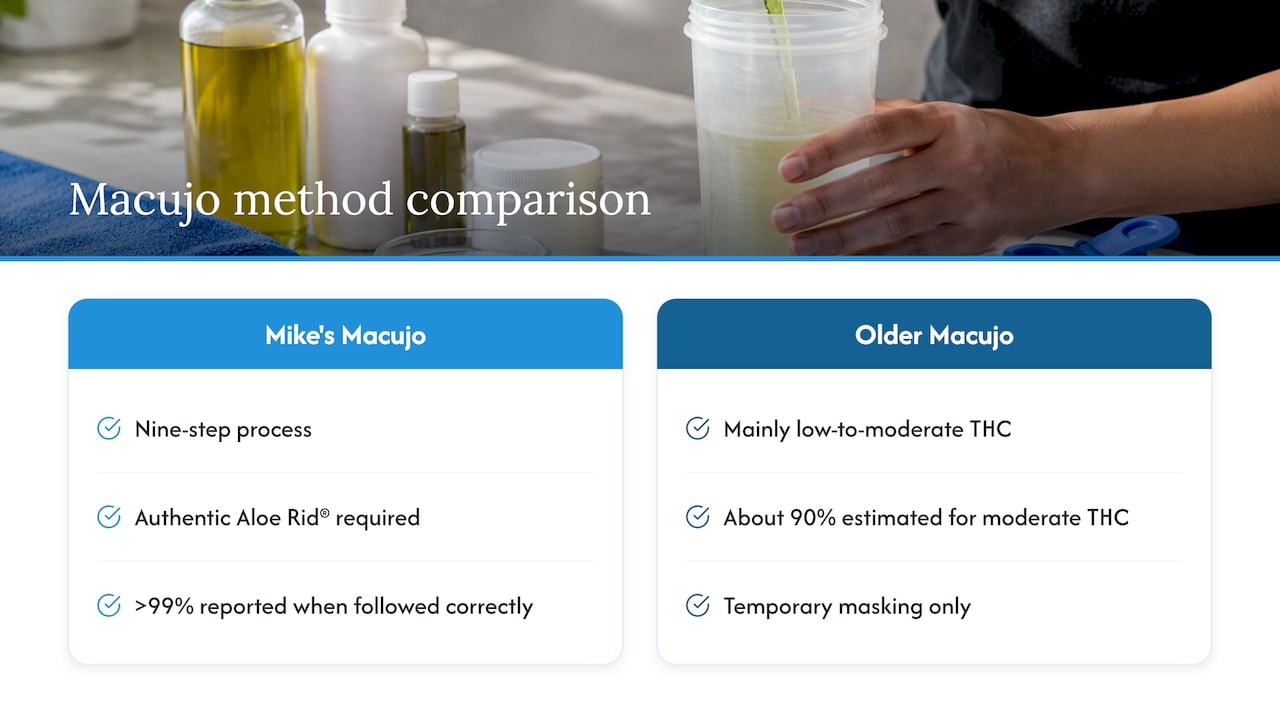
We also keep the older Macujo Method distinct. It was designed mainly for low-to-moderate THC exposure, we estimate about 90% success for moderate THC, and it only masks temporarily. Mixing the two up is a common mistake.
We will not tell you a generic clarifier does the same thing, and we will not tell you any shampoo is magic. The independent research above shows how mixed the results are across products. What we can say is that the method, the calculator and direct support from people who have done this for decades are what we stand behind. If your situation is unusual, call us before you spend money on anything.
— MIchael
How to choose a clarifying shampoo for ordinary use
If you simply want to remove buildup and have no test in mind, a short checklist works well:
- Match the surfactant to your hair. Oily scalp and heavy styling products can handle an SLES-based clarifier. Dry, curly or color-treated hair does better with a milder sulfate-free cleanser.
- Look for a chelator if you swim often or have hard water.
- Treat botanicals as a bonus, not a reason to buy.
- Limit frequency to once every week or two, and follow with a conditioner.
- Skip anything that makes drug test promises without explaining how many washes, in what order and for which substance.
For a deeper look at what separates products sold for testing from everyday clarifiers, see our page on the best hair detox shampoo for a drug test.
Where Macujo fits
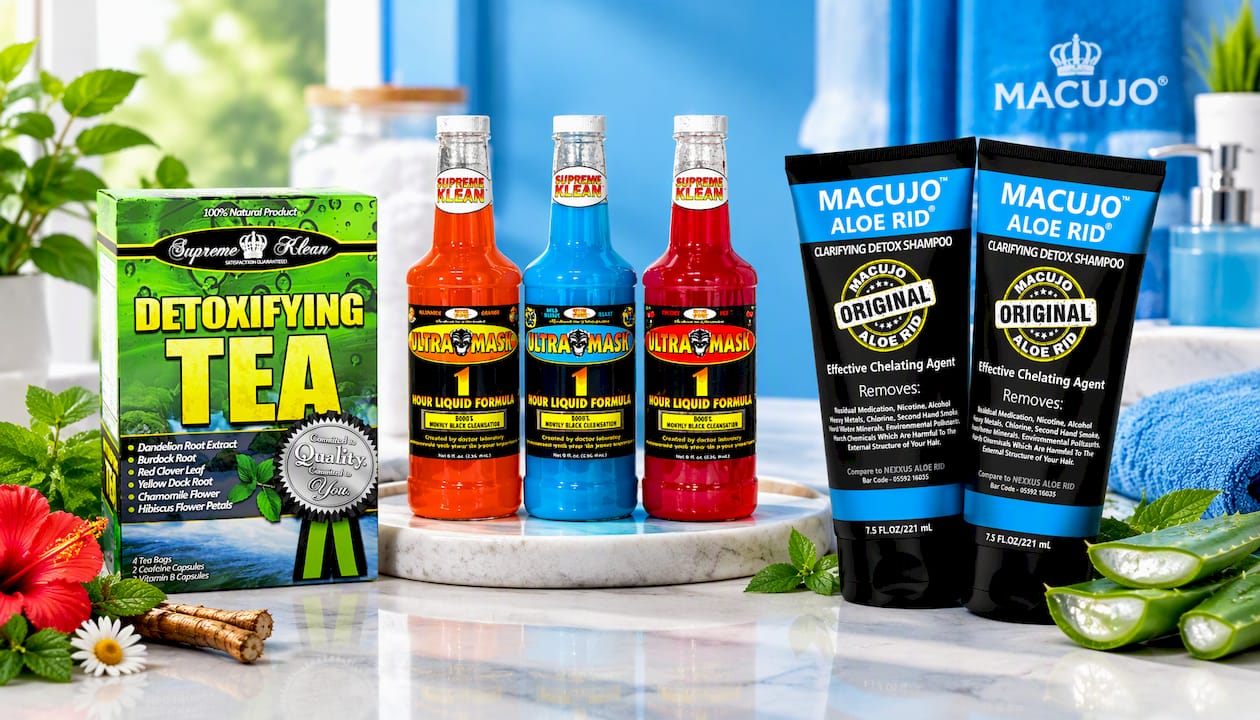
If you have a hair follicle test scheduled, our hair test products and Macujo Aloe Rid® Shampoo page is the place to start, and Macujo Aloe Rid Old Formula Shampoo is listed at 100-150 USD. Prefer to talk it through first? The Afterhours Personal Consultation is 100 USD, and it gets you on the phone with an expert who can look at your timeline and exposure. If you already have a result in hand, read failed hair test? use the 90-day window and, for treatment-program testing, rehab hair drug tests.
FAQ
What does a detox shampoo do?
A detox or clarifying shampoo removes oil, sebum, styling product and mineral buildup from hair and scalp, usually with strong surfactants and a chelating acid. It is a cosmetic reset. It is not a medical treatment, and the FDA does not require these products to be proven effective before they are sold.
What is the main ingredient in clarifying shampoos?
The main active ingredient is a surfactant, most often sodium lauryl sulfate or sodium laureth sulfate. Milder versions use sulfosuccinates or sarcosinates instead. Everything else, from charcoal to ginger, plays a supporting or marketing role.
What ingredients should I avoid in clarifying shampoo?
If your scalp is sensitive, watch for high levels of sulfates, strong alkaline pH adjusters, heavy fragrance and large amounts of menthol or peppermint. Also avoid using any clarifier daily, since frequent use can dry the hair and irritate the scalp. If you notice hair loss, breakage or lasting irritation, stop and see a dermatologist.
Will an ingredient like charcoal or apple cider vinegar help me pass a hair drug test?
There is no reliable evidence that it will. Drug metabolites sit inside the hair shaft, and research on commercial products shows highly variable results, with harsh treatments sometimes damaging hair in ways labs can notice. A test-specific plan based on your substance, last use date and 90-day history is a far better basis for decisions than any single ingredient.
Sources
- Advances in testing for sample manipulation in clinical and forensic toxicology, part B: hair samples
- Manipulation of THC Hair Concentrations by Commercially Available Products
- The influence of cosmetic treatments in the uptake of in vitro cocaine contamination in hair
- Hair Follicle Drug Test: How It Works and Detection Windows, LegalClarity
- FDA: Hair cleansing products
- Surfactants in clarifying shampoos, Macromolecular Chemistry and Physics
- Clinical toxicology guidance on hair testing, PubMed