Last Updated on September 22, 2026
Use a clarifying shampoo when your hair feels coated, heavy, or greasy from product buildup and oils. Use a chelating shampoo when you’re dealing with mineral deposits, that dull greenish cast from pool water, or a hard-water film that won’t rinse out. If you genuinely don’t know which problem you have, start with a clarifying wash. If a dull film, discoloration, or waxy texture is still there afterward, follow up with a chelating shampoo.
TL;DR:
- Clarifying shampoos primarily remove oils, silicones, and styling residues, while chelating shampoos target metal ions from minerals and pool chemicals.
- Signs of needing a clarifier include greasy buildup and visible film, whereas persistent grip or green tint after swimming indicates a need for chelating treatment.
- Use clarifying shampoos weekly for heavy product use, but limit chelating treatments to every few weeks or after hard water exposure to prevent damage.
- Look for chelators like EDTA, EDDS, phytic acid, or sodium gluconate in the ingredient list to identify true chelating shampoos.
- Avoid stacking both treatments in one wash and wait at least a week after chemical or color treatments to prevent damage and ensure effective results.
Table of Contents
- Chelating vs Clarifying Shampoo: What’s Actually Happening in the Bottle
- How to Tell Which One You Actually Need
- Using Clarifying and Chelating Shampoo Without Wrecking Your Hair
- Reading the Label: How to Spot a Real Chelator
- When You Might Need Both, and in What Order
- Are Chelating Agents Safe for Your Hair and the Environment?
- Who Benefits and Who Should Be Careful With Each Formula
- Does Your Anti-Dandruff Shampoo Already Chelate?
- What Happens When You Mix These Shampoos With Keratin Treatments or Hair Color
- Why Macujo Treats Buildup as a Diagnostic Problem, Not a Guessing Game
- Get a Wash Plan Built Around What’s Actually in Your Hair
- Sources
- FAQ
Chelating vs Clarifying Shampoo: What’s Actually Happening in the Bottle
Both shampoos strip your hair harder than your daily wash, but they’re built to grab completely different things. Clarifying shampoos lean on stronger surfactants, ingredients like sodium lauryl sulfate, sodium laureth sulfate, or sulfosuccinates, to break down oils, silicones, and the resins that styling products leave behind. Think of it as a heavy-duty degreaser for your scalp and strands.
Chelating shampoos work through a completely different mechanism. Instead of just washing away surface grime, they contain chelators (also called sequestrants) that chemically bind to metal ions like calcium, magnesium, copper, and iron, locking them into a molecule that then rinses down the drain. Common chelating agents include EDTA, EDDS, phytic acid, and sodium gluconate.
This is where a lot of shoppers get tripped up. A bottle labeled “detox” or “deep clean” isn’t automatically doing both jobs. Whether a shampoo actually pulls minerals out of your hair depends entirely on its formulation, not its marketing copy.
A few practical distinctions worth remembering:
- Clarifying shampoos target oils, silicone buildup, chlorine odor, and styling residue.
- Chelating shampoos target dissolved metals from hard water, well water, pool chemicals, and even some medications.
- Salon educators frame the real question as “what is being removed,” not “strong versus gentle.” A chelators vs clarifiers breakdown from Beauty Launchpad makes this distinction the whole basis for choosing correctly.
- Repeated clarifying washes can fail entirely if the underlying problem is metal deposition rather than surface coating.
Knowing which category solves your actual problem saves you money and spares your hair from unnecessary stripping.
How to Tell Which One You Actually Need
Your hair is giving you clues. You just have to read them correctly before grabbing a bottle off the shelf.
- Signs you need clarifying. Your hair feels greasy or coated within a day of washing, dry shampoo or heavy styling products leave a visible film, and a single clarifying wash makes your hair noticeably lighter and bouncier almost immediately.
- Signs you need chelating. Your hair feels gritty or waxy even right after rinsing, you notice a green or brassy tint after swimming, or hair color refuses to take evenly and tones look muddy or off.
- Factor in hair condition, not just symptoms. Porous, bleached, or chemically damaged hair binds minerals more aggressively than healthy hair does. Research on water hardness metal uptake found that hair condition influences mineral absorption more than local water hardness alone, meaning two people in the same house with the same tap water can have very different buildup problems depending on how damaged their hair already is.
If your hair is both damaged and exposed to hard water or pool chemicals regularly, lean toward chelating sooner rather than later.
Using Clarifying and Chelating Shampoo Without Wrecking Your Hair
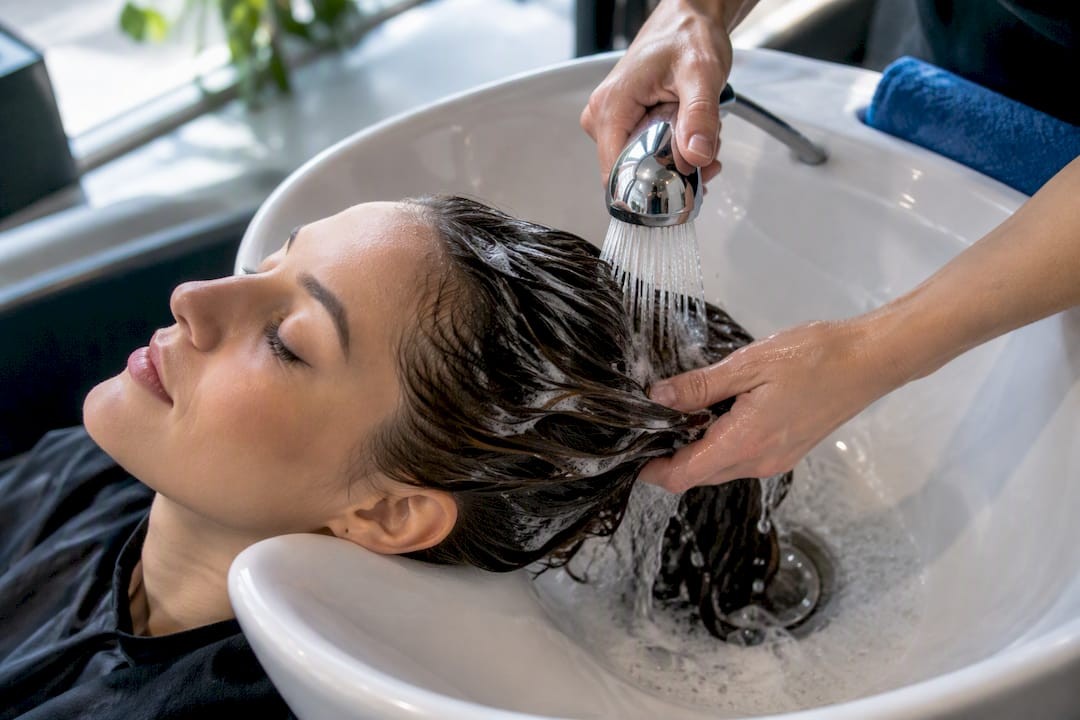
The application itself is simple: wet your hair thoroughly, work the shampoo into your scalp with your fingertips, let it sit for the time the label recommends, rinse completely, and repeat only if the product instructions call for a second pass. Always follow with a hydrating conditioner or a deep mask. Both shampoo types leave the hair shaft slightly more porous right after use, and skipping the conditioning step is how people end up with straw-like ends.
Frequency matters more than people assume:
- Clarifying shampoo: fine for weekly use if you’re a heavy product user, but DermNet’s clinical guidance advises against using stronger clarifying formulas more than once or twice a week.
- Chelating shampoo: typically reserved for use every few weeks to monthly, or specifically after swimming sessions or noticeable hard-water exposure.
- Dial back frequency further for color-treated, bleached, or chemically relaxed hair, since these hair types are already more porous and prone to protein loss.
Never stack a clarifying wash and a chelating wash back to back in one shower. That’s two aggressive treatments compounding on hair that hasn’t had a chance to recover.
Pro Tip: If your scalp feels tight, itchy, or unusually dry after using either shampoo, that’s your hair telling you to stretch out the interval, not push through with another wash.
If you notice sudden breakage, unusual shedding, or scalp irritation that doesn’t resolve, that’s a signal to talk to a dermatologist or a licensed stylist rather than trying to fix it with another product.
Reading the Label: How to Spot a Real Chelator
Ingredient lists are ordered by concentration, so a chelator buried near the bottom is doing far less work than one listed in the first several ingredients. Look specifically for these names:
- Disodium EDTA or tetrasodium EDTA
- EDDS (ethylenediamine-N,N’-disuccinic acid)
- Phytic acid
- Sodium gluconate
Citric acid shows up constantly in shampoo formulas, mostly to adjust pH, but it’s a weak chelator at best under typical shampoo pH conditions. Don’t count on it to pull calcium or copper out of your hair the way a purpose-built chelator will.
Here’s the catch most shoppers miss: a shampoo can list EDTA purely to stabilize the formula itself, not to treat your hair. A trace amount near the bottom of the ingredient list is doing housekeeping for the product, not hard-water removal for you. University research on chelant formulations found that EDDS-containing shampoo measurably reduced copper uptake and associated protein loss under tested conditions, which is the kind of functional effect a trace ingredient can’t deliver. If a brand is serious about hard-water treatment, the chelator will appear prominently in the ingredient list, often paired with marketing language that specifically mentions mineral or hard-water removal, not vague “detox” claims.
When You Might Need Both, and in What Order
Some hair problems are layered: oily buildup sitting on top of a mineral film. In that case, clarify first to strip the surface oils and resins, then follow up on a separate wash day with a chelating shampoo if a dull film, discoloration, or waxy texture is still there.
Don’t run both treatments in the same session. That’s too much stripping at once, and your hair needs a chance to rebuild moisture between aggressive washes.
Practical sequencing by scenario:
- Regular swimmers: clarify after pool sessions for chlorine odor and residue, chelate every few weeks to address copper-driven green tint.
- Hard-water households: chelate on a set schedule, clarify only when styling product buildup is the separate issue.
- Pre-color appointments: clarify a few days ahead to remove product buildup, then chelate if your stylist suspects mineral interference with color uptake.
Are Chelating Agents Safe for Your Hair and the Environment?
Chelating agents get a mixed reputation, partly because EDTA has drawn environmental scrutiny outside the cosmetics world. In water treatment and industrial contexts, EDTA is criticized for being slow to biodegrade and for potentially remobilizing heavy metals in waste streams once it’s washed down the drain. That’s a legitimate wastewater concern at an industrial scale, but it’s worth keeping in perspective for shampoo use: the concentrations in a bottle of hair care product are a fraction of what industrial applications use.
For hair and scalp safety specifically, EDTA and EDDS have a long track record in cosmetic formulations and are generally well tolerated at the concentrations used in shampoo. Phytic acid and sodium gluconate are often marketed as gentler, more readily biodegradable alternatives, and both come from more naturally derived sources, which appeals to shoppers looking to avoid synthetic sequestrants.
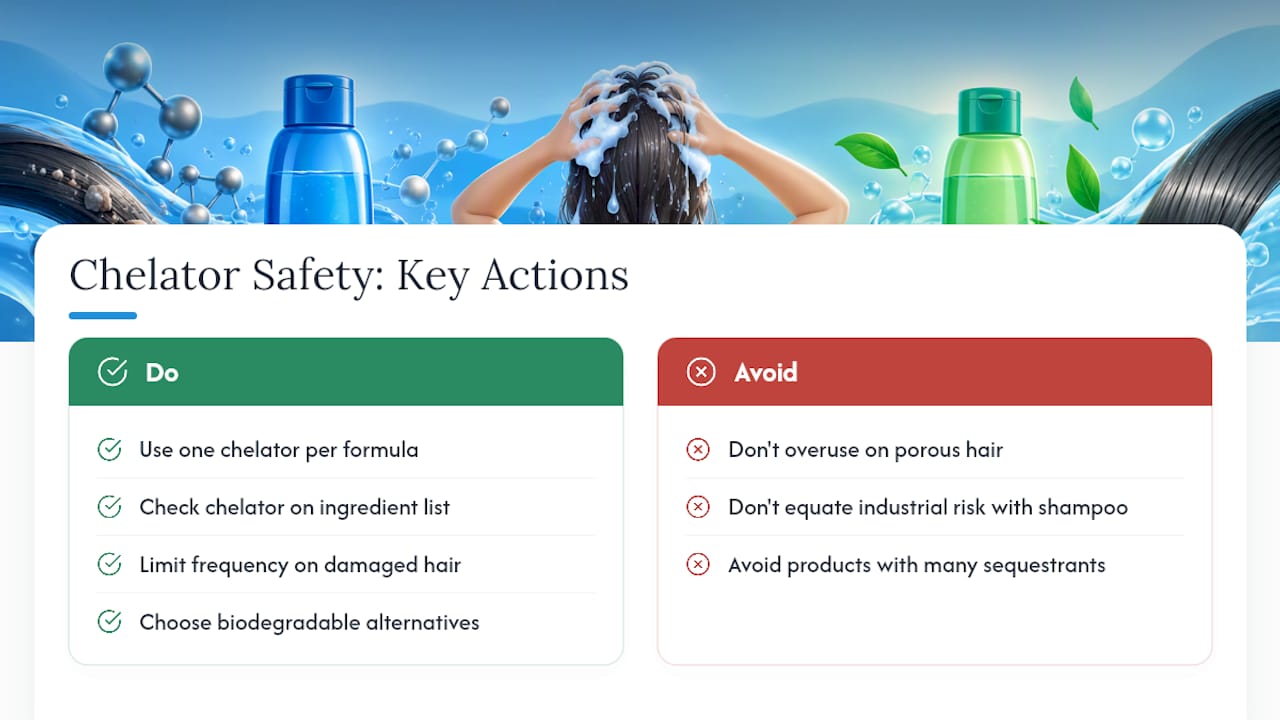
The safety consideration that actually matters more for most people isn’t the chelator itself, it’s frequency and hair condition. Chelating shampoos, like clarifying shampoos, strip the hair shaft’s protective layer temporarily. Overuse on already porous or damaged hair compounds that vulnerability rather than solving it. If you’re choosing between formulas, favor ones where the chelator sits clearly in the ingredient list rather than products that pile on multiple aggressive sequestrants at once for a stronger marketing claim. One well-formulated chelator, used at a sane frequency, does the job without unnecessary chemical load on your hair or down your drain.
Who Benefits and Who Should Be Careful With Each Formula
Clarifying shampoo is genuinely useful for people who use heavy styling products, dry shampoo daily, or live in humid climates where hair care routines pile up oils and residue fast. It’s less useful, and potentially harmful, for people with naturally dry, curly, or coily hair textures that rely on natural oils for definition and softness. Over-clarifying that hair type strips the very oils it depends on.
Chelating shampoo is a strong match for swimmers, people in hard-water regions, and anyone with color-treated hair that’s started tanking in a mineral-dulled way. It’s especially valuable for bleached or highlighted hair, since damaged and porous hair strands bind calcium and magnesium more readily than healthy hair does, making mineral buildup a recurring problem rather than a one-time fix.
The drawback for both categories is the same underlying risk: overuse leads to protein loss, brittleness, and a compromised scalp barrier. Fine, thin hair types tend to show this damage fastest, since there’s less structural reserve to draw from. Thicker, coarser hair types tolerate occasional clarifying or chelating sessions with more resilience.
The honest takeaway is that neither shampoo type is universally “better.” The right choice depends entirely on what’s actually sitting on your hair, and how much structural damage your hair can currently absorb without breaking down further.
Does Your Anti-Dandruff Shampoo Already Chelate?
No, not automatically. This is one of the most common misconceptions in hair care, and it trips up a lot of people who assume their daily cleansing shampoo is quietly doing double duty. Whether a shampoo like an anti-dandruff brand functions as a chelator depends entirely on its specific ingredient list, not its category or its reputation for being a “strong” cleanser.
DermNet’s guidance on shampoo formulations confirms that chelation depends on what’s actually in the bottle, and plenty of anti-dandruff and cleansing shampoos are formulated around active ingredients like zinc pyrithione or selenium sulfide, which target scalp conditions, not mineral buildup. Some formulas do include EDTA, but often at levels meant to stabilize the product rather than deliver a dedicated hard-water treatment.
The only reliable way to know is to check the current ingredient label yourself, since formulations change and brands reformulate products without much fanfare. If you’re relying on your daily shampoo to handle mineral buildup and you’re still seeing dullness, discoloration, or a waxy film, that’s a sign your shampoo isn’t doing the chelating job you assumed it was.
What Happens When You Mix These Shampoos With Keratin Treatments or Hair Color
Chelating and clarifying shampoos both interact with chemical hair treatments, and the timing of that interaction matters more than most people realize.
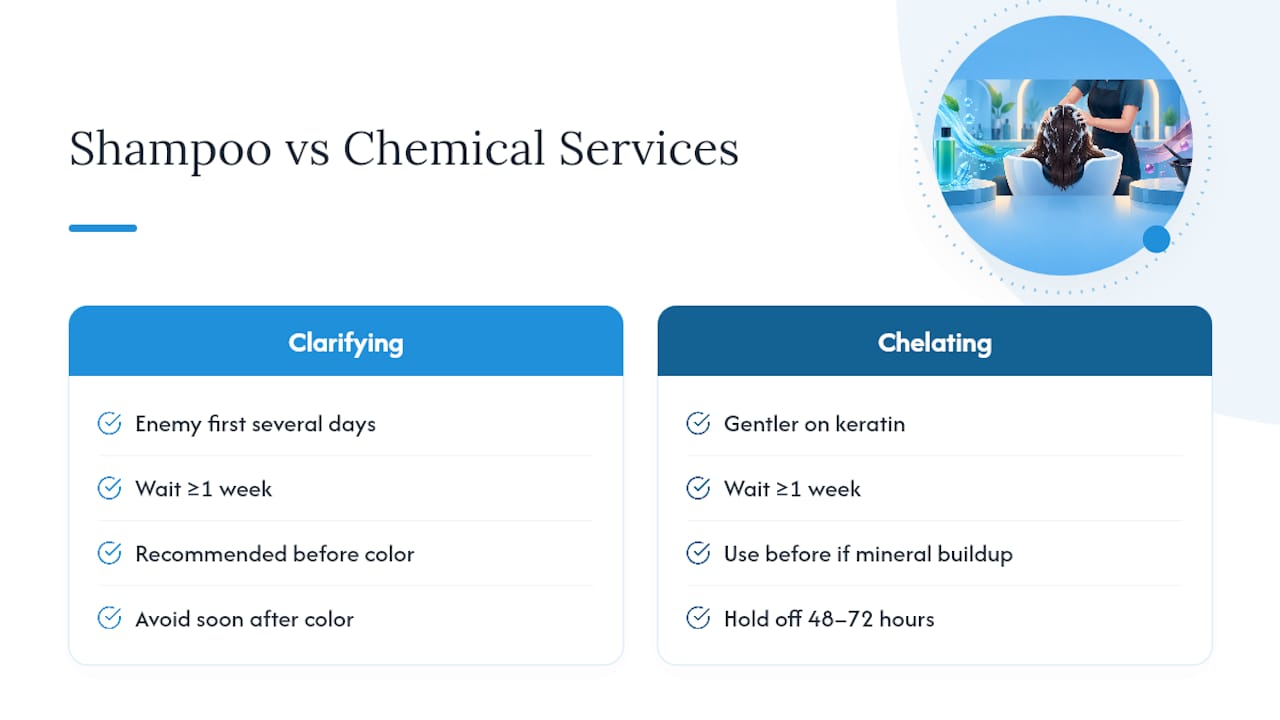
With keratin smoothing treatments, clarifying shampoo is the enemy for the first several days after application. The stronger surfactants strip the keratin coating before it’s had time to fully bond and set, cutting the treatment’s lifespan short. Chelating shampoo is gentler on keratin bonds directly, but it’s still an aggressive wash overall, so most stylists recommend waiting at least a week before introducing either type of specialty shampoo post-treatment.
With hair color, the relationship flips depending on timing. Clarifying before a color appointment is often encouraged, since it removes product buildup that can block even color absorption. Clarifying too soon after coloring, though, strips pigment faster and fades vibrancy. Chelating shampoo plays a different role here: mineral deposits from hard water can interfere with how evenly color develops or holds, and salon educators specifically recommend chelating beforehand when mineral buildup is suspected, then holding off on both shampoo types for at least 48 to 72 hours after the color service to let it set fully.
The overarching rule is timing discipline. Introduce either shampoo too soon after a chemical service, and you risk undoing money you just spent at the salon.
Why Macujo Treats Buildup as a Diagnostic Problem, Not a Guessing Game
The approach described here aligns with principles used in drug-testing hair cleansing methods developed for people facing high-stakes hair testing situations. This approach involves identifying what’s actually sitting in the hair shaft before choosing a treatment.
In practice, that means combining clarifying and chelating principles inside a tailored, sequenced protocol rather than relying on one aggressive product. Readers working through a required-washes calculation or comparing shampoo options for sensitive testing situations benefit from the same diagnose-first logic. Ready-made options built around this approach include products like detox drinks and specialized shampoo bundles available from various sources.
— MIchael
Get a Wash Plan Built Around What’s Actually in Your Hair
Guessing which shampoo to buy wastes money and time you probably don’t have, especially if you’re dealing with a deadline rather than just dull hair. This approach pairs a specialized shampoo formula with a required-washes calculation based on substance history, last use date, and frequency over the past 90 days, rather than a one-size-fits-all bottle.
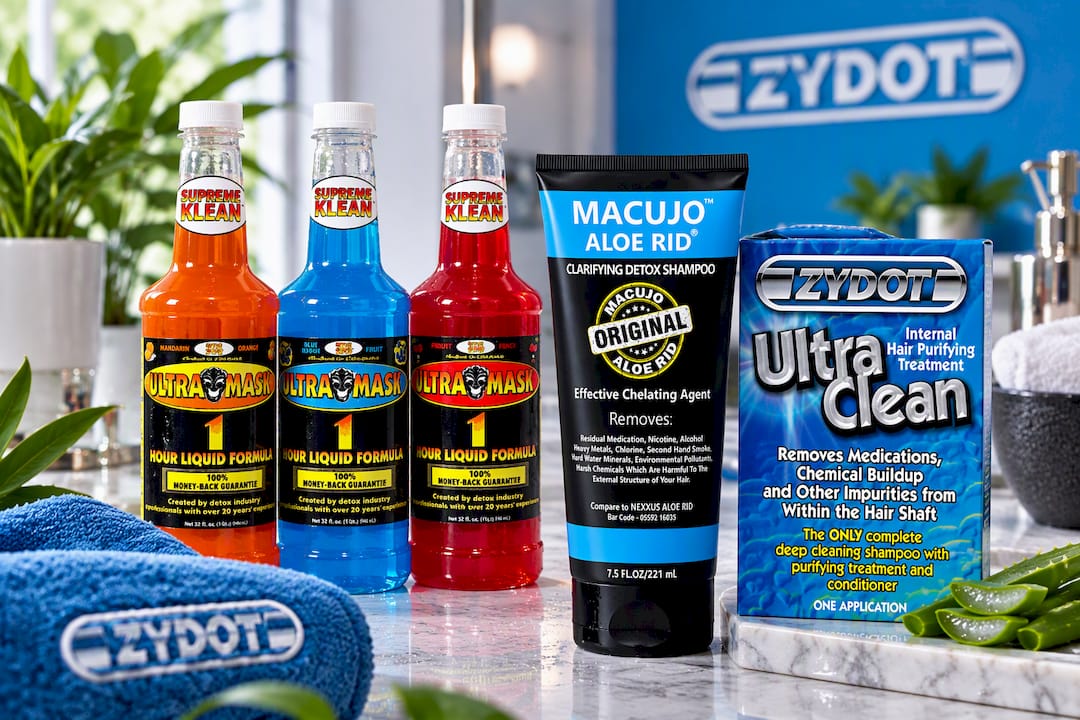
If your situation involves more than routine hard-water buildup, the Macujo Aloe Rid 7.5oz plus Zydot bundle is built around Mike’s Macujo Method, the company’s current nine-step protocol. For people who want expert eyes on their specific timeline and drug history, an afterhours personal consultation gets you a tailored plan instead of a forum guess. You can also browse Macujo’s full product lineup, including hair, urine, and saliva test products, and start with the required-washes calculator to see exactly what your situation calls for.
Sources
- DermNet — Shampoos
- Uptake of water hardness metals by human hair (PubMed)
- Beauty Launchpad — Chelators vs Clarifiers
FAQ
Do I need clarifying or chelating shampoo?
It depends on what’s building up in your hair. Choose clarifying for oily, product-heavy buildup and chelating for mineral deposits, hard-water film, or swimmer-related discoloration, and start with clarifying if you’re unsure since it addresses the more common problem first.
How can I tell if I need a chelating shampoo?
Look for a gritty or waxy texture that persists even right after washing, a green or brassy tint after swimming, or hair color that won’t develop evenly. Damaged or bleached hair is especially prone to this because porous hair strands bind minerals like calcium and magnesium more readily than healthy hair.
Which shampoos are chelating?
A shampoo qualifies as chelating only if it lists a functional chelator, such as disodium EDTA, tetrasodium EDTA, EDDS, phytic acid, or sodium gluconate, prominently in its ingredient list. Products like Zydot Ultra Clean Shampoo are formulated specifically around strong cleansing and are worth considering if you want a dedicated option rather than guessing from a drugstore label.
Is Head and Shoulders a chelating shampoo?
Not automatically. Anti-dandruff formulas are typically built around active ingredients like zinc pyrithione, which treat scalp conditions rather than bind metal ions, and chelation depends entirely on the specific formulation, not the brand’s general reputation for strength. Check the current ingredient label directly if you’re relying on a daily shampoo to also handle mineral buildup.