Last Updated on October 17, 2026
Yes, methamphetamine can be found in hair, and a standard 1.5-inch sample near the scalp typically reflects about 90 days. In one 2015 study, 54% of subjects still tested positive at a 0.2 ng/mg cutoff up to 90 days after stopping, while labs commonly use 500 pg/mg. Any positive still needs laboratory confirmation.
TL;DR:
- A single study found no samples positive at the 0.2 ng/mg cutoff after 153 days of abstinence, so this is not a universal timeline.
- Different laboratories may apply different cutoffs and wash protocols, so ask which standards were used before comparing results from separate providers.
- Parent drug alone cannot distinguish use from residue; metabolite analysis can support internal exposure, but some chemical markers may form on hair after oxidizing exposure.
- Bleaching, dyeing, and perming can lower measured levels, while smoke or residue can raise them; document both factors before interpreting a result.
- After a positive screen, request mass spectrometry confirmation and ask for the lab’s cutoff, wash procedure, and chain of custody records.
Table of Contents
- How does methamphetamine get into your hair?
- What detection window and lab cutoffs should you expect?
- What is the difference between a parent drug and its metabolites?
- Which factors change a hair test result?
- How are samples collected, processed, and confirmed?
- What can segmental analysis reveal about timing?
- What hair test preparation methods do people use, and do they work?
- How does Mike’s Macujo Method work for methamphetamine?
- How do we use Macujo Aloe Rid® Shampoo for methamphetamine cleansing?
- How do you calculate the required washes for methamphetamine?
- How does Mike’s Macujo Method compare with other cleansing methods?
- When should you wash relative to your last methamphetamine use?
- Our perspective: how to read your own situation
- How can we help you test and plan?
- FAQ
- Sources
How does methamphetamine get into your hair?
Methamphetamine reaches a hair strand in more than one way, and the route matters for how a result is read. Hair grows from a follicle that is fed by tiny blood vessels. Whatever circulates in your blood while a strand is forming can be locked into the growing hair, and that strand then carries a record of exposure as it emerges from the scalp.
Three routes are generally described:
- Incorporation from blood: drug and metabolites move from the capillaries into the cells at the base of the follicle and become trapped as the hair hardens.
- Deposition from sweat and sebum: after incorporation, the drug can also be secreted onto the skin and hair shaft by the glands around the follicle, then absorbed into the outer layers of the hair.
- External contamination: smoke, vapor, dust or residue from handling the drug can settle on the surface of the hair and cling to it.
The first two routes reflect use by the person. The third does not necessarily reflect use at all, and that is why laboratories put so much effort into separating the two. The Society of Hair Testing (SoHT) consensus states plainly that interpretation has to take external contamination and cosmetic hair treatments into account, and that the concentration in hair cannot tell anyone the exact quantity consumed.
What controlled studies show
The strongest evidence for the internal routes comes from controlled-administration research, where participants receive a known dose under supervision and hair is sampled afterward. Work such as the study of methamphetamine and amphetamine incorporation in human hair documents how the drug appears in hair after dosing and gives experimental support for these incorporation pathways. Because the dose and timing are known, researchers can compare what went in with what showed up in the strand.
Why the route matters
Ingestion and exposure carry very different meaning. A person who smoked or injected the drug has internal exposure, and the drug will be present in blood and sweat. A person who simply spent time in a room where the drug was used may end up with surface residue and nothing more. A lab that treats both cases the same would be unfair to the second person, which is why validated wash steps, metabolite analysis and careful reporting exist.
Hair color and growth rate shape the picture too, but we cover those separately below. For a broader primer on the process, our guide on how hair drug testing actually works walks through the full path from scalp to lab report.
What detection window and lab cutoffs should you expect?
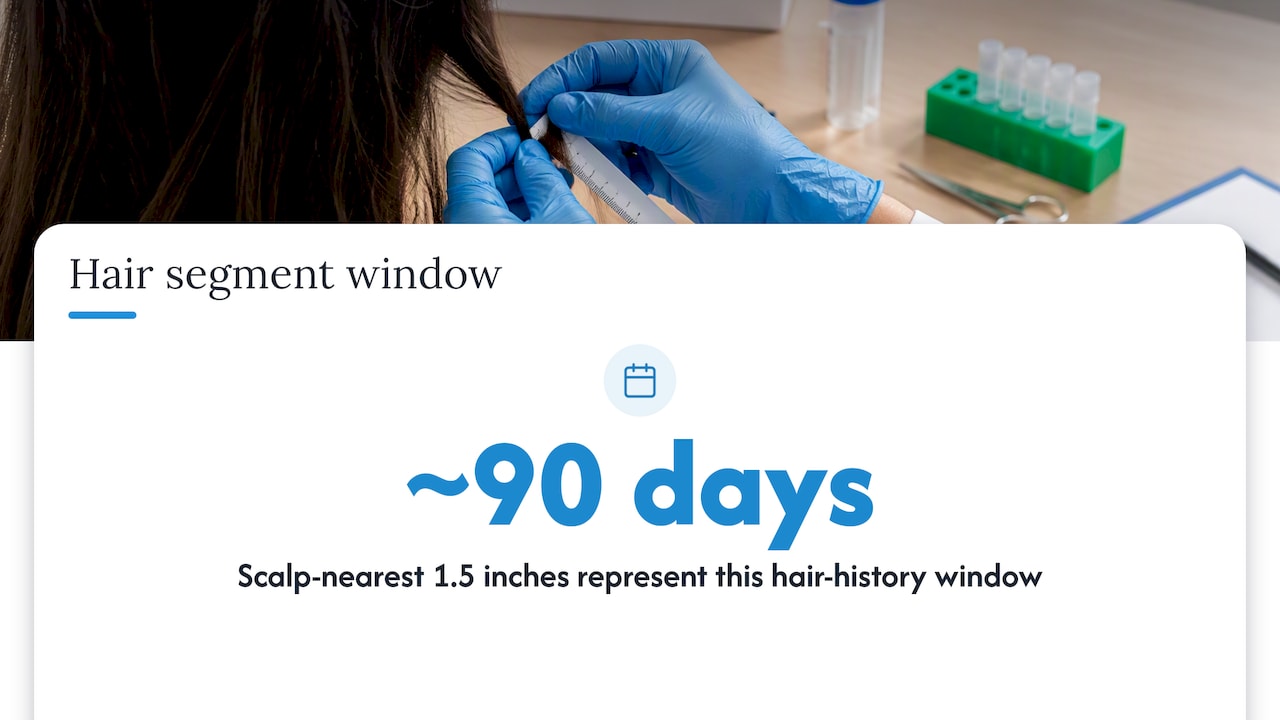
The 90-day figure comes from simple geometry. Head hair grows at a modest rate, and the convention in workplace testing is to cut about 1.5 inches from the scalp end of the strand. That length is treated as roughly three months of growth. It is a convention, not a measurement of your own hair, which is why you may see our article on the methamphetamine hair test timeline for job tests stress that 90 days is not a guarantee.
Employers favor this window because it captures a long stretch of behavior with one sample, and because it is much harder to beat than a urine screen, which reflects only days.
What a published study found
The most useful public data point comes from a 2015 study of people who had stopped using methamphetamine.
In that study of detection after abstinence, 54% of subjects tested positive at a 0.2 ng/mg cutoff up to 90 days after stopping, and no positives were detected at that cutoff after 153 days. Even months after last use, a meaningful share of people still carried detectable drug in hair, and the picture clears only well past the three-month mark.
That finding is a single study, so treat it as an illustration of how persistent the signal can be rather than a rule that applies to every person.
How cutoffs change who tests positive
A cutoff is the concentration at or above which a lab reports a positive result. Anything lower is reported negative, even if some drug is physically present. Industry documentation reports that methamphetamine is commonly handled at 500 pg/mg, and that Quest Diagnostics uses that same figure for both screening and confirmation.
Here is what that means in practice:
- A higher cutoff produces fewer positives, because only samples with more drug clear the bar.
- A lower cutoff raises sensitivity, so lighter or older exposure is more likely to be flagged.
- Two labs using different thresholds can report different outcomes on the same strand of hair.
Why guidelines matter
Cutoffs are not frozen. Federal workplace testing discussions have proposed and revised guidelines for hair, and regulatory program updates describe changes under consideration such as adjusted cutoffs and specimen-validity testing for alternative matrices like hair. For you, the practical lesson is to find out which lab and which standard apply to your test. For a related look at how long different substances linger, see how long drugs stay in your hair.
What is the difference between a parent drug and its metabolites?
Methamphetamine is the parent drug, the substance a person actually takes. When the body processes it, some of it is converted into other compounds called metabolites. Amphetamine is the best known metabolite of methamphetamine, and there are others, including conjugated forms produced in later stages of metabolism.
This distinction is the heart of the contamination question. Surface residue on hair is parent drug that never passed through a body. A metabolite, by contrast, is something the body made. If a lab finds metabolites in a hair sample, that points toward internal processing rather than a coating of smoke or dust.
What the NIJ research found
The National Institute of Justice has funded work on exactly this problem. According to the NIJ summary of that research, conjugated phase II metabolites can be measured in hair in quantities large enough to be useful, and metabolite analysis can help distinguish ingestion from environmental contamination. That is promising for fairness, because it gives labs a way to ask a better question than “is drug present?”
How labs use metabolites in practice
Several practical points follow from this:
- Finding the parent drug alone leaves the contamination question open, especially at low levels.
- Finding the parent drug together with its metabolites at consistent ratios supports the case for use.
- Ratios of metabolite to parent drug can also vary along the strand, which is one reason segmental analysis of abusers’ head hair has been studied for dependence and timeline patterns.
Analytical caveats
Metabolite testing is not a magic switch. Technical guidance on drug metabolites and hair testing notes that some hydroxyamphetamines and conjugated metabolites are candidate markers for demonstrating use, but that some hydroxyamphetamines can be produced when oxidizing agents act on methamphetamine deposited on hair. In plain terms, certain markers could in theory form on the hair from an outside source if a harsh chemical is involved.
That caveat is the reason methods must be validated carefully. Extraction conditions can create or alter some metabolites, so a lab that does not control for this could misread a sample. When you review a result, ask whether the lab reports metabolites and how it handled them.
Which factors change a hair test result?
A methamphetamine hair test is not a simple counter that adds up your exposure. Several characteristics of your hair and your recent history can push a reading up or down, and the SoHT consensus reminds readers that concentrations alone cannot fix the amount consumed.
Melanin and hair color
Some drugs bind more strongly to melanin, the pigment that darkens hair. SoHT guidance notes that darker hair can show higher concentrations of certain analytes than lighter hair after the same exposure. For you, this means two people with identical use could produce different numbers, and a result should be read in that light rather than as a precise measure of behavior.
Cosmetic treatments
Chemical treatments change the structure of the hair shaft and can reduce what a lab measures. The usual list includes:
- Bleaching, which strips pigment and can remove a large share of drug from the strand.
- Dyeing, which uses chemicals that can lower measured levels, though less aggressively than bleach.
- Perming or relaxing, which alter the protein structure and can allow drug to leach out.
- Frequent harsh shampooing or swimming in treated water, which can slowly shift concentrations.
Our article on dyed hair and drug tests goes into how bleaching and dyeing affect measured drug levels. The key interpretive point is that a lower reading from treated hair does not mean the person used less. It may only mean the hair lost some of what it held.
External exposure
Smoke, vapor and dust can leave drug on the outside of a strand. Labs respond with validated wash protocols designed to remove surface contamination before the hair is dissolved and analyzed. Wash procedures are not identical from lab to lab, which is one reason results can differ between providers and why SoHT stresses considering contamination during interpretation.
Growth rate and sampling
Hair grows at different speeds from person to person and from one area of the head to another. A strand cut at the crown may not line up with one cut elsewhere, and a 1.5-inch sample covers a variable amount of calendar time.
Pro Tip: Before any test, write down recent bleaching, dyeing, perming and any places where you were exposed to smoke or drug residue, and consider a pre-test if you are worried, so you can raise these factors with the lab if a question comes up.
How are samples collected, processed, and confirmed?
The quality of a hair result depends on what happens before the strand ever reaches a machine. Sloppy collection or weak documentation can undermine a result as surely as a bad instrument.
Collection best practices
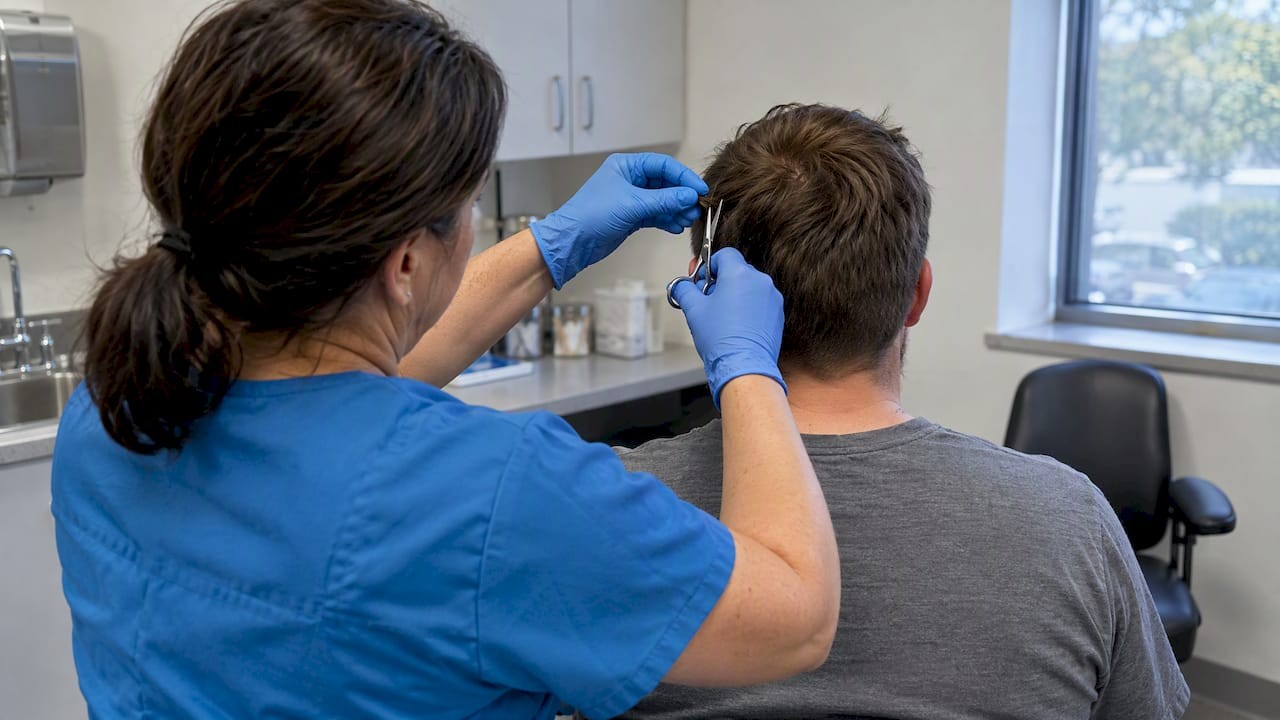
The SoHT consensus describes careful collection. Typical practice is to cut the sample close to the scalp so the root end is represented, keep the strands aligned so the root end is known, and record where on the head the hair came from. MedlinePlus similarly explains that hair samples are cut near the scalp and can show longer-term drug use, and that hair testing is performed by labs and may complement urine, blood, saliva or sweat testing depending on purpose.
Decontamination washes
Once a sample reaches the lab, it is washed. The wash removes external contaminants so the analysis reflects what is inside the hair. Good labs also keep the wash liquid for analysis, because drug found in the wash tells them something about surface exposure. The wash procedure has to be validated, meaning the lab has shown that it removes surface drug without stripping out what was incorporated.
Screening versus confirmation
Hair testing is usually a two-stage process:
- Screening uses a fast immunoassay-style test to flag samples that might contain the drug.
- Confirmation uses a more specific method to identify and measure the compounds. The common confirmatory methods are GC-MS and LC-MS/MS, which are mass spectrometry techniques that separate and identify molecules by mass.
- Proficiency testing is how a lab shows it performs reliably, by analyzing blind samples and being checked against other labs.
A screening result alone should never be treated as final. The cutoffs that apply to both stages are discussed in the industry hair testing FAQ.
When to ask for more
If you receive a positive result, request confirmation by mass spectrometry if it was not already done, ask for chain-of-custody documentation, and ask which cutoff and wash procedure the lab used. Our guide on what to do after a failed hair test outlines how to use the 90-day window to verify and retest.
What can segmental analysis reveal about timing?
Hair is a timeline that grows outward from the scalp, so different sections of a strand correspond to different periods. Splitting a sample into sections lets labs ask not just “was drug present?” but “roughly when?”
Standard segmental analysis
In routine testing, the segment nearest the scalp represents the most recent weeks and months. The common convention is that the first 1.5 inches equals about 90 days. If a lab divides a longer strand into sections, each one maps to an earlier stretch. Research on segmental analysis of methamphetamine and amphetamine in head hair found variation along segments in chronic users, with amphetamine-to-methamphetamine ratios tending to rise from the tip toward the root, a pattern that can be useful for timeline analysis.
Micro-segmental analysis
A far finer technique exists. According to a detailed review of micro-segmental hair analysis, a single hair strand can be cut at 0.4-mm intervals, roughly one day of growth, which can give near day-level resolution. The same source notes this technique is more common in forensic investigations than in routine employment testing.
Practical limits
Even the finest method has constraints:
- Variable growth rates mean a fixed length does not equal a fixed number of days for everyone.
- Internal temporal markers are needed for higher precision, because without a known reference point the mapping is an estimate.
- Cost and complexity keep micro-segmental work out of ordinary workplace screening.
For an employment test, expect the broad 90-day view. For a legal or forensic question, a lab may use finer tools. If you want more background on how the standard window works, see our explainer on how long drugs stay in your hair.
What hair test preparation methods do people use, and do they work?
People facing a hair test try a wide variety of approaches, and effectiveness differs sharply between them. For methamphetamine, which is incorporated into the hair from the blood and not only deposited on the surface, the gap matters even more.
The usual categories look like this:
- Ordinary shampooing and home remedies, such as vinegar rinses, baking soda or dish soap. These mainly address surface residue and have little power against drug locked inside the strand.
- Harsh chemical treatments, such as bleaching or dyeing. These can lower measured levels, as our piece on dyed hair and drug tests explains, but results are inconsistent, can damage hair and may be noticed by a lab.
- Short-term masking products, which coat or temporarily disguise the hair. Their effect is limited and does not last.
- Shaving the head, which may lead a collector to take body hair instead, covering a longer period.
- A structured, test-specific cleansing method, where the number of washes is tied to the substance, the date of last use and how often it was used.
The first four are hit-or-miss, particularly for a drug that sits inside the strand. The structured approach is the only one that is planned around your individual exposure. We describe our own method in detail next.
How does Mike’s Macujo Method work for methamphetamine?
Mike’s Macujo Method is our current standard. It is a systematic process developed for high THC levels and for other drugs and alcohol, including methamphetamine. It must be completed with authentic Macujo Aloe Rid® Shampoo, because the steps are built around how that product behaves.
Two things set it apart from older approaches. First, it is not one fixed routine for everyone. The number of washes you need is calculated from your own history: which substance was involved, the date of last use, and how often you used during the previous 90 days. Second, it works in a defined sequence of steps, with directions that have to be followed completely and in order.
The method’s effectiveness is not established by the sources provided, and no cleansing method can guarantee a particular test result.
Because methamphetamine is a higher-exposure case than many people expect, we tailor the plan to the exposure you describe instead of handing you a generic schedule. If you want help working through your situation, you can book an Afterhours Personal Consultation and we will walk through the steps with you.
How do we use Macujo Aloe Rid® Shampoo for methamphetamine cleansing?
Macujo Aloe Rid® Shampoo is the product the method is built around, and the method only works with the authentic version. Counterfeits and look-alikes do not behave the same way, so we always tell customers to confirm they are using the real thing. You can see the shampoo and related items in our hair products category.
For a methamphetamine case, the shampoo is used in repeated, timed washes that follow the sequence set out in Mike’s Macujo Method. The point of repeating the process is that a single wash does very little for drug that has been incorporated into the hair. The washes work cumulatively, and how many you need is not a guess. It comes from the calculator, which takes into account your last use and how heavily you used.
A few practical habits make a difference:
- Follow the directions exactly as written, including the order of the steps.
- Do not skip a required wash to save time, because the method assumes all of them are done.
- Use the authentic shampoo throughout, not a substitute partway through.
- Keep your hair free of new exposure while you work through the process.
Our Old Formula shampoo is listed in the range of $100 to $150, depending on what you choose, and the exact options are on the product pages.
How do you calculate the required washes for methamphetamine?
The number of washes is not something you should estimate by feel. We built Mike’s Macujo Required Washes Calculator so that it is based on the facts of your own case. It asks for three things:
- The substance involved, in this case methamphetamine.
- The date of your last use, which tells the calculator how much time your hair has had to grow past the exposure.
- How often you used during the previous 90 days, which reflects how much drug the hair was likely to carry.
Those answers produce a required number of washes. Someone who used once long ago will need a different plan than someone who used regularly and recently. That is the reason a single published schedule would fail so many people.
The calculator gives you a number, but it does not replace the directions. The method only holds up when you complete every required wash and follow every instruction. If your numbers are unclear, for example you are unsure of a date or a frequency, that is a good moment to talk to someone before you start rather than after.
If you would like help running the numbers or sanity-checking your answers, our Afterhours Personal Consultation is available for exactly that kind of question.
How does Mike’s Macujo Method compare with other cleansing methods?
The honest comparison comes down to what each approach is designed to do, and whether it accounts for a drug that has been incorporated into the strand.
Many other methods are generic. They offer one routine for every drug and every person, or they rely on one product used once or a handful of times. Some treat only the surface of the hair. Others use harsh chemistry that can damage hair and gives inconsistent results, as discussed in our piece on dyed hair and drug tests.
Our older method, the old Macujo Method, was designed mainly for low-to-moderate THC exposure. It is not the same thing as Mike’s Macujo Method, and the two should not be confused.
Mike’s Macujo Method differs in three ways:
- It is calculated around your substance, date of last use and frequency, not one routine for everyone.
- It is a defined nine-step process, which removes the guesswork about order and technique.
- It is built to address high exposure, and its effectiveness is not established by the sources provided.
No method can promise results to someone who skips steps, and none can protect hair against new use afterward. What we can say is that a plan tied to your own history is a fairer match for a drug like methamphetamine than a one-size routine.
When should you wash relative to your last methamphetamine use?
Timing is a real variable, and it is built into how we calculate washes. The date of your last use is one of the three inputs to the calculator, because the more time that has passed, the more clean hair has grown in at the scalp and the less your plan has to carry.
A few principles are worth keeping in mind:
- Start as early as you can. A longer runway gives you more flexibility and less pressure, and an early start means you can complete every required wash without cramming.
- Do not compress the schedule. The method assumes the required washes are completed correctly. Rushing or doubling up is not the same as following the directions.
- Match frequency to the calculator, not to a rule of thumb you found online.
- Stay clear of new use. Once your hair is clean, it stays that way only if drugs or alcohol are not used again.
If your test date is close, that does not mean you are out of options. It means you should get your numbers checked quickly. If a test is approaching, an Afterhours Personal Consultation can help review your dates and history.
Our perspective: how to read your own situation
We have experience helping people prepare for hair follicle drug tests, and we often see alarm that outruns the facts. A hair result is not a verdict on a person’s character, and it is not a precise measure of what someone did. The science itself says so: the SoHT consensus cautions that concentration cannot fix the exact amount consumed, and that contamination and cosmetic treatments belong in the interpretation.
So our editorial stance is that careful reading beats panic. Many people overestimate how much a test proves, and many underestimate how much a rushed or poorly documented sample can distort. The right response to a worrying situation is to gather facts, not to guess in either direction.
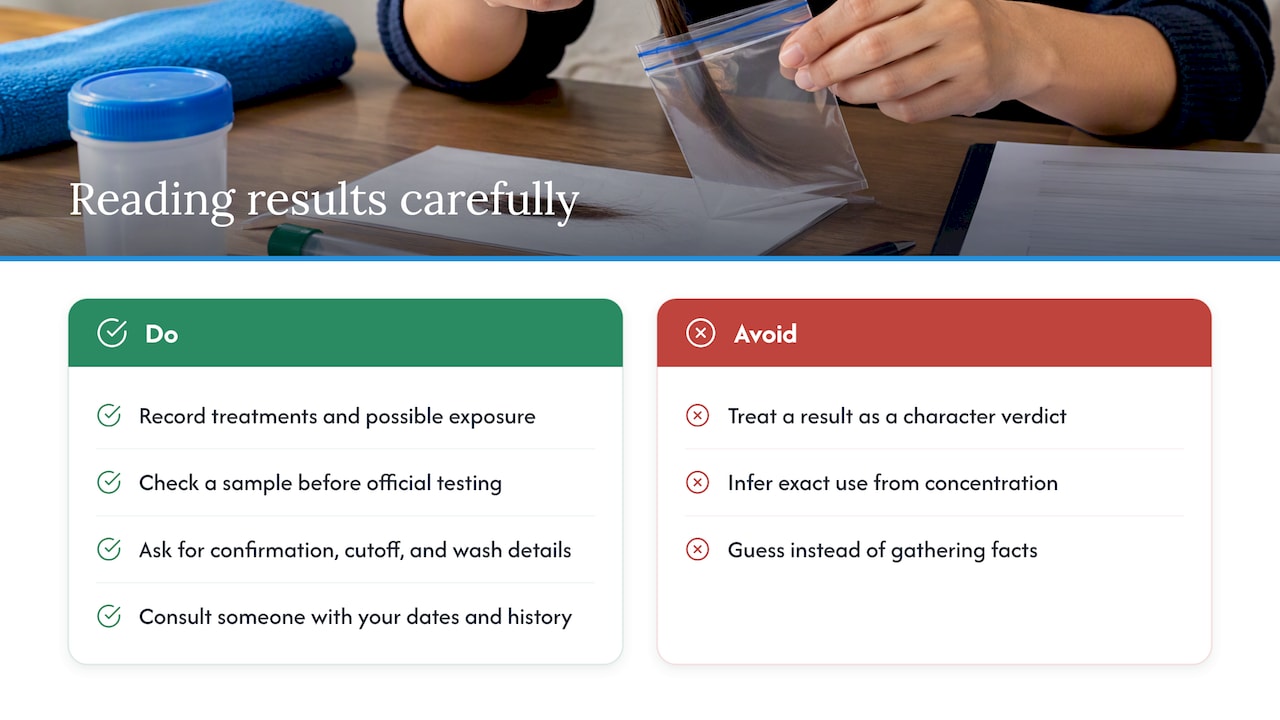
That points to some concrete next steps. Write down any recent bleaching, dyeing or perming, and any places where you may have been exposed to smoke or residue. Consider checking a sample yourself before an official test so you know where you stand. If a result comes back positive, ask for confirmation by mass spectrometry and for the lab’s cutoff and wash procedure. And if your timeline is tight, talk to someone who can look at your particular dates and history.
The reason an individualized calculator and a personal consultation matter is simple: a general article cannot know when you last used or how often, but a plan built around those facts can. The truth is that the same hair, the same test and the same cutoff can mean very different things for different people.
— MIchael
How can we help you test and plan?
When you are close to a test, the most useful thing is information about where you stand, followed by a plan that fits your timeline. We offer three practical options, and you can use them alone or together.
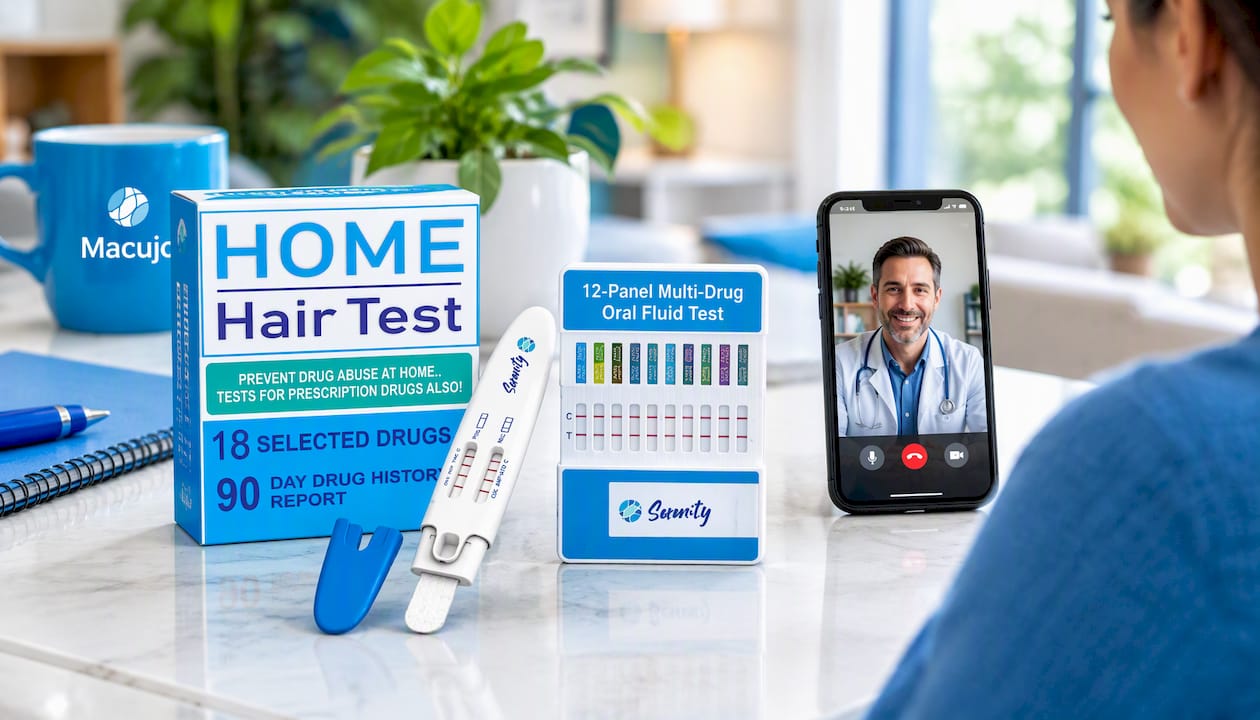
- Home Hair Test kit: a way to check a hair sample yourself before an official lab test, so you know what you are dealing with. You can find it on our Home Hair Test kit page.
- Saliva drug test: a saliva screening option that is better suited to recent use, since saliva reflects a much shorter window than hair. See our saliva drug test.
- Afterhours Personal Consultation: individualized support for urgent cases, priced at $100 one-off. It complements testing and the Required Washes Calculator, because we can look at your last-use date and your frequency of use and shape a plan around them.
If you are worried about hair test results, we recommend starting with a self-check, then using the calculator to build your wash plan with Mike’s Macujo Method and authentic Macujo Aloe Rid® Shampoo. Our shampoo and related products are listed in the hair products section, and we also carry hair, urine and saliva test products across Macujo.
If your timeline is short, the fastest next step is to book an Afterhours Personal Consultation and tell us your dates.
FAQ
Can methamphetamine be found in hair?
Yes. Methamphetamine is incorporated into growing hair from the blood and can also be deposited from sweat and sebum, so a hair sample can show use over a period of months. A positive result still needs laboratory confirmation by mass spectrometry, and labs consider contamination before reporting.
How far can a hair follicle test detect drugs?
A standard sample of about 1.5 inches cut near the scalp is generally treated as covering roughly 90 days. In a 2015 study of methamphetamine after abstinence, 54% of subjects tested positive at a 0.2 ng/mg cutoff up to 90 days, so detection can persist for most of that window.
What throws off a hair follicle test?
Cosmetic treatments such as bleaching, dyeing and perming can lower measured levels, and external contamination can raise them. The SoHT consensus says interpretation must consider both, along with the fact that concentration cannot show the exact amount consumed.
How long do you need to be clean for a hair follicle drug test?
There is no single number, because it depends on your last use, your frequency and your hair. The same 2015 study found no positives at 0.2 ng/mg after 153 days of abstinence, which shows that the signal can fade only well after the 90-day mark. Our required washes calculator tailors the plan to your own dates.
Sources
- Duration of detection of methamphetamine in hair after abstinence
- Hair testing - FAQ
- 2021 SoHT CONSENSUS ON DRUGS OF ABUSE (DOA) TESTING IN HAIR Consensus revision – presented in Santiago September, 17 th 2021 after expert meeting in Sevilla
- Detecting Drugs in Hair: Is It Drug Use or Environmental Contamination? | National Institute of Justice