Last Updated on October 6, 2026
Hair tests commonly detect methamphetamine in the proximal 1.5-inch hair sample for about 90 days, but exact detection depends on dose, timing, hair traits, and lab cutoffs. A single heavy dose can show up for at least two weeks under controlled conditions, while chronic use often registers across the full proximal segment. The rest of this guide walks through how the test actually works, what changes your odds, and what to do if a result comes back positive.
TL;DR:
- Hair drug testing detects methamphetamine typically within a 90-day window, with recent use more likely identified near the scalp end.
- The detection period relies on hair growth rate, drug dose, and testing cutoffs, which vary between labs and influence positive results’ timing.
- Melanin-rich darker hair incorporates drugs more readily, which can skew concentrations, and cosmetic treatments like bleaching can reduce detectable drug levels.
- False positives are less likely if confirmatory tests detect both methamphetamine and its metabolite, and proper chain-of-custody procedures are followed.
- The window of detection after a single dose is generally two weeks, but chronic use can keep results positive for the full segment length, about three months.
Table of Contents
- How hair drug testing works: incorporation, sampling, and segmental analysis
- Typical detection window and timeline for methamphetamine in hair
- Factors that change detection: dose, frequency, and hair traits
- Interpreting results and avoiding false positives in meth hair testing
- What to expect during a hair test: collection, reporting, and timing
- If you receive a positive result: confirmatory actions and next steps
- Mike’s Macujo Method and the support options behind it
- Realistic expectations when a test is coming up fast
- Discreet options if you want paid help before a test
- FAQ
- Sources
How hair drug testing works: incorporation, sampling, and segmental analysis
Hair stores a chemical record of what passes through your bloodstream. While a hair follicle is in its active growth phase, called anagen, blood vessels feed the root and small amounts of circulating drug compounds get trapped inside the growing shaft. Methamphetamine and its metabolite amphetamine also reach hair through sweat and sebum secreted onto the scalp, and in some cases through external contact with drug residue in the environment. That last pathway is why labs build in decontamination steps before analysis, a point SAMHSA’s guidance on hair testing addresses directly.
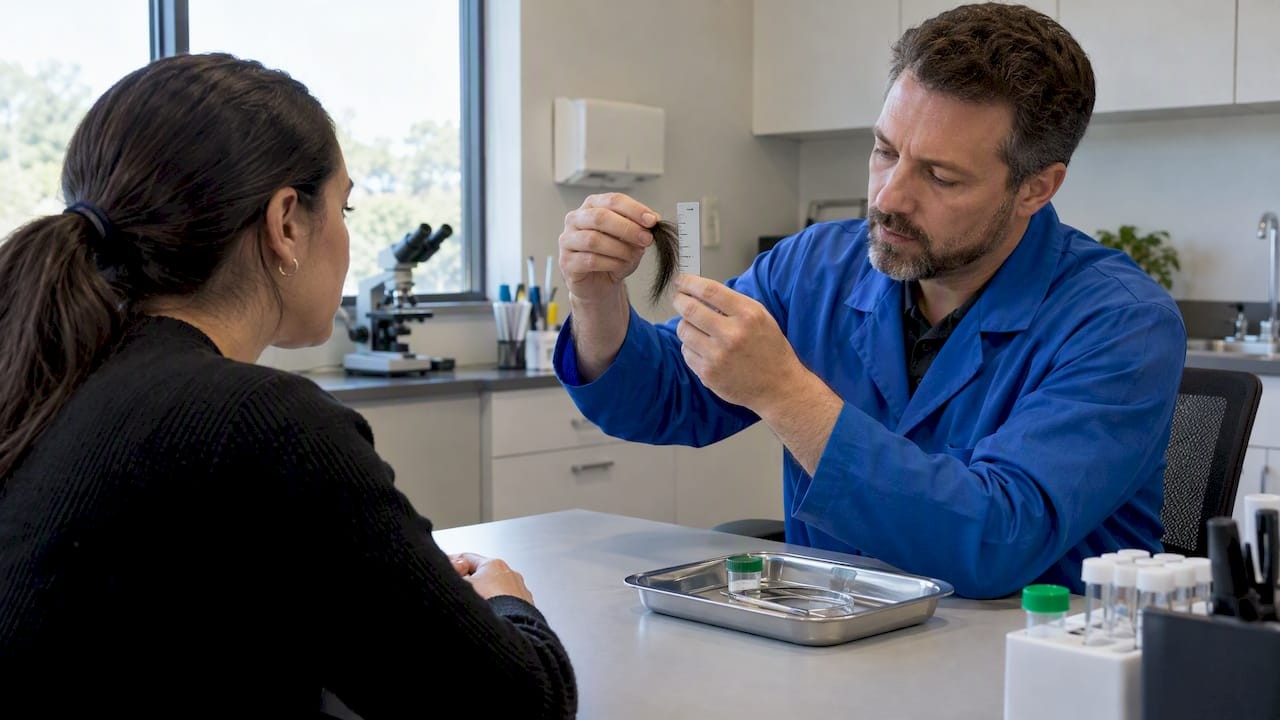
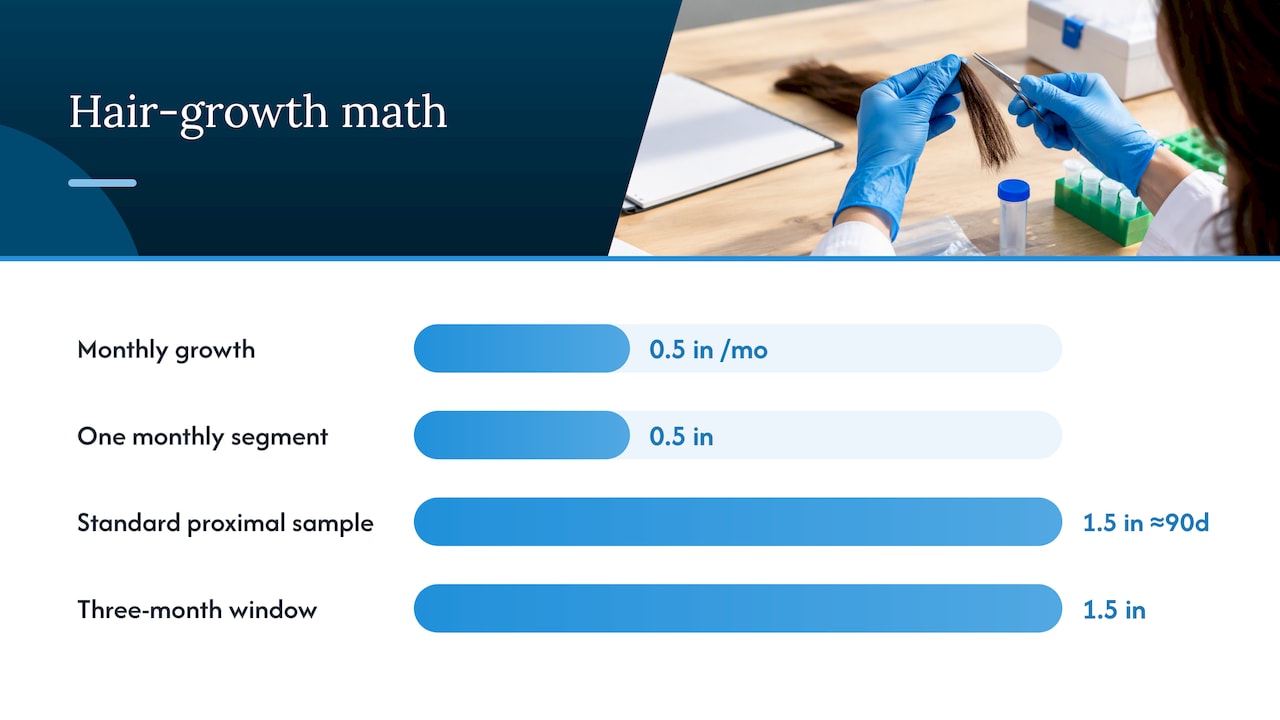
Labs typically collect a proximal sample, meaning the section of hair closest to the scalp, cut to about 1.5 inches. That length isn’t arbitrary. Head hair grows at an average rate of roughly half an inch per month, so 1.5 inches of hair represents close to 90 days of growth. Segmental analysis takes that logic further: a lab can cut a longer hair sample into multiple segments and test each one separately, which produces a rough month-by-month timeline of exposure rather than a single yes-or-no answer. Our earlier breakdown of why a 1.5-inch sample is standard covers this same growth math in more detail for readers comparing different drug classes.
One detail trips people up constantly: there’s a lag between use and detectability. A drug doesn’t appear instantly at the scalp line. It has to be incorporated into the hair at the follicle, then that portion of hair has to grow out far enough to be included in the sample that gets tested. Controlled-dosing research found methamphetamine and amphetamine become detectable roughly 6 to 14 days after dosing, which means a test taken the day after use may miss very recent exposure entirely, even though it will likely catch use from weeks earlier.
The practical takeaways from how incorporation works:
- Hair only records drug exposure from the point a follicle was actively growing, not from before that hair existed.
- A positive result near the scalp end points to more recent use than a positive result further down the strand.
- The 6 to 14 day incorporation lag means a hair test is a poor tool for detecting use from the past few days, unlike urine or saliva.
Typical detection window and timeline for methamphetamine in hair
The honest answer to “how long does meth stay in hair” has two layers: what happens after a single dose, and what happens with repeated use. Controlled human dosing studies give the clearest single-dose picture. One such study found methamphetamine concentrations stayed above the 0.2 ng/mg cutoff for at least two weeks following a single administration, with exact timing varying between individuals and by dose size.
Methamphetamine can remain detectable above standard cutoffs for at least a couple of weeks after a single dose, according to controlled-dosing research, and the window extends much further with repeated use because each use adds another layer of drug incorporated into newly grown hair.
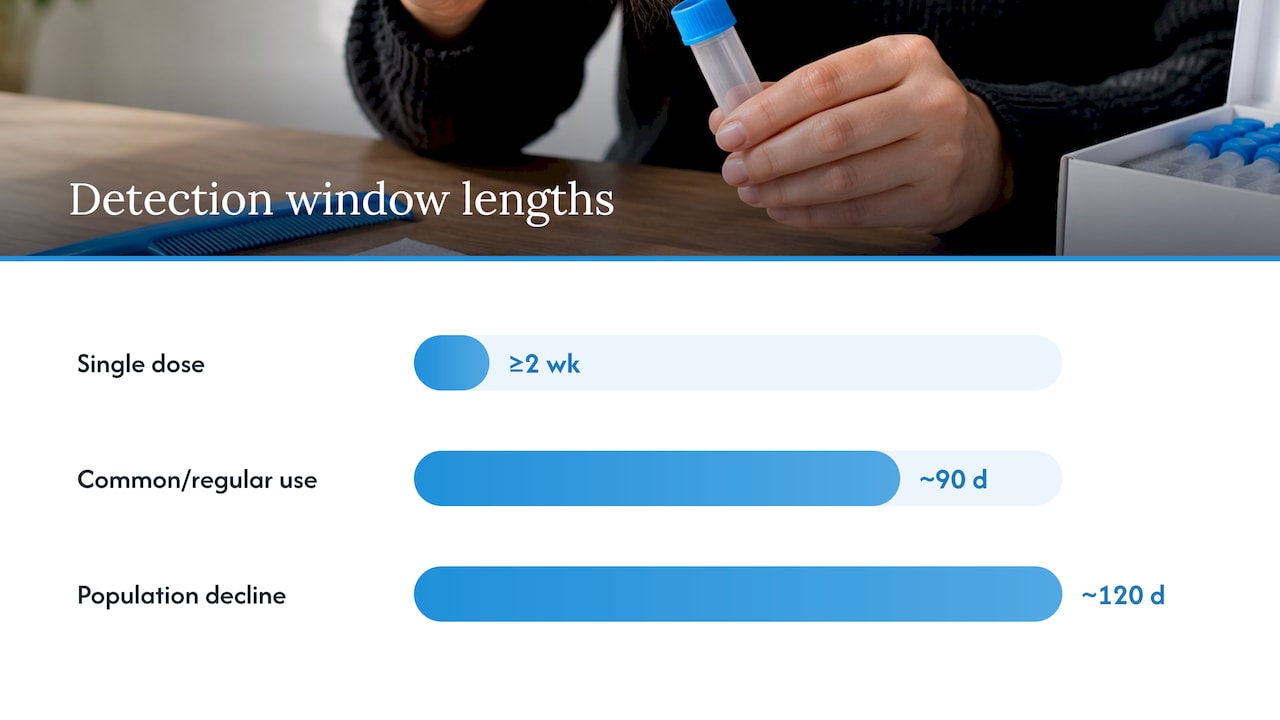
For people with a pattern of regular use, the proximal 1.5-inch segment commonly stays positive across the full 90-day window that segment represents. Detection isn’t guaranteed to last exactly that long in every case. Population-level research tracking sequential hair segments has observed detection rates dropping off well before the 90-day mark closes out for some subjects, with much lower positivity by the 120-day point and very few positives beyond that. Individual variation is wide enough that nobody should treat 90 days as a hard guarantee in either direction.
Lab cutoffs matter as much as biology here. A cutoff is the concentration threshold a sample has to clear to count as positive, and labs typically run two: an initial screening cutoff and a stricter confirmatory cutoff.
- A lower initial screening cutoff catches more borderline samples but produces more results that need confirmation.
- A higher confirmatory cutoff, measured with more specific chemistry, is what actually determines a reportable positive.
- Changing either threshold changes how far back a “positive” can reach, which is part of why two labs can report different windows for the same person.
Factors that change detection: dose, frequency, and hair traits
No two hair tests measure the exact same thing, because too many personal variables shift how much drug ends up trapped in the strand. Dose and frequency sit at the top of the list: heavier or more frequent use raises the concentration of methamphetamine and amphetamine in the hair, which raises both the odds of clearing a cutoff and the length of time detectable levels persist.
Hair color plays a bigger role than most people expect. Melanin, the pigment that gives hair its color, appears to bind methamphetamine more readily. A controlled dosing study found a strong correlation between hair melanin concentration and methamphetamine incorporation, meaning darker hair can show higher measured concentrations than lighter hair exposed to the identical amount of drug. This is sometimes called color bias, and it’s a known limitation that toxicologists account for when interpreting results, not a loophole for lighter-haired individuals to rely on.
Growth rate and sample length change what window gets tested in the first place:
- Faster-growing hair pushes older drug residue further from the scalp within the same time period, which can shift the represented timeframe.
- Slower-growing hair compresses more history into the same 1.5-inch segment.
- Body hair, sometimes used when head hair is unavailable, grows far more slowly and irregularly, so labs interpret it as representing a longer and less precise window, often stated as up to a year rather than 90 days.
Cosmetic processing is the wild card. Bleaching and coloring can degrade some of the drug trapped in the hair shaft, which can lower measured concentrations and occasionally push a borderline sample below a cutoff. Labs are not blind to this, though: heavily processed hair has a different look and texture under examination, and some labs note visible damage on the report.
Pro Tip: Ask the testing facility which cutoff level they use for initial versus confirmatory screening before you assume a specific detection window applies to your situation.
Interpreting results and avoiding false positives in meth hair testing
A positive methamphetamine result isn’t just one number. Labs look at supporting evidence to judge whether a result reflects actual use rather than incidental exposure. The main tool is metabolite testing: amphetamine is a metabolite the body produces when it processes methamphetamine, so finding both compounds, in a biologically plausible ratio, is stronger evidence of ingestion than finding methamphetamine alone. SAMHSA’s guidance on drug metabolites and hair testing recommends exactly this approach to help distinguish systemic use from surface contamination.
Before testing begins, labs run a wash procedure meant to strip external residue off the hair’s surface. These washes reduce but don’t eliminate the risk of contamination entirely, which is part of why metabolite detection matters so much as a second check. Controlled research has shown that as wash cycles continue, the amount of drug removed decreases over time in a pattern consistent with internal incorporation rather than surface deposit, which helps toxicologists judge whether a sample reflects contamination or use.
A controlled study found methamphetamine remained above the 0.2 ng/mg screening cutoff for at least two weeks after a single dose, illustrating how sensitive modern cutoffs are compared to the amounts involved in casual exposure claims.
What a results report typically includes:
- An initial screening result and, when positive, a separate confirmatory result from a more specific method such as GC-MS or LC-MS/MS.
- The specific cutoff concentrations used for both screening and confirmation.
- Metabolite findings alongside the parent drug, when tested.
Labs can also supply additional documentation on request, including raw chromatogram data and records of the wash procedure performed, which becomes relevant if a result is disputed.
What to expect during a hair test: collection, reporting, and timing
Hair test collection is fast and unremarkable compared to urine testing, but the details matter if you ever need to question a result.
- A collector cuts a hair sample, usually from the back of the crown where growth is most consistent, keeping it as close to a 1.5-inch proximal length as the hair allows.
- The sample is sealed in the presence of the donor and documented under chain-of-custody procedures that track who handled it from collection to lab.
- The lab performs an initial screen, and any positive result moves to confirmatory testing using a more specific chromatography-based method.
- Results are typically reported within a few business days for a standard screen, with confirmatory testing sometimes adding additional time.
- For segmental testing, the report breaks results out by segment rather than as a single combined result, giving a rough timeline rather than one verdict.
Head hair is the default sample type because its growth rate is well studied and relatively consistent. When head hair isn’t available, a lab may substitute body hair, but body hair grows more slowly and less predictably, so its reported window is wider and less precise. Our detailed explanation of how hair drug testing works covers collection and reporting mechanics for readers who want the fuller process.
If you receive a positive result: confirmatory actions and next steps
A positive screening result isn’t the end of the process, and it shouldn’t be treated as final without a few checks.
- Confirm that a confirmatory test was run using GC-MS or LC-MS/MS rather than relying on the initial screen alone, since screening tests are designed to be sensitive rather than definitive.
- Ask the lab for its wash and quality assurance documentation, which shows what steps were taken to rule out external contamination.
- Verify chain-of-custody records are complete and that the lab carries proper accreditation for forensic or workplace testing.
- Request raw data, including chromatograms, if you intend to challenge a result through an employer appeal or legal counsel.
- Move quickly if an employer or legal process has a short appeal window. Many HR policies and legal proceedings set tight deadlines for disputing a drug test result.
- If you believe the result reflects environmental exposure rather than use, that explanation needs supporting evidence, such as documented proximity to drug use or corroborating metabolite ratios, since an unsupported claim of secondhand exposure rarely carries weight on its own.
Mike’s Macujo Method and the support options behind it
Hair drug test cleansing methods have evolved since 1999, including approaches developed by Mike. There is a recognized nine-step process designed for high toxin exposure, which involves a specific shampoo and a required-washes calculator that factors in substance, last-use date, and frequency over the prior 90 days.
Additional preparation options may include home test kits, personal consultations, and multi-drug oral fluid tests for saliva-based screening alongside hair testing.
Our step-by-step preparation guide walks through the method and timeline in full.
Realistic expectations when a test is coming up fast
Hair tests look back months, not days, and a single-use timeline is nowhere near a chronic-use timeline. If a test is imminent, confirm the lab’s cutoff and sample length first, consider a screening test to see where you stand, and talk to someone who understands the process before assuming the worst.
— MIchael
Discreet options if you want paid help before a test
A Home Hair Test kit suits anyone who wants a private read on their own status before an official test gets scheduled. An Afterhours Personal Consultation fits better when your situation involves specific timing, dosage history, or hair characteristics that a generic guide can’t address.
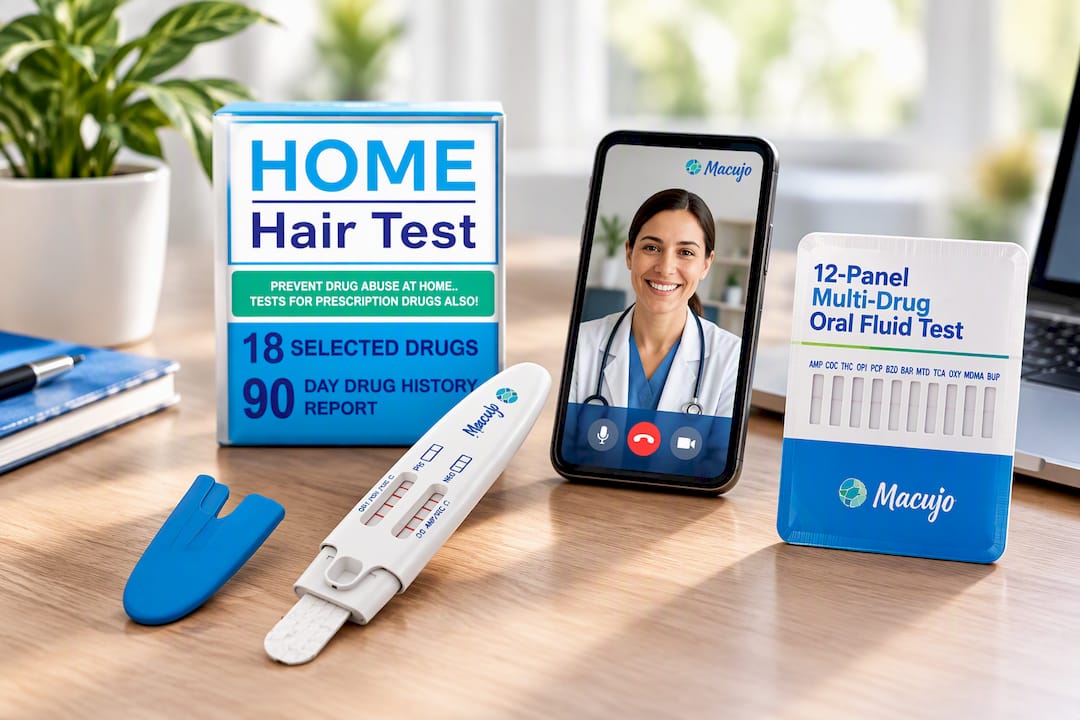
- Check your own hair status privately with a Home Hair Test kit.
- Get a tailored plan through an Afterhours Personal Consultation.
If you’re ready to see which option fits your timeline, start with our full product lineup.
FAQ
How long can drugs be detected in hair follicles?
Most drugs, including methamphetamine, are commonly detectable in the proximal 1.5-inch hair segment for about 90 days, since that length represents roughly three months of average head-hair growth. The exact window shifts with dose, frequency of use, and the specific drug and lab cutoff involved.
What can throw off a hair follicle test?
Hair color and melanin content can affect measured concentrations, since darker hair has shown stronger drug incorporation in controlled studies. Cosmetic treatments like bleaching, growth rate differences, and the use of body hair instead of head hair can also shift results in either direction.
What shows up on a 12-panel hair follicle test?
Expanded-panel tests screen for a broader range of substances than basic panels, typically covering common drugs of abuse along with their primary metabolites in a single hair sample. The specific substances included vary by lab and testing package, so confirming the exact panel with the testing provider is the most reliable way to know what’s covered.
Can a hair follicle test detect when a drug was used?
Segmental hair analysis gives an approximate timeline rather than an exact use date, since each segment of hair corresponds to a rough window of growth. Because there’s a lag of roughly 6 to 14 days between use and detectability at the scalp, test results point to a general period of exposure rather than a precise day.
Can you pass a hair test for meth?
Passing depends heavily on how recently and how heavily meth was used relative to the test date, since detection commonly extends across the full 90-day proximal window for regular users. Readers preparing for a specific test often use a structured method, such as Mike’s Macujo Method, paired with a required-washes calculator based on their own use history.
Sources
- Incorporation of methamphetamine and amphetamine in human hair following controlled oral methamphetamine administration — PMC
- Labcorp — Hair drugs of abuse testing (FAQ)
- Drug metabolites and hair testing — SAMHSA