Last Updated on October 2, 2026
A 12 panel hair test screens clipped hair strands for roughly a dozen drug classes and typically covers the past 90 days of use. Labs run an initial ELISA screen, then confirm any nonnegative result with GC/MS or LC/MS-MS before reporting it, and workplace results usually pass through a Medical Review Officer. Detection is possible as early as 5 to 7 days after use, though a single, isolated use is less likely to register than repeated use.
TL;DR:
- Hair growth rate, hair color, and cosmetic treatments can influence the detection window, making some tests detect drug use beyond the typical 90 days.
- Labs focus on identifying metabolites rather than parent drugs to differentiate between actual drug use and environmental contamination.
- Confirmatory testing with GC/MS or LC/MS-MS takes up to 72 hours, which can affect the overall turnaround for results and scheduling.
- The twelfth slot in a standard panel varies by lab, sometimes including synthetic opioids or expanded benzodiazepines, affecting what substances are detected.
- Pre-test preparation, such as avoiding recent chemical treatments and using detection kits, can improve chances of passing or assessing test readiness.
Table of Contents
- Which 12 substances does a standard hair panel screen for?
- How hair testing works from collection to lab confirmation
- How far back a hair test looks and what changes the results
- What to expect and how to prepare for hair sample collection
- How results are interpreted and what safeguards exist
- What a 12 panel hair test costs and how long it takes
- Mike’s Macujo Method and other test-prep options
- Legal and privacy rules that apply to hair drug testing
- When employers and clinicians choose hair testing over other methods
- A founder’s perspective on realistic expectations
- Get ready for your hair test with the right tools
- Sources
- FAQ
Which 12 substances does a standard hair panel screen for?
A standard 12 panel hair configuration looks for specific parent drugs and, in many cases, their metabolites, since metabolites are harder to explain away as accidental exposure. The exact list can shift slightly between labs, but most panels are built around the same core group.
- AMP (amphetamine)
- MAMP (methamphetamine)
- COC (cocaine), detected via its metabolite benzoylecgonine
- THC (cannabinoids), often confirmed through THC-COOH
- OPI (opiates), covering morphine, codeine, and 6-MAM as a heroin marker
- OXY (oxycodone)
- MTD (methadone)
- BZO (benzodiazepines)
- BAR (barbiturates)
- PCP (phencyclidine)
- MDMA (ecstasy)
- A twelfth slot that varies by lab, sometimes propoxyphene, sometimes an expanded opiate or benzodiazepine category
Some providers build their 12 panel around synthetic opioids instead of the traditional opiate trio, and others fold buprenorphine into the mix given how often it shows up in both prescription and illicit use. Expanded benzodiazepine lists are common too, since the class includes many individual compounds with different half-lives. For a fuller breakdown of what drugs show up on a hair follicle test and what a positive result means for the person being tested, it helps to see how panels are named and marketed before assuming any two “12 panel” tests are identical.
Labs target metabolites rather than parent compounds whenever possible because metabolites only form after a substance has been processed by the body, which helps distinguish use from contamination. A parent drug can sometimes appear on hair through environmental exposure, secondhand smoke, or contact with contaminated surfaces, without ever being ingested. A metabolite is much harder to explain that way, which is part of why external contamination is a recognized challenge in hair testing that labs work to rule out through washing and extraction protocols before they ever report a result.
How hair testing works from collection to lab confirmation
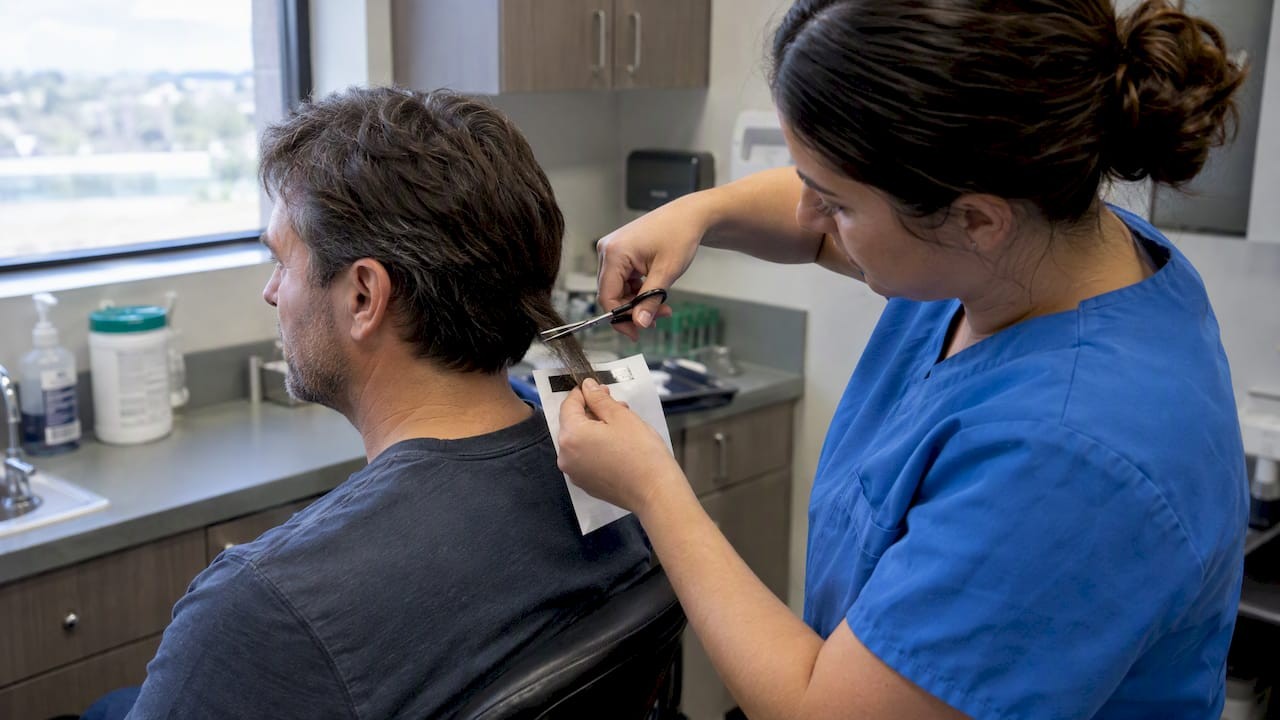
Collection starts with clipped hair, not hair pulled from the follicle, despite the common name “hair follicle test.” A technician typically takes a sample from the proximal 1.5 inches of scalp hair closest to the root, aiming for around 25 milligrams, because hair grows at roughly half an inch per month and that length maps to about three months of history. When head hair is too short or unavailable, body hair is sometimes used instead, though it grows more slowly and less predictably, which makes timing harder to pin down.
Once the sample reaches the lab, ELISA is used as the initial screen. It is fast and sensitive, but not specific enough on its own to prove drug use beyond dispute. Any specimen that screens nonnegative moves to confirmatory testing with GC/MS or LC/MS-MS, which identifies the exact metabolites present and provides the kind of evidence that holds up in an employment dispute or legal proceeding.
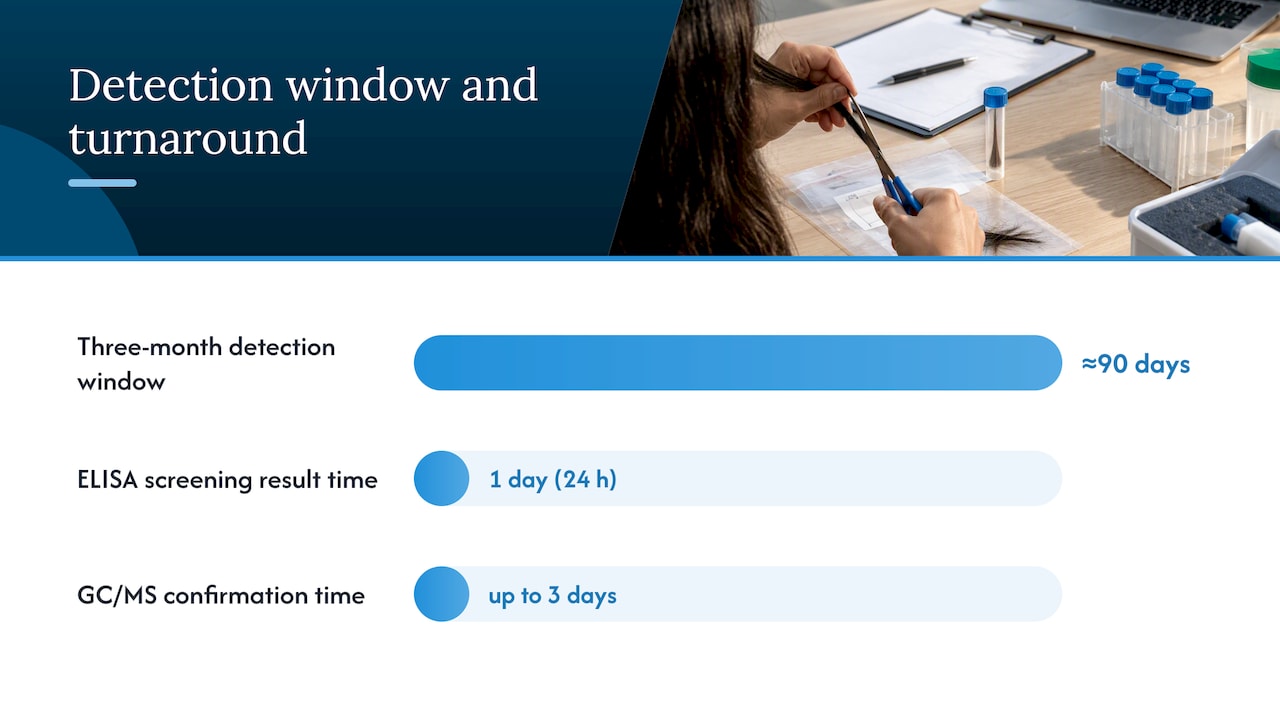
A hair strand test can return an ELISA screen within 24 hours, while GC/MS confirmation can take up to 72 hours, which is one reason employers often build a few extra days into their hiring timelines.
Before analysis, labs generally wash the sample to reduce surface contamination, then extract it using validated procedures.
- Washing steps use solvents such as isopropanol along with buffer solutions to strip external residue without destroying what is embedded in the hair shaft.
- Extraction breaks down the hair matrix so that drugs and metabolites trapped inside, not just on the surface, can be measured.
- Cutoff thresholds are set so that trace-level contamination that survives washing still falls below the level needed to report a positive.
This whole process is why hair testing tends to reflect repeated use rather than a single incident: drugs and metabolites enter hair through the bloodstream as it grows, so a pattern of use leaves a pattern of deposits along the strand, not just a single point. More detail on the mechanics is available in a breakdown of how hair drug testing actually works from collection through reporting.
How far back a hair test looks and what changes the results
The commonly cited detection window for a standard 1.5-inch head hair sample is about 90 days, with the earliest practical detection point sitting around 5 to 7 days after use, once enough drug has been incorporated into the visible hair shaft. That window is an approximation, not a guarantee, and several factors can shift it in either direction.
- Hair growth rate varies by person, which changes how much of the 90-day window is actually captured in a 1.5-inch sample.
- Hair color and texture affect how readily drugs bind to the hair shaft, with darker, coarser hair generally retaining more than fine or light hair.
- Cosmetic treatments like bleaching, relaxing, or frequent coloring can degrade drug residues and lower measured concentrations.
- Frequency and dose of use matter enormously, since heavier or more frequent use deposits more drug into the hair matrix.
- Body hair grows more slowly than head hair and reflects a longer, less precisely dated window when it is used as a substitute.
Peer-reviewed research indicates hair testing is better suited to detecting chronic or repeated use than a single, isolated event, and sensitivity for one-time use varies by substance and by the individual’s hair characteristics. Hair testing also cannot reliably pinpoint exactly when within the window use occurred, since growth rates are not perfectly uniform. Metabolite-based confirmation, discussed earlier, is the primary tool labs use to keep environmental contamination from being mistaken for actual use.
What to expect and how to prepare for hair sample collection
Walking into a collection appointment prepared reduces the chance of delays or disputes, especially for employer or forensic testing where procedure matters as much as the result.
- Bring government-issued photo ID, since most chain-of-custody collections require it to confirm identity before the sample is taken.
- Avoid new hair coloring, bleaching, or chemical treatments in the days before collection if you have a choice in timing, since these can alter the sample.
- Know whether your test is a consumer-ordered kit or a formal chain-of-custody collection, because the latter involves stricter documentation, sealed specimen bags, and signed forms.
- Ask ahead of time what happens if your hair is too short to sample, since some sites will use body hair or switch to a different specimen type.
- Understand your employer’s or program’s refusal policy before the appointment, since refusing to provide a sample is frequently treated the same as a positive result.
The collector typically clips a small section of hair close to the scalp from the back of the head, where it is less noticeable, then weighs, labels, and seals the sample in front of the donor. If head hair is insufficient, some programs allow body hair instead, though turnaround and interpretation can differ slightly given body hair’s slower growth pattern.
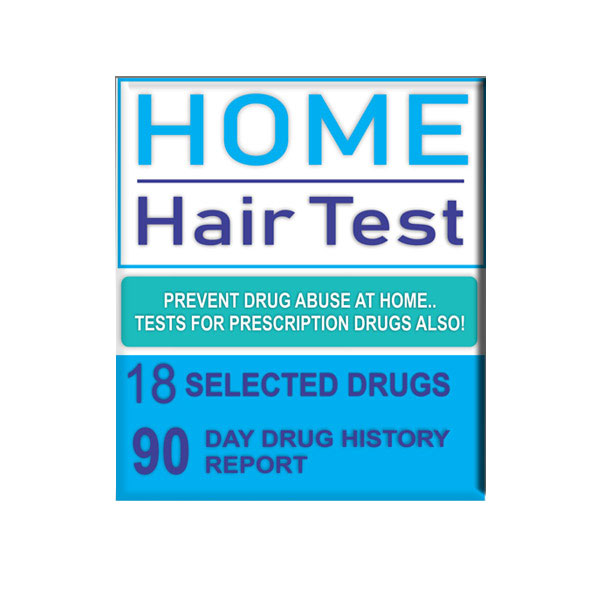
Pro Tip: If you are anxious about an upcoming test, a home hair test kit can give you a private readiness check before the official appointment, and scheduling around any planned hair treatments helps avoid sample complications.
How results are interpreted and what safeguards exist
A hair test result moves through two distinct stages before it is finalized. The initial ELISA screen flags samples that may contain a substance, but a screen alone is never the final word. Only after GC/MS or LC/MS-MS confirmation identifies specific metabolites does a lab report an actual positive, and that confirmatory step is what protects the person being tested from a screening-only error.
- Screening results are typically available quickly, while confirmatory testing adds additional processing time.
- A Medical Review Officer reviews workplace or legal positive results to help determine whether a legitimate prescription could explain the finding before any action is taken against the individual.
- Split samples allow a portion of the original specimen to be sent to an independent lab for an additional test if the donor disputes the result.
- Environmental contamination claims are investigated using the same metabolite-focused methods described earlier, since a true positive shows metabolite patterns that surface contact alone does not produce.
Consumer-ordered tests do not always include MRO review by default, so it is worth confirming that detail before ordering if the result needs to hold up in a formal setting.
What a 12 panel hair test costs and how long it takes
Consumer 12 panel hair tests generally sit at a higher price point than basic urine panels, reflecting the added laboratory work of confirmatory testing. Employer or forensic chain-of-custody collections typically cost more still, given the documentation, MRO review, and stricter handling requirements involved.
- Screening results are often available within 24 to 48 hours of the lab receiving the sample.
- Confirmatory testing can take anywhere from 72 hours to about a week, depending on lab backlog and whether expedited processing is requested.
- Split-sample storage, additional confirmatory runs, and MRO review all add time and cost on top of a basic screen.
Anyone working against a hiring deadline should ask upfront how the provider’s turnaround compares to these ranges, since backlog varies a lot between labs.
Mike’s Macujo Method and other test-prep options
For readers preparing for an upcoming test rather than simply trying to understand one, Macujo offers a structured option built specifically around hair chemistry. Mike’s Macujo Method, introduced in 2018, is a nine-step protocol built for high THC exposure as well as other drugs and alcohol, and it must be completed with authentic Macujo Aloe Rid Old Formula Shampoo. The number of washes needed is calculated individually through Mike’s Macujo Required Washes Calculator based on the substance, last use date, and frequency of use over the prior 90 days.
- When every step and wash is followed exactly, the method reportedly has a high success rate, though results depend entirely on correct execution and no further use afterward.
- This is distinct from the older Macujo Method, which was built for low to moderate THC exposure and offers only temporary masking rather than a thorough clean.
- A home hair test kit lets someone check their own readiness privately before a real appointment.
- An Afterhours Personal Consultation connects a person with guidance on timing and strategy when a test date is approaching fast.
Anyone relying on this or any other preparation method should still confirm expectations against their actual lab’s or program’s policies. For a fuller walkthrough, see the science-backed preparation timeline.
Legal and privacy rules that apply to hair drug testing
Hair drug testing sits in a different legal category depending on who orders it and why. Employer-mandated testing is generally governed by workplace policy and, in some industries, federal regulations for safety-sensitive positions, while court-ordered testing follows its own chain-of-custody rules designed to hold up as evidence. Consumer-ordered testing, by contrast, is typically private: the person ordering the kit controls who sees the result, and there is no automatic reporting to an employer or agency.
Privacy protections vary by testing context, and a result obtained through a formal employer or legal collection is usually documented and retained differently than a private, consumer-ordered test. Anyone concerned about how a result might be shared or used should ask the testing provider directly how results are stored, who has access, and whether the sample or data is retained after reporting.
Refusal to provide a sample in a workplace or legal context is commonly treated as equivalent to a positive result, which is worth understanding before declining a scheduled collection. Because rules differ by employer policy, industry, and jurisdiction, anyone facing a formal test should review their specific program’s documentation rather than assume a general rule applies. None of this is legal advice, and a person with real concerns about a specific testing situation should raise them with their employer’s HR department or an attorney familiar with workplace testing law.
When employers and clinicians choose hair testing over other methods
Hair testing is generally chosen over urine, blood, or saliva testing when the priority is establishing a pattern of use over months rather than catching very recent use. Pre-employment screening is one of the most common scenarios, since a 90-day window gives an employer a broader picture of a candidate’s recent history than a urine test’s much shorter detection span. Safety-sensitive industries, including transportation and heavy equipment operation, often favor hair testing for this reason.
Clinical settings sometimes use hair testing to monitor patients in long-term treatment or recovery programs, where documenting sustained abstinence matters more than catching a single slip. Child custody disputes and certain legal proceedings also lean on hair testing because of its longer lookback period compared to blood or saliva, which only cover the last day or two.
Saliva and urine remain preferred when recent use, within the last 24 to 72 hours, is the actual question, since hair testing is poor at capturing very recent, isolated use. A 12-panel oral fluid saliva test fills that gap for situations where same-day or next-day use is the concern rather than a 90-day history. Choosing the right method comes down to matching the testing window to the actual question being askedwhether that is “did this person use recently” or “has this person used repeatedly over the past few months.”
A founder’s perspective on realistic expectations
Having worked in hair testing preparation since about 1999, I built this guidance because most people facing a hair test get almost none of this explained to them beforehand. Confirmatory testing and MRO review exist for good reason: rely on them, verify your actual deadline, understand your employer’s specific policy, and consider a home test or a consultation if your situation feels urgent.
— MIchael
Get ready for your hair test with the right tools
Knowing how a 12 panel hair test works is only half the equation when you have an actual appointment on the calendar. Macujo carries a home hair test kit for checking your own status privately before the real thing, along with Macujo Aloe Rid Old Formula Shampoo for anyone following Mike’s Macujo Method.
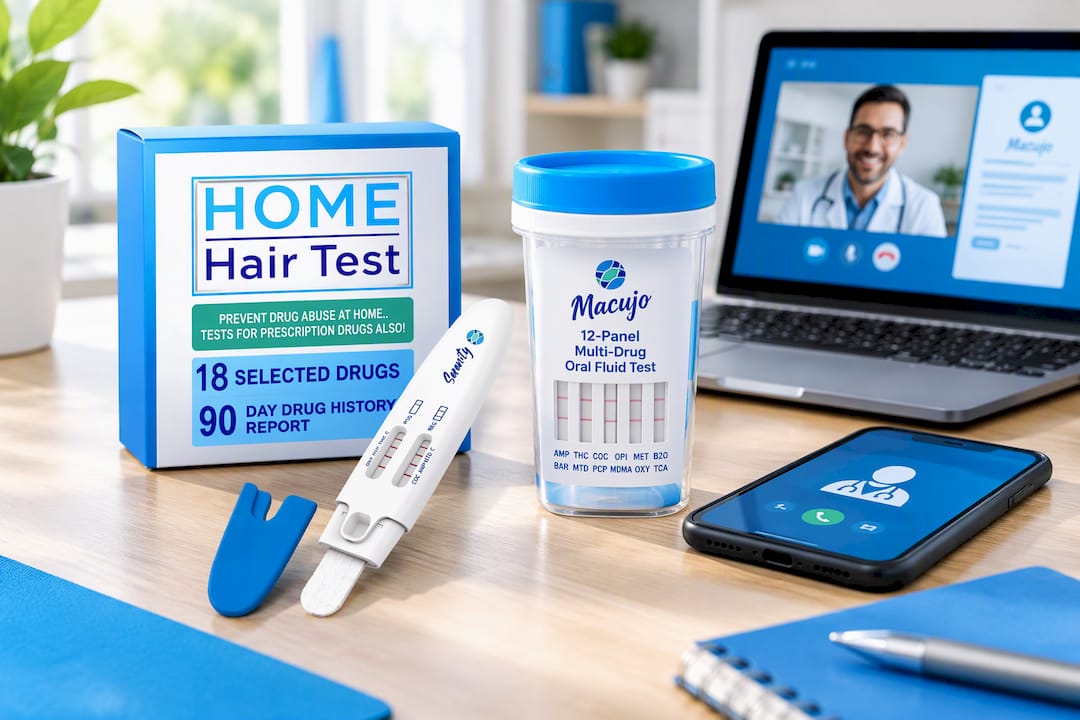
If your timeline is tight or your situation is complicated by frequency of use or drug type, an Afterhours Personal Consultation gives you direct access to guidance on timing and strategy. Macujo’s required-washes calculator factors in your substance, last use date, and use frequency to tell you exactly how many washes your situation calls for. Browse the full range of hair, urine, and saliva test products to find what fits your timeline before your appointment date arrives.
Sources
- Hair strand drug test: how it works, uses, and what to expect — Healthline
- Detecting drugs in hair: Is it drug use or environmental contamination? — NIJ
- Ensure accurate drug tests with a Medical Review Officer — Concentra
- Limitations and utility of hair testing for drugs of abuse — PMC (peer‑reviewed)
FAQ
What shows up on a 12 panel hair follicle test?
A standard panel screens for amphetamine, methamphetamine, cocaine, THC, opiates, oxycodone, methadone, benzodiazepines, barbiturates, PCP, and MDMA, plus one variable twelfth category that differs by lab. Some labs swap in synthetic opioids or buprenorphine depending on their configuration.
How far back does a 12 panel drug test go?
A standard 1.5-inch head hair sample typically covers about the past 90 days of use, with the earliest detection generally possible around 5 to 7 days after use. Hair growth rate, hair color, and cosmetic treatments can all shift that window slightly.
How much does a 12 panel hair follicle test cost?
Pricing is available directly from providers and depends on whether you need a basic consumer test or a formal chain-of-custody collection with MRO review, since the latter involves more documentation and processing. Confirmatory testing and split-sample handling typically add to the base price.
What drugs does a 12 panel test detect?
It detects the same core substance classes covered above: amphetamines, cocaine, THC, opiates, oxycodone, methadone, benzodiazepines, barbiturates, PCP, and MDMA, confirmed through metabolites where possible. The exact twelfth slot and any expanded categories vary by testing provider.
How does a 12 panel hair test tell the difference between drug use and contamination?
Labs rely on metabolite detection rather than parent drug alone, since metabolites only form after a substance is processed by the body, making surface contamination far less likely to trigger a false positive. Washing and extraction protocols before GC/MS or LC/MS-MS confirmation add another layer of protection against misreading contamination as use.