
Common Types of Drug Tests Used by Employers
Toxicology tests are performed by employers for various reasons and at varied intervals. Federal laws establish drug-testing requirements; however, state-level requirements vary by state.
The Supreme Court issued a ruling that essentially states that, although drug tests infringe upon an employee’s privacy, they may be necessary to protect people’s health and safety. Some states, such as Delaware, Minnesota, and Arizona, have laws allowing employers to deny employment or terminate employees based on their drug-test results.
Most Common Drug Tests for Employment
Testing methods are generally minimally invasive, except for blood testing, and allow employers to test for a wide variety of substances. Many people face toxicology screening for employment, so the sections below explain the most common tests and why they are performed.
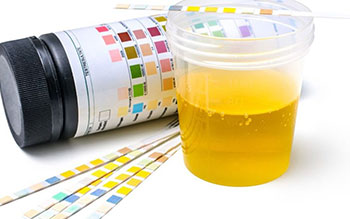
Urinalysis
Testing urine for employment used to be the most common form of drug testing because it is cost-effective and has a quick turnaround time. However, urine tests can be unreliable because they are easy to tamper with and detect substances in the system for only a short period. Because of these factors, employers are using them less frequently.
Urine drug screening (UDS) tests can detect a wide range of substances, including amphetamines, benzodiazepines, marijuana, cocaine, nicotine, alcohol, and methadone. Although this test is commonly used, the primary immunoassay UDS may miss some substances or produce false-positive results. When the initial results are questioned, a follow-up gas chromatograph/mass spectrometry (GC/MS) test may be performed. The GC/MS test can also produce false-positive results. Both UDS tests may not detect drug use if the drugs were used on the day of the test.
Also see: Products That Help You Pass a Urine Test | Ultra Pure Synthetic Urine
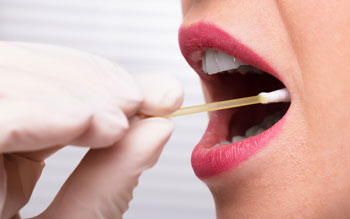
Saliva
Saliva drug tests, also called oral-fluid or mouth-swab drug tests, are minimally invasive and use a sponge or another absorbent pad on the end of a collection stick. Employers may choose these tests instead of urinalysis. Oral-fluid tests are sometimes preferable because the sample can be collected while the person remains in view, making the test much more difficult to tamper with.
They are also quick to administer. Their detection capabilities are similar to those of a urine drug screen, allowing an array of substances to be detected. Unlike a urine test, a saliva test can detect substances in the system much sooner. Drugs can generally be detected with a saliva test approximately 30 minutes after consumption.
On average, drugs can be detected in saliva for between 5 and 48 hours. Detection varies according to factors such as frequency of use and the type of substance used. Saliva tests are quite common because of their nearly 98 percent accuracy rate.
Also see: Products That Help You Pass an Oral-Swab Drug Test
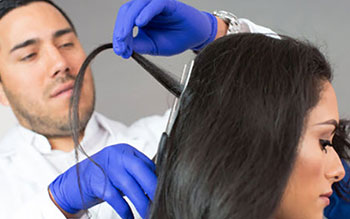
Hair
Hair-follicle drug testing has a higher accuracy rate than urine screening and is now the most commonly used drug test by employers. Hair drug testing involves examining the hair closest to the scalp and soaking the strands in a chemical to open the follicle, remove masking agents, and reach the inner layers of the hair strands.
Hair drug tests are useful for employers seeking results that detect substance use over longer periods. Drug residue can be detected for up to 90 days, depending on the amount and type of substance used. Insurance companies frequently use hair drug tests because employee drug use can create risks and increase insurance costs. When considering the detection period, think of it this way: a hair test indicates that you do not use drugs, whereas a urine test indicates that you are not currently on drugs.
Also see: Products That Help You Pass a Hair Drug Test
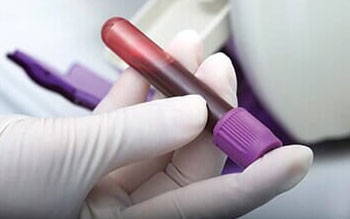
Blood
Blood tests are considered highly accurate and are the most accurate tests for current drug use. Employers may use this test when they are concerned that someone is presently under the influence of a substance. Blood analysis offers quick detection when traces of drugs are currently in the blood. However, blood tests are the least common drug tests used by employers.
Employers are often more interested in habitual drug use, and blood tests cannot detect long-term use. Blood tests are performed only by qualified professionals, eliminating the risk of altering the test or its results. Blood analysis is also used less frequently because it is expensive and invasive.
Employment and Pre-Employment Drug Testing
Depending on your field of work, drug tests may be performed more frequently than in other fields. County, state, and federal jobs are among those with the highest drug-testing requirements.
Teachers, hospital workers, transportation drivers, athletes, and construction workers are among the professionals who may be required to undergo drug testing. Many employers in these and other fields use pre-employment drug testing when selecting candidates. In addition to pre-employment screening, you should be prepared for random or periodic testing if your employer requires it.
Drug tests are also frequently performed after workplace accidents as employers attempt to determine whether substances contributed to the incident.
While there is no single method for passing every type of drug test, you can use Mike’s Macujo Method when preparing for a hair drug test. This hair-follicle treatment method should be used properly before your test to help ensure that toxins are effectively removed from your hair.