Last Updated on November 17, 2026
A random hair drug test gives you little or no warning, and it reads roughly the last 90 days of your history, not the last few days. That is why preparing for one works differently from preparing for a urine test. What matters is how much exposure your hair carries, how long ago your last use was, and how many correct washes your situation requires. Mike’s Macujo Method, which we have used since 2018, starts from exactly those three facts and gives you a specific number of washes with Macujo Aloe Rid® Shampoo instead of a guess.
TL;DR
- A hair test typically covers about 90 days of use, based on the first 1½ inches of hair closest to the scalp, according to Quest Diagnostics.
- Very recent use (the last 5 to 10 days) may not show yet, because hair needs time to grow above the scalp.
- “Random” describes when you are chosen, not which specimen is used. Hair is one of several options an employer can pick.
- Your required number of washes depends on the substance, your date of last use and how often you used in the previous 90 days. Our calculator works that out for you.
- If you are called in with little notice, the first move is to calculate, not to guess.
Table of Contents
- What “random” actually means in a hair test
- What a hair sample shows, and what it misses
- What affects a result
- What to do the moment you are told to report
- Why the calculator beats a rule of thumb
- Where Macujo fits
- Our perspective
- If you think a result is wrong
- Frequently asked questions
- Sources
What “random” actually means in a hair test
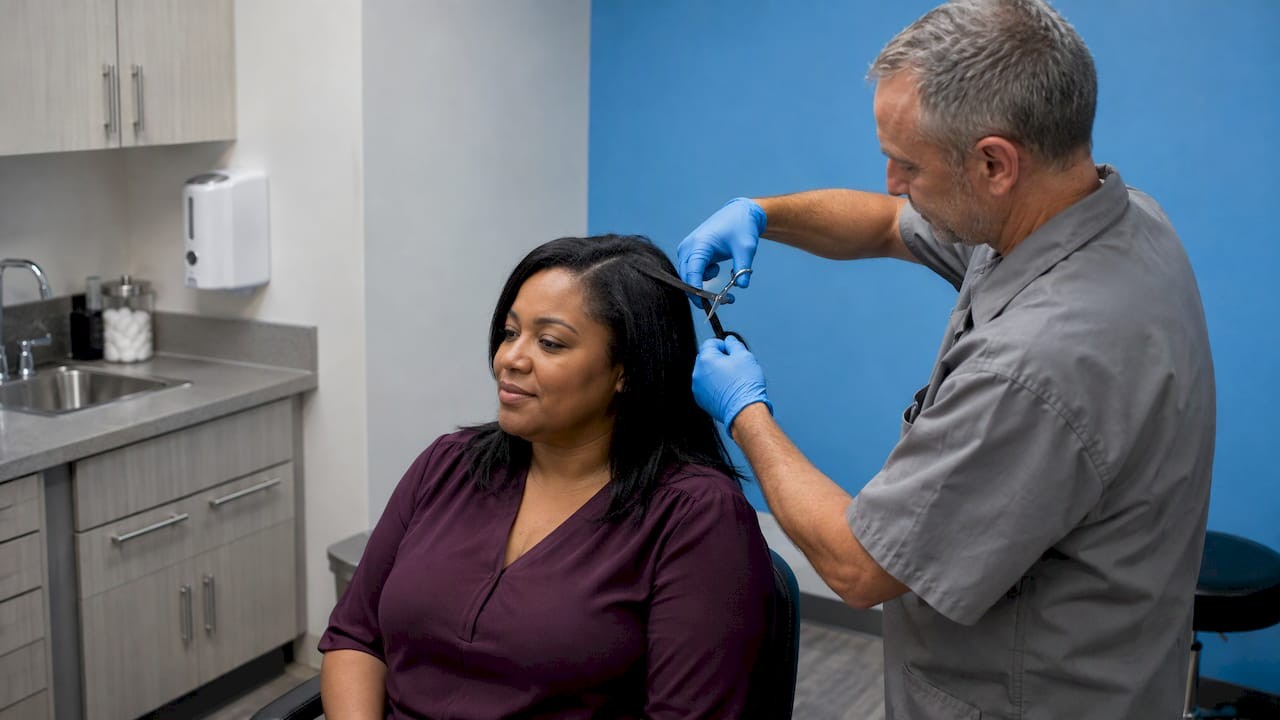
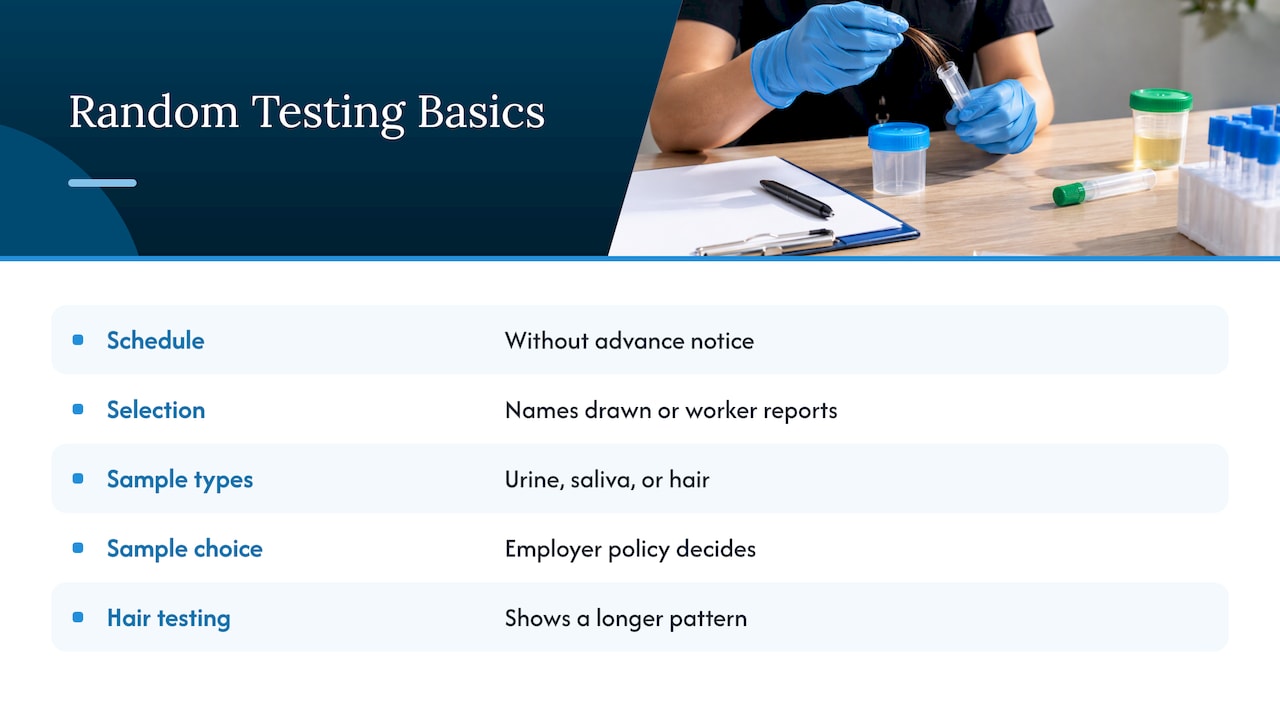
A random drug test is one an employer schedules without telling you in advance. Companies draw names from a pool of employees or ask a current worker to report to a collection site. The word “random” says nothing about the kind of sample. Urine, saliva and hair are all used, and the employer’s policy decides which.
That matters because many people assume a surprise test means a urine test. Employers that choose hair do it because it shows a longer pattern. If your workplace or a job you are applying for uses hair testing, a surprise call can arrive when you are nowhere near ready.
For federal workplaces, hair has been moving into the picture. A 2020 Federal Register notice proposed allowing federal executive agencies to use hair for pre-employment and random testing, with another authorized specimen type also available. It was a proposal, so what applies to you depends on your employer and your industry. If you work in transportation, our guide to the DOT hair follicle testing policy explains where that stands.
For a broader look at the options, see common types of drug tests used by employers.
What a hair sample shows, and what it misses
Hair testing is built around hair growth. Substances in the body reach the hair through the blood supply at the root, and they stay in the strand as it grows out. A lab reads the part of the strand closest to the scalp.
The 90-day window
Quest Diagnostics says its standard head-hair analysis uses the first 3.9 cm (1½ inches) from the root end, which represents approximately a 90-day interval based on average growth, per its hair testing FAQ. So when a random test is called, the lab is not asking what happened this week. It is asking what pattern your hair recorded over roughly three months.
That is also why a heavy user and an occasional user face very different situations. Frequent use over the previous 90 days leaves more to account for, and it means the number of washes you need is not the same for everyone. Our article on how hair drug testing actually works goes through the mechanics step by step.
The blind spot for recent use
Quest also reports that head hair takes about 5 to 10 days after use to grow above the scalp and become available for collection. A 2025 review in the Journal of Applied Laboratory Medicine agrees that drug-containing hair may take days to emerge above the scalp, and says the process can take up to 10 days.
In practice, use in the last week or so may not be in the sample at all. That gap is a known feature of hair testing, and it is the reason employers often pair hair with another specimen type. Our comparison of hair versus urine tests at work covers what each one catches and what each one can miss.
Why hair is not used for every kind of test
Quest says hair testing is not suited to post-accident or reasonable-suspicion testing, because it detects a longer-term pattern rather than use close to the event. So a hair test is most common in pre-employment screening and in routine or random programs, where the employer cares about a pattern and not about what happened this morning.
Body hair
If you have no head hair, or very short hair, a collector may take body hair instead. Body hair grows more slowly, so it can reflect a much longer period. Our page on the body hair drug test window explains what the longer window means.
What affects a result
Two people with the same history can produce different readings. The 2022 Society of Hair Testing consensus says hair color and type, external contamination, hair treatments and growth rates can all influence concentrations or how a result is interpreted.
That is why a generic “wash three times” tip is not a plan. Hair is individual, and so is your exposure. The factors that matter most to your preparation are:
- The substance. Marijuana, cocaine, opiates, amphetamines and other drugs are all commonly screened in hair, and each leaves a different profile.
- Date of last use. It tells you how much of the 90-day window is affected.
- Frequency of use in the previous 90 days. Daily use and a few occasions are very different starting points.
- Your hair itself. Length, color and any treatments change how you should read your own situation.
Two of these, the date and the frequency, are things only you know. Write them down accurately before you do anything else.
What to do the moment you are told to report
A random call usually sets a short deadline. Here is a sequence that keeps you calm and organized.
- Find out the test type. Ask HR or the collection site whether it is a hair, urine or saliva test. Each calls for a different approach.
- Write your timeline. List the substance, the date of last use and how often you used in the previous 90 days. Be exact. Vague answers lead to vague plans.
- Run the numbers. Enter those details into Mike’s Macujo Required Washes Calculator. It gives you the number of washes your history calls for, not a one-size answer.
- Use the method as written. Mike’s Macujo Method is a nine-step process built for high THC levels and for other drugs and alcohol, and it is completed with authentic Macujo Aloe Rid® Shampoo. Every required wash and every direction counts. When every required wash and direction is completed correctly, the method has a reported success rate of better than 99%, and the hair stays clean unless drugs or alcohol are used again.
- Talk to someone if your timeline is tight. If the notice is short or your history is heavy, a personal consultation lets you check the plan against your actual dates.
- Stay clean afterward. The method’s results hold only as long as there is no new use, and a random program can call you again.
Why the old method is not the same thing
You may see references to the old Macujo Method online. It was designed primarily for low-to-moderate THC exposure and provides only temporary masking, with an estimated success rate of about 90% for moderate THC. Mike’s Macujo Method replaced it as our standard in 2018, and it is the one built for higher levels and for other drugs and alcohol. If you are heavy-use, urgent or unsure, you want the current method and the calculator.
Why the calculator beats a rule of thumb
Most advice you will find about last-minute hair tests tells you to wash a set number of times and hope. The trouble with that is that your hair does not carry a set amount. The calculator takes the three facts that drive the amount, the substance, how long ago, and how often, and turns them into a required wash count.
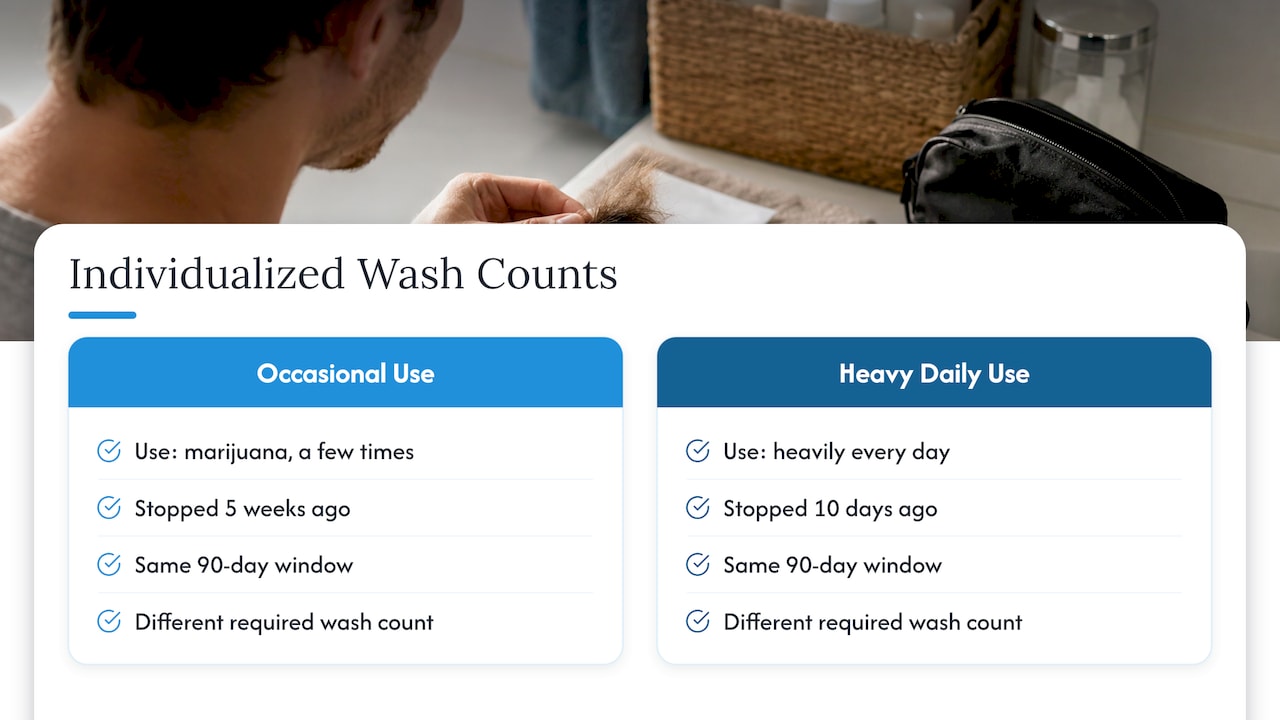
A worked example shows the logic. Imagine two applicants, both called for a random hair test in the same week. One used marijuana a few times over the last three months and stopped five weeks ago. The other used heavily every day until ten days ago. They share the same 90-day window but not the same exposure, so they should not run the same routine. Entering each history into the calculator gives each person a different required number, and the method is then followed to that number.
The important point is that the count is a requirement, not a suggestion. Skipping a wash or shortening a direction is the most common way a plan falls apart, so the structure of the nine steps exists to keep you on track when you are under pressure.
Where Macujo fits
We have helped people prepare for hair follicle tests since approximately 1999. If a random test has just been announced, here is what we offer:
- Macujo Aloe Rid Old Formula Shampoo, the authentic shampoo the method requires, priced at $100 to $150. You can find it in our hair products category.
- Afterhours Personal Consultation, a phone consultation with an expert for $100, available through our shop. Customers also receive unlimited support.
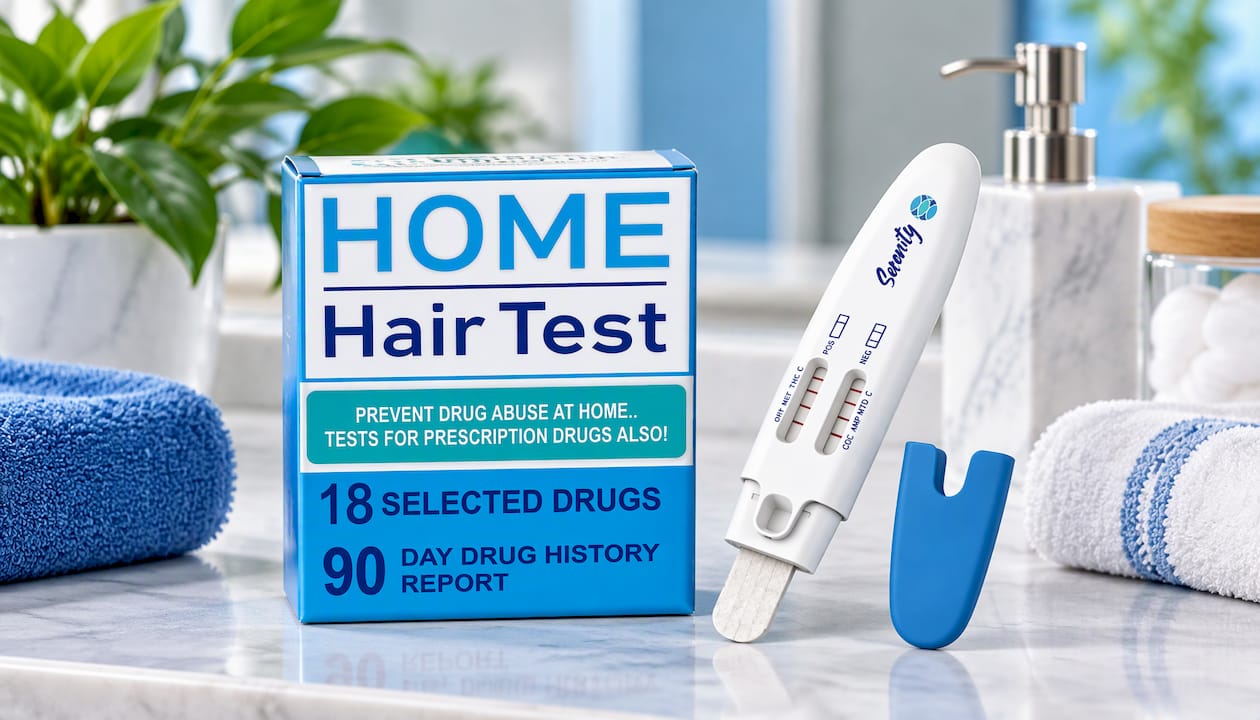
- Hair, urine and saliva test products, including a Home Hair Test kit and a 12-panel saliva drug test, listed on our main site.
If you want a plan that fits your own dates, start with the calculator and then the shampoo. If your timeline is tight, add the consultation so you can go through the schedule with someone who knows the method.
Browse the Macujo Aloe Rid shampoo and book a consultation from the shop page when you are ready.
Our perspective
Most people who contact us have the same story. A call came with almost no notice, they looked online, and they found a pile of tips that did not say anything about their own history. That is the problem we built our method around.
A hair test reads about 90 days, and the amount in your hair depends on what you used, when you last used and how often. That is why we ask for those three facts first and why our Required Washes Calculator exists. A plan that ignores them is a plan built on a guess.
Mike’s Macujo Method is our current standard. We introduced it in 2018 for high THC levels and for other drugs and alcohol, and it is done with authentic Macujo Aloe Rid® Shampoo. When every required wash and direction is completed correctly, we report a success rate of better than 99%, and the hair stays clean unless drugs or alcohol are used again.
We also know a random call is stressful. That is why we offer unlimited support and an after-hours phone consultation. You should not have to work out a nine-step process alone at midnight before a morning collection.
MIchael
If you think a result is wrong
Sometimes a result comes back that you did not expect. The lab process has a built-in check. The Society of Hair Testing consensus recommends that presumptive positive screens be confirmed by mass spectrometry, and says laboratories should use techniques with adequate sensitivity and specificity. A positive that stands after confirmation has passed that second step.
If you want to question a result, ask the employer or the testing company how the sample was confirmed and whether a retest is available under their policy. If a prescription medication could be involved, speak to your prescribing doctor, who can document it. In many workplaces a Medical Review Officer, a physician who reviews positive results, handles that conversation, so ask whether one is part of your program.
If the result is a failed one and you plan to test again, our guide on using the 90-day window to verify and retest explains how to read the timeline. For the science on reliability, see our summary of hair drug test accuracy. And if your own history reaches past three months, when 90 days isn’t enough walks through what changes.
Frequently asked questions
Can an employer give a random hair drug test?
Yes, if the employer’s policy allows it. “Random” describes how people are selected, and the employer decides the specimen type. Hair is used in some programs, particularly pre-employment and routine screening, and a federal proposal in 2020 would have allowed hair for random testing at federal agencies alongside another specimen type.
How far back does a random hair test look?
A standard head-hair test looks back about 90 days, based on the first 1½ inches of hair nearest the scalp. Use in the last 5 to 10 days may not appear yet, because the hair has not grown out from the scalp.
What if I get no notice at all?
Start with the facts you control: the substance, your last use date and your use in the previous 90 days. Enter them into the Required Washes Calculator, then follow the nine steps of Mike’s Macujo Method with Macujo Aloe Rid® Shampoo. If time is short, an Afterhours Personal Consultation at $100 lets you go through your schedule with an expert.
Does body hair count if I have a shaved head?
Yes. A collector can take body hair when head hair is not available. Because body hair grows more slowly, the period it reflects can be much longer than 90 days, so read our page on the body hair window before the test.
Can my hair color or treatments change the result?
They can influence how a result reads. The Society of Hair Testing consensus lists hair color and type, hair treatments, external contamination and growth rates among the factors that affect concentrations or interpretation. That is one more reason to base your plan on your own history and not on a generic tip.
Sources
- Mandatory Guidelines for Federal Workplace Drug Testing Programs, Federal Register (2020)
- Hair testing FAQ, Quest Diagnostics (2023)
- Review on Toxicology Testing in Hair, Journal of Applied Laboratory Medicine (2025)
- General Consensus on Hair Testing, Society of Hair Testing (2022)