Last Updated on November 15, 2026
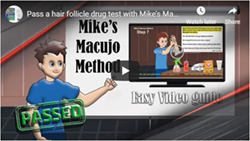
The day of a hair drug test is the last step of a process that starts weeks earlier. The lab reads about 90 days of your history from hair that is already on your head, so what you do in the final 24 hours matters far less than whether your required washes were finished beforehand. If you have a test coming, work out your wash count first. Then use test day to arrive calm, with the right paperwork and a clear picture of what the collector will do. Our required washes calculator and Mike’s Macujo Method with authentic Macujo Aloe Rid® Shampoo are built for exactly that sequence.
TL;DR
- A standard hair test reads the first 1.5 inches of hair nearest the scalp, which covers roughly 90 days of use.
- Collection is observed, takes about 5 to 10 minutes, and needs around 100 to 120 strands. Hair from a brush is not accepted.
- Preparation is done before test day: the number of washes in Mike’s Macujo Method depends on the substance, the date of last use and how often you used in the previous 90 days.
- Do not use again between your last wash and the test. Hair that is clean stays clean unless drugs or alcohol are used again.
- If your timeline is tight or your situation is unusual, a personal consultation gets your questions answered before the appointment.
Table of Contents
- What the lab actually tests
- Your timeline: count backward from the test
- A preparation schedule that works
- What happens at the collection site
- What can affect a hair result
- Prescription medication and results you question
- Where we fit in
- Our view: preparation is a plan, not a trick
- Test day checklist
- FAQ
- Sources
What the lab actually tests
People call it a hair follicle test, but that is a misnomer. Quest Diagnostics explains that the hair is cut as close to the scalp as possible and the hair itself is tested, not the follicle. Nothing is plucked.
The reason a hair test looks back so far is how hair records exposure. Drugs in the bloodstream are incorporated into growing hair. According to Quest’s hair testing FAQ, the standard sample is the first 1.5 inches (3.9 cm) of head hair from the root end, which at the average growth rate of about half an inch a month covers approximately 90 days.
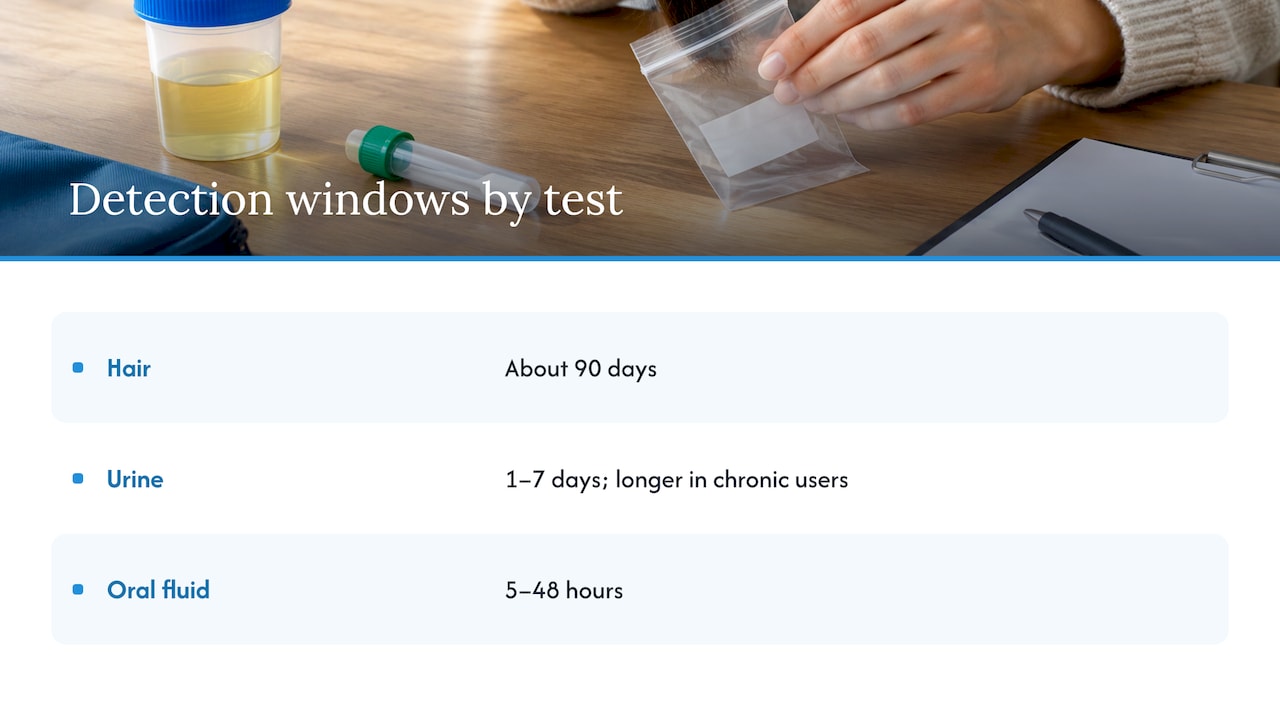
Compare that to other test types. Labcorp’s workplace testing FAQ gives about 90 days for hair, against one to seven days for urine (longer in chronic users) and five to 48 hours for oral fluid. That is why employers choose hair for pre-employment screening and why last-minute abstinence does not change a hair result the way it can for a urine test. Our guide on hair versus urine tests at work covers the difference in more detail.
The 7 to 10 day lag
New use does not show up in the scalp-level sample immediately. A 2025 review in the Journal of Applied Laboratory Medicine reports that drugs are not detectable in hair above the scalp for at least a couple of days, and up to about 10 days, after ingestion. The practical point for your calendar: the window is 90 days of history, but the very latest days may not yet be in the section being cut. Do not read that as permission to use. It is a reason to count your days from the date of your last use carefully, which is what the calculator does for you.
Your timeline: count backward from the test
Good preparation starts with three facts, and they are the same three facts our calculator asks for:
- The substance. THC, cocaine, methamphetamine, opioids and others differ in how they are laid down in hair and how they are cleansed. For methamphetamine specifically, see our timeline guide for job tests.
- The date of last use. The longer ago it was, the more of the contaminated hair has grown out or can be addressed by washing.
- How often you used in the previous 90 days. Heavy and frequent exposure raises the number of washes required.
If your last use was recent, or you were a heavy user, treat the wash count as the main task of the next days, not as an afterthought. Mike’s Macujo Method is a systematic nine-step process, introduced in 2018 and developed for high THC levels and for other drugs and alcohol. It must be completed with authentic Macujo Aloe Rid® Shampoo, and the number of washes comes from Mike’s Macujo Required Washes Calculator. When every required wash and direction is completed correctly, the method has a reported success rate of better than 99%.
If you want the longer view on why 90 days is a typical window but not a guarantee, read When 90 Days Isn’t Enough for a Hair Drug Test Timeline.
Which method is yours
Two names circulate and they are not interchangeable. The old Macujo Method was designed primarily for low-to-moderate THC exposure, has an estimated success rate of about 90% for moderate THC, and provides only temporary masking. Mike’s Macujo Method is our current standard and is the one built for high THC levels and other substances. If you are a heavy user with an imminent test, the current method is the one to plan around.
A preparation schedule that works
The schedule below assumes you have already used the calculator and know your wash count.
Several days out
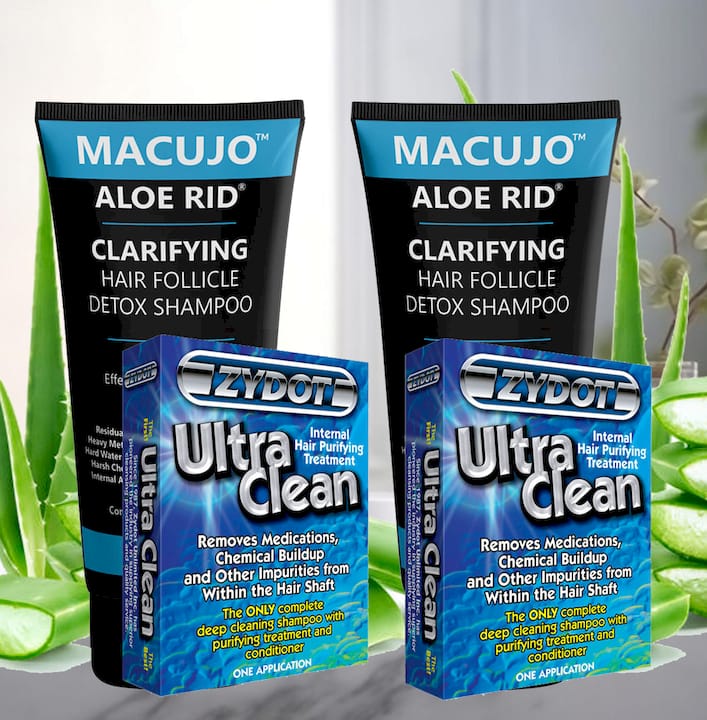
- Order and confirm you have everything. The method requires authentic Macujo Aloe Rid® Shampoo. Make sure you have enough for every required wash before you start, so you do not stop halfway.
- Read the directions in full and watch the videos. Each of the nine steps has a reason, and skipping or rushing one is the usual way a wash count goes wrong.
- Plan the washes around your test time. Block out the time for each wash. Do not compress them in a way the directions do not allow.
- Stop all use. New exposure after your washes undoes the work, because the hair remains clean only unless drugs or alcohol are used again.
The day before
- Finish any remaining required washes exactly as directed.
- Do not try anything new on your hair that is not part of the method. Stick to the directions you were given.
- Confirm the appointment time, the collection site address and the paperwork or order number your employer gave you.
- Eat, sleep and plan to arrive early. A rushed arrival does not help anyone.
The morning of the test
- Follow the final steps in your directions for the day of the test.
- Keep your hair as it is. Do not cut it short on your own: the collector decides what is needed, and a very short cut can lead to body hair being collected instead (see below).
- Bring what the employer or collection site told you to bring.
- If you have questions at this point, our after-hours phone consultation exists for this kind of moment.
What happens at the collection site
Knowing the routine removes most of the anxiety. Based on Quest’s collection details:
- Collection is observed.
- For hair longer than 4 inches, about 120 strands are needed, roughly a bundle the circumference of a pencil, about 1 cm wide.
- If your hair is between 0.5 and 4 inches, more hair is needed.
- If head hair is under 0.5 inch, body hair can be used, in the order chest, underarm, leg, then facial.
- Hair from a brush is not acceptable.
Quest’s at-a-glance guide adds that collection takes 5 to 10 minutes and that the specimen is folded in foil, sealed with tamper-evident tape and sent with a Custody and Control Form. Another laboratory, USDTL, lists 100 mg of hair as the ideal amount for screening and confirmation, and 150 mg for alcohol markers or panels above 10 drugs. Collectors usually pass through all of this routinely, so the appointment itself is short.
If you have very short hair or a shaved head
Body hair has a longer look-back. Cleveland Clinic notes that scalp hair shows about three months while slower-growing body hair can show up to 12 months. If you expect body hair to be collected, read our page on the up to 12 month window for body hair tests before the appointment, and tell us about it in a consultation so the plan fits.
What can affect a hair result
A hair result is not a simple reading of how much you used. The 2025 JALM review lists hair growth rate, pigment content, chemical treatments, external contamination, collection height and storage as factors, and states there is no strong correlation between ingested dose and the concentration in hair. The 2022 SOHT consensus similarly says concentrations can be affected by bleaching, dyeing, perming, straightening and UV exposure, and by external contamination.
For you, this means a few practical things on test day:
- Secondhand exposure and contact matter. Be careful about smoke or dust around you in the days before the test. Hair is exposed to sweat and the environment, as the UNODC laboratory manual points out.
- Alcohol is a separate question. If your test includes alcohol markers, tell us when you plan. Mike’s Macujo Method was developed for drugs and alcohol, and your wash count reflects the substance you enter in the calculator.
- Consistency beats improvisation. Mixing in unrelated treatments changes your hair in ways the directions were not written for. Follow the method as written.
Prescription medication and results you question
If you take a prescribed medication, tell the person running your test and keep your prescription information with you. In workplace programs, a medical review step exists so that legitimate prescriptions can be considered when a result is reviewed. The federal rules for urine testing were revised effective February 1, 2024, including medical review changes for codeine and morphine, per the Federal Register notice. Your prescribing doctor is the right person to ask about how a specific medicine may show up on a test.
If a result looks wrong to you, ask for the lab’s reporting and your retest rights in writing. Some states set their own rules: Maryland, for example, allows hair specimens only for pre-employment testing, limits them to 1.5 inches, and permits independent retesting at the person’s cost, under its statute. Check your own state’s rules, and see a lawyer for a legal dispute. Our page on a failed hair test and the 90 day window explains how to approach verification and a retest.
Where we fit in
We have helped people prepare for hair tests since about 1999. For test day, what you get from us is practical:
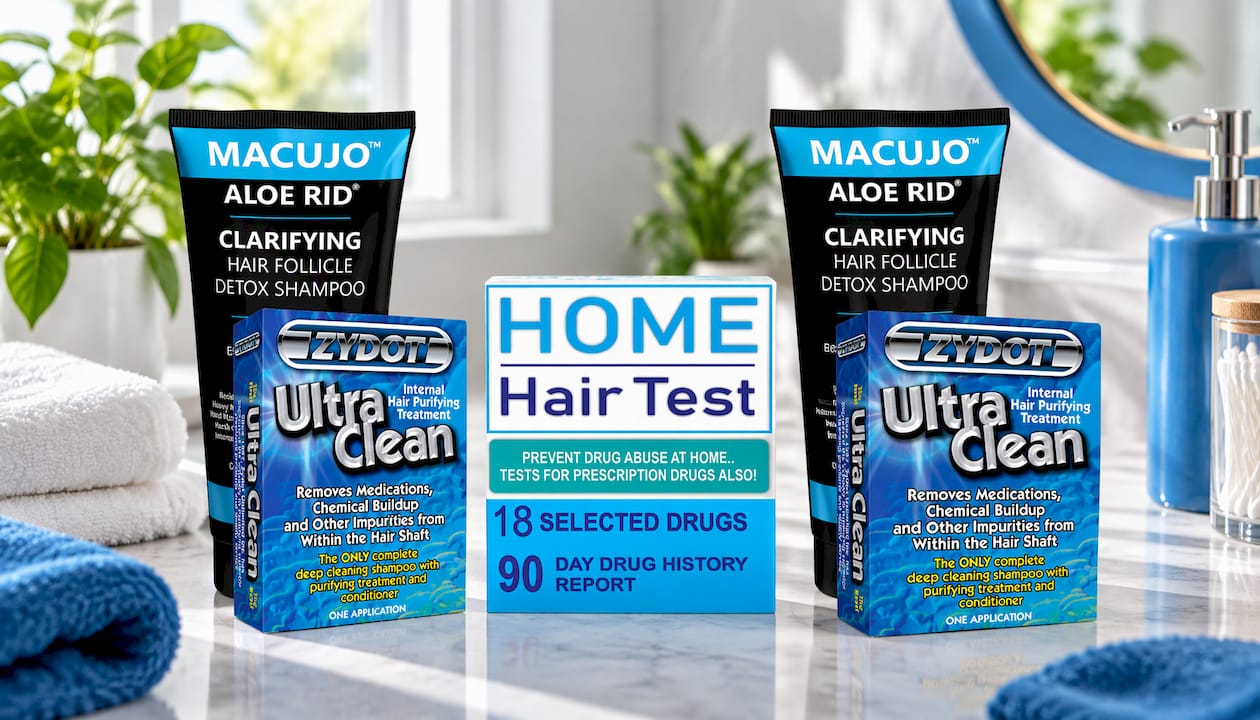
- Authentic Macujo Aloe Rid® Shampoo, the product the method must be completed with. The Macujo Aloe Rid Old Formula Shampoo is listed at $100 to $150. A set pairing it with Zydot Ultra Clean is also available as Macujo Aloe Rid + Zydot Ultra Clean (2 Sets).
- The required washes calculator, which turns your substance, last-use date and 90-day frequency into a wash count.
- Detailed instructions and videos for each of the nine steps.
- The Afterhours Personal Consultation at $100, a phone consultation with an expert for the questions that come up late, the night before included. See our consultation page for what to expect, and the question list for a consultation to bring your details in order.
If your employer’s panel is wide, our page on preparing for a 12 panel hair test walks through the 90 day window and the method. You can also want to practice with a Home Hair Test kit to see how a test works.
Our view: preparation is a plan, not a trick
Test day is where people feel the pressure, but the outcome is decided by what happened in the days before. In more than two decades of helping people through hair tests, the pattern we care about is simple: the person who counts their washes honestly and completes each one as written walks in calm.
That is why Mike built the calculator into the method. Your substance, your last-use date and your use in the last 90 days are different from the next person’s, so a one-size routine is the wrong tool. Mike’s Macujo Method gives a nine-step process and a wash count tailored to you, and we designed it for heavy THC exposure and for other drugs and alcohol.
The part we would stress most is finishing. Every wash, every direction, with authentic Macujo Aloe Rid® Shampoo. When that is done correctly, our reported success rate is better than 99%, and the hair stays clean unless drugs or alcohol are used again. If you are unsure about any detail, call us. Support does not stop at checkout.
MIchael
Test day checklist
| When | What to do |
|---|---|
| Now | Enter substance, last-use date and 90-day frequency in the calculator and note the wash count |
| Days before | Confirm you have enough authentic Macujo Aloe Rid® Shampoo, read the directions, watch the videos |
| Throughout | No new use of drugs or alcohol; avoid smoke and dust exposure |
| Day before | Finish remaining washes exactly as directed; confirm site, time and paperwork |
| Morning | Follow the day-of directions; leave your hair uncut; arrive early |
| At the site | Expect observed collection of about 100 to 120 strands in 5 to 10 minutes |
| After | Keep copies of paperwork; know your state’s retest rights |
FAQ
How far back does a hair drug test look?
A standard test covers about 90 days, based on the first 1.5 inches of hair nearest the scalp. Body hair can cover a longer period, up to about 12 months according to Cleveland Clinic. Your wash count in our calculator depends on your own use history within that period.
Can I prepare on the day of the test itself?
The real work happens before test day, because the sample is cut from hair already grown. On the day, follow your final directions, leave your hair uncut, arrive early and bring the paperwork you were given. If a last-minute question comes up, our after-hours consultation is there for it.
How much hair will they take?
For hair over 4 inches, collectors typically take about 120 strands, roughly a pencil-width bundle. More is taken if your hair is shorter, and body hair can be used when head hair is under half an inch. Hair from a brush is not accepted.
Do I need to tell the collector about my medications?
Yes, mention prescribed medicines to the person running your test and keep your prescription details with you. For how a specific medicine may appear on a test, ask your prescribing doctor. Workplace programs generally include a review step for legitimate prescriptions.
What if I have a test tomorrow?
Enter your details in the calculator right away to see your wash count, then call us for a consultation. The sooner you know the number, the sooner you can plan your washes realistically.
Sources
- Quest Diagnostics: Hair testing FAQ
- Quest Diagnostics: Hair drug screening facts and information
- Quest Diagnostics: Drug testing solutions at-a-glance
- Labcorp: Hair drugs of abuse testing FAQ
- Cleveland Clinic: Drug test
- Journal of Applied Laboratory Medicine: Review on toxicology testing in hair
- SOHT 2022 consensus on hair testing
- UNODC: Guidelines for testing drugs in hair, sweat and oral fluid
- USDTL: Hair drug test laboratory services
- Federal Register: Mandatory Guidelines for Federal Workplace Drug Testing Programs
- Maryland statute on drug and alcohol testing