Last Updated on November 14, 2026
Hair porosity does not decide whether a hair drug test is positive. Your use history does: which substance, how long ago, and how often over the last 90 days. Porosity only changes how easily water and chemicals move in and out of the hair fiber, and the popular home float test is too unreliable to build a plan on. If you have a test coming, plan around your own history. That is how we built Mike’s Macujo Method and its Required Washes Calculator.
TL;DR
- A hair drug test looks back about 90 days on a standard 1.5-inch head-hair sample. Porosity does not shorten or lengthen that window.
- The float test (dropping a strand in water) does not diagnose porosity reliably. Oils, product residue and water temperature change the result.
- Research does link porosity and damage to how much drug a strand takes up, including from the outside. That is why lab washing exists, and why a hair-cleansing plan has to be specific.
- The number of washes you need depends on the substance, your date of last use and how often you used in the previous 90 days, not on a float result.
- If the test is close, a personal consultation turns your history into a plan.
Table of Contents
- What a hair drug test actually measures
- What hair porosity is, and why people ask about it
- Why the float test cannot guide a drug-test plan
- Does porosity change how drugs get into hair?
- How labs handle washing, and why your own routine is a variable
- What a plan built on your history looks like
- Step by step: preparing for a hair test with porosity in mind
- Is hair testing even likely in your situation?
- Where we can help
- Our view: your history matters more than your hair type
- FAQ
- Sources
What a hair drug test actually measures
When you use a drug, it and its metabolites (the substances your body makes as it breaks the drug down) travel in the bloodstream and are built into the growing hair. Labcorp explains that a standard 1.5-inch head-hair sample, with hair growing about half an inch a month, detects use up to 90 days before the test. The same page compares this with one to seven days in urine and five to 48 hours in oral fluid.
Two details matter for planning:
- A delay at the start. Healthline reports that drugs generally cannot be detected in hair until five to seven days after use. Use in the last week or so is mostly a urine-test problem, which is why employers sometimes pair the two. Our page on hair versus urine tests at work covers that gap.
- A rough timeline, not an exact date. Hair growth rates vary from person to person, so a hair result cannot pin down the day of use. The same Healthline page makes this point.
The panel usually includes cannabis, cocaine, amphetamines, methamphetamine, ecstasy, PCP and opioids, according to Healthline.
Notice what is missing from all of this: nothing in the standard description of the test mentions porosity as a factor in how far back it looks. The window is set by sample length and growth rate.
What hair porosity is, and why people ask about it
Porosity describes how readily the hair fiber takes up and loses water. Hair with a tightly closed outer layer (the cuticle) is called low porosity. Hair with a lifted or damaged cuticle is high porosity. Chemical treatments, heat, bleach and sun can all push hair toward high porosity.
People search “hair porosity drug test” for two reasons. Some want to know whether their porosity changes how drugs get into the hair. Others want to know whether it changes how well a cleansing routine works. Both are fair questions, and the honest answer to both is: it can matter, but you cannot measure it well at home, and it is not the factor that sets your plan.
Why the float test cannot guide a drug-test plan
The float test is simple: drop a clean strand in a glass of water and see if it sinks. Floating supposedly means low porosity, sinking means high. It is everywhere online. It is also unreliable.
- CROWN states that float-test results are affected by product residue, air trapped in the cuticle and water temperature, and that none of the common home methods gives quantified, reproducible results.
- The New York Society of Cosmetic Chemists describes the float and spray tests as simple, qualitative methods that can give a general idea under controlled conditions. The lab methods for measuring porosity properly are technical: vapor sorption, gas adsorption and fiber swelling.
- GlowUp Hair explains that a single hair weighs only tens of micrograms, so the water’s surface film can hold it up regardless of pore structure. Sebum, silicone and hard-water minerals change the result further.
- Lab Muffin Beauty Science notes that these tests read surface wettability and damage rather than porosity itself. Heavy oil use can produce a “low porosity” reading even on damaged hair.
So if your strand floats, you have learned something about the day’s surface chemistry, not about your drug-test risk. Treating a float result as a reason to do fewer washes, or more, is guesswork.
Does porosity change how drugs get into hair?
This is where the science is more interesting. A 2005 study by Schaffer, Hill and Cairns, published in the Journal of Analytical Toxicology, soaked hair in cocaine solutions. They found that porosity, not hair color, determined how fast the drug penetrated. Permed samples of every color took up more.
The same study measured surface contamination in cocaine-positive head hair from 67 people. It ranged widely, up to more than 20 times the amount found inside the hair. The authors concluded that results from contaminated samples are meaningless unless the contamination is removed.
Two practical lessons follow:
- Hair condition affects what a strand holds. Damaged, treated or porous hair behaves differently from virgin hair. That is one reason two people with the same use history can get different results.
- Surface material is a real part of the picture. Labs wash samples before analysis for exactly this reason. A 2025 Journal of Applied Laboratory Medicine review describes the use of organic and aqueous washes, and says a drug found in the hair but not in the wash may rule out external contamination.
Other factors also move results. Medical News Today lists the compound itself, the amount used, sweat, melanin content and bleaching or coloring. Darker hair holds some drugs more strongly: our page on dyed hair and hair drug tests explains how bleach and color fit in.
None of this gives you a number. You cannot read your own porosity precisely, and even if you could, no published rule converts it into a wash count. That is why a method built on your use history is more dependable than one built on a float test.
How labs handle washing, and why your own routine is a variable
Labs do not test raw hair. The Society of Hair Testing’s 2022 consensus says pre-analysis washing has two jobs: removing hair-care products, sweat and sebum that could interfere, and removing environmental contamination. Each lab must validate its own wash protocol.
A 2014 paper by Hill and colleagues in Drug Testing and Analysis adds a point that matters to anyone with fragile hair. Sweat-derived drug on hair depends heavily on grooming. Some hair types cannot take daily shampooing and are washed weekly or less, which allows more build-up. Labs use a standardized sequence (an isopropanol wash followed by several timed buffer washes) so results do not depend on the donor’s shampoo habits.
For you, the point is plain. Your normal washing habits are one variable among many, and the lab’s wash is another you do not control. A plan that depends on guessing both is a weak plan. A plan that follows a defined, step-by-step process, completed in full, removes much of the guessing.
What a plan built on your history looks like
Mike’s Macujo Method is our current standard. We introduced it in 2018 as a systematic nine-step process developed for high THC levels and for other drugs and alcohol. It must be completed with authentic Macujo Aloe Rid® Shampoo.
How many washes you need is not a guess and not a porosity reading. Mike’s Macujo Required Washes Calculator works it out from three inputs:
| Input | Why it matters |
|---|---|
| The substance involved | Different drugs and alcohol call for different preparation. |
| Date of last use | More time since last use changes the requirement. |
| Frequency of use in the previous 90 days | This reflects the length of the lookback window a hair test covers. |
When every required wash and every direction is completed correctly, the method has a reported success rate of better than 99%, and the hair stays clean unless drugs or alcohol are used again. The step that most often goes wrong is skipping or shortening one, because the process feels long or the hair looks fine. Each of the nine steps is there for a reason, and the calculator’s count is a minimum to complete, not a figure to trim.
We get one more question regularly: what about the old Macujo Method? It was designed primarily for low-to-moderate THC exposure, has an estimated success rate of about 90% for moderate THC, and provides only temporary masking. Mike’s Macujo Method replaced it as the standard for heavier use and wider substance coverage. If you find an older write-up online, check which method it describes before you follow it.
Step by step: preparing for a hair test with porosity in mind
If your hair is bleached, permed, heat-styled or visibly damaged, the questions are the same as for anyone else. The difference is that you should not rely on shortcuts based on how your hair feels.
- Write down your history. List the substance, the date of last use and how often you used in the last 90 days. Be honest: the count is only as good as the inputs, and a wrong date or an understated frequency gives a wrong number.
- Run the calculator. Use Mike’s Macujo Required Washes Calculator with that history. Do not substitute a float test, a guess or a friend’s count.
- Use the authentic shampoo. The method is built around Macujo Aloe Rid® Shampoo and must be completed with it. Counterfeit or look-alike products are not part of the method.
- Complete every wash and every direction. Follow the instructions and videos in order. Do not combine steps or compress the schedule to save time.
- Plan the calendar. Count back from the test date so that every wash is finished with time to spare. If you do not know the date of your test, plan as if it is tomorrow.
- Get a person on the line if the test is close. A call is faster than rereading instructions at midnight. See what a hair drug test consultation covers and the questions worth asking first.
Is hair testing even likely in your situation?
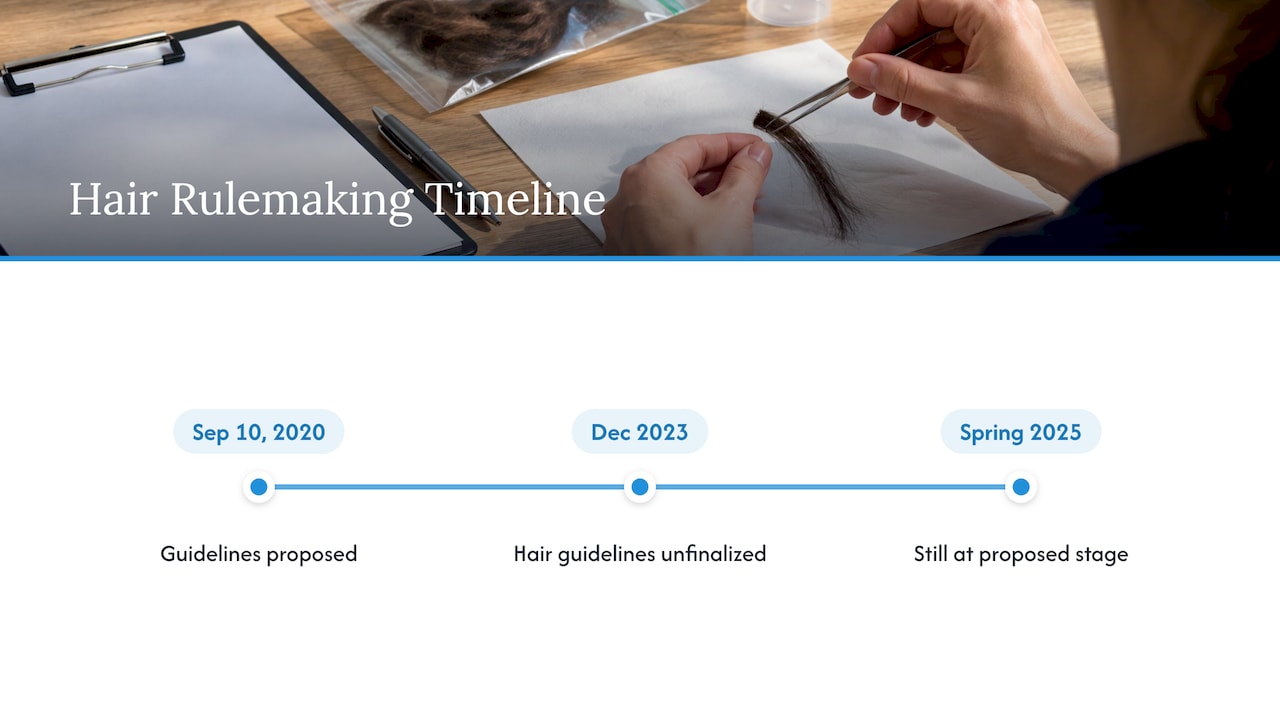
If you are a job applicant, the first question is whether your employer uses hair testing at all. Under federal rules it does not apply to most workplaces. The proposed HHS/SAMHSA hair Mandatory Guidelines were published as a proposed rule in the Federal Register on September 10, 2020. They would have set out a 1.5-inch head-hair sample split into two specimens. The rulemaking was still at the proposed stage in the Spring 2025 Unified Agenda, and a December 2023 SAMHSA meeting transcript confirms that the hair guidelines remained unfinalized while the urine guidelines were published.
In practice, that means hair testing is mostly a private employer’s choice, and the employer’s policy and the lab’s procedures decide what happens. Check the paperwork you were given, and if you are unsure, ask the employer’s HR contact which specimen will be collected.
If the sample might come from somewhere other than your head, the window changes. Cleveland Clinic notes that scalp hair covers about three months and slower-growing body hair up to 12 months. Our guides on the body hair drug test and eyebrow hair drug tests explain what that means.
Where we can help
If your test is coming up, we can work out the plan with you:
- Macujo Aloe Rid Old Formula Shampoo, the authentic shampoo the method requires, is listed at $100 to $150 on our hair products page.
- The Afterhours Personal Consultation is $100 one-off, and you can book it from our shop. You talk through your history with an expert by phone, including the evenings when the test is close.
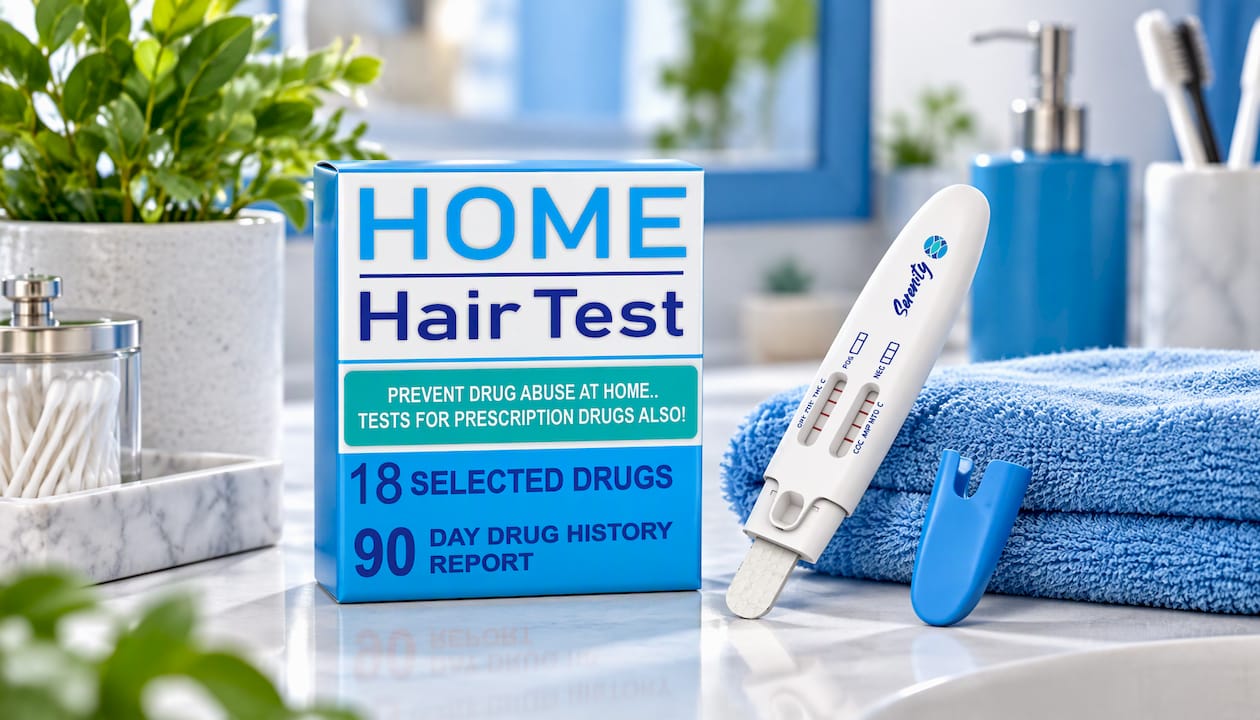
- Hair test kits are also available through our home hair test kit page. We also carry urine and saliva test products if the employer collects a different specimen.
We provide detailed instructions, videos and the calculator, and customers get ongoing support and after-hours phone consultation.
Our view: your history matters more than your hair type
We have helped people prepare for hair follicle drug tests since about 1999, and the question we get most is some version of “my hair is damaged, or dyed, or oily, so what does that change?”
Our answer has stayed steady. Hair condition is real, and we do not pretend otherwise. But the thing that reliably predicts what a test will find is your use history over the last 90 days: what you used, when you last used it and how often. That is why Mike’s Macujo Method does not ask you to diagnose your porosity. It asks three questions about your history and gives you a wash count.
We built it that way on purpose. A home test that tells you your hair is “low” or “high” tells you something about the surface that day. It does not tell you what to do about a test in two weeks. A calculator, a nine-step process and authentic Aloe Rid® Shampoo do.
The most common mistake we see is stopping early because the hair looks and feels clean. The count is the count. Finish every wash and every direction, and the hair stays clean unless drugs or alcohol are used again.
If you are unsure about your own numbers, call us. That is what the consultation is for.
MIchael
FAQ
Does low or high porosity hair change how long drugs show up on a hair test?
No published standard ties porosity to the 90-day lookback. The window comes from sample length and growth rate. Porosity and damage can change how much of a substance a strand takes up, but you cannot measure your own porosity precisely enough at home to turn it into a plan. Build the plan from your substance, last use date and 90-day frequency.
Is the float test accurate for finding my porosity?
Not reliably. Product residue, trapped air, sebum and water temperature all change what the strand does in the glass, and cosmetic chemists describe the test as a general, qualitative check at best. It is fine for curiosity about your conditioner routine. It is not a basis for deciding how many washes you need before a drug test.
How often should I wash low porosity hair before a hair test?
Care routines for low-porosity hair are written for hydration and styling, not drug tests. For a test, the number of washes comes from Mike’s Macujo Required Washes Calculator, which uses the substance, your date of last use and how often you used in the previous 90 days. Complete the full count with Macujo Aloe Rid® Shampoo as directed.
What does a hair drug test detect?
A standard head-hair sample looks back about 90 days and typically screens for cannabis, cocaine, amphetamines, methamphetamine, ecstasy, PCP and opioids. Use in the most recent week or so may not show yet, because drugs take about five to seven days to appear in hair. Hair cannot give the exact date of use.
Can I talk to someone about my situation before the test?
Yes. Our personal consultation is a phone conversation with an expert, and it includes after-hours availability. Have your substance, last use date and 90-day frequency ready, along with your test date if you know it.
Sources
- Labcorp: Hair Drugs of Abuse Testing FAQ
- Healthline: Hair Strand Drug Test
- CROWN: What Is Hair Porosity?
- NYSCC: An Overview on Hair Porosity
- GlowUp Hair: Hair Porosity and the Float Test
- Lab Muffin Beauty Science: Hair porosity tests
- Schaffer, Hill and Cairns 2005: Hair Analysis for Cocaine
- Journal of Applied Laboratory Medicine: Review on Toxicology Testing in Hair
- Medical News Today: Hair follicle drug test
- SOHT General Consensus on Hair Testing 2022
- Hill et al. 2014: Damaged or porous hair, Drug Testing and Analysis
- Federal Register: Proposed Mandatory Guidelines, September 10, 2020
- Unified Agenda, Spring 2025: RIN 0930-AA33
- SAMHSA DTAB Open Session Transcript, December 5, 2023
- Cleveland Clinic: Drug Test