Last Updated on November 12, 2026
A hair drug test looks back about 90 days, and the clock starts about a week after use, not on the day of use. Your detox timeline depends on two things: what you used and when, and how many cleansing washes that history requires. The washes must be finished before the collection date. We built Mike’s Macujo Required Washes Calculator around exactly those inputs: the substance, the date of last use and how often you used during the previous 90 days.
This guide covers the drug-test side of hair detox. It shows how long drugs stay in hair, when they first appear, what stretches or shortens the window, and how to plan your washing schedule.
TL;DR
- Standard hair tests look back roughly 90 days on a 1.5-inch scalp sample. Body hair can reach back up to a year.
- Drugs usually take about 5 to 10 days to appear in hair above the scalp, so very recent use is often outside the sample.
- Hair color, treatments, hair length and the drug itself change how a result reads.
- Your wash count should come from your own history. Our calculator uses substance, date of last use and 90-day frequency.
- Mike’s Macujo Method is a nine-step process completed with authentic Macujo Aloe Rid® Shampoo, and every required wash has to be done before test day.
Table of Contents
- How the hair testing clock actually runs
- The detection window in numbers
- A working timeline from last use to test day
- What stretches or shortens your personal timeline
- Building your wash timeline
- Where we come in
- Mistakes that wreck a hair timeline
- Our perspective
- FAQ
- Sources
How the hair testing clock actually runs
Hair is a record, not a snapshot. After a substance is taken, it is incorporated into the hair bulb in as little as 30 minutes, in a way that depends on pigment. But the lab tests hair that has already grown out of the scalp. The same 2025 review says drugs will not be detectable in hair above the scalp surface for at least a couple of days after ingestion, and that this can take up to 10 days.
Federal drafting work points the same way. The 2020 SAMHSA proposed guidelines say drug analytes do not appear in hair for 5 to 7 days after use. For that reason, they say hair is not an appropriate specimen to detect recent use.
A 2025 forensic study found a slower process. Drug incorporation through the bulb continued for about two weeks after intake. It takes roughly 3 to 4 weeks, at average growth rates, for the drug to be fully exposed outside the scalp.
For your timeline, that gives you two facts:
- The last few days before a test are rarely what a hair test sees. We cover that gap in our guide to hair versus urine tests at work.
- Everything from about a week ago back to roughly three months ago can be in the sample.
The detection window in numbers
The standard answer is three months. Cleveland Clinic gives scalp hair a three-month window and slower-growing body hair up to 12 months. It lists cocaine, PCP, amphetamines, opioids and MDMA among the substances hair testing can detect. Drugs.com says most hair tests can pick up heavy or regular use over the past three months, and that armpit hair widens the window to up to a year.
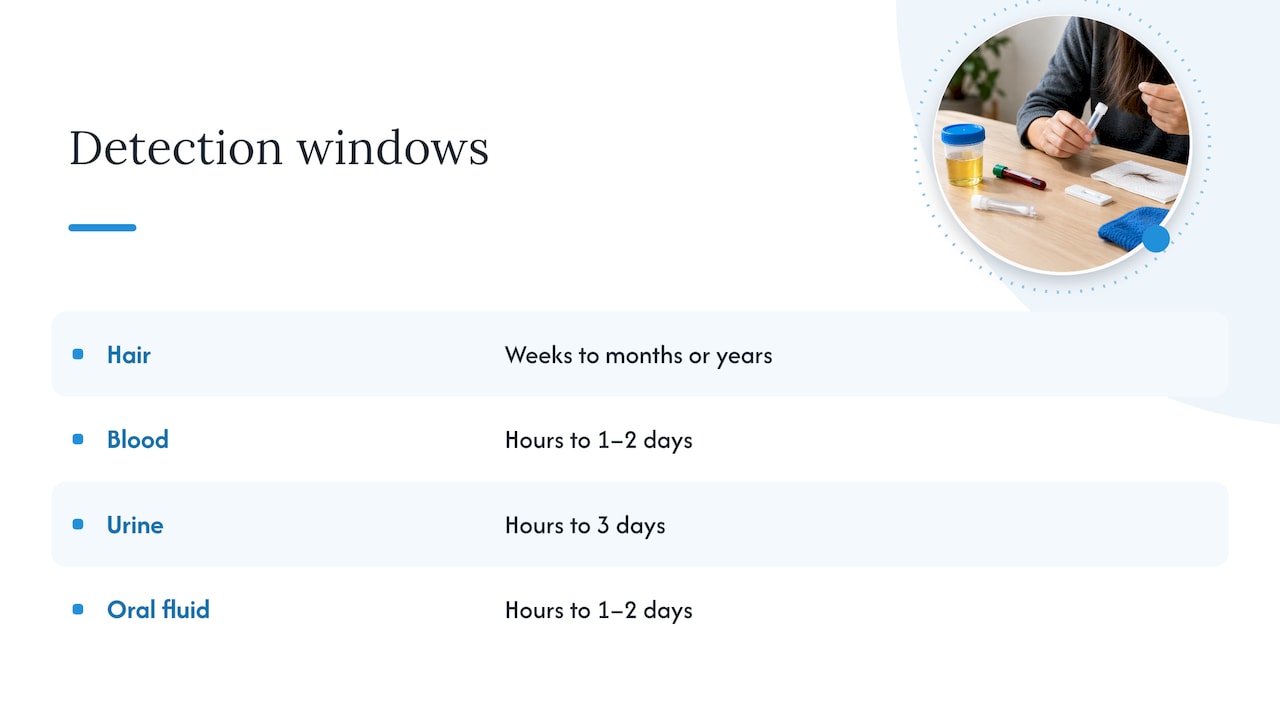
The Merck Manual describes hair as the longest window of detection of the common specimens, at 100 days or more for some drugs. The UNODC guidelines put it in context. They give hair a window of weeks to months or years, against hours to 1 or 2 days in blood, hours to 3 days in urine and hours to 1 or 2 days in oral fluid.
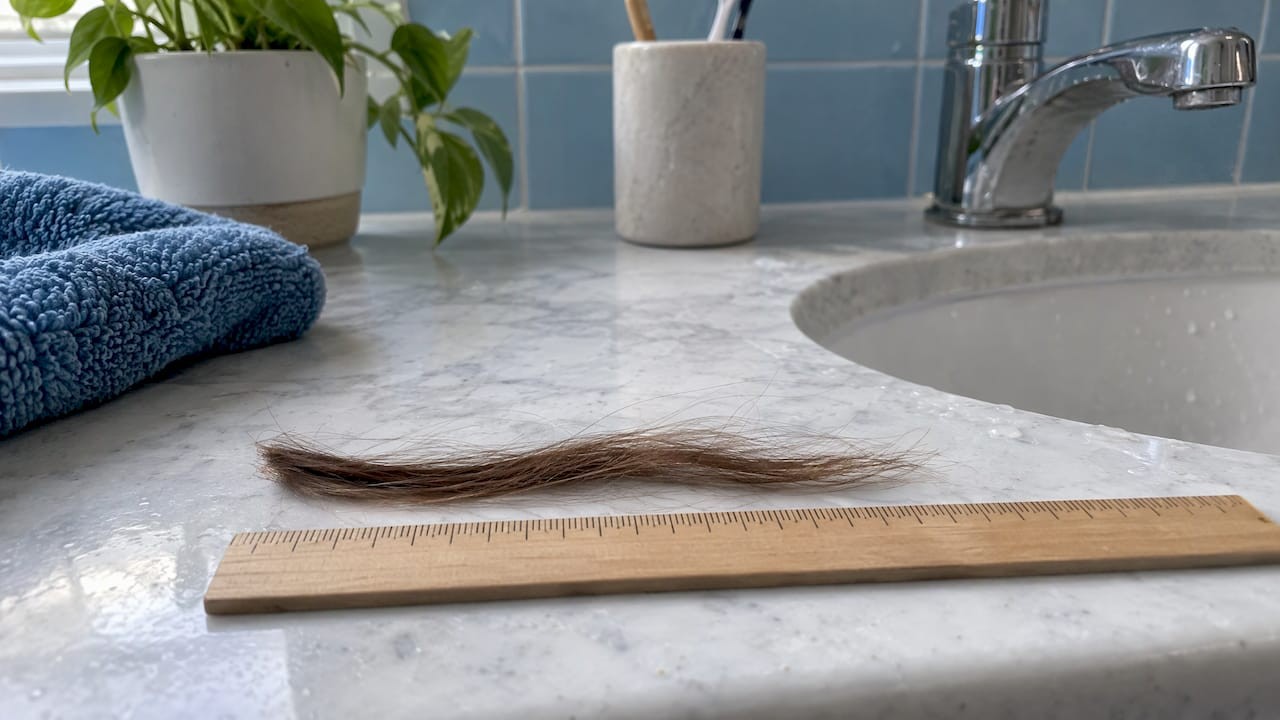
Why exactly 90 days? Head hair at the vertex grows about 0.4 millimeters a day, roughly 1 centimeter a month. A 1.5-inch segment is about 3.8 centimeters, which is about three months of growth. SAMHSA’s 2020 draft also proposed allowing head hair specimens between 0.5 and 1.0 inches long. That would represent roughly 30 to 60 days.
A working timeline from last use to test day
Use this as a planning frame. It combines the research above with how we structure preparation.
| Stage | Time since last use | What is happening in the hair |
|---|---|---|
| Incorporation | Minutes to hours | Substances enter the bulb, depending on pigment and drug properties |
| Growth out of the scalp | About 5 to 10 days | Hair carrying the drug emerges above the scalp surface where it can be cut |
| Full exposure | About 3 to 4 weeks | The drug is fully exposed outside the scalp at average growth rates |
| Core window | Up to about 90 days | A 1.5-inch scalp sample covers this period |
| Body hair window | Up to about 12 months | Slower-growing body hair keeps a longer record |
Two practical points follow.
If your last use was within the past week, the drug may not yet be in the hair that gets collected. That does not tell you what the lab will find if more days pass before the test. Hair keeps growing, and the exposed length keeps lengthening.
If your last use was 60 to 90 days ago, the relevant material sits near the tip of a 1.5-inch sample. Heavy use earlier in the window is what the wash plan has to address. Our own breakdown covers when 90 days isn’t enough and how long hair affects a test.
What stretches or shortens your personal timeline
The 90-day figure is an average. The 2025 toxicology review lists hair structure, physiology, external contamination, drug properties, melanin content, growth rate and cosmetic treatments as factors that affect results. Here is what each means for you.
Hair color and melanin
The same review explains that incorporation depends on drug properties and hair color. White hair has no pigment and takes up almost no drug in the bulb. Darker hair generally holds more. The SoHT consensus also says natural hair color can influence incorporation.
Cosmetic and physical treatments
The SoHT 2022 general consensus says concentrations can be affected by topical, chemical or physical treatments, including bleaching, dyeing, perming, straightening and UV exposure. That is one reason timelines vary between two people with similar histories.
Length and growth rate
The sample is cut close to the scalp, so length matters only up to about 1.5 inches. Longer hair does not add months to a standard scalp test. Growth rate does matter, because it sets how many days each centimeter represents. If you have little or no head hair, a lab can turn to body hair. That is where the window opens to up to 12 months. Read more in our guide to the body hair drug test and what to expect with eyebrow hair tests.
Which drug it is
Drugs differ in how they enter and stay in hair, and heavy or frequent use leaves more to address than occasional use. Our page on how long drugs stay in your hair goes drug by drug, and there is a separate look at the methamphetamine hair test timeline.
Why concentration is not a diary
The SoHT consensus says the concentration of a drug in hair cannot be used to determine the quantity consumed. The UNODC guidelines note that time resolution is about 3 to 4 days under ideal conditions. They add that sweat, sebum and the mixed population of hairs in a lock make segmental analysis much less precise. For workplace programs, SAMHSA’s draft says segmental analysis must be done with caution and is not recommended. In plain terms, a lab looks at the whole 90-day stretch and does not read it day by day.
Building your wash timeline
Cosmetic “hair detox” is a different thing from a drug-test cleanse. A clarifying rinse for buildup can be done on any weekend. A cleanse for a hair follicle test has a deadline, which is the collection appointment. Everything is counted backward from that day.
Here is how we recommend you plan it.
- Write down your facts. Which substance, when you last used it, and how often you used during the previous 90 days. These three items are the exact inputs of our required-washes calculator.
- Get your wash number first. In Mike’s Macujo Method, the number of required washes is set by the calculator. We do not hand out one fixed number to everyone, because a single occasional use and months of heavy use are not the same problem.
- Count back from the test. Divide the washes into a schedule that finishes with time to spare. If your employer gives short notice, start the same day you get the call.
- Complete every wash and every direction. The method is a systematic nine-step process, and it is designed to be completed with authentic Macujo Aloe Rid® Shampoo. When every required wash and direction is completed correctly, we report a success rate of better than 99%. The hair then remains clean unless drugs or alcohol are used again.
- Keep your abstinence going. New use after the cleanse adds new drug to new hair growth, and the clock restarts.
The most common way a schedule fails is starting late and skipping washes to catch up. Doing it properly is a matter of finishing the full count, not rushing it.
Why the calculator beats a rule of thumb
Generic advice says “wash a lot for a week” or “stop 90 days ahead.” Neither fits someone who last used 12 days ago after months of heavy use, or someone who tried something once. Our calculator ties the required washes to the substance, the date of last use and the frequency over the previous 90 days. That is the reason we built the method around it, so you start from your own numbers instead of a guess.
Where we come in
We have helped people prepare for hair follicle tests since approximately 1999. Mike’s Macujo Method, introduced in 2018, is our current standard. It was developed for high THC levels and for other drugs and alcohol. Our older Macujo Method was designed mainly for low-to-moderate THC exposure and provides only temporary masking, so the current method is the one to follow.
The Macujo Aloe Rid Old Formula Shampoo line is priced at $100 to $150 on our hair products page. If you want someone to go through your dates and your schedule with you, the Afterhours Personal Consultation is $100 one-off. You get a phone consultation with an expert, and our unlimited support and after-hours calls exist for situations where a test is close.

We also carry hair, urine and saliva test products from our main shop, so you can plan across test types if your employer may use more than one.
Mistakes that wreck a hair timeline
- Counting from the wrong day. The drug test sees hair that grew out after use, so the day of last use and the test date both matter, not just “how long since.”
- Assuming a short haircut resets everything. Test labs can use body hair when head hair is short, and body hair has a window of up to 12 months.
- Treating all drugs and users alike. Frequency and substance change the work required. That is why we start from the calculator.
- Switching products mid-plan. The method is built around authentic Macujo Aloe Rid® Shampoo and its nine steps. Mixing in unrelated products and skipping directions leaves gaps in a plan that depends on completion.
- Using again after you finish. Cleansing addresses what is in the hair now. New use adds new drug to new growth.
- Waiting for a notice. Many applicants get a day or two between the offer and the collection appointment. Frequent job applicants should keep their dates written down.
If you take prescription medication, mention it to the prescriber or the medical review officer handling the test, since those are the people who evaluate results involving legitimate prescriptions. Your doctor is also the right contact for any health question about substance use.
Our perspective
Most of what you read on this keyword is written for people who want shinier hair. A hair drug test is a different problem, with a deadline, an employer and a lab behind it.
What we have learned since 1999 is that the timeline is personal. The 90-day window is real, but how much has to be cleansed depends on what you used, how recently and how often. That is why Mike’s Macujo Method starts with the calculator and ends only when every required wash is done.
We designed the nine steps for high THC levels and for other drugs and alcohol, and we built it to be completed with authentic Macujo Aloe Rid® Shampoo. If you give us your dates, we can help you turn them into a schedule you can finish before test day.
MIchael
FAQ
How long does a hair detox take before a drug test?
It depends on your wash count, which comes from the substance, the date of last use and your frequency during the previous 90 days. Mike’s Macujo Required Washes Calculator gives that number. You then schedule every wash so the full method is finished before the collection date.
How far back does a hair drug test look?
A standard test on a 1.5-inch scalp sample looks back about 90 days. Cleveland Clinic gives scalp hair a three-month window and slower-growing body hair up to 12 months. Shorter samples cover less time. SAMHSA’s 2020 draft proposed 0.5 to 1.0 inches for roughly 30 to 60 days.
How soon after use can a hair test pick up a drug?
Not right away. The 2025 toxicology review says drugs are not detectable above the scalp surface for at least a couple of days, and it can take up to 10 days. Many sources quote about 5 to 10 days before hair carrying the drug can be collected.
Does hair color or dye change the timeline?
Yes. The SoHT consensus says natural hair color can influence how much drug is incorporated. It also says bleaching, dyeing, perming, straightening and UV exposure can change concentrations. That is why two people with the same history can read differently.
Can I talk to someone about my own dates?
Yes. Our $100 Afterhours Personal Consultation is a phone call with an expert. It is built for people with a close test date who want their schedule checked.
Sources
- Review on Toxicology Testing in Hair, Journal of Applied Laboratory Medicine (2025)
- SAMHSA proposed hair testing guidelines (2020)
- Hair testing for investigating intake and use history, PMC (2025)
- Drug Test: What It Is, Purpose, Procedure & Types, Cleveland Clinic
- How far back does a hair follicle test detect drugs? Drugs.com
- Drug Testing, Merck Manual Professional Edition
- Guidelines for testing drugs under international control, UNODC (2014)
- 2021 SoHT Consensus on Drugs of Abuse Testing in Hair
- SoHT General Consensus on Hair Testing (2022)