Last Updated on November 10, 2026
Cannabis oil can show up on a hair test. The result depends on the oil. Oil with THC that you swallow, vape or dab can leave THC markers in hair. Hemp or CBD oil is less likely to cause a positive, but it is not risk-free, and products vary a lot. Hair keeps a record of roughly the last 90 days, so what matters most is how much you used, how often, and how recently.
This guide explains what a hair lab looks for, what the research says about oils, and how to prepare if your test is coming up.
TL;DR
- A standard hair test looks back about 90 days, based on roughly half an inch of hair growth per month and a 1.5-inch sample cut at the scalp.
- THC oil, vape oil, concentrates and edibles are all cannabis use as far as a hair test is concerned. The form does not change what the lab measures.
- CBD and hemp oil rarely cause a positive when the product is regulated and used as directed, but studies show cannabinoids can get into hair from products applied to the scalp.
- Heavy and daily use is detected most reliably. Light use is detected less consistently, but a lab can still find it.
- Your wash count depends on the substance, your last use and your frequency over the previous 90 days. Our calculator works that out for you.
Table of Contents
- What a hair test actually looks for
- Does the type of cannabis oil matter?
- How long cannabis oil can be detected in hair
- Frequency, dose and your likelihood of a positive
- What the research says about washing and hair treatments
- Our perspective
- How to prepare for a hair test if you used cannabis oil
- Safety and legal points to keep in mind
- Need help with your own situation?
- FAQ
- Sources
What a hair test actually looks for
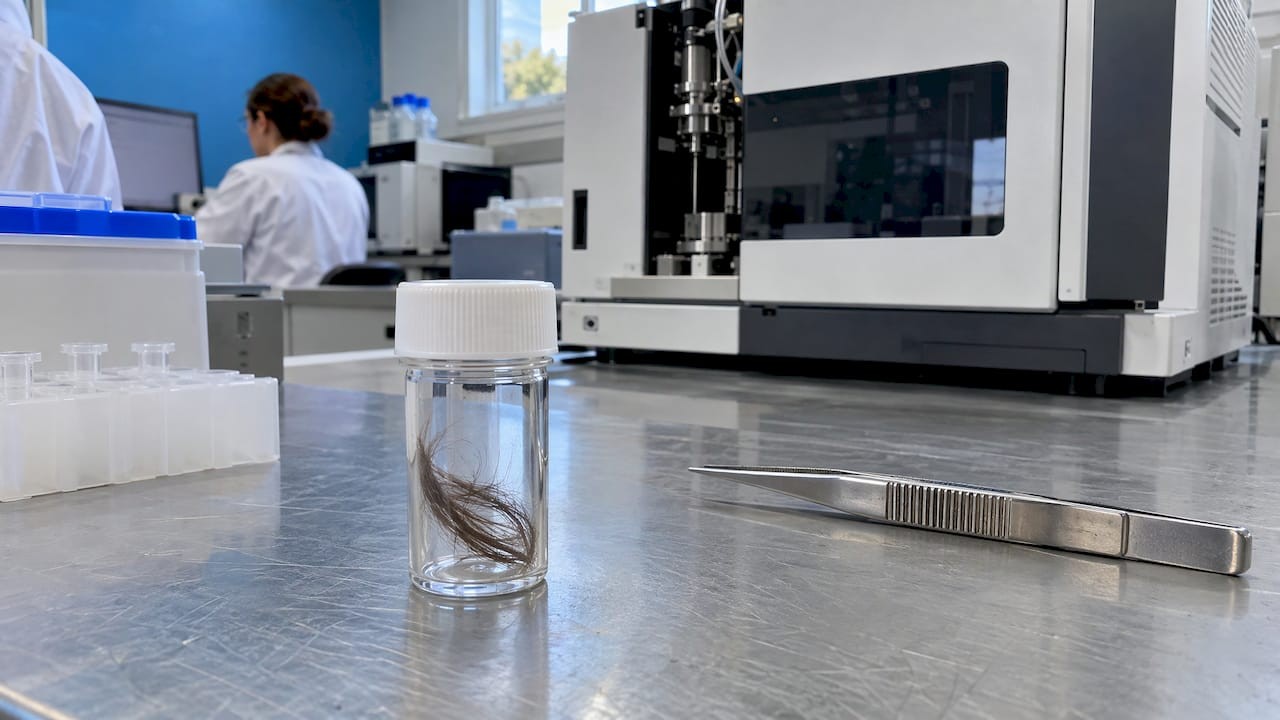
A hair follicle test does not look for “oil” or “flower.” It looks for cannabinoid markers in a small sample of head hair. The lab usually screens first and then confirms any presumptive positive with a more specific method.
The marker that matters most is THC-COOH, the carboxy metabolite of THC. SAMHSA explains that most hair testing targets parent drugs, with the major THC metabolite, THC-COOH, as the exception. It also names external contamination as a major issue for hair testing.
THC-COOH is formed inside the body. That is why labs treat it as a sign of consumption. The science is still debated, though. A 2015 study in Scientific Reports found THC-COOH in older hair segments that grew before the volunteers took THC orally, and in sebum and sweat samples. The authors concluded that sebum diffusing into hair plays a relevant role.
The practical takeaway: hair can pick up cannabinoids from inside your body through blood and also through sweat and the oils on your scalp. Labs and employers still treat a confirmed positive as a positive.
Does the type of cannabis oil matter?
Yes, but mostly in terms of what is in the bottle and how you use it. Here is how the common oils line up.
| Type of oil | Contains THC? | What it means for a hair test |
|---|---|---|
| THC tincture or oil taken by mouth | Yes | Counts as cannabis use. THC and its metabolites can reach hair. |
| Vape cartridge or dab concentrate | Yes, often at high levels | Counts as cannabis use. High-potency products often mean higher exposure. |
| Edibles and infused oils in food | Yes | Counts as cannabis use. See our page on THC edibles and hair tests. |
| Full-spectrum CBD oil | Trace amounts possible | Low risk if regulated and used as directed. Product quality varies. |
| CBD isolate or broad-spectrum oil | Should be none | Lowest risk, though labeling is not always accurate. |
| Hemp oil applied to hair or scalp | Trace amounts possible | Can transfer cannabinoids into hair. See the study below. |
THC oils and concentrates
If the oil contains THC, treat it the same as flower. Concentrates and vape oils can deliver far more THC per session than a joint, so a few sessions a week may carry more exposure than the same number of smoking sessions. If you used any of these in the past 90 days, plan on the assumption that a hair test can detect it.
CBD and hemp oil
A hair test is not designed to look for CBD. Still, CBD products are not all the same. A 2026 systematic review found that regulated CBD and hemp oils are unlikely to produce positive results under typical use. It also found that unregulated products, prolonged consumption and hair as a testing matrix carry a measurable risk of ambiguous or borderline results.
Labs have even used CBD as context. In a study of 4,773 hair samples, about 10% had markedly higher CBD relative to THC. The authors proposed that CBD at five times the THC level is good evidence of mainly CBD ingestion. That suggests a lab can tell a CBD-dominant profile from a THC-dominant one, but it does not guarantee a clean result, since a product labeled THC-free may still contain a little THC.
Hemp oil on your hair
This one surprises people. In a 2019 study from the UK, volunteers applied hemp oil to their head hair daily for six weeks. One or more cannabis constituents (THC, CBN, CBD) showed up in the hair of 89% of the 10 volunteers, and 33% tested positive for all three major constituents. One volunteer showed low levels of a THC metabolite. The authors advised that cosmetic hemp oil use should be recorded when hair is sampled and that results should be read with caution.
If you are facing a test, do not apply hemp or cannabis-based oils to your scalp or hair in the weeks before. It is an easy variable to remove.
How long cannabis oil can be detected in hair
The usual answer is about 90 days. The reasoning is simple. Head hair grows roughly half an inch a month, and a lab typically cuts a sample about 1.5 inches long close to the scalp. Healthline explains that this segment can provide a timeline of cannabis use over the past three months.
A few details change the picture:
- Newest use may not show yet. A 2019 review notes that drugs take about two weeks to reach and deposit in hair follicles. Use in the last week or so is less likely to be in the portion that gets cut, which is why some employers pair hair tests with urine tests. We cover that in hair vs. urine tests at work.
- Longer hair can look back further. The same review says hair analysis can cover a week to many months, and up to a year, depending on hair length. If you have long hair, a lab may take only the section nearest the scalp, but body hair is sometimes used instead, with a different timeline.
- Hair growth varies. Individual growth rates, hair type and scalp conditions all shift the window. If you want the longer view, see when 90 days isn’t enough for a hair test timeline.
A hair test does not tell the lab which form of cannabis you used. It reports whether THC markers are above the cutoff.
Frequency, dose and your likelihood of a positive
Hair is better at flagging regular use than occasional use. A 2016 UK study concluded that hair analysis can indicate heavy daily or near-daily cannabis use over the past three months, but cannot reliably detect light use or the quantity consumed. That is a point about how consistent detection is, not a guarantee of a negative.
In our experience, people who used a little still get surprised. Our own write-up on occasional marijuana use and hair tests covers findings in which THC turned up in 39% of light users. If your test is on the calendar, assume it is possible and prepare accordingly.
Three factors drive your exposure:
- THC content. High-potency oils and concentrates deliver more THC per use.
- Frequency over the previous 90 days. Daily use builds up more than a handful of sessions.
- Recency. Last use within the past few weeks matters for how much has already been laid into the hair.
These are exactly the three inputs we use for our wash calculation, which we describe below.
What the research says about washing and hair treatments
Hair is not a sealed record. Products that touch the hair change what the lab measures. A 2022 German study treated 54 THC-positive hair samples with commercially available products and measured mean reductions of 52% for one shampoo up to 65% for a disinfectant. In some cases concentrations fell to non-detectable. The researchers also noted that the treatments could not be seen by eye.
An Italian study from 2023 found that bleaching and dyeing cycles reduced THC by 60% compared with untreated hair, with no noticeable damage. The authors noted that hydrogen peroxide under alkaline conditions was the most effective approach at lowering concentrations.
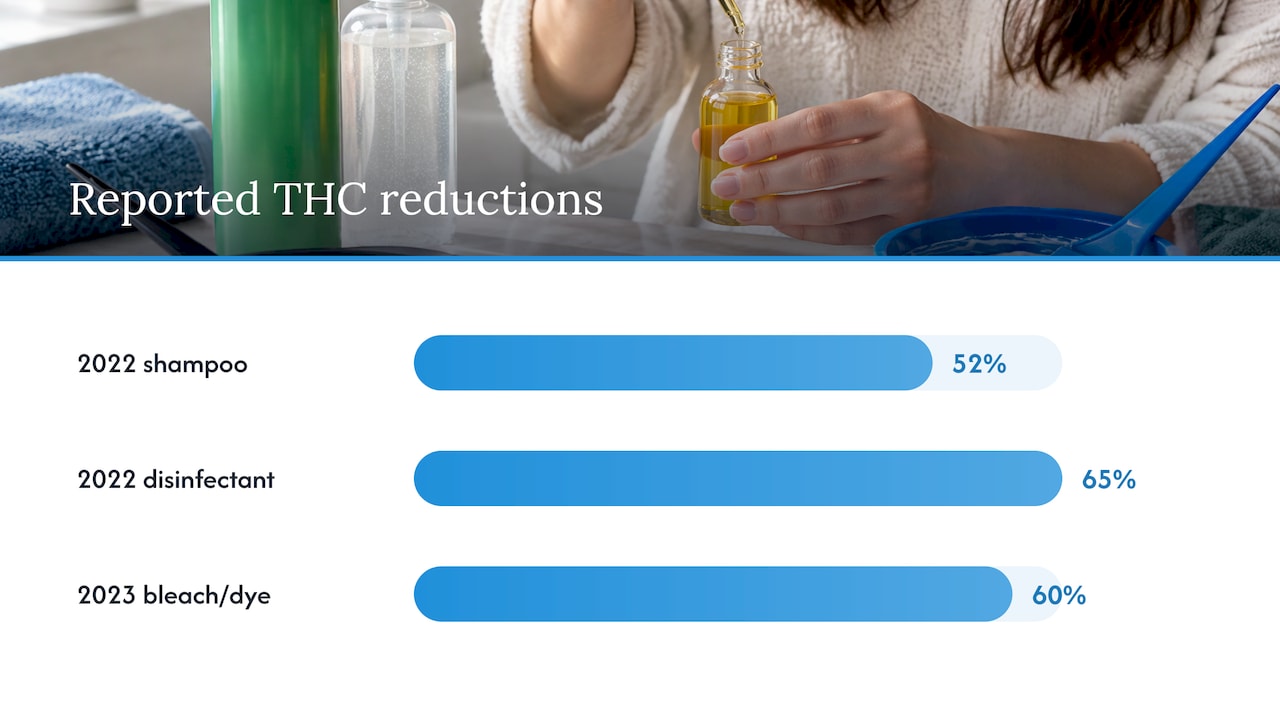
What this tells you is that washing and chemistry matter, and that a partial reduction is not the same as a result under the cutoff. The reduction you need depends on how much THC is in your hair to begin with. That is why we do not use a one-size-fits-all approach.
Our perspective
Most people who write to us about oil have the same worry: they used a vape cartridge, a tincture or an edible, and they assume the form must change the answer. It does not. A hair lab measures THC markers, and the more potent the oil and the more often you used it, the more you have to remove.
That is why we built Mike’s Macujo Method around your history instead of a guess. Introduced in 2018, it is a systematic nine-step process developed for high THC levels and for other drugs and alcohol. It is done with authentic Macujo Aloe Rid Shampoo. The number of washes comes from our Required Washes Calculator, which uses the substance, the date of last use and how often you used during the previous 90 days.
When every required wash and every direction is completed correctly, we report a success rate of better than 99%, and your hair stays clean unless you use drugs or alcohol again. Our old Macujo Method was designed for low-to-moderate THC exposure and provided only temporary masking, and Mike’s method is the standard we recommend today.
We have helped people prepare for hair tests since about 1999. If oil, concentrates or daily use is in your history, the right move is to get your wash count and follow the directions exactly. If you want a person to walk through it with you, we do phone consultations.
MIchael
How to prepare for a hair test if you used cannabis oil
Start with the facts of your own history, then act on them in this order.
- Write down your timeline. Note the type of oil (THC, CBD, hemp), roughly how often you used in the last 90 days, and the date of your last use. Be honest with yourself, because this drives the wash count.
- Stop all use and remove scalp exposure. Do not apply hemp or cannabis oils to your hair or scalp. Avoid secondhand exposure where you can.
- Get your required number of washes. Enter your substance, last use date and frequency into the Macujo Required Washes Calculator. The result is tailored to your history rather than a generic count.
- Follow the method exactly. Our method is designed to be done with authentic Aloe Rid Shampoo, and every direction is part of it. Our guide on how to pass a hair follicle test for THC with Macujo walks through the steps.
- Know the test. Read how the sample is taken and what to expect in all about hair drug testing. Our infographic of cannabis drug testing facts is a quick reference.
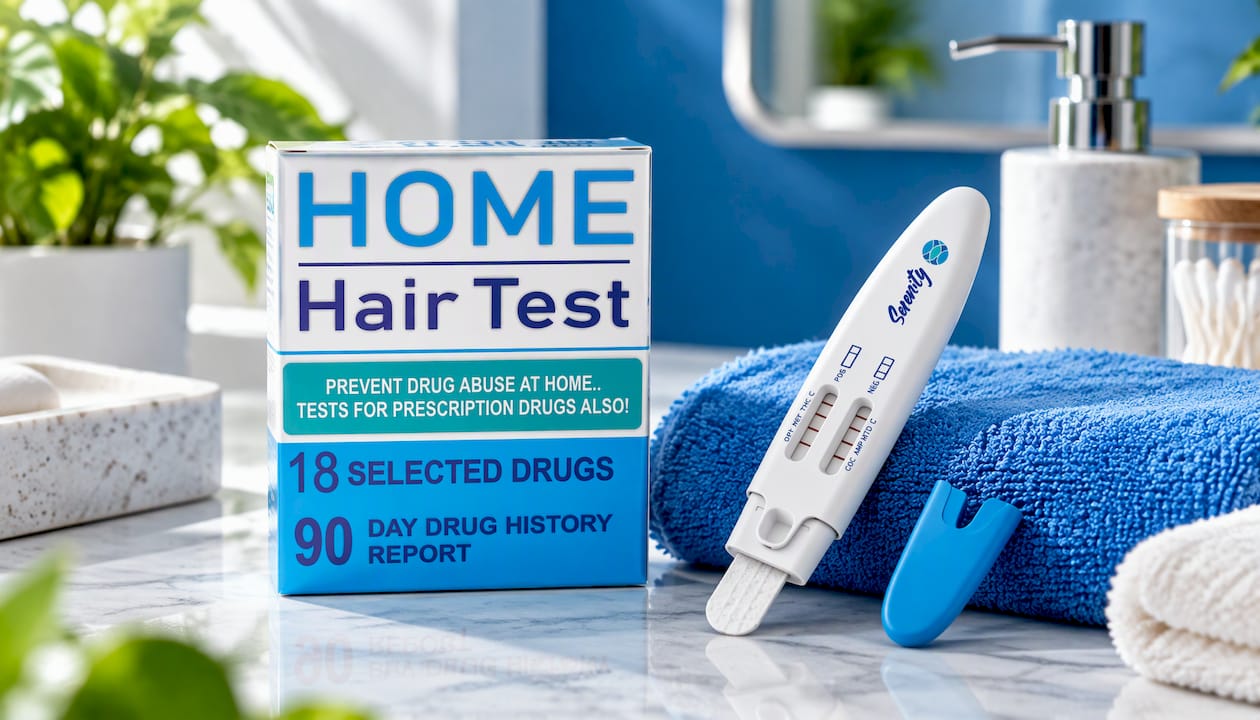
- Use a home hair test if you want a check on your own situation. A home hair test kit is available if you want to see where you stand.
If you use CBD for a medical reason
If you take CBD or hemp oil for a health reason, tell the clinician managing your care before you change anything. If your employer or the testing program has a medical review step, ask the medical review officer how disclosure of CBD use is handled. Pick products with third-party lab results that show THC content, and keep the label and receipt for the product you used.
Safety and legal points to keep in mind
- Cannabis remains illegal under federal law, and employers in many industries, including federally regulated and safety-sensitive work, still test. State laws differ, so check your state and your employer’s written policy.
- Do not borrow hair treatments from the internet that use strong oxidizers on your scalp. Peroxide under alkaline conditions is an aggressive chemistry, and skin and eye irritation are real risks. Follow product directions, and see a doctor for any burns or reactions.
- If you are in a treatment program or are subject to a court-ordered test, speak with your counselor or attorney before you do anything else.
Need help with your own situation?
If you have a test date and a history that involves oil, vapes or concentrates, we can work out the plan with you. Our Macujo Aloe Rid Shampoo is the product the method is built on, and our Afterhours Personal Consultation is $100 for a one-on-one call about your timeline and your wash count.
See the Aloe Rid shampoo, book an afterhours personal consultation, or read what to expect first in our hair drug test consultation guide. If you want to prepare questions beforehand, use our list of consultation questions to ask. Shampoo pricing is $100 to $150 depending on the product page.
FAQ
Will CBD oil show up on a hair follicle test?
A hair test is not looking for CBD itself. The risk comes from THC traces in some products, especially unregulated or full-spectrum ones. A 2026 review found regulated CBD and hemp oils are unlikely to cause positives at typical use. Product quality matters, so pick brands that publish third-party THC results.
How far back does a hair test go for cannabis oil?
About 90 days for a standard 1.5-inch sample cut near the scalp, since hair grows around half an inch per month. Very recent use may not have reached the sample yet, which is why some employers add a urine test. Longer or different hair samples can change the window.
Can hemp oil on my scalp cause a positive?
It can add cannabinoids to the hair. In a UK study, daily hemp oil on head hair for six weeks led to cannabinoids in the hair of most volunteers. Skip cannabis-based hair products before a test, and tell the collector if you have used them.
How long does a cannabis hair test take to come back?
It depends on the lab and the employer’s process. Negative results usually come back faster than presumptive positives, which get a confirmation step. Ask the employer or the collection site for their expected turnaround rather than assuming.
Does a vape or dab cartridge count the same as other cannabis use?
Yes. A hair test looks for THC markers, not the product format. Because vape oils and concentrates are often high in THC, they can mean heavier exposure, so use the date of last use and your frequency to work out your preparation.
Sources
- SAMHSA: Drug Metabolites and Hair Testing
- Moosmann et al., Scientific Reports (2015): finding cannabinoids in hair does not prove cannabis consumption
- Impact of CBD and hemp oil use on drug test results: a systematic review (2026)
- Cannabinoids in 4,773 hair samples, Journal of Analytical Toxicology (2021)
- Paul et al.: Detection of cannabinoids in hair after cosmetic application of hemp oil (2019)
- Healthline: How long does weed stay in your system?
- Review of bioanalytical techniques for evaluation of drugs in hair (2019)
- Taylor et al.: Comparison of cannabinoids in hair with self-reported use (2016)
- Bertges et al.: Manipulation of THC hair concentrations by commercially available products (2022)
- Hair analysis: assessment of homemade hair treatment, Drug Testing and Analysis (2023)