Last Updated on November 9, 2026
Swimming in a chlorinated pool can lower the drug concentrations measured in hair in laboratory studies, but those studies looked at specific substances under controlled soaking, not at a weekend of laps before a pre-employment screen. Chlorine is not a plan, and it is not tailored to your substance, your last use or your hair. If you have a hair test coming, the number that matters is how many correct washes your own history calls for, and that is what we built our method around.
Below is what the research found, why the results do not transfer neatly to real life, and what to do in the time you have.
TL;DR
- Lab work shows that long soaking in chlorinated water can reduce some substances in hair, including alcohol markers and benzodiazepines. Ordinary swimming is a much weaker version of that.
- Studies measured particular compounds in hair soaked for hours. They do not tell you what a pool does to THC or other drugs in your own hair before a real test.
- Hair length, color, treatments and the amount you used all change the result, so a generic habit is a gamble.
- Mike’s Macujo Method is a nine-step process built around a required-washes calculator that uses your substance, date of last use and 90-day frequency.
- If you have a test coming, start with the calculator or an after-hours consultation rather than a pool schedule.
Table of Contents
- How a hair test reads your hair
- What the research shows about chlorine and hair
- Why a pool day is not a plan
- Does swimming change how many days you have?
- Perspective
- What to do with the time you have
- Get a plan built for your test
- If a result goes wrong
- FAQ
- Sources
How a hair test reads your hair
A collector cuts a small sample of head hair close to the scalp and sends it to a laboratory. According to Medical News Today, a head-hair sample can typically show patterns of use over about 3 months, and the panel usually covers cannabis, amphetamines, cocaine, opiates and PCP. The standard sample is about 1.5 inches of hair, which is where the roughly 90-day window comes from, as Drugtest.co describes it.
That window is why swimming comes up so often. Hair is exposed to water, shampoo and sun every day, so people reasonably wonder whether enough exposure changes what a lab finds. It can, but how much depends on the compound, the hair and the exposure.
If you want the full mechanics of sampling and lab analysis first, we explain them in how hair drug testing actually works.
What the lab looks for
Labs compare results to cutoff levels, measured in picograms of drug per milligram of hair. National Drug Screening lists typical US cutoffs of 500 pg/mg for cocaine, amphetamine and methamphetamine, 200 pg/mg for opiates, 300 pg/mg for PCP, and 1.0 pg/mg for the marijuana metabolite at screening with 0.1 pg/mg at confirmation. Cutoffs differ between labs and employers, so the figures on your own paperwork rule.
The marijuana metabolite cutoff is tiny. That is one reason heavy THC exposure calls for a structured approach rather than casual water exposure.
What the research shows about chlorine and hair
The most cited work is a study in Drug Testing and Analysis by Luginbühl, Nussbaumer and Weinmann. It measured ethyl glucuronide (EtG), a marker of alcohol consumption, in hair. After 10 hours of incubation in chlorinated pool water, EtG fell by 57 ± 6%, compared with 47 ± 11% in deionized water. In 20 forensic hair samples, the mean decrease after 10 hours in chlorinated water was 53 ± 18%.
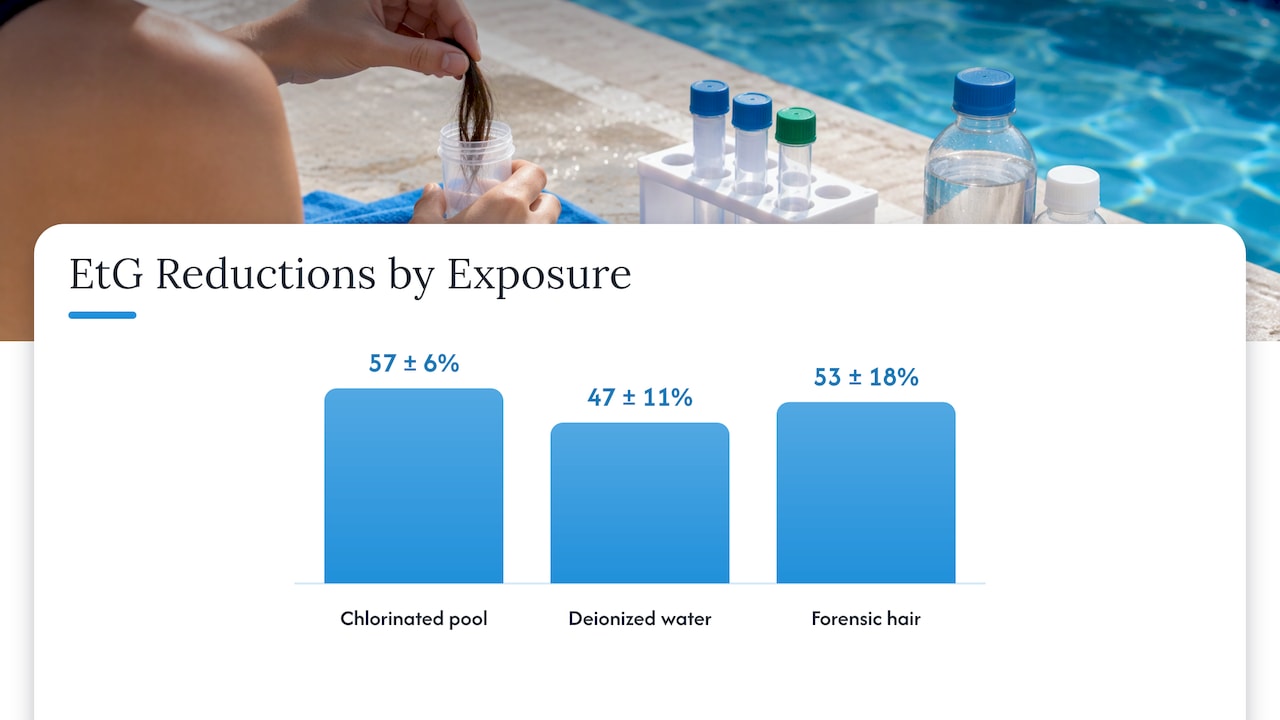
Two things stand out. First, plain water did a lot of the work too, so washout is a general effect of soaking, not only of chlorine. Second, the exposure was ten continuous hours of immersion, which is not what a swim looks like.
A 2023 review in PMC by Wissenbach, Binz and Steuer summarizes the same finding and adds that washout can already occur through daily hygiene.
Benzodiazepines and a pool-related case
A 2017 in vitro study by Morini and colleagues in Forensic Science International found that benzodiazepines in hair dropped considerably even after 4 hours of soaking in chlorinated water. Clonazepam degraded fastest, with 61% lost, and diazepam showed the greatest loss, 86% after 30 hours. The authors concluded that prolonged chlorinated water and sunlight exposure must be considered as possible causes of false negatives for these drugs.
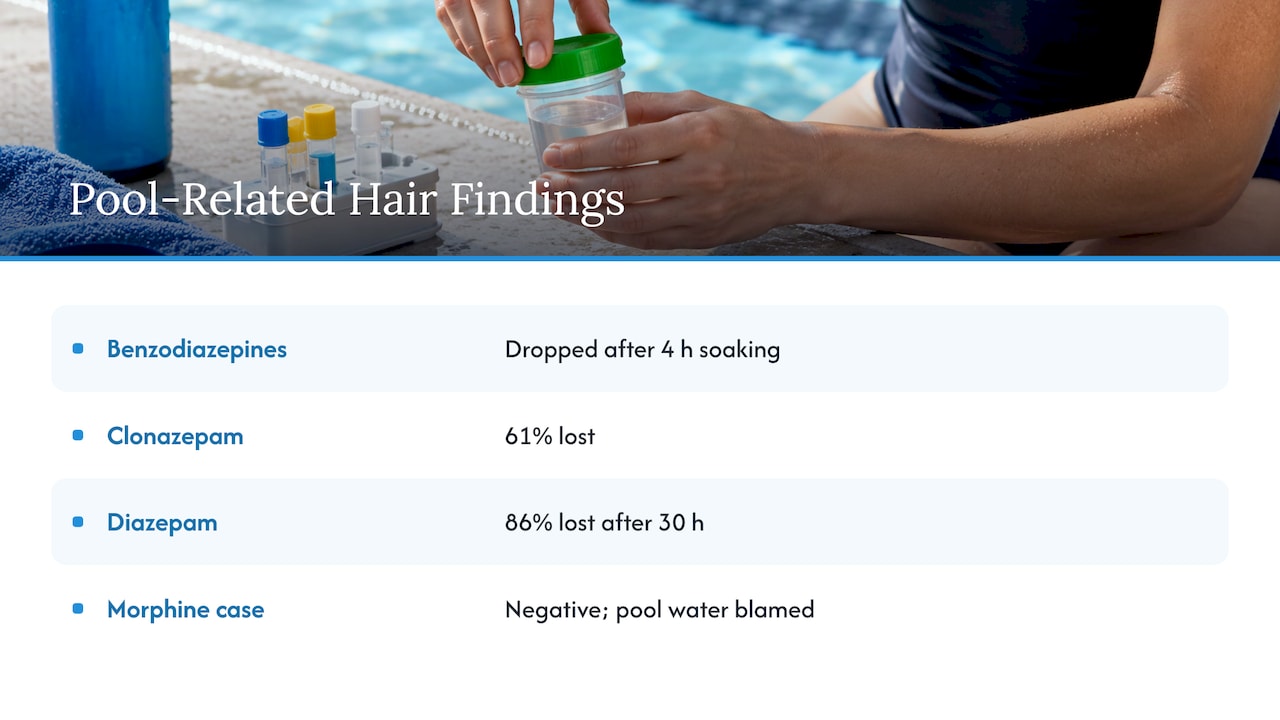
A 2020 case report by Kintz described a man with long-term morphine treatment whose segmental hair test came back negative. The author attributed the missing morphine to the chlorinated water of his swimming pool. If benzodiazepines are your concern, our guides on benzodiazepines in hair tests and how to prepare for a benzo hair test go deeper.
The findings at a glance
| Study | Substance | Exposure | Reported effect |
|---|---|---|---|
| Luginbühl et al., 2017 | EtG (alcohol marker) | 10 hours, chlorinated water | 57 ± 6% decrease |
| Luginbühl et al., 2017 | EtG | 10 hours, deionized water | 47 ± 11% decrease |
| Luginbühl et al., 2017 | EtG, 20 forensic samples | 10 hours, chlorinated water | 53 ± 18% mean decrease |
| Morini et al., 2017 | Clonazepam | Soaking in chlorinated water | 61% loss |
| Morini et al., 2017 | Diazepam | 30 hours soaking | 86% loss |
Why a pool day is not a plan
It is tempting to read the table and decide that a few swims will do the job. Here is why that reasoning falls apart.
The substances differ. The strongest numbers are for an alcohol marker and for benzodiazepines. Nothing in these studies tells you what chlorine does to THC metabolite in your hair, which is the substance most job applicants worry about.
The exposure differs. Ten hours of continuous soaking in a lab is not a lap session. A UK legal commentary from Chronicle Law notes that prolonged, regular pool swimming is more likely to affect a sample than hot tub steam, yet even prolonged chlorine exposure would not remove the trace of drug for someone using regularly.
Hair differs. A review by Hubbard in the Journal of Applied Laboratory Medicine lists hair structure, melanin, growth rate, cosmetic treatments, drug properties and the extraction method among the factors that shape hair toxicology results. It also notes that dose and hair concentration do not correlate strongly. Two people with identical use can land far apart.
The pool can hurt you in other ways. Chlorine and sun are hard on hair, and damaged hair behaves unpredictably. If your hair is bleached or dyed, that already changes levels. We cover it in our guide to dyed hair and hair drug tests.
What about hot tubs, showers and ordinary washing?
Everyday washing does cause some washout, according to the PMC review above, but it is a gradual background effect, not a controlled reduction. You cannot count on it to bring a specific substance under a specific cutoff by a specific date. That is the gap a test-specific method fills.
Does swimming change how many days you have?
Timing matters more than most people think. Psychemedics explains that it takes roughly 5 to 7 days after use for the hair carrying that drug to grow above the scalp, and that the minimum period labs can accurately evaluate in most situations is about one month. Drugtest.co gives a similar 7 to 10 day delay before use shows up in hair.
Two practical points follow:
- Very recent use may not be in the hair yet, which is why hair and urine tests answer different questions. Our comparison of hair versus urine tests at work explains how recent use can slip through one and not the other.
- Thirty days is enough time to plan carefully, but not enough to waste. Every week spent on guesswork is a week you could have used on a structured process.
Perspective
We have been helping people get ready for hair follicle tests since about 1999, and swimming is one of the most common questions we hear. The honest answer is that water exposure is one variable among many, and it is the least controllable one. You cannot dial in how much a pool takes out, and you cannot repeat it the same way twice.
That is why we built Mike’s Macujo Method in 2018 as a systematic nine-step process. It is designed for high THC levels and for other drugs and alcohol, and it is completed with authentic Macujo Aloe Rid Shampoo. The number of washes is not a guess. Our Required Washes Calculator takes the substance, the date of last use and how often you used during the previous 90 days, then tells you what your situation calls for.
When every required wash and every direction is completed correctly, we report a success rate better than 99%, and the hair stays clean unless drugs or alcohol are used again. The old Macujo Method served low-to-moderate THC exposure with an estimated success rate of about 90% for moderate THC and only temporary masking. Mike’s method is our current standard for that reason.
If you are unsure where you fall, call us. Unlimited support and after-hours phone consultation exist so you are never working it out alone the night before a collection.
MIchael
What to do with the time you have
Here is a sequence that works whether you have a month or a few days.
- Write down your history. Note the substance, the date of last use and roughly how often you used across the last 90 days. These are the three inputs the calculator needs.
- Run the calculator. It tells you how many washes your history calls for with Mike’s Macujo Method. Do not shorten it because the test feels close.
- Use authentic product. The method must be completed with authentic Macujo Aloe Rid Shampoo. Substitutes are not the method.
- Follow every direction in order. The nine steps are a process, not a menu. Skipping one changes the outcome.
- Plan around treatments. If your hair is bleached or dyed, tell us, because it affects how we advise you.
- Stay clean afterward. The hair stays clean only as long as no new drug or alcohol use occurs.
If you want to rehearse your questions before you call, our list of consultation questions to ask before a hair test and our page on what to expect from a hair drug test consultation help you get the most from the conversation.
Where swimming fits, if at all
If you swim regularly, keep doing what is normal for you, and mention it when you consult. It is a fact about your hair routine, and it belongs in the picture. It is not a substitute for the washes your history requires. Rinse after the pool, avoid adding bleach or new color right before collection, and keep your hair length and style as you would normally wear it.
Get a plan built for your test
Our Macujo Aloe Rid Old Formula Shampoo line is listed at $100 to $150 on our hair products page. If you want someone to walk through your numbers with you, the Afterhours Personal Consultation is $100 and puts you on the phone with an expert when regular hours do not fit your schedule.
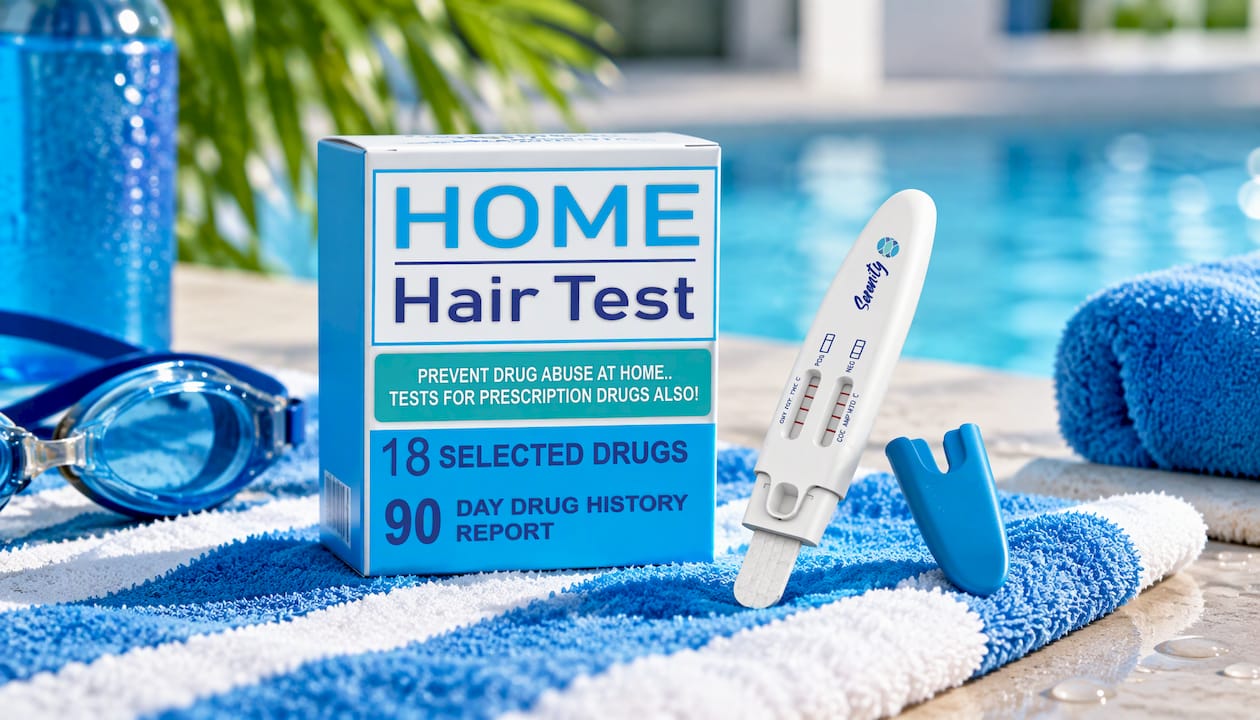
If you also need to check where you stand, we carry hair, urine and saliva test products on our main site, including a home hair test kit. Our blog collects more guides on the Macujo method.
If a result goes wrong
Labs can report an inconclusive result when there is contamination or a problem during testing, and then ask for a new sample, according to Medical News Today. If a result surprises you, the 90-day window matters in both directions, and our guide to verifying and retesting after a failed hair test walks through next steps.
For an overview of how water and mineral content can affect hair, see our write-up on hard water hair detox.
FAQ
Can swimming in a chlorinated pool affect a hair drug test?
It can lower measured levels of some substances in laboratory conditions. A 2017 study found alcohol marker EtG fell by 57 ± 6% after 10 hours in chlorinated water. Ordinary swimming is far shorter exposure, and the results do not tell you what happens to your specific drug.
Is a hot tub as effective as a pool?
Not according to the available commentary. Chronicle Law reports that regular, prolonged pool swimming is more likely to affect a sample than hot tub water or steam. Neither is a reliable or predictable way to prepare for a test.
Can I be ready for a hair follicle test in 30 days?
Thirty days is a workable window if you use it well. Labs generally cannot evaluate less than about a month of growth, and drug use takes roughly 5 to 7 days to reach hair above the scalp. Start with the required-washes calculator so your plan matches your history.
How many washes will I need?
It depends on the substance, the date of last use and how often you used in the previous 90 days. Mike’s Macujo Required Washes Calculator uses exactly those inputs, and our team can confirm the result by phone.
Sources
- Decrease of ethyl glucuronide concentrations in hair after exposure to water (Drug Testing and Analysis, 2017)
- Stability of benzodiazepines in hair after prolonged exposure (PubMed)
- Negative hair test result after long-term drug use (PubMed)
- Advances in testing for sample manipulation in clinical and forensic toxicology (PMC)
- Review on Toxicology Testing in Hair (Journal of Applied Laboratory Medicine)
- Hair follicle drug test: How it works (Medical News Today)
- Standard drug testing cut-off levels (National Drug Screening)
- Hair drug testing lookback and limits (Drugtest.co)
- Hair Drug Testing Facts FAQs (Psychemedics)
- Will hot tub use affect a hair drug test result? (Chronicle Law)