Last Updated on November 7, 2026
A hair drug test works on black hair the same way it works on any hair color: the lab cuts about 1.5 inches from the scalp and looks back roughly 90 days. The difference is chemistry. Drugs bind to melanin, and black hair has more of it, so the same exposure can leave higher concentrations in darker hair. If you have black hair and a test coming up, that is the single fact that should shape your preparation.
TL;DR
- A standard hair test covers about 90 days of use, based on the first 1.5 inches of hair nearest the scalp.
- Drugs bind to melanin, so darker hair can hold higher drug concentrations than lighter hair from comparable exposure.
- A 7-panel hair test covers marijuana, cocaine, amphetamines, opiates, PCP, benzodiazepines and barbiturates.
- Your preparation should fit your own history: substance, date of last use and how often you used in the past 90 days.
- If a result looks wrong, act fast: talk to the reviewer, document any prescriptions and ask about retesting.
Table of Contents
- Why hair color matters for a hair drug test
- How far back a hair test looks
- What a hair drug test detects
- How the lab handles your sample
- Dyed, bleached or treated black hair
- How to prepare when you have black hair
- Get a plan built for your hair
- If you think a result is wrong
- FAQ
- Sources
Why hair color matters for a hair drug test
When a drug is used, the body carries it through the bloodstream to the growing hair follicle, where it is locked into the strand as it forms. Many drugs are attracted to melanin, the pigment that gives hair its color. A SAMHSA literature review on hair pigmentation reports that melanin content is greater in darker hair and that drugs incorporate and bind more in pigmented hair than in non-pigmented hair, which produces higher drug concentrations in darker hair.
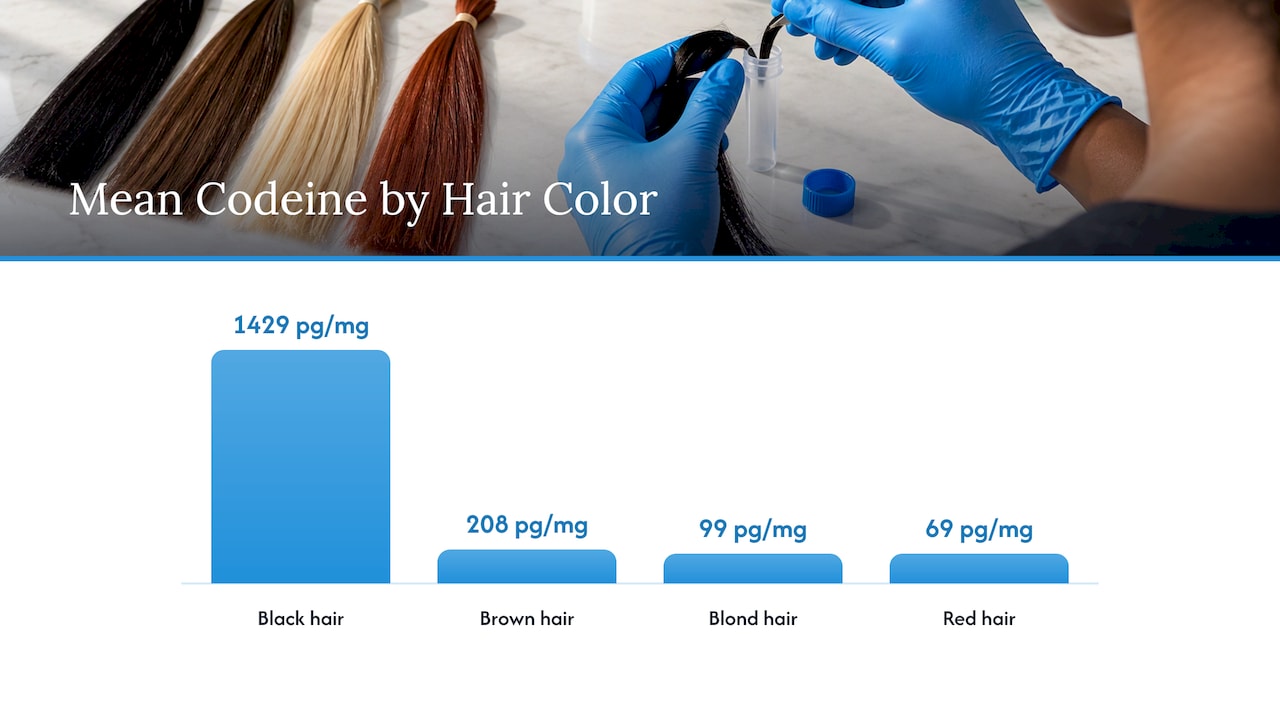
The numbers from controlled research are striking. In a 2003 codeine study by Rollins and colleagues, the mean hair codeine concentration five weeks after dosing was 1429 pg/mg in black hair, 208 pg/mg in brown hair, 99 pg/mg in blond hair and 69 pg/mg in red hair. Concentration tracked melanin closely (R² = 0.73). A 1999 study in Clinical Chemistry also found a strong relationship between hair codeine and melanin content.
A more recent review in the Journal of Applied Laboratory Medicine cited by Labcorp’s hair testing FAQ describes the same pattern for cocaine: higher concentrations in brown hair than in blonde hair, with the highest levels in black hair from Black Americans.
What this means in practice
The lab compares your result to a fixed cutoff. If the same exposure puts more drug in dark hair, a black-haired person can cross that cutoff with less use than a blond-haired person. The Rollins study makes this concrete: at a proposed federal codeine cutoff of 200 pg/mg, every subject with black hair would have been reported positive, while subjects with blond or red hair would have been reported negative.
That is not a reason to panic. It is a reason to take your own history seriously and to plan your preparation around the real amount and timing of use rather than a generic checklist.
How far back a hair test looks
Head hair grows about half an inch per month. Labcorp’s hair testing FAQ explains that a 1.5-inch sample therefore represents up to about 90 days before collection. For comparison, it lists urine detection at roughly one to seven days (longer in chronic users) and oral fluid at five to 48 hours. Quest Diagnostics describes the same standard: the first 3.9 cm (1.5 inches) from the root end, a pattern of repeated use over about 90 days.
Three points trip people up:
- Very recent use often does not show yet. The proposed federal hair guidelines note that drugs and metabolites are not detected in hair for 5 to 7 days after ingestion, so hair is not the right specimen for catching very recent use. You can read the details in the Federal Register notice. Our page on hair versus urine tests covers how recent use can slip through.
- Federal programs may use a shorter segment. The same proposed guidelines describe head hair 0.5 to 1.0 inch long, representing roughly 30 to 60 days, for pre-employment and random testing. Most private employers follow the lab’s standard 1.5 inches.
- Hair does not show how much you used. The National Institute of Justice notes that neither blood nor hair testing can reveal the quantity of a drug consumed.
If your timeline is tighter than 90 days, read when 90 days isn’t enough for a hair drug test timeline and, if your hair is long, how long hair affects a drug test.
Body hair is a different window
If there is not enough scalp hair, collectors may use body hair. Body hair grows more slowly, and Drugs.com reports that a sample from the armpit instead of the scalp can widen the detection window to as much as a year. We cover what that means in our guide to body hair drug tests.
What a hair drug test detects
The proposed federal hair guidelines list the drug groups regulated programs test for: marijuana metabolite (THCA), cocaine and its metabolite, phencyclidine (PCP), opioids (codeine, morphine, hydrocodone, hydromorphone, oxycodone, oxymorphone), the heroin metabolite 6-AM, and amphetamines (amphetamine, methamphetamine, MDMA and MDA).
Private employers often order a broader 7-panel hair test. Commercial testing providers describe it as screening for amphetamines, cocaine, marijuana, opiates, PCP, benzodiazepines and barbiturates, with a lookback of up to 90 days. Benzodiazepines are prescription sedatives, so if you take one legitimately, see our page on benzodiazepines in hair tests for how cutoffs and documentation work.
Alcohol can also be tested in hair through its own markers, which is a separate order from the standard drug panel.
How the lab handles your sample
Knowing the process helps you spot where questions can arise.
- Collection. A collector cuts a small lock from the crown, close to the scalp. Quest describes the standard length tested as the first 1.5 inches from the root end.
- Washing. The lab washes the hair to remove external contamination. The Journal of Applied Laboratory Medicine review, as summarized in the Labcorp FAQ source, says there is no consensus on the best decontamination protocol, and the NIJ adds that these wash procedures are not standardized.
- Extraction and screening. The drug is isolated from the hair and analyzed with mass spectrometry methods such as GC-MS, GC-MS/MS or LC-MS/MS.
- Confirmation. Quest reports that every presumptive positive is pulled for confirmation, specimen identification is verified again and a second portion of the original hair is tested. Each batch includes calibrators and at least 10% quality control samples.
The NIJ also points out that labs can look at certain conjugated metabolites to tell drug use from environmental exposure. In other words, a lab is built to be careful before it reports a positive.
Dyed, bleached or treated black hair
Cosmetic treatment changes what ends up in a strand. A 1997 study by Jurado and colleagues found drug content fell in every case after bleaching or dyeing. Most mean differences were 40% to 60% for cocaine, benzoylecgonine, codeine, 6-acetylmorphine and THC-COOH, and above 60% for morphine. Bleaching reduced levels more than dyeing, and the more damaged the hair, the bigger the drop.
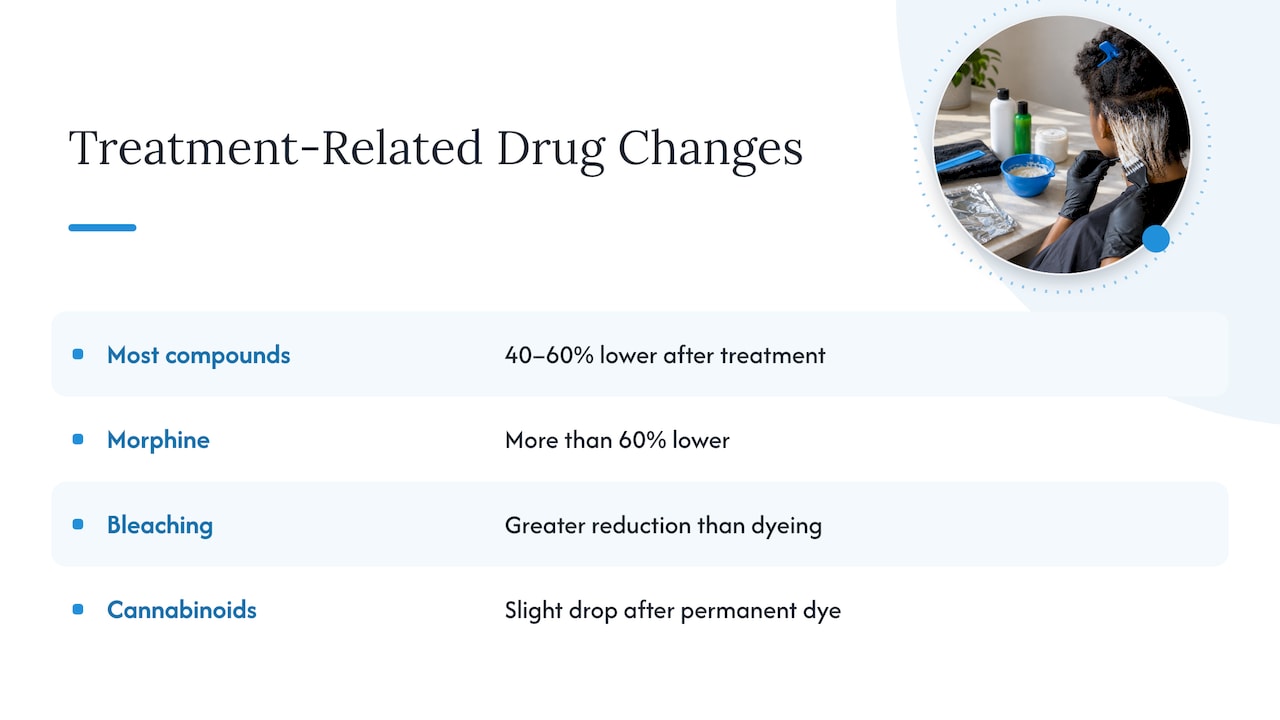
A 2023 review by Wissenbach and colleagues adds that cannabinoids dropped only slightly after permanent dyeing, and that the hydrogen peroxide concentration is a decisive factor in damage. The same review notes that labs are developing markers, such as PTCA, to flag oxidative treatments, and that this marker depends partly on hair color.
So treatment is not a reliable plan on its own. It varies with your hair, with the substance and with how the lab looks at the strand. Our pages on dyed hair and drug tests and whether bleaching can help you pass go through the details.
Our perspective on black hair and hair tests
We have helped people prepare for hair follicle tests since about 1999, and black hair comes up constantly. Our view is simple: the science says darker hair holds more, so a generic, one-size-fits-all routine is the wrong tool. Preparation has to match the person.
That is why Mike’s Macujo Method, introduced in 2018, is built around a required number of washes rather than a fixed routine. Mike’s Macujo Required Washes Calculator uses three things: the substance, the date of last use and how often you used in the previous 90 days. A heavy user with dark, dense hair needs a different plan than someone with a single exposure.
The method is a systematic nine-step process developed for high THC levels and for other drugs and alcohol, and it is completed with authentic Macujo Aloe Rid® Shampoo. When every required wash and direction is followed correctly, we report a success rate better than 99%, and the hair stays clean unless drugs or alcohol are used again. Our older method was designed mainly for low-to-moderate THC exposure and gave temporary masking, which is why the current method is our standard.
What we care about most is that you are not guessing. Use the calculator, follow every step, and call us if your situation is unusual.
MIchael
How to prepare when you have black hair
Start with an honest accounting. These steps keep your plan realistic.
- Write down your history. Which substances, when you last used and how frequently across the past 90 days. Heavier and more frequent exposure means more drug in the strand, and more so in dark hair.
- Confirm the test type and date. Ask the employer or the collection site whether it is a hair test, which panel it covers and when you are scheduled. A 7-panel test casts a wider net than a 5-panel urine test.
- Do not rely on one-off tricks. The research on cosmetic treatment shows results vary widely with hair condition and chemistry.
- Follow a method matched to your exposure. The number of required washes should come from your history, and every wash should be completed as directed.
- Keep your hair as it is. Do not start new dyes, relaxers or chemical treatments the week of the test unless you have a plan. Heavy damage can change how a strand behaves and may draw attention.
- Gather documentation. If you take prescribed medication, such as an opioid, a benzodiazepine or an ADHD stimulant, keep the prescription details ready for the medical reviewer.
If you already tested positive and are weighing your next move, read what to do after a failed hair test.
Get a plan built for your hair
If your test is close, we make the planning part easy. Our Macujo Aloe Rid shampoo is priced at $100 to $150, and the required-washes calculator tells you how many washes your history calls for. Mike’s Macujo Method walks you through the nine steps with detailed instructions and videos.
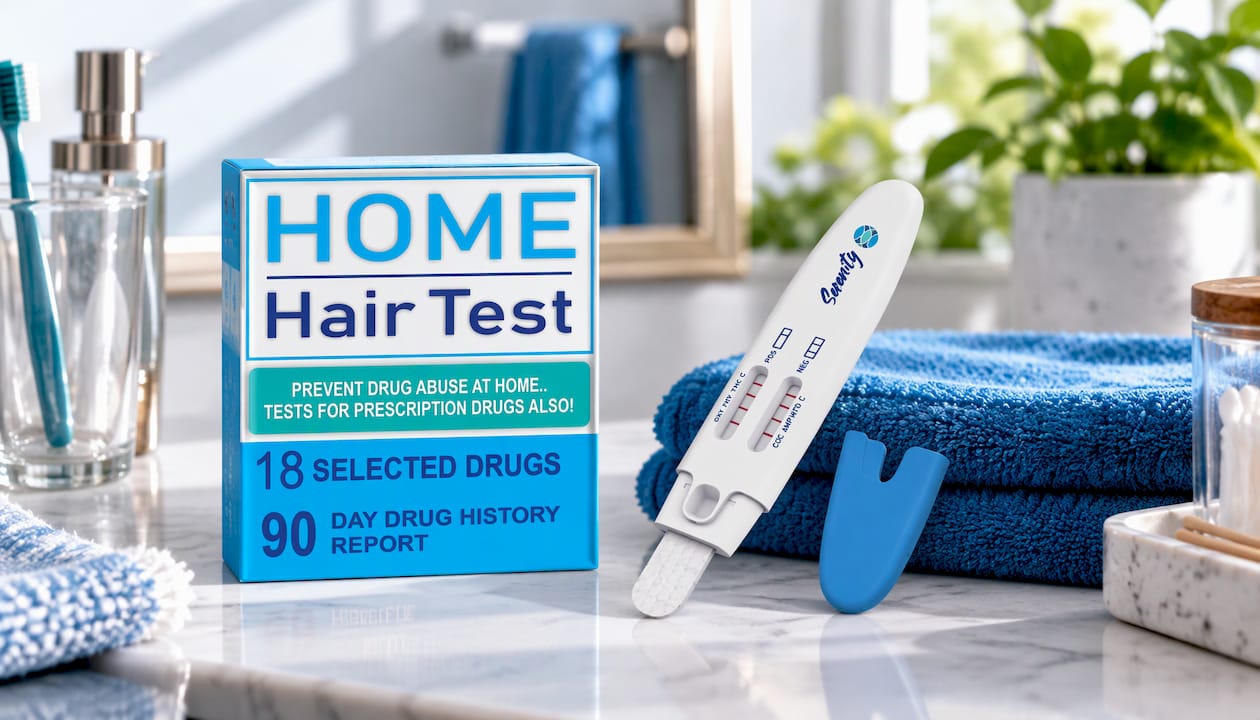
Want a person to check your plan? Our Afterhours Personal Consultation is $100, and it is a phone call with someone who knows hair tests inside out. Here is what to expect from a consultation. If you need a way to check your own hair first, we also carry a home hair test kit.
If you think a result is wrong
Black hair has a documented pigment effect, and medications can also appear in a hair result. If a result does not match your history, move quickly and stay organized:
- Respond to the medical reviewer. In workplace testing, a medical review officer usually contacts you before a positive is reported to your employer. Take the call and offer your prescription details.
- Put your questions in writing. Ask the employer or the testing company which drugs, which cutoff and which confirmation method were used.
- Ask about a retest. Ask whether a retained portion of the original sample can be sent to a different accredited laboratory, and what the deadline and cost are. Policies differ by employer and by state, so get the answer in writing.
- Keep everything. Prescriptions, dates, collection paperwork and every email.
For next steps with a positive result, see our failed hair test guide. If a legal or discrimination issue is involved, an employment attorney in your state is the right professional to ask.
FAQ
Does black hair make a hair drug test more likely to come back positive?
It can. Drugs bind to melanin, and darker hair has more of it, so research shows higher drug concentrations in dark hair than in light hair after similar exposure. That effect has been measured most clearly with codeine and cocaine. Your own history of use still determines whether any drug is present at all.
Can a hair drug test detect drug use?
Yes. Hair testing is designed to show a pattern of repeated use over about 90 days, using the first 1.5 inches of hair from the scalp. Labs confirm presumptive positives with mass spectrometry and retest a second portion of the sample. Hair generally does not show use in the last 5 to 7 days.
What does a 7-panel hair drug test detect?
Commercial 7-panel hair tests cover marijuana, cocaine, amphetamines (including methamphetamine and ecstasy), opiates, PCP, benzodiazepines and barbiturates. The lookback is up to 90 days. Your employer decides the panel, so confirm it before your appointment.
Does dyeing your hair affect drug test results?
It can lower the amount of drug measured. Studies found drops of about 40% to 60% for several drugs after bleaching or dyeing, with bleaching reducing levels more than dye. Results vary with the hair and the chemistry, and labs are developing ways to detect oxidative treatments, so it is not a dependable plan on its own.
What if I do not have enough scalp hair?
Collectors can use body hair instead. Body hair grows more slowly, so the window can reach up to a year. Plan for that longer lookback if you are asked to give a body hair sample.
Sources
- Labcorp: Hair Drugs of Abuse Testing FAQ
- Quest Diagnostics: Hair testing FAQ
- National Institute of Justice: Detecting Drugs in Hair
- Federal Register: Proposed Mandatory Guidelines using Hair
- SAMHSA: Hair pigmentation literature review
- Rollins et al. 2003: Effect of hair color on codeine incorporation
- Kronstrand et al. 1999: Codeine concentration in hair and melanin
- Jurado et al. 1997: Cosmetic treatment of hair and drug testing
- Wissenbach et al. 2023: Testing for sample manipulation
- Drugs.com: Hair drug tests