Last Updated on November 6, 2026
The best hair detox routine for a drug test is one built around your own history: what you used, when you last used it, and how often you used it in the past 90 days. A generic clarifying shampoo, a baking soda paste or a one-time wash is made for product buildup, not for the metabolites a lab looks for. A test-specific routine uses the right shampoo, the right number of washes and every step in order. This guide explains how hair tests work, what the research says about washing, and how to plan a routine you can finish on time.
TL;DR
- A hair test looks back about 90 days, so a routine has to match your substance, date of last use and frequency of use.
- Studies show a single shampoo application rarely brings results below detection limits, so one wash is not a plan.
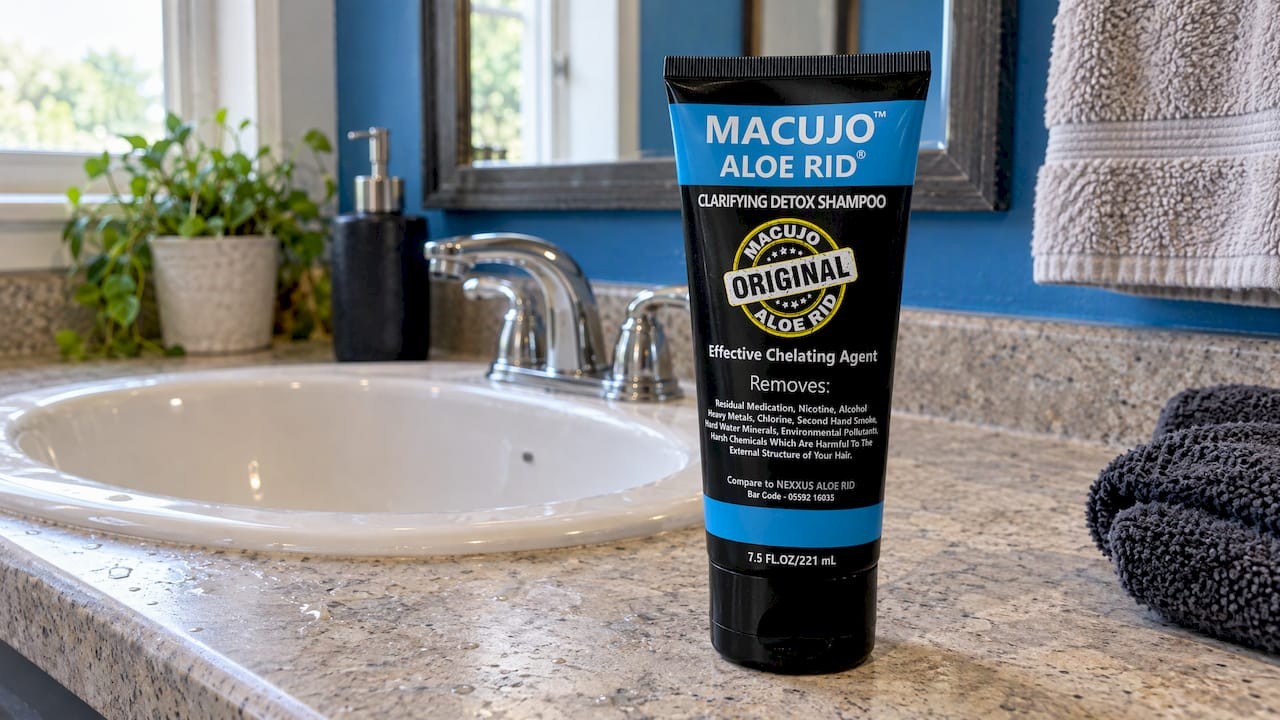
- Our method, Mike’s Macujo Method, is a nine-step process that uses Macujo Aloe Rid® Shampoo, with the number of washes set by our calculator.
- Hair color, bleaching, dyeing and sweat all influence how much drug is in a sample, so personal factors matter.
- Finish every wash and direction, and start early. Consultations are available if you want a second opinion on your timeline.
Table of Contents
- What a hair drug test actually looks for
- Why a regular “hair detox” is not a drug test routine
- What shapes your routine
- How often should you wash?
- Mike’s Macujo Method in plain terms
- Get your plan started
- Care for your hair and scalp along the way
- Know your test and your rights
- FAQ
- Sources
What a hair drug test actually looks for
Before choosing a routine, it helps to know what you are cleansing against. A collector usually cuts 100 to 120 hairs from the crown, wraps them in foil and sends them to a lab. Labs commonly need hair about 1.5 inches (4 cm) long, and if you have no head hair, body hair from the leg, chest or armpit can be used.
Testing runs in two stages. An initial ELISA screen is followed, if positive, by confirmatory GC-MS testing that identifies the specific drugs. A 1.5-inch sample covers up to about 90 days of use.
Two details shape any routine:
- Drugs take time to show up. Federal proposed guidelines note that drugs and metabolites are not detected in hair for 5 to 7 days after ingestion, so hair says little about very recent use.
- Labs wash samples too. The industry consensus is that lab washing removes products, sweat, sebum and external contamination before analysis. That is why a cleansing routine has to do more than clean the surface.
For a deeper look at the window itself, see our guide on how far back a hair follicle test goes and our piece on when 90 days isn’t enough.
Why a regular “hair detox” is not a drug test routine
Most of what ranks for this phrase is about scalp buildup: clarifying shampoo once a week, brushing, clips and a pointed-nose bottle for scalp products. That is good hair care, and it has nothing to do with the metabolites inside the hair shaft. Drug metabolites enter the hair through the follicle, sweat glands and oil glands, and some bind to melanin. A routine for a drug test has to address that, so it needs a different design.
The research shows why a single product or shortcut is a weak plan:
- A study of one application of a detox shampoo found only slight decreases in drug concentrations, not enough to drop below the limit of detection.
- A 2022 German study of everyday shampoos, hair tonics and disinfectants found THC concentrations fell 52 to 65% on average, and in 14 of 54 cases fell below detection limits. Repeated, thorough washing matters, and results vary from sample to sample.
- For alcohol markers, one review reports that a single detox shampoo application did not significantly change EtG, while longer contact time changed it more.
The pattern is consistent. Results depend on the product, the contact time, the number of repetitions and the starting concentration. That is the reason we built our method around a calculated number of washes instead of a fixed routine.
What shapes your routine
Four things decide how much work your hair needs.
Substance and amount
Heavy, frequent use puts more in the hair than occasional use. Different drugs also bind differently: basic drugs such as cocaine, amphetamines and opioids bind strongly to eumelanin, the pigment common in dark hair, so dark hair can hold considerably more than blonde or red hair.
Date of last use
Time helps. Hair grows about 0.4 millimeters per day, roughly 1 cm a month, and a lab typically reads the length closest to the scalp. The longer since your last use, the less work new growth leaves to do.
Frequency in the past 90 days
Occasional exposure and daily use are different problems. This is the reason our calculator asks about frequency, not just the last date.
Hair history
Bleaching, dyeing, perming, straightening and UV exposure can all change what is measured in hair. Sweat and melanin content matter too, according to a Medical News Today summary. Tell a consultant about any treatments so your plan reflects them.
If you have body hair or a longer lookback to worry about, read about the body hair drug test window. If your history includes methamphetamine, see our methamphetamine hair test timeline.
How often should you wash?
For ordinary buildup, a clarifying shampoo about once a week is a typical suggestion on hair care sites. A drug test routine is different: it is a defined course, not a weekly habit. The number of washes depends on your answers about substance, last use and frequency, and it should be finished well ahead of your test date.
Our calculator, Mike’s Macujo Required Washes Calculator, uses exactly those three inputs. Once you have the number, the rule is simple: complete every required wash, in order, as directed. Skipping a wash or shortening a step is the most common way a plan falls short.
A sensible schedule looks like this:
- Run the calculator the day you learn about the test.
- Order your shampoo right away so shipping does not eat into your timeline.
- Spread washes as the directions say and finish with margin before the test.
- Do not add new hair treatments, dyes or bleach mid-routine.
- Stay away from any new exposure until after the test, because hair stays clean only if drugs or alcohol are not used again.
Mike’s Macujo Method in plain terms
We have helped customers prepare for hair follicle tests since about 1999. Mike’s Macujo Method, introduced in 2018, is our current standard: a systematic nine-step process developed for high THC levels and for other drugs and alcohol. It must be completed with authentic Macujo Aloe Rid® Shampoo, and the number of washes comes from the calculator.
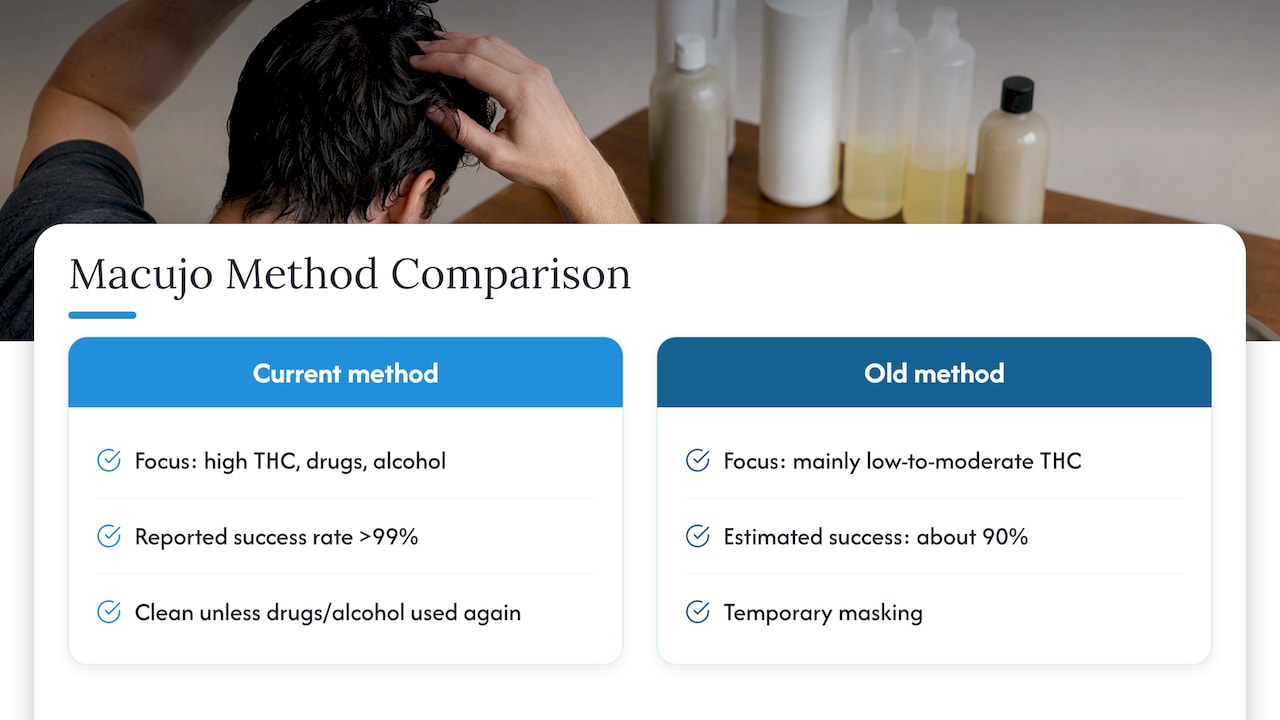
When every required wash and direction is completed correctly, the method has a reported success rate of better than 99%, and the hair remains clean unless drugs or alcohol are used again.
It should not be confused with the old Macujo Method, which was designed mainly for low-to-moderate THC exposure. That version has an estimated success rate of about 90% for moderate THC and provides only temporary masking. If you used heavily, the current method is the one built for you.
Our view
After more than two decades of working with people facing hair tests, the thing we see most is a rushed, generic routine. Someone washes a few times with a clarifying shampoo and hopes for the best. We designed Mike’s Macujo Method because the problem is specific: your substance, your timeline and your use pattern decide the work.
That is why we start with the Required Washes Calculator and not a one-size schedule. It gives you a number, and the nine steps tell you exactly how to carry it out with Macujo Aloe Rid® Shampoo. We also answer questions after hours by phone, because tests have a way of being scheduled on short notice.
Follow the directions completely, start early and call us if anything about your situation is unclear.
MIchael
Get your plan started
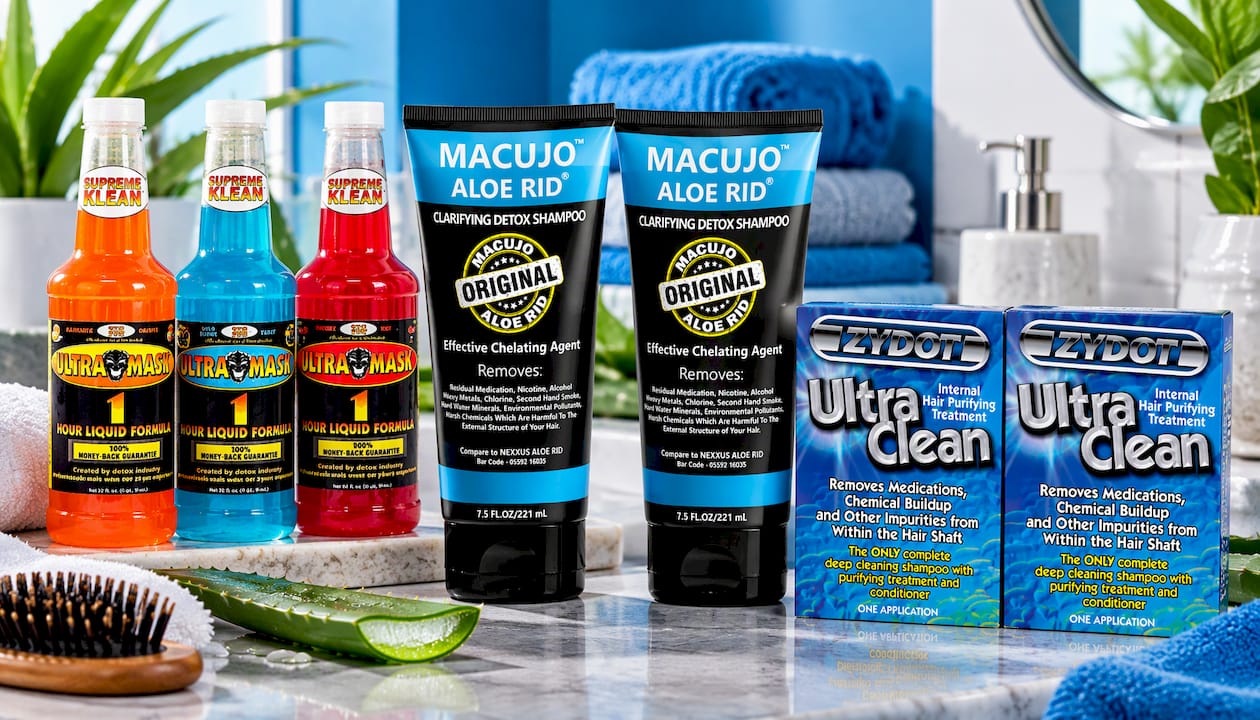
If your test is coming up, the quickest path is the shampoo and the calculator. You can order Macujo Aloe Rid with Zydot or, if you want extra supply for a longer course, the two-set option. Our Aloe Rid Old Formula line is listed at 100 to 150 USD on our hair products page.
If you would rather talk it through, the Afterhours Personal Consultation is 100 USD one-off. Read what to expect from a consultation first, and have your dates and use history ready.
Care for your hair and scalp along the way
Intensive washing asks something of your hair, so treat it well. Overuse of harsh products can strip natural oils and cause dryness or irritation, which is a good reason to follow directions exactly rather than adding extra products or homemade mixes of acids and chemicals. Stop and see a dermatologist if your scalp burns, bleeds or develops a rash.
A few habits help:
- Follow the contact times in the directions and rinse completely.
- Skip dyes, bleach and relaxers during the routine.
- Keep conditioning to what the directions allow.
- Read our guide on scalp detox before a hair test for scalp-specific steps.
Know your test and your rights
Hair testing is mostly a private-employer practice. As of 2026, hair is not authorized under SAMHSA Mandatory Guidelines or DOT rules for federally regulated programs, though employers can still use it. Some employers pair hair with urine, and our comparison of hair versus urine tests at work explains how recent use can still show on other tests. Urine and saliva products are also available on our main shop.
If a result comes back positive, read what you can do next in our failed hair test guide, and see our rehab hair test guide if your test is tied to treatment.
FAQ
What is the best detox for your hair?
For buildup, a clarifying shampoo is enough. For a drug test, the best choice is a test-specific method with a calculated number of washes. Ours is Mike’s Macujo Method with Macujo Aloe Rid® Shampoo.
How often should hair be detoxed?
For everyday buildup, about once a week is common. Before a drug test, the number depends on your substance, date of last use and frequency over the past 90 days. Our calculator gives you that number.
Does hair detox really work?
Single applications of ordinary products show limited change in studies, while repeated, thorough washing lowers concentrations more. That is why our method relies on a full set of required washes done exactly as directed.
What’s the best way to pass a hair drug test?
Start early, use the calculator, complete every wash and step with authentic Macujo Aloe Rid® Shampoo, and avoid any new use. A consultation can help you fit the plan to your date.
Sources
- Hair Strand Drug Test: How It Works (Healthline)
- Hair Drug Test (InOut Labs)
- Hair follicle drug test (Medical News Today)
- Hair Drugs of Abuse Testing FAQ (Labcorp)
- HHS/SAMHSA 2020 proposed hair testing guidelines
- SoHT General Consensus on Hair Testing 2022
- Hair Follicle Drug Test (Testing.com)
- Effect of the shampoo Ultra Clean on drug concentrations in hair (PubMed)
- Manipulation of THC Hair Concentrations (PMC)
- Advances in testing for sample manipulation (PMC)
- Forensic Insights Into Drug Detection
- Strategies on How to Pass a Hair Drug Test for Weed
- Hair drug testing, 90-day lookback