Last Updated on November 2, 2026
If you used a drug lightly, a hair follicle test is less likely to flag it than it would be for a daily or heavy user, but it can still happen, and you should plan for it. A light user’s best preparation is to know the detection window, count the days since last use, and follow a test-specific wash plan built on your own use history instead of a guess. This guide covers how hair tests treat light, daily and heavy use, what the science says about washing, and how we approach it at Macujo.
TL;DR
- A standard hair sample covers roughly 90 days, and drugs take about 5 to 10 days to reach the scalp surface, so use in the last week or so usually is not what a hair test sees.
- In one peer-reviewed cannabis study, THC turned up in 39% of light users and 77% of heavy users, so light use is the case most likely to be missed, though never guaranteed.
- Published research shows washing and cosmetic treatments can lower drug concentrations, but results vary widely by drug, product and protocol.
- Mike’s Macujo Method sets the number of washes from the substance, your date of last use and your frequency over the previous 90 days.
- Hair testing is not authorized for DOT-regulated testing, which uses urine or oral fluid.
Table of Contents
- What a hair test actually looks at
- Why light use is treated differently
- Light, daily and heavy use compared
- What washing can and cannot change
- How Mike’s Macujo Method approaches it
- A practical plan for a light user
- Bleach, dye and home remedies
- Which tests use hair, and which do not
- Get a plan built around your history
- Perspective
- FAQ
- Sources
What a hair test actually looks at
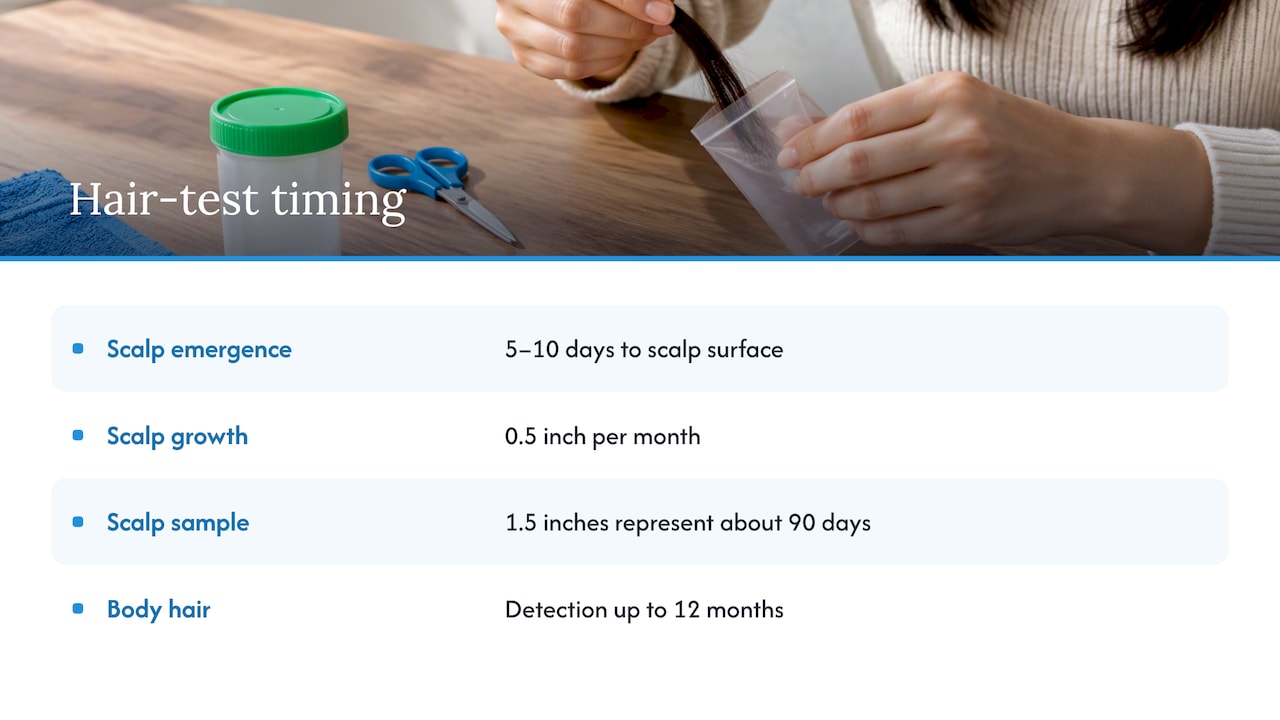
A hair test looks for drugs and their metabolites that were taken into the hair as it grew. A typical 1.5-inch sample of scalp hair represents about 90 days, because head hair grows around one-half inch per month, according to Labcorp’s hair testing FAQ. The same page notes that the exact detection time depends on dose, assay sensitivity, route of use, duration of use and individual factors.
Two details matter a lot for light users.
The lag. Quest Diagnostics explains that drugs generally take about 5 to 10 days to reach the scalp surface. Hair is therefore not a reliable test for use in the few days right before collection. The hair that grew during that week is still under the skin.
The window. The sample reaches back about three months. If you used a few times early in that window, the segment of hair that recorded it sits toward the tip of your sample. That is the part a sample cut close to the scalp may include or leave out, depending on your hair length and how the collector cuts.
Body hair works differently. Cleveland Clinic notes that slower-growing body hair can extend the window to as much as 12 months. Collectors usually take head hair, but if you have very short or no head hair, body hair can be used. If you are curious how drug types differ, our page on how long drugs stay in your hair goes deeper.
Why light use is treated differently
The most useful study for this question compared self-reported cannabis use with hair results. In that 2017 peer-reviewed study, THC was found in 77% of heavy users and 39% of light users, and in none of the non-users. The authors concluded that hair testing can indicate heavy daily or near-daily use but cannot reliably detect light use or measure how much someone consumed.
Drugs.com’s medically reviewed overview says something similar: hair testing suits regular or heavy use over roughly three months and is not recommended for occasional use.
What does that mean for you?
- Light use has lower odds of detection, not zero. Nearly four in ten light users in that study still tested positive for THC.
- A result is not a measurement of how much you used. The Society of Hair Testing’s 2023 consensus recommendations stress that a concentration should not be treated as a precise measure of dose or frequency without context.
- “Light” is your word, not the lab’s. A lab sees a number against a cutoff. If your number lands above the cutoff, how you describe your use does not change the result.
That last point is why preparation, not hope, is the sensible approach when a job depends on the result.
Light, daily and heavy use compared
Readers who search for light, daily and heavy user detox are really asking the same thing: how much work does my situation need? Here is how the three profiles differ in what a hair test may pick up.
| Use pattern | What a 90-day hair sample may show | What it means for preparation |
|---|---|---|
| Light or occasional | Lower chance of a positive, especially for cannabis; 39% of light users in one study had detectable THC | Still worth a plan if the test matters; wash count depends on last use date and frequency |
| Daily or near-daily | A detectable pattern across the three-month window is more likely | Needs a structured, test-specific wash plan and the full set of directions |
| Heavy | Highest chance of detection; 77% of heavy users in the same study | Needs the most thorough plan and usually the most washes |
No hair result reliably tells the exact amount used, so a lab cannot say “light” or “heavy” from one number. For you, the practical question is simpler: what did you use, how recently, and how often in the past 90 days?
What washing can and cannot change
Honest preparation starts with how the science describes washing. The research is varied, and it is worth reading so you can judge any product claim, ours included.
Washing lowers concentrations, by differing amounts. A 2025 review in the Journal of Applied Laboratory Medicine reports that decontamination effectiveness in published protocols ranged from 7% to 113%, which shows how much results depend on the drug and the method.
Product type matters. In a 2022 study of THC in hair, commercially available treatments produced mean reductions from 52% with one shampoo to 65% with a disinfectant. Some samples became non-detectable, and the treatments could not be seen by eye.
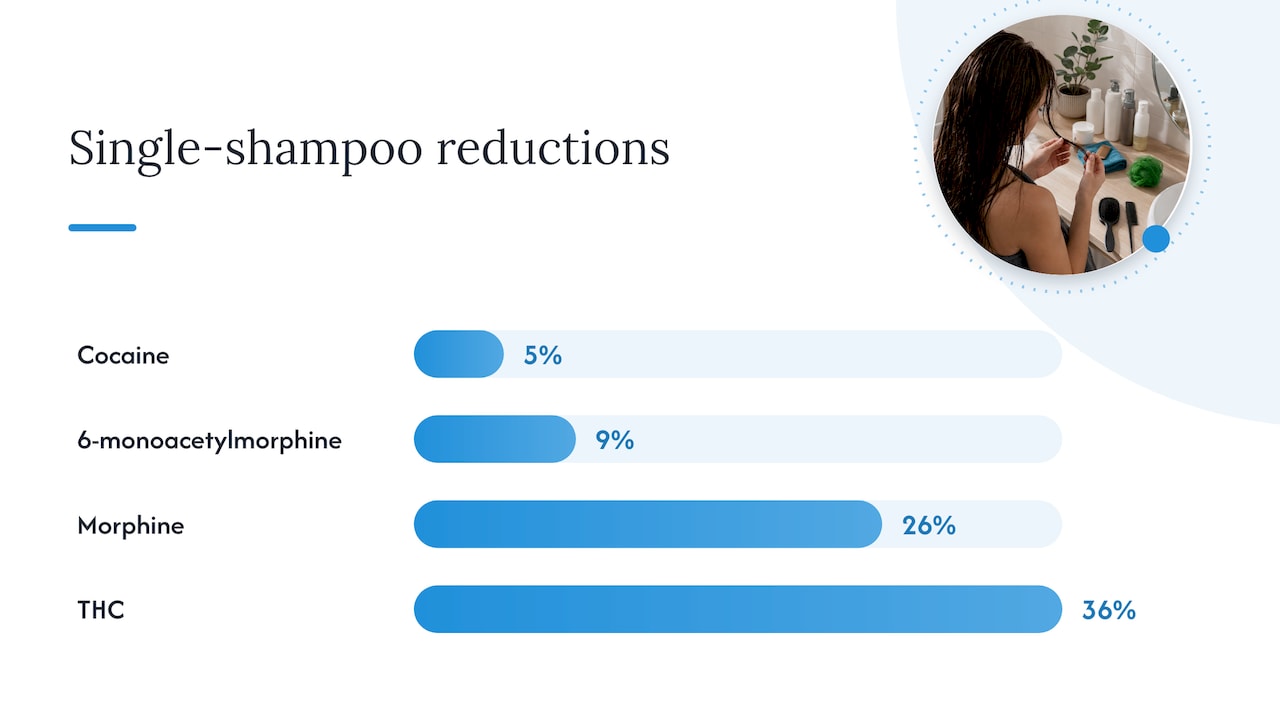
A single quick application is a weak plan. An older 2000 experiment with a single shampoo application found every drug still detectable, with decreases of 5% for cocaine, 9% for 6-monoacetylmorphine, 26% for morphine and 36% for THC. Likewise, a 2023 review found that one application of several detox shampoos did not significantly change hair ethyl-glucuronide, the alcohol marker, while a prolonged treatment with one product out of four cut it by a mean of 73%.
The lesson for a light user is that repeated, thorough, correctly sequenced washing is a different thing from a one-time rinse. Method and completeness are what separate the outcomes in the literature.
Labs wash too. Laboratories wash samples to remove external contamination while keeping what is embedded in the hair. UNODC guidance says it is practically impossible to achieve both perfectly, and that water and methanol can swell hair and may remove incorporated compounds. In plain terms, washing and hair do interact, and that is the basis for any hair cleansing approach.
The National Institute of Justice adds that lab washing procedures are not standardized, and that distinguishing use from environmental contact is difficult. That is useful context if you have been around smoke but did not use.
One more point from the 2023 review: no standardized routine workflow currently exists to objectively detect cleansing shampoos or extensive washing, though oxidative treatments such as bleaching can be screened with visual checks and some laboratory markers.
How Mike’s Macujo Method approaches it
We have helped people prepare for hair follicle tests since about 1999. Our current standard, Mike’s Macujo Method, was introduced in 2018. It is a systematic nine-step process developed for high THC levels and for other drugs and alcohol, and it must be completed with authentic Macujo Aloe Rid® Shampoo.
The feature that matters most to a light user is that the plan is not one-size-fits-all. The number of washes comes from Mike’s Macujo Required Washes Calculator, which uses three inputs:
- The substance involved.
- Your date of last use.
- How often you used during the previous 90 days.
That means a light user typically gets a different plan from a daily or heavy user, rather than being sold the same heavy routine. When every required wash and direction is completed correctly, we report a success rate of better than 99%, and the hair stays clean unless drugs or alcohol are used again. That is our reported figure for the current method, not a published clinical result.
It also helps to know that Mike’s Macujo Method is not the old Macujo Method. The old method was designed mainly for low-to-moderate THC exposure, has an estimated success rate of about 90% for moderate THC, and provides only temporary masking. If you read an older forum post about “the Macujo Method”, it likely refers to that version.
A practical plan for a light user
Here is the order we suggest working in.
- Write down your facts. The substance, the date of last use, and roughly how many times you used in the past 90 days. Be honest with yourself, since the plan is only as accurate as these inputs.
- Confirm the test type. Hair, urine or saliva each needs a different approach. We also carry urine and saliva products, listed on our main shop page, if your employer is using a different specimen.
- Check your timeline. Count the days to the test. If your last use was within the past week or two, remember the 5 to 10 day lag before drugs reach the scalp surface; the newest growth is not yet in the part of hair that is cut.
- Run the calculator. Use the Required Washes Calculator to get the number of washes for your substance, last use and frequency.
- Use the authentic shampoo and follow every direction. Skipping a wash or changing the order undermines the plan. Our product page for Macujo Aloe Rid® Shampoo explains what is available.
- Keep hair care simple until the test. Do not add unrelated treatments you cannot account for.
- Stay clean afterward. Hair cleansed this way only stays clean if you do not use again.
If you want to compare options before buying, our guide to the best hair detox shampoo for a drug test lays out what to look for.
Bleach, dye and home remedies
People with a light history often reach for a quick fix: bleach, dye, a vinegar rinse. These are worth understanding before you try them.
The 2025 laboratory-medicine review reports that bleaching significantly reduces concentrations of several incorporated drugs, including cocaine metabolites, benzodiazepines and opioids. Heat and sunlight can also degrade some analytes. But direction and size of the effect depend on the drug and the treatment, so a lowered concentration is not proof that use did not occur.
Bleach also damages hair, and that damage can be seen. The 2023 review notes that oxidative treatments may be screened by visual examination and laboratory markers. Our write-ups on dyed hair and hair drug tests and home remedies and their risks go through what we see go wrong most often.
What about the haircut? Reader questions often ask whether shaving helps. Our page on whether a shaved head helps you pass covers that, including what happens when a collector turns to body hair. Textured or locked hair has its own considerations, which we cover in our guide on dreadlocks.
Which tests use hair, and which do not
Not every employer uses hair. Under 49 CFR 40.210, only urine and oral-fluid specimens screened and confirmed at HHS-certified laboratories are authorized for DOT testing. Hair testing is not authorized under Part 40. If your job falls under DOT rules, the specimen will not be hair. Non-DOT employers, though, can choose hair on their own policy.
Federal hair guidelines are still a work in progress. SAMHSA’s June 2023 advisory-board minutes describe proposed hair-testing guidelines as still under review, and they do not make hair an authorized federal workplace specimen. In 2022, FMCSA also declined to treat a positive employer hair test as actual knowledge reportable to the Drug and Alcohol Clearinghouse, saying it lacked the statutory authority. Check your own employer’s policy and the current rules before you assume anything.
If you are returning from treatment, hair testing comes up there too. See our guide on rehab hair drug tests and the 90-day window.
Get a plan built around your history
If you are a light user with a test coming, you do not need the heaviest routine, you need the right one. Our Macujo Aloe Rid® Shampoo is the product at the center of Mike’s Macujo Method, and the Macujo Aloe Rid 7.5oz with Zydot kit is a place to start. The Macujo Aloe Rid Old Formula Shampoo line is listed at $100 to $150, and you can see what is available in our hair products category.
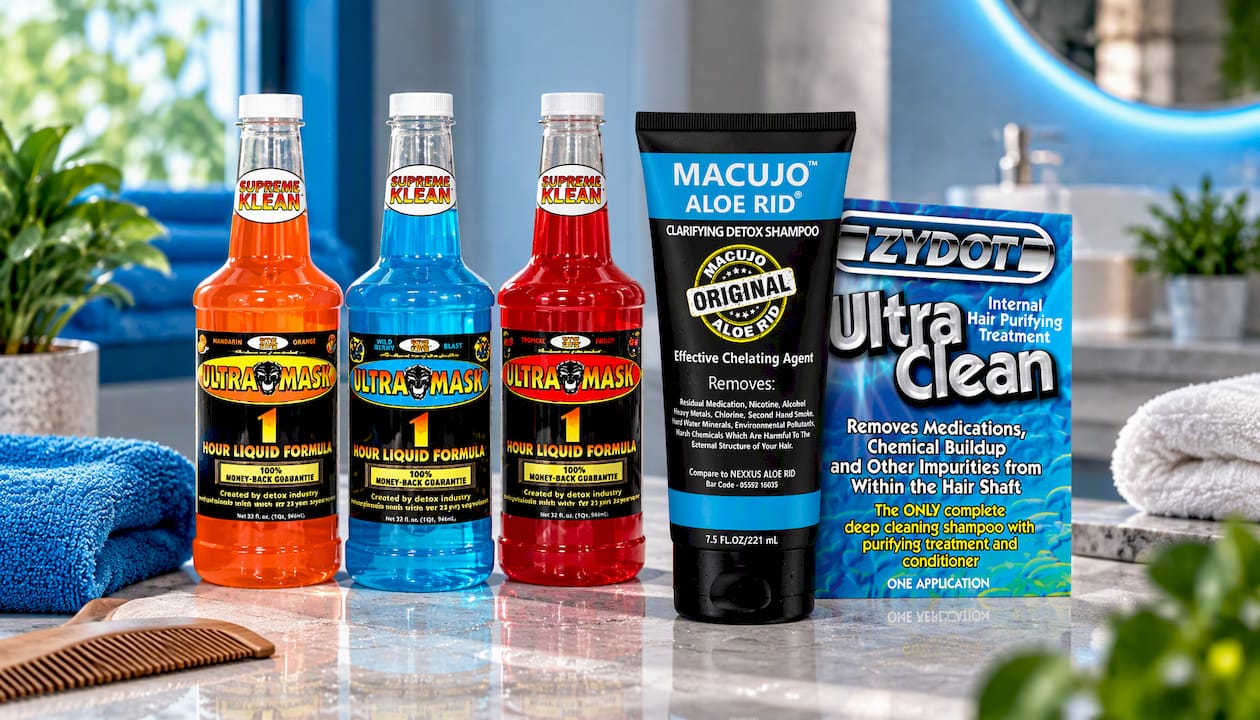
If you would rather talk it through, the Afterhours Personal Consultation is $100 and is available through our shop. We go over your substance, last use date and frequency, and what to do in your timeline. You can read what to expect from a consultation first, or browse more hair detox kits and shampoos.
Perspective
After more than two decades of helping people prepare for hair tests, the pattern we see is that the people who struggle are rarely the ones with the most exposure. They are the ones who guessed. A light user who assumes the test will miss them, and does nothing, is gambling a job on a coin that, in the research, lands on detection close to four times in ten.
That is why we built Mike’s Macujo Method around your facts instead of a generic routine. The substance, the date of last use and your frequency in the past 90 days decide the wash count. A light user gets a plan sized to a light history, and a daily or heavy user gets the full workload they need. Either way, every wash and every direction counts.
We also say plainly what the method is. The old Macujo Method was a temporary mask for low-to-moderate THC. Mike’s Macujo Method, which we introduced in 2018, is the one we stand behind today, with authentic Macujo Aloe Rid® Shampoo and a reported success rate better than 99% when completed correctly. And if you have questions at 10 p.m. the night before, that is what our after-hours consultation is for.
MIchael
FAQ
Can a light user fail a hair drug test?
Yes. Light use is less likely to be detected, but it is not guaranteed to be missed. In a 2017 peer-reviewed cannabis study, THC was found in 39% of light users. If a test affects your job, a plan based on your use history is the safer course.
Does a daily user need a different hair detox than a light user?
Usually, yes. Daily or near-daily use is more likely to leave a detectable pattern across the 90-day window, so it generally needs more washes. With Mike’s Macujo Method, the calculator sets the number from your substance, last use date and frequency, so the plan scales to your history.
How long before a test should I start?
As soon as you know a test is coming. Count the days since your last use, and remember drugs take about 5 to 10 days to reach the scalp surface. Run the Required Washes Calculator early so you can complete every wash without rushing.
Will my employer know I used a hair detox?
The 2023 review says no standardized routine workflow currently exists to detect cleansing shampoos or extensive washing. Oxidative treatments such as bleach are easier to screen for, since they leave visible damage and laboratory markers. That is one reason we caution against bleach and home remedies.
Is hair testing used for DOT jobs?
No. Under 49 CFR 40.210, DOT testing uses urine or oral fluid only, and hair is not authorized under Part 40. Other employers may choose hair under their own policies, so check yours.
Sources
- Labcorp: Hair Drugs of Abuse Testing FAQ
- Quest Diagnostics: Hair testing FAQ
- Cleveland Clinic: Drug Test
- Comparison of cannabinoids in hair with self-reported use (2017)
- Drugs.com: How far back does a hair follicle test detect drugs?
- Society of Hair Testing consensus (2023)
- Review on Toxicology Testing in Hair, JALM (2025)
- Manipulation of THC Hair Concentrations by Commercially Available Products (2022)
- Effect of the shampoo Ultra Clean on drug concentrations in hair (2000)
- Advances in testing for sample manipulation (2023)
- UNODC guidelines for testing drugs in hair, sweat and oral fluid
- National Institute of Justice: Detecting Drugs in Hair
- DOT: 49 CFR 40.210
- Federal Register: FMCSA Clearinghouse hair test decision (2022)
- SAMHSA Drug Testing Advisory Board minutes (June 2023)