Last Updated on November 1, 2026
Thin hair does not shrink the 90-day window of a hair drug test. The window depends on how long the hair is, not how many strands you have. A collector takes a small sample from the scalp, usually cut about 1.5 inches from the root. If your head hair is too sparse or too short to give that sample, the collector can switch to body hair, and body hair can look back much further.
This guide explains what thin hair changes, what it does not change, and how to prepare when a hair follicle test is close.
TL;DR
- Thin hair affects how the sample is collected, not how far back the test looks. A 1.5-inch head-hair sample covers about 90 days.
- Short hair is the bigger issue than thin hair. If there is not enough scalp hair, collectors can take hair from other body sites.
- Body hair grows more slowly, so it can show a window of up to 12 months.
- Dye, bleach and washing can change drug concentrations in hair, but labs account for this, and results are not a simple yes or no on what you did to your hair.
- If you have a test coming, work out your timeline first, then decide how to prepare.
Table of Contents
- Thin hair vs. short hair: the difference that matters
- How much hair does the collector need?
- What if there is not enough head hair?
- What the test can detect
- Does thin, fine or treated hair change the result?
- A quick timeline check
- Perspective: why we tell thin-haired clients to plan, not panic
- Choosing how to prepare
- Get a plan for your hair
- What to do before the appointment
- FAQ
- Sources
Thin hair vs. short hair: the difference that matters
People search “thin hair” when they really have one of two worries. One is that sparse hair will not give the lab enough to test. The other is that fine hair will somehow show less, or more, than thick hair.
The first worry is about collection. The second is mostly a myth. Drugs are incorporated into the hair as it grows, so what the lab reads depends on the hair that grew while the substance was in your system. Hair that is thin in density still grows from every follicle at its own pace.
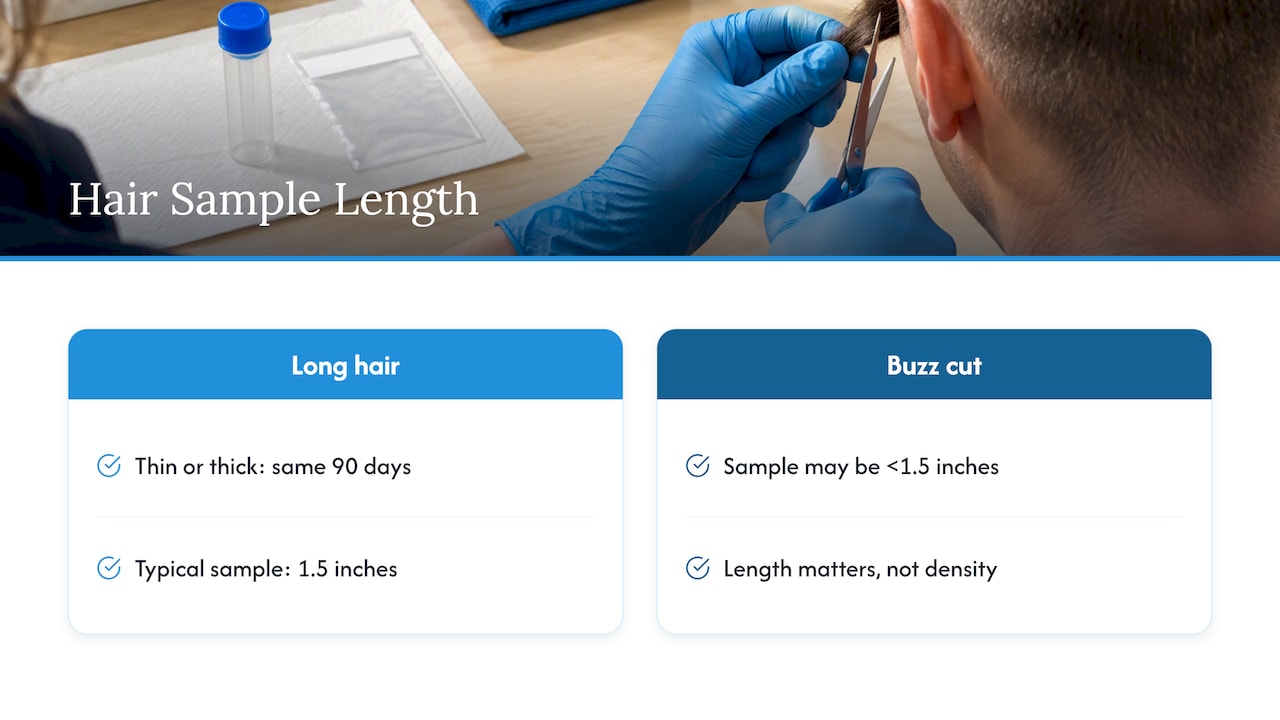
What does change the picture is length. Labcorp states that a 1.5-inch head-hair sample detects drug use up to 90 days prior to testing. Quest Diagnostics says the same for standard head-hair testing: a sample of 1.5 inches (3.9 cm) from the root is typically analyzed to cover that period.
So a person with thin but long hair and a person with thick but long hair are tested over the same 90 days. Someone with a buzz cut, thick or thin, may have less than 1.5 inches to work with. We cover that case in more detail in our guide on when long hair actually affects a drug test.
How much hair does the collector need?
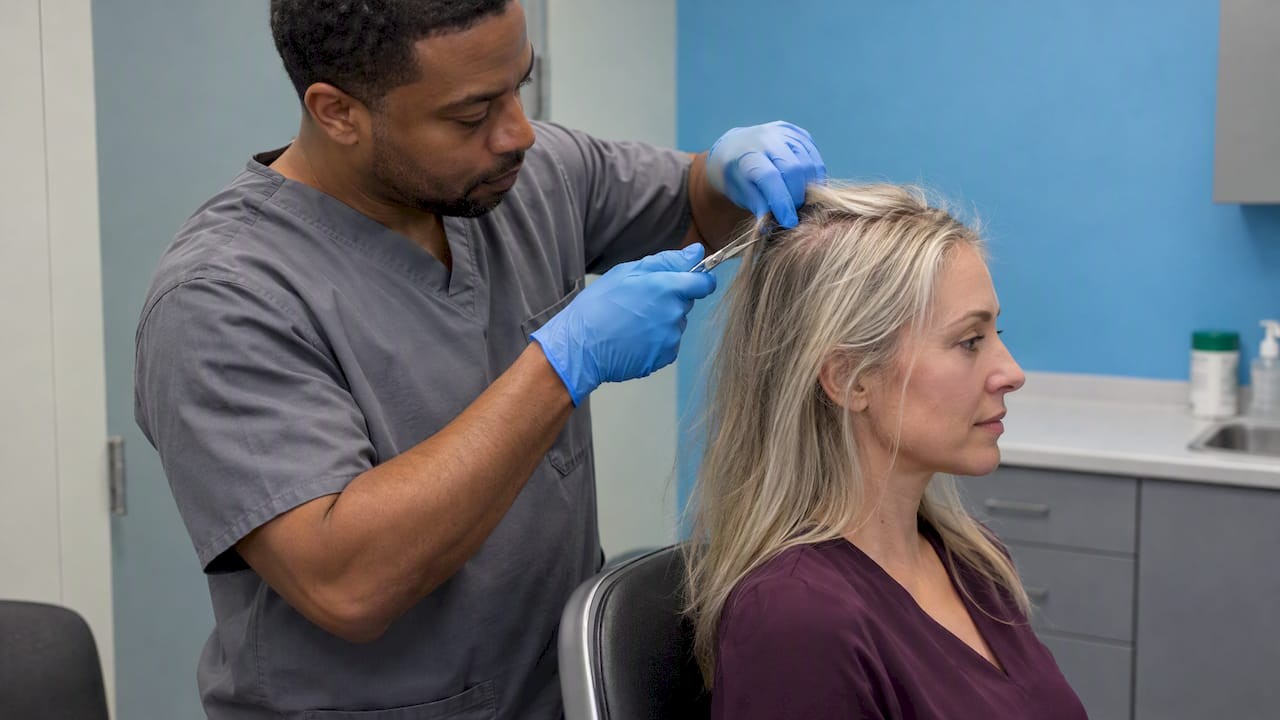
The published lab guidance we rely on gives a length, 1.5 inches, rather than a strand count. The collector cuts the sample close to the scalp, and the lab washes and analyzes it. If your hair is thin, the collector may take small amounts from more than one spot on the head so the cut is not obvious. Which spots, and how much, is the collector’s decision under the testing program’s rules, so ask the collection site or your employer’s contact what their procedure is rather than assuming.
A few practical points follow from that:
- Length first. If your hair is under about 1.5 inches, the window the sample covers is shorter than 90 days, roughly in proportion to length.
- Density second. Sparse hair can mean the collector needs to sample several areas. It does not mean a different test.
- Documentation. The Society of Hair Testing consensus stresses careful documentation of collection sites, color, length, and any chemical or physical treatments. Expect the collector to note what your hair looks like.
What if there is not enough head hair?
Employers and labs have a fallback. The SoHT consensus notes that hair from other body sites can be collected if deemed more suitable for testing. People with shaved heads, baldness, or very thin crowns are the usual reason.
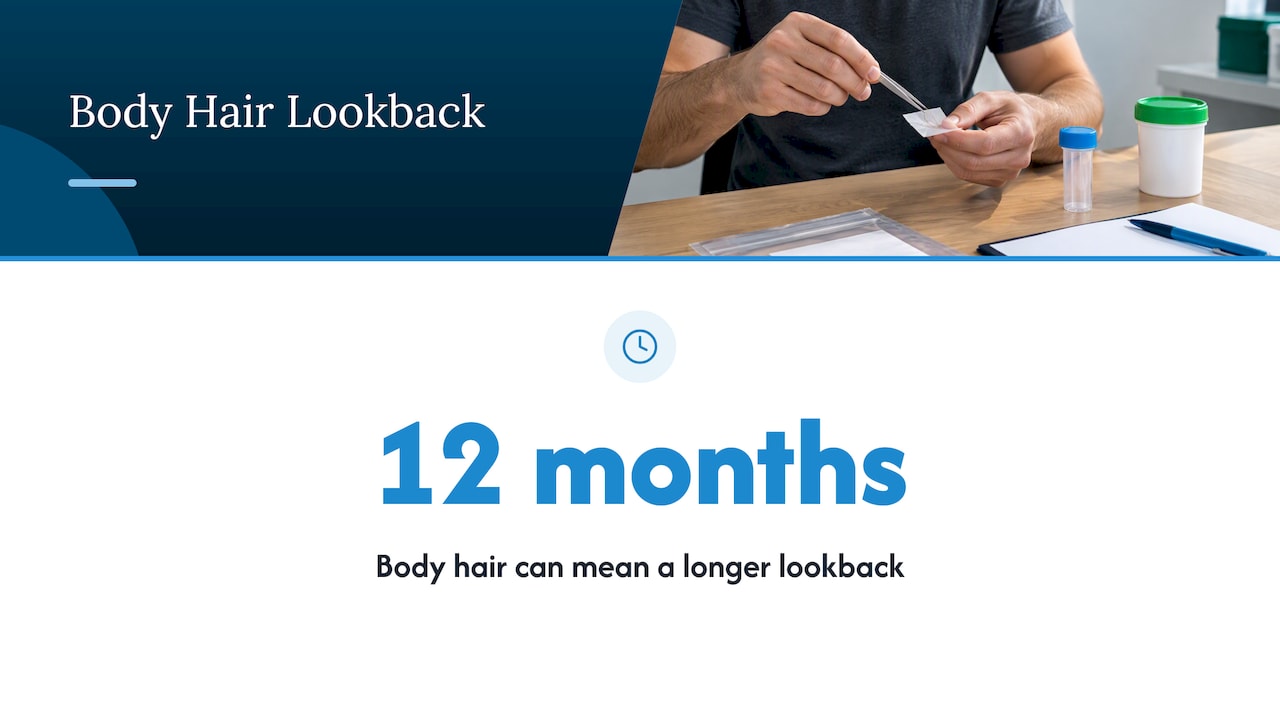
The trade-off is time. Because body hair generally grows more slowly than scalp hair, the Cleveland Clinic explains that body hair samples can provide a detection window often reaching up to 12 months. Shaving your head does not make a test go away. It can push the lab toward a longer lookback.
This is the most important thing to understand if you are thinking about cutting your hair short. We go through it in our breakdown of the 12-month window for body hair tests, and the same logic applies to smaller sites such as eyebrow hair, which lacks a month-by-month timeline.
What the test can detect
Hair testing is not limited to one drug. The Cleveland Clinic lists cocaine, PCP, amphetamines, opioids and MDMA among the substances hair testing can find. Quest also describes expanded testing that adds fentanyl, methadone and related metabolites, plus expanded opiates.
Which panel you get depends on the employer or program. For a longer list and what each result means, see what drugs show on a hair follicle test. If MDMA is your concern, this page on the 1.5-inch, 90-day window for MDMA is the closest match.
Does thin, fine or treated hair change the result?
Thin hair itself is not a recognized variable. Hair color, hair type and treatments are. The SoHT consensus says hair analysis should be interpreted considering natural hair color and type, hair treatments and external contamination.
That matters for people with thin hair, because thin hair is often treated hair. Fine hair is frequently bleached, dyed, permed or heat styled. The same consensus says chemical or physical treatments, including bleaching, dyeing and UV exposure, can affect concentrations. Our page on dyed hair and hair drug tests explains how that plays out and why it is not a reliable plan on its own.
Two cautions keep expectations realistic:
- Labs wash samples too. External contamination is a known issue, so samples are washed before analysis, and wash protocols require laboratory validation. The National Institute of Justice notes that these procedures are not standardized.
- Screens are confirmed. Per the SoHT consensus, presumptive positive screens must be confirmed using mass spectrometry. A positive is not final on the first pass.
Researchers are also working on ways to tell use from environmental exposure, such as phase II conjugated metabolites. That is research, not a rule your test will necessarily follow.
A quick timeline check
Before deciding anything, do the arithmetic. Hair grows roughly half an inch a month, so 1.5 inches reflects about three months. Answer these four questions:
- What substance is involved?
- When was your last use?
- How often did you use in the past 90 days?
- How long is your hair, and which sites could the collector use?
The first three are exactly the inputs to Mike’s Macujo Required Washes Calculator. The fourth tells you whether head hair or body hair is likely in play.
Why this order? Because the length of hair decides the window, and the window decides what the lab can see. Thin hair only changes how the sample is gathered.
Perspective: why we tell thin-haired clients to plan, not panic
We have helped people prepare for hair follicle tests since about 1999, and the thin-hair question comes up constantly. The honest answer is that thin hair is rarely the problem. Timeline and method are.
Clients with sparse hair worry that a collector will cut so close that nothing is left to work with, or that fine hair will somehow hold more of a drug. What we see is simpler: the test reads the hair that is there, and what matters is how much of your recent history that hair covers.
That is why Mike’s Macujo Method starts with the Required Washes Calculator rather than a one-size-fits-all routine. The number of washes depends on the substance, your date of last use and how often you used in the previous 90 days. Our method, introduced in 2018, is a nine-step process built for high THC levels and for other drugs and alcohol. It must be completed with authentic Macujo Aloe Rid Shampoo, and when every required wash and direction is followed correctly, we report a success rate of better than 99%, with the hair staying clean unless drugs or alcohol are used again.
The old Macujo Method was designed for low-to-moderate THC and only masked temporarily. If you read an older forum post, do not mix the two up.
If your hair is thin, treated, or short enough that a body-hair sample is possible, talk to us before you cut anything. A call takes the guesswork out of it.
MIchael
Choosing how to prepare
Once you know your timeline, you have three realistic routes.
| Situation | What it means | Where to start |
|---|---|---|
| Long, thin head hair | Standard 1.5-inch sample, 90-day window | Calculator, then the method |
| Short or very sparse head hair | Shorter window from head hair, or body hair may be requested | Consultation before any haircut |
| Dyed or bleached thin hair | Treatments can alter concentrations, but not predictably | Plan around your use history, not the dye |
| Shaved head or bald | Body hair, window up to 12 months | Consultation |
If you are not sure which row you are in, our hair drug test consultation page explains what to expect on a call and how to prepare for it. If you want background on the process itself, start with how hair drug testing actually works.
Hair test or urine test?
Some employers use both, and the two look at different windows. A urine test catches recent use. Hair reaches back about 90 days, though very recent use can slip through because it has not yet grown out of the scalp. We lay out the difference in hair vs. urine tests at work. Federal programs have their own rules: the March 2026 SAMHSA Model Plan includes appendices for federal workplace testing using urine and oral fluid.
Get a plan for your hair
If your test is close, we can help you work out the right number of washes and the right steps for your hair. Mike’s Macujo Method uses authentic Macujo Aloe Rid Shampoo, and our shampoo is listed at $100 to $150 on our hair products page. If you want to talk it through first, the Afterhours Personal Consultation is $100, and it comes with after-hours phone support.
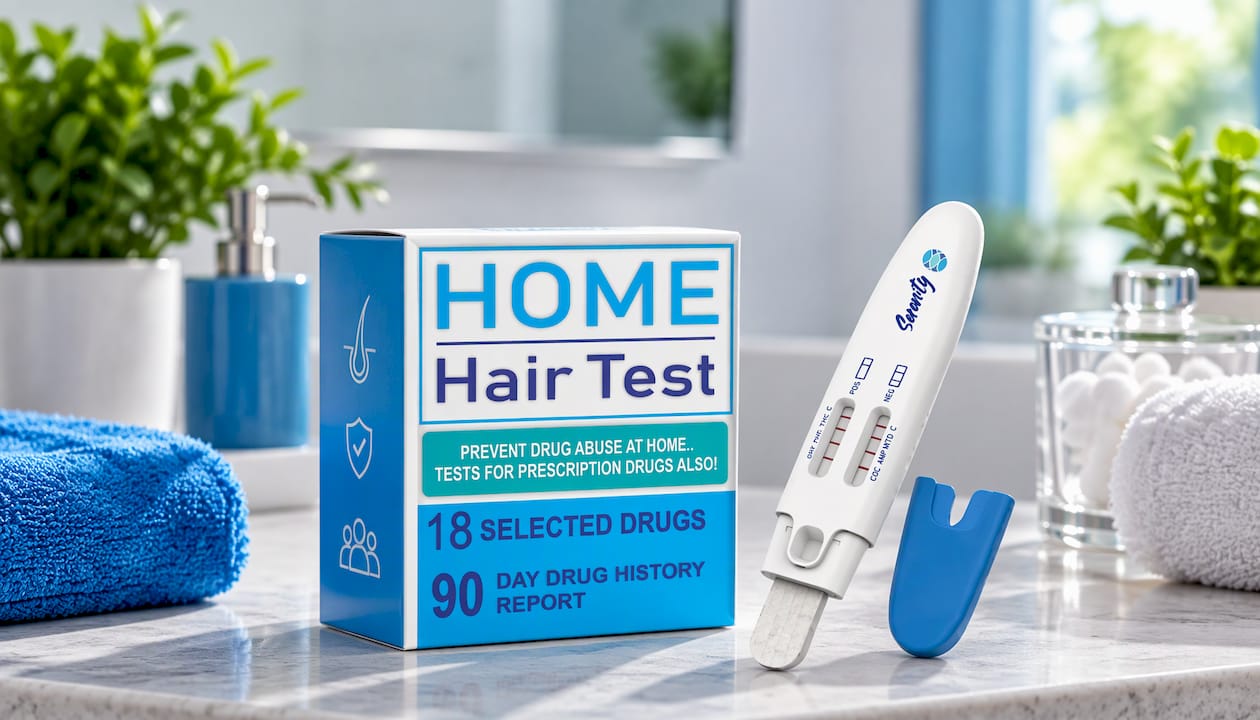
Want to see your own hair history on paper before you order? Our home hair test kit is one way to check where you stand, and more guides are on the Macujo blog.
What to do before the appointment
Some small steps help whatever your hair looks like:
- Ask what sample the program uses. Head hair, body hair, or both. Ask before you change your hair.
- Do not cut your hair short on a hunch. A short cut can reduce the head-hair window, and the collector can still go to body hair.
- Keep a record of treatments. Dye, bleach, perm and straightening dates are part of what labs document.
- Avoid new exposure. Environmental contamination is a recognized issue, but a clean test depends on not using, not on explaining away a result later.
- Do not wait on the calculator. The sooner you know your required number of washes, the more room you have for a calm schedule.
FAQ
Does thin hair make a hair drug test easier to pass?
No. The test covers the length of hair collected, not how dense it is. A 1.5-inch sample covers about 90 days whether your hair is thick or thin. What changes your odds is your use history and how you prepare.
What if my hair is too short or sparse for the test?
The collector can take hair from other body sites if that is more suitable, according to the Society of Hair Testing consensus. Body hair grows more slowly, so the window can reach up to 12 months. Ask the testing program what it accepts before you alter your hair.
How much hair length do I need for 90 days?
About 1.5 inches from the scalp. Labcorp and Quest both describe the 1.5-inch sample as the standard for a 90-day lookback on head hair. Shorter hair covers a proportionally shorter period.
Can dyed or bleached thin hair still be tested?
Yes. Treatments such as bleaching and dyeing can affect drug concentrations, and labs document them, but the hair is still analyzed and positive screens are confirmed with mass spectrometry. Treatment is not a dependable way to avoid a result.
Should I call before I order anything?
If you are unsure whether head or body hair will be tested, or how many washes your history requires, a consultation is the fastest way to find out. We can go through your substance, last use and frequency with you by phone.
Sources
- Labcorp: Hair Follicle Drug Testing
- Quest Diagnostics: Hair testing FAQ
- Quest Diagnostics: Hair drug testing brochure
- Society of Hair Testing: General Consensus on Hair Testing, 2022
- Cleveland Clinic: Drug Test
- NIJ: Detecting Drugs in Hair
- NIJ: Phase II Metabolites of Drugs in Hair
- SAMHSA: Model Plan for a Comprehensive Federal Drug-Free Workplace, March 2026