Last Updated on October 14, 2026
For catching recent use, a urine test wins. For spotting long-term or concealed drug habits, a hair test wins. That split matters for workplace screening: urine typically covers the last one to three days, while hair can reach back roughly 90 days, and federal DOT and HHS programs currently authorize only urine and oral fluid, not hair.
TL;DR:
- A standard 1.5 inch scalp sample reflects roughly 90 days, but hair cannot detect use from the preceding one to two weeks.
- When scalp hair is unavailable, programs may collect body hair, whose less predictable growth cycles produce a broader window that is harder to date.
- A matched applicant study found hair yielded 24 times more opioid, 23 times more cocaine, and 13 times more amphetamine positives, reflecting different detection windows.
- Federal programs governed by DOT rules cannot substitute hair for urine, while private employers may use hair for voluntary pre employment screening.
- Bleaching and frequent washing can reduce detected levels, while darker hair may show higher concentrations; validated wash steps and confirmatory tests help interpret results.
Table of Contents
- How hair and urine tests work
- Detection windows and how timing maps to sample length
- What large-sample evidence shows about positivity rates
- Federal rules and what they mean for program design
- Reading results: contamination, cosmetic treatments, and hair type
- How we built our approach to hair testing
- What employers and applicants should actually do
- How our products and consultations fit into your preparation
- FAQ
- Sources
How hair and urine tests work
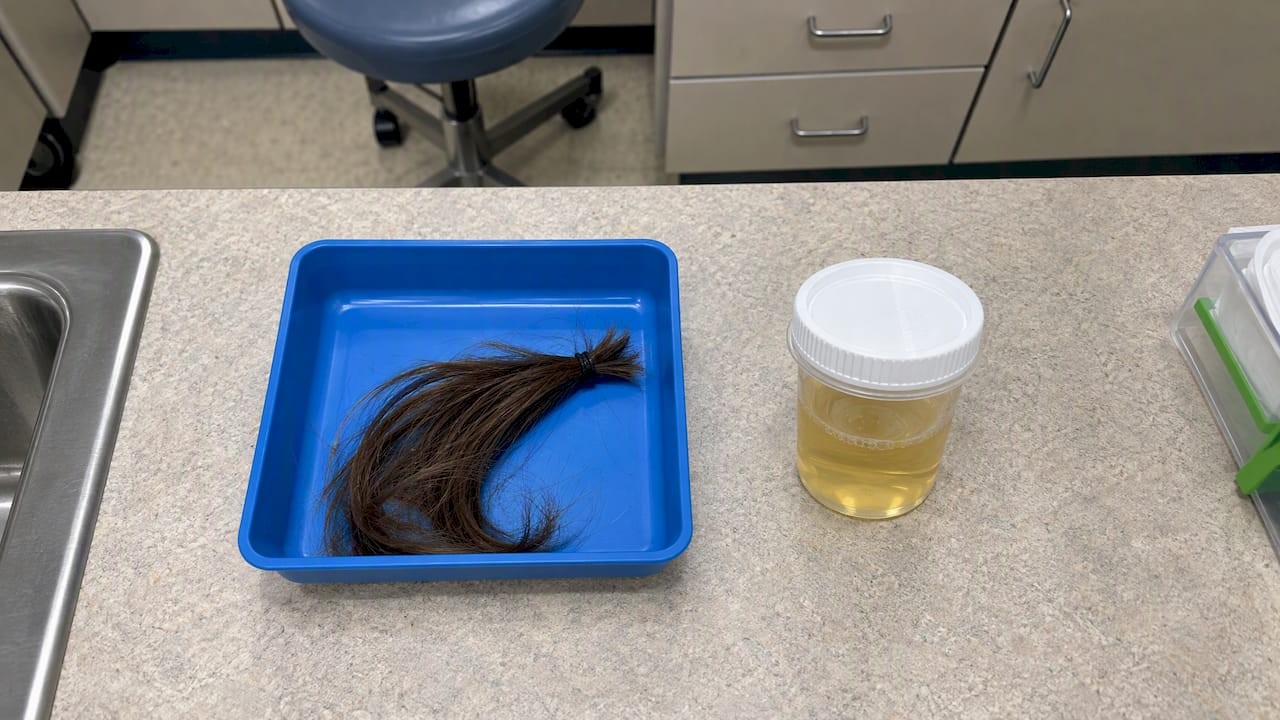
Urine testing relies on renal excretion: your kidneys filter drugs and their byproducts out of your blood and into urine, where lab assays typically target metabolites rather than the parent drug itself. For cannabis, that means detecting THC-COOH, not THC.
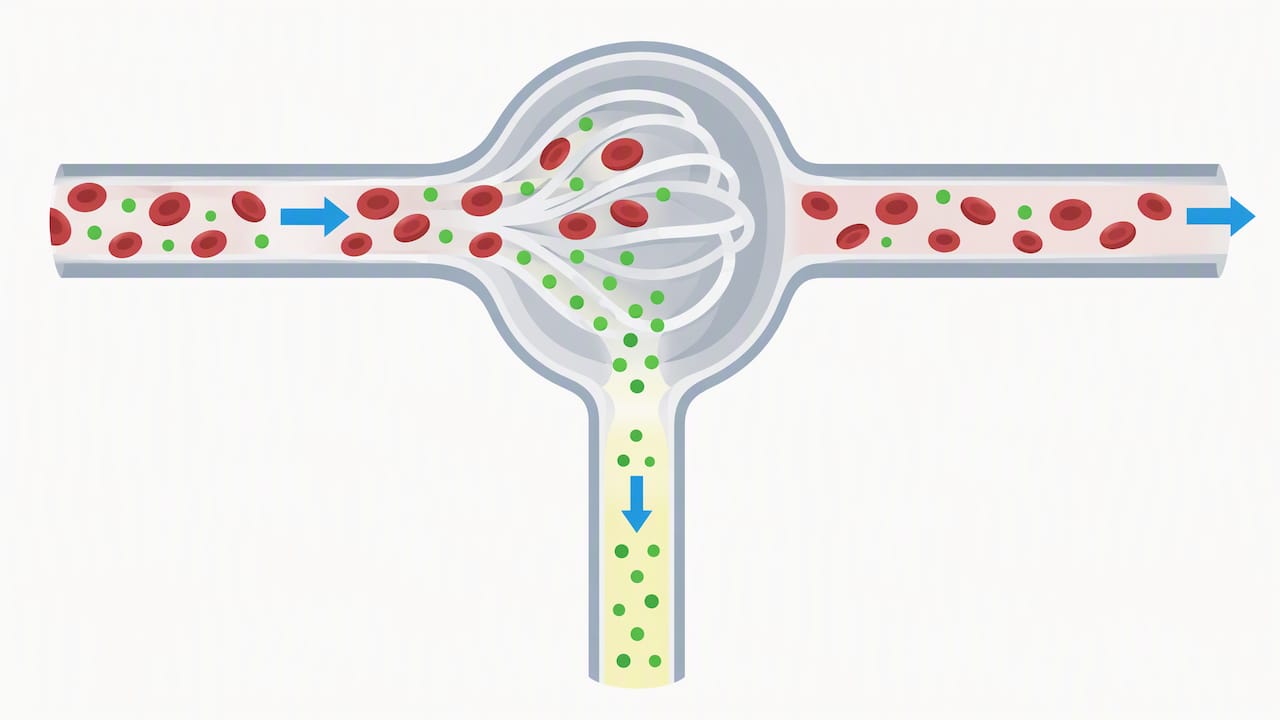
Hair works differently. As a hair follicle forms, it incorporates the parent drug and its metabolites from blood circulating at the root. Sweat and sebum can also deposit trace amounts of a substance onto the hair shaft after it grows, which is why decontamination before analysis matters.
Both methods follow a similar lab workflow:
- An initial immunoassay screens the sample for likely positives.
- A confirmatory test, usually GC-MS or LC-MS/MS, verifies any presumptive positive at the molecular level.
- Hair samples go through validated wash steps first, to strip away surface contamination before extraction.
- Chain-of-custody documentation tracks the sample from collection to result, protecting both the employer and the person tested.
Urine detection windows run about 1 to 3 days for most substances, while hair testing commonly covers around 90 days for a standard 1.5 inch scalp sample. That gap in coverage is the whole reason employers choose one matrix over the other. Chain-of-custody protocols and HHS-certified labs are the trust signals worth asking about before accepting either result, and understanding how hair drug testing actually works helps applicants know what a lab is actually measuring.
Detection windows and how timing maps to sample length
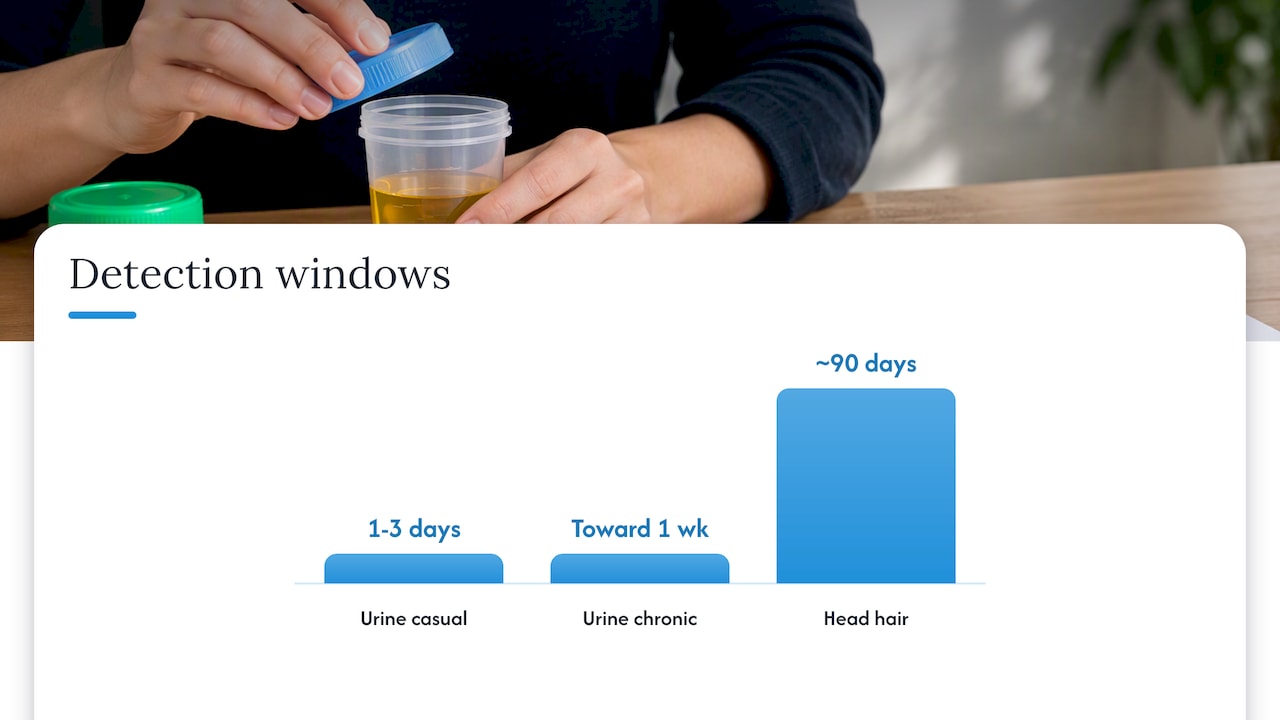
Urine is a short-range snapshot. Most labs report a 1 to 3 day window for casual use, stretching toward a week in people with heavy, chronic use patterns. Hair works on a longer calendar: a standard 1.5 inch scalp sample reflects roughly the past 90 days, since head hair grows at a fairly predictable rate that labs use to estimate the time window.
There’s a catch with hair: it doesn’t show very recent use. A substance typically needs one to two weeks to become detectable in the hair shaft as it grows out from the root, so a hair test taken the day after use will likely miss it. Segmental testing can map exposure over time, with each half inch of hair representing roughly a month of history. Body hair, by contrast, grows and rests in less predictable cycles, so its detection window is broader and harder to pin to a specific period.
| Matrix | Typical detection window | Lag before detectable |
|---|---|---|
| Urine | 1 to 3 days | Hours |
| Head hair (1.5 inch sample) | ~90 days | one to two weeks |
| Body hair | Longer, less time-specific | Variable |
Before choosing a test, three questions help: How far back do you need to look? Is head hair available, or only body hair? How fast do you need results?
What large-sample evidence shows about positivity rates
Matched-sample studies comparing the two matrices consistently find higher positivity rates in hair. A large pre-employment dataset covering 2017 to 2023 reported hair testing catching roughly 24 times more opioid positives, 23 times more cocaine positives, and 13 times more amphetamine positives than urine testing on the same applicant pool.
- Hair’s wider window pulls in chronic or concealed users that a short urine window simply cannot reach.
- Higher positivity doesn’t mean hair is “more accurate” in an absolute sense; it means the two tests are measuring different things over different timeframes.
- Differences in cutoff thresholds, sample timing, and applicant populations all affect how directly these numbers compare.
Hair testing identified roughly 13 to 24 times more positives across several drug classes in this matched pre-employment sample, a gap that matters most to employers in safety-sensitive industries where undetected chronic use carries real risk. For a hiring manager, that multiplier is less about which test is “better” and more about which window of behavior the role actually needs covered.
Federal rules and what they mean for program design
Federally mandated workplace testing programs, including those governed by DOT, currently authorize only urine and oral fluid as specimen types. Hair is not an approved matrix under the current Mandatory Guidelines, so safety-sensitive transportation employers and other federally regulated programs cannot substitute it for urine.
Private employers running their own voluntary programs have more flexibility and can choose hair testing for pre-employment screening if they want visibility into longer-term patterns. For those programs, acceptance usually comes down to a few operational basics:
- Confirm the lab holds appropriate certification and follows documented chain-of-custody procedures.
- Ask whether confirmatory testing uses GC-MS or LC-MS/MS, not immunoassay results alone.
- Factor in turnaround time and per-test cost, since hair testing generally takes longer to process than urine.
Pro Tip: If you’re unsure which specimen type your prospective employer requires, ask directly before test day. DOT-covered positions require urine or oral fluid by rule, not hair, so confirm program type early. Reading up on DOT hair follicle testing policy can clarify which rules apply to a given role.
Reading results: contamination, cosmetic treatments, and hair type
A positive hair result isn’t automatically proof of ingestion. Labs distinguish external contamination from actual drug use partly through validated wash protocols that strip surface residue before extraction, following consensus guidelines from the Society of Hair Testing on sample prep and decontamination.
A few other factors shape interpretation:
- Bleaching, dyeing, and frequent washing can reduce analyte concentration in hair, raising the risk of a false negative in someone who did use a substance.
- Melanin binds some drugs more readily, so darker hair can show higher concentrations than lighter hair for the same level of exposure, independent of actual use.
- Body hair grows and rests on a different cycle than scalp hair, which makes its results broader and less tied to a specific time period.
These variables are why segmental hair testing requires a trained collector marking the proximal (root) end accurately, not a random clipping.
How we built our approach to hair testing
Mike created the original Macujo Method and, in 2018, developed Mike’s Macujo Method, a nine-step process built specifically for high THC exposure along with other drugs and alcohol. Customers have been preparing for hair follicle tests using various methods since approximately 1999.
Our required washes calculator factors in substance, last use date, and frequency over the past 90 days to determine how many washes a given situation needs. For people who want to check their progress before a formal lab appointment, a Home Hair Test kit offers a way to verify results at home, and an Afterhours Personal Consultation is available when a situation calls for more tailored guidance than a calculator alone can give.
What employers and applicants should actually do
Employers should define the program’s actual goal first: are you screening for recent impairment after an incident, or trying to understand longer-term patterns before hiring? That answer determines whether urine, hair, or both make sense, and it should be written into policy before testing begins.
Applicants should confirm which specimen their employer requires well before test day, and use a verification option early if there’s any doubt. Some programs combine both matrices: urine for a recent-use snapshot, hair for the longer view.
— MIchael
How our products and consultations fit into your preparation
Knowing your detection window is only half the job: acting on it is the other half. If you’re facing a hair follicle test and want to check where you stand first, our Home Hair Test kit lets you verify a sample before the formal lab appointment.
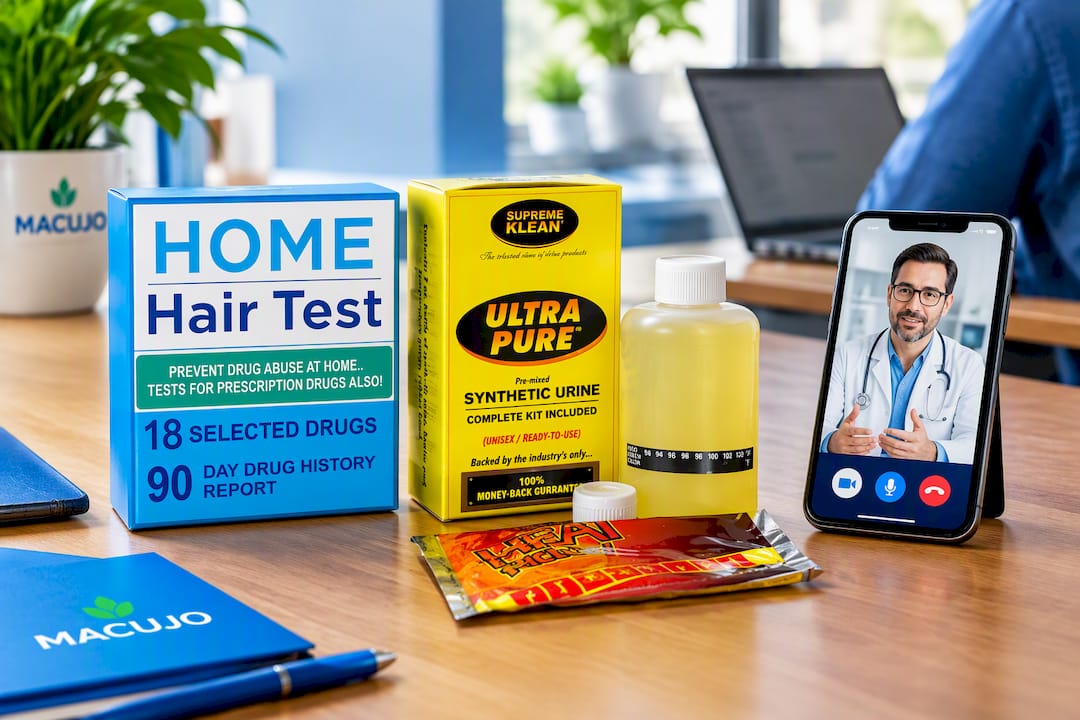
- Use the Home Hair Test kit to check your own hair before a scheduled test.
- Book an Afterhours Personal Consultation for a plan built around your specific use history and timeline.
- Browse our Aloe Rid Old Formula Shampoo, priced at $100 to $150, as part of a complete preparation routine.
- If your situation involves a urine specimen instead, our Ultra Pure Synthetic Urine Kit is available through the shop.
An Afterhours Personal Consultation gives you direct, specific guidance rather than generic advice. Start by reviewing our shop to see which option matches your timeline.
FAQ
What can a hair drug test detect?
A hair drug test detects the parent drug and its metabolites that became incorporated into the hair shaft as it grew, typically covering about 90 days of history for a standard scalp sample. It cannot detect use from the past one to two weeks, since hair needs time to grow out from the root before the substance becomes detectable.
Is a urine test the same as a drug test?
A urine test is one type of drug test, not the only one. It specifically detects drug metabolites excreted through the kidneys over a window of about 1 to 3 days, while other drug tests use hair, saliva, or blood instead.
If I shave my head, will the new hair that grows back be drug-free?
New hair that grows in after shaving will not contain drug residue from past use, since hair only incorporates substances present in your system while it’s forming at the root. Keep in mind that many testing programs treat an unexplained lack of head hair as grounds to collect body hair instead, which carries a broader, less time-specific window.
How long do I have to be clean to pass a hair follicle test?
Because a standard sample reflects roughly 90 days of growth, you generally need a sustained period without use for that window to clear through natural growth alone. The exact timeline depends on frequency and amount of past use, which is why a required washes calculator accounts for those specifics rather than giving one fixed number.
Sources
- Quest Diagnostics — Hair testing overview
- Trucking Alliance report — Assessment of hair vs urine (2017–2023)
- PubMed Central — Hair sample analysis and concordance with self-report
- SAMHSA — Drug-free workplace FAQs (Mandatory Guidelines summary)
- Society of Hair Testing — Consensus for DoA (2021)