Last Updated on October 4, 2026
A seven-day hair detox can meaningfully reduce the metabolite load in your hair, but it is not a guaranteed pass, and anyone promising certainty is overselling the science. If your test is a week out, your first move is to run a required-washes calculator using your substance, last use date, and frequency, because that number drives everything else you do this week.
TL;DR:
- The required-washes calculator determines the exact number of washes needed based on your last use, substance, and usage frequency over the past 90 days.
- Chemically treated or porous hair can affect how shampoos work and how labs interpret your sample, making proper timing and product authenticity critical.
- A single seven-day detox improves chances but cannot guarantee a negative result because of the complex ways drugs bind inside hair and limitations in decontamination protocols.
- Evenly spaced washes, authentic products, and accurate record-keeping are essential, as skipping steps or using counterfeit shampoos significantly reduce effectiveness.
- Hair testing generally detects drugs used 30 to 60 days before collection and is unreliable for recent use within five to seven days prior to testing.
Table of Contents
- Quick checklist before you start the seven-day plan
- The seven-day step-by-step regimen
- Which products the regimen actually calls for
- What the forensic science says about detection and decontamination
- Practical mistakes that undermine an otherwise solid plan
- Why required washes, not guesswork, drive this method
- Getting the right products and support for your seven days
- FAQ
- Sources
Quick checklist before you start the seven-day plan
Before you commit to a seven-day regimen, confirm the basics so you don’t waste a wash cycle on a plan that doesn’t fit your situation.
- Confirm your test date and time, and whether it’s a standard head-hair collection or a shorter specimen like body hair.
- Measure your hair length at the collection site; hair shorter than about half an inch may push the lab toward an alternative specimen.
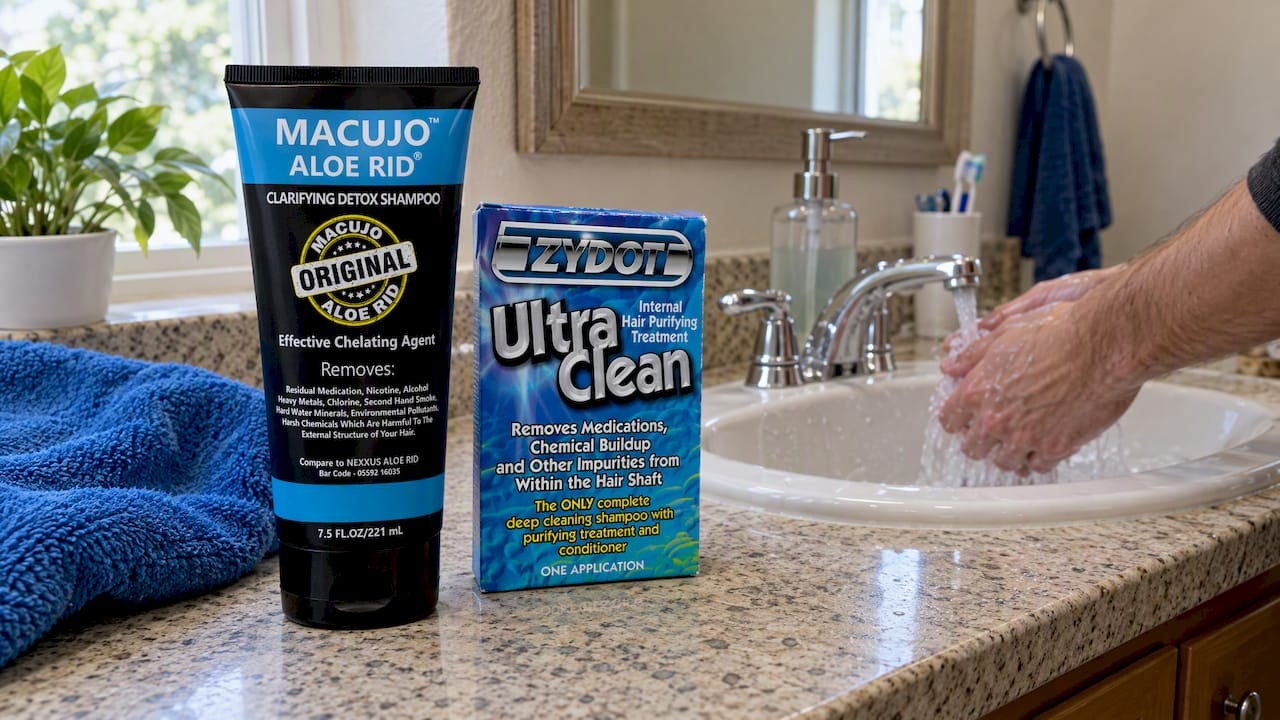
- Gather your supplies now: authentic Macujo Aloe Rid Shampoo and the Zydot component, plus towels, gloves, and a timer.
- Write down your last use date, your frequency of use over the past 90 days, and any recent bleaching, dyeing, or relaxing.
That last point matters more than most people expect. A chemically treated scalp changes how a shampoo behaves against your hair shaft, and it changes what a lab sees when it examines your sample.
The seven-day step-by-step regimen
Start on Day 0, before you wash anything. Plug your substance, last use date, and usage frequency into the required-washes calculator and write down the target number it gives you. That figure, not a generic schedule, is what you’re building the week around.
- Day 0: Run the calculator, confirm your wash target, and lay out your authentic Macujo Aloe Rid and Zydot products so you’re not scrambling later.
- Day 1: Perform your first full wash following the recommended systematic sequence exactly, including the stated soak time before rinsing.
- Days 2 through 6: Continue one full wash per day, spacing them roughly 24 hours apart rather than doubling up, since concentrating washes in a single day doesn’t substitute for the number of separate applications your target calls for.
- Each wash day: Log the date, time, and which product batch you used. This record matters if you ever need to explain your preparation to a lab or counselor.
- Day 7: Perform your final scheduled wash with enough buffer before your appointment for your hair to dry and settle naturally.
Spacing washes evenly, rather than front-loading them, gives each application time to work without over-stripping your scalp. If you notice redness, tightness, or scalp irritation partway through the week, pause for a day rather than skipping a wash outright, then resume once your scalp calms down.
For a moderate-use profile ending several days before testing, a typical calculator result might call for multiple washes across the week, front-loaded slightly if your last use was more recent. This is an illustrative example, not a fixed prescription: your own number depends on your inputs.
Pro Tip: Keep a simple log, one line per wash with date, time, and product, so you can see at a glance whether you’ve hit your required-washes target before test day.
Which products the regimen actually calls for
The method is built around specific products, and substituting a generic drugstore clarifying shampoo defeats the purpose of the sequence.
- Macujo Aloe Rid 7.5oz + Zydot forms the core wash pairing: the Aloe Rid formula is applied first per the method’s steps, with Zydot used as directed afterward.
- Macujo Aloe Rid 7.5oz + Zydot Ultra Clean Shampoo follows the same nine-step sequence and is the version built specifically for Mike’s Macujo Method.
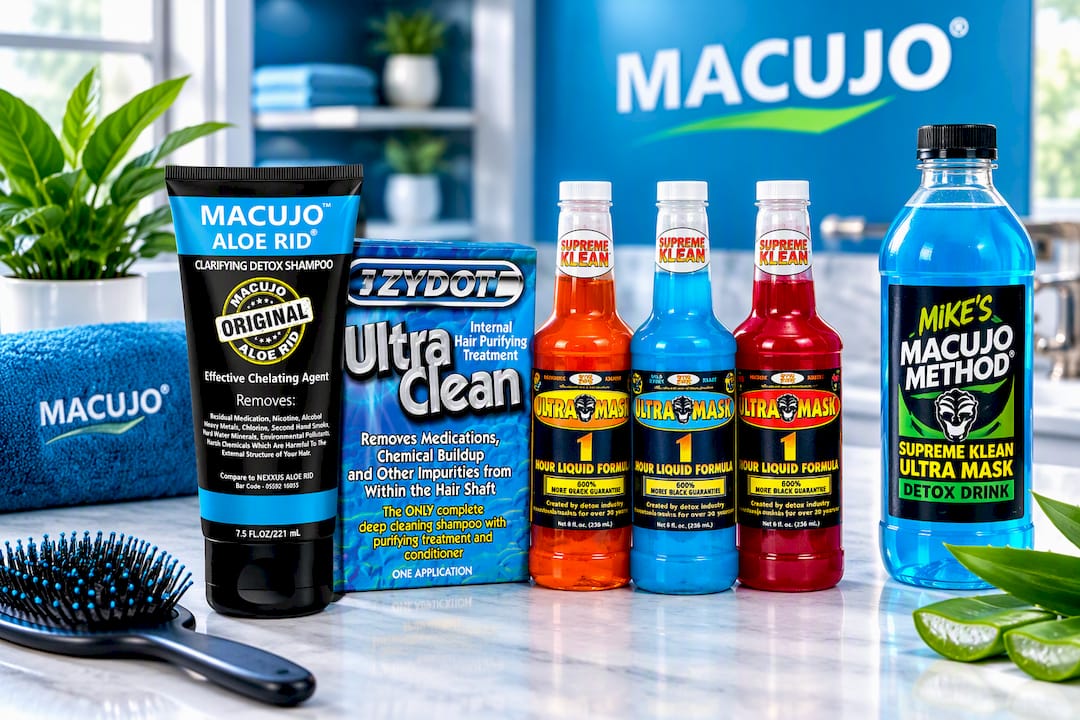
- Supreme Klean Ultra Mask Detox Drink plays a supporting role on test day itself; it is not a substitute for completing your hair washes and should never be treated as a standalone solution.
- Avoid counterfeit or relabeled shampoo bottles sold through third-party marketplaces, since the method depends on the authentic formula reacting correctly with hair.
- Do not bleach, dye, or chemically treat your hair during the seven days, since that damage changes how your hair behaves under both the method and lab scrutiny.
What the forensic science says about detection and decontamination
Hair testing is built to detect drug incorporation that occurred roughly 7 to 10 days before collection, and a standard 0.5 to 1.0 inch hair segment reflects about 30 to 60 days of history, according to federal workplace drug testing guidelines. That same guidance notes hair isn’t a reliable tool for catching use in the five to seven days immediately before the test.
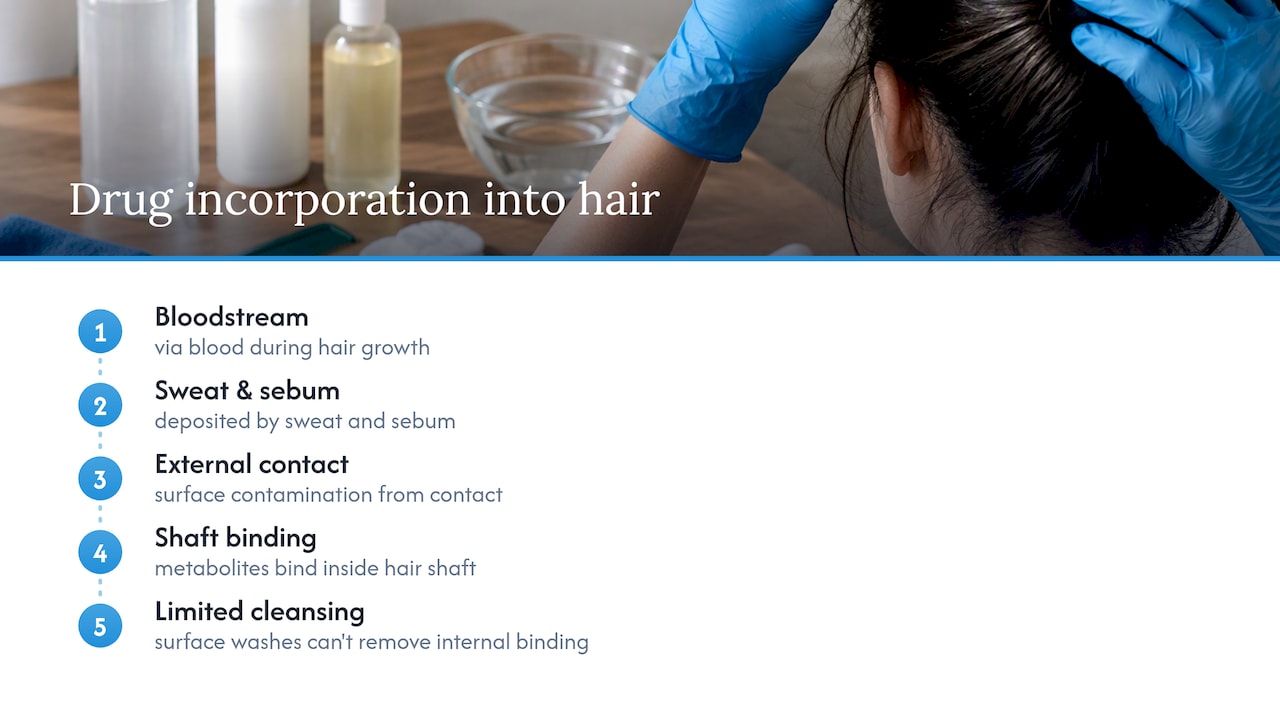
Drugs reach hair through the bloodstream, through sweat and sebum, and through external contact, which is why surface cleansing alone struggles to remove what’s already bound inside the shaft. Hair porosity and melanin content change how tightly metabolites bind, and recent toxicology reviews note there’s still no single harmonized decontamination standard across labs.
Labs rarely take a wash result at face value. Forensic protocols developed by researchers including Hill’s wash-criterion methodology use aqueous and ethanolic pre-washes specifically to distinguish external contamination from actual ingestion, and confirmation testing by GC-MS/MS follows any presumptive positive. A widely cited PubMed-reviewed study found that cosmetic treatments including bleach, dye, perms, and commercial shampoos did not convert any positive THC sample to negative, which is exactly why a structured, repeated regimen matters more than a single aggressive wash.
Practical mistakes that undermine an otherwise solid plan
A handful of avoidable errors account for most failed attempts, and they’re worth checking against before test day.
- Don’t treat one intense wash the night before as a substitute for your full required-washes count.
- Avoid new cosmetic treatments during the week, and document any recent ones honestly if asked.
- Watch for red flags labs note, including unusually porous or damaged hair and inconsistent wash patterns that suggest last-minute tampering.
- If your notice is extremely short, your use was heavy and chronic, or a previous attempt didn’t work, that’s the point to get personalized guidance rather than guessing.
Pro Tip: If you’re unsure whether your situation fits the standard seven-day structure, a short consultation before you start can save you from wasting your only week of prep time.
Why required washes, not guesswork, drive this method
I built the required-washes calculator because I got tired of watching people guess their way through a week that only gives you one real shot. The old Macujo Method worked reasonably well for lighter THC exposure, but it wasn’t built for heavier or more frequent use, which is why I developed Mike’s Macujo Method as a more systematic nine-step process. When someone follows every step and every required wash exactly as calculated, the method holds up well. When they skip steps or guess at wash counts, it doesn’t, and that gap is almost always the real story behind a failed attempt.
— MIchael
Getting the right products and support for your seven days
Running your required-washes number and gathering the right products are two separate problems, and we solve both. Our Macujo Aloe Rid and Zydot combination and the Ultra Clean pairing built for Mike’s Macujo Method are the authentic formulas the nine-step process depends on, and our Supreme Klean Ultra Mask Detox Drink covers the test-day piece of your plan.
If your timeline is tight or your use history is complicated, our Afterhours Personal Consultation puts you directly in touch with support that can walk through your specific numbers with you. Start by checking your hair test products and shampoo options and get your order moving today.
FAQ
Can a seven-day hair detox guarantee a negative result?
No single shampoo or routine can guarantee a negative result, since peer-reviewed research has found that cosmetic treatments and commercial shampoos often fail to convert positive samples to negative. Following a complete, correctly sequenced regimen with authentic products and the right required-washes count gives you the strongest realistic chance.
How many washes do I actually need for seven days?
Your wash count depends on your substance, last use date, and frequency of use over the past 90 days, which is exactly what the required-washes calculator is built to determine. There’s no universal number that applies to every person or every drug.
How far back can a hair test detect drug use?
A standard 0.5 to 1 inch hair segment reflects roughly 30 to 60 days of history, and federal guidelines note hair isn’t reliable for detecting use in the five to seven days right before collection. Segment length determines how far back the lookback period extends.
Will bleaching or dyeing my hair help remove drug metabolites?
Chemically damaging your hair is not a reliable strategy, and doing it during your prep week can create inconsistent, porous hair that raises red flags during lab review. Research on hair porosity suggests damaged hair interacts unpredictably with both incorporated drugs and wash procedures, making results harder to interpret rather than easier.
What does Mike’s Macujo Method cost to try?
Our Macujo Aloe Rid Old Formula Shampoo runs 100 to 150 USD, and if you want a personalized walkthrough, our Afterhours Personal Consultation is a 100 USD one-time session. Both are priced and available directly through our site.
Sources
- Study: Cosmetic treatments did not change positive THC hair results (PubMed record)
- Hill 2014: Methods to identify damaged/porous hair and ethanolic/aqueous wash-criterion (Drug Testing and Analysis)
- Mandatory Guidelines for Federal Workplace Drug Testing Programs (Federal Register)
- Review: challenges and variables in hair toxicology (PubMed, 2025)