Last Updated on October 1, 2026
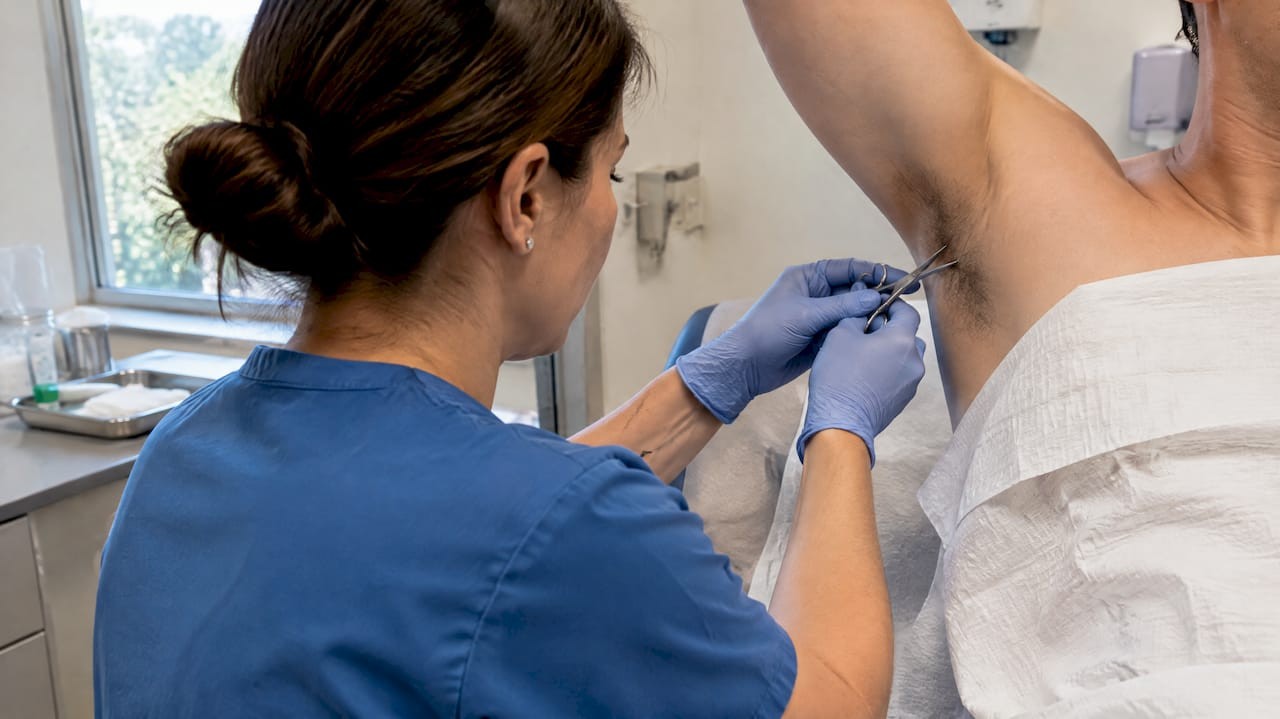
Armpit hair is an accepted alternative specimen when scalp hair is unavailable, and collectors must record that source on the chain of custody. Axillary hair can still reveal months of drug use, but it grows on a different cycle than scalp hair, so the detection window is wider and less precise. Because contamination is harder to rule out on body hair, labs lean more heavily on metabolite testing to confirm actual use.
TL;DR:
- Axillary hair tests indicate drug use occurred at some point over an extended period, but they cannot specify the exact month of use as scalp hair tests do.
- Contamination from environmental sources and surface contact can produce false positives, so labs prioritize metabolite testing for confirmation of actual ingestion.
- Different reference ranges and interpretive factors apply depending on whether the hair sample is from the scalp or body, affecting the reliability of borderline results.
- Gathering sufficient, properly documented axillary hair samples and asking labs about metabolite testing and decontamination steps are critical for accurate interpretation.
- Preparation methods like Macujo can help detoxify for tests, but professional guidance and independent testing are advisable when high stakes are involved.
Table of Contents
- Collection protocol and sample requirements for armpit hair
- Detection window: how axillary hair timing differs from scalp hair
- How laboratories interpret axillary hair results
- Contamination risk and metabolite testing: distinguishing use from exposure
- Factors that change axillary hair test accuracy
- Practical next steps after an axillary hair test
- Macujo’s role in preparing for axillary hair collection
- A realistic view on hair testing and its limits
- Where Macujo can help if you’re facing an axillary hair test
- Sources
- FAQ
Collection protocol and sample requirements for armpit hair
Collectors follow a set order of preference, and axilla is rarely the first choice. Scalp hair comes first because its growth rate is well documented and its timeline is easiest to interpret. When a donor has little or no head hair, collectors move to body sites, typically in this order: chest, underarm, leg, or face, according to Quest Diagnostics’ hair testing guidance.
Sample size expectations differ from scalp collection. A standard scalp sample runs about 90 to 120 strands, roughly 100 milligrams, or around that length of root-proximal hair used for testing, the same source notes. Body hair is thinner and sparser, so collectors gather it by volume rather than strand count, often comparing the needed amount to a standard cotton ball.
A few collection details matter for how the result gets read later:
- Collectors align the cut ends so roots stay on one side, which preserves any timeline information the hair can offer.
- Samples are wrapped in foil or placed in labeled containers immediately after cutting to prevent loss or mix-up.
- The collection form must specify the hair source (scalp, axilla, chest, or another body site), since head and body hair are never combined in one sample.
- When scalp hair is unavailable and body hair is substituted, the lab report typically carries a notation that the result reflects a different specimen type, which can affect how an employer or reviewing physician interprets it.
That documentation step is not a formality. A result labeled as coming from axillary hair gets read against a different set of expectations than a scalp result, and anyone contesting a finding should start by confirming the source was recorded correctly.
Detection window: how axillary hair timing differs from scalp hair
Scalp hair gives a reasonably predictable timeline. Head hair grows at about 1.3 centimeters per month, so a 3.9 centimeter segment, close to 1.5 inches, cut near the scalp covers roughly 90 days of exposure, as Quest Diagnostics explains. That 90-day window is the industry’s working standard for a standard workplace hair test.
Axillary hair does not follow that same clean math. Several features of body hair growth blur the picture:
- Body hair cycles through growth, rest, and shedding phases that are not synchronized the way scalp hair is, so a single sample can mix strands of very different ages.
- Because growth rates vary by site and by person, a given length of underarm hair does not map to a fixed number of days the way scalp hair does.
- Large-sample research comparing head and body hair has found statistically significant differences in drug concentrations and positivity patterns between sites, supporting the use of separate reference ranges rather than one universal cutoff, according to a comparison of drug levels in head and body hair.
- Because older and newer growth sit side by side in one sample, axillary results tend to represent a longer, blended exposure period rather than a specific recent window.
The practical takeaway is straightforward: an armpit hair result tells you drug use happened at some point over an extended period, but it will not pin that use down to a specific month the way a segmented scalp sample can. Anyone comparing a scalp result to a prior axillary result, or vice versa, should expect the timelines to not line up precisely.
How laboratories interpret axillary hair results
Labs do not treat every hair sample the same way once it reaches the bench. Concentrations of a given drug can run higher or lower in body hair than in scalp hair, and the direction of that difference depends on the specific compound, which is part of why a single universal cutoff does not work well across hair sources.
The same large comparison study found meaningful concentration differences across sites, drawing on a dataset of 138,352 head hair results and 9,532 body hair results, and recommended that laboratories compile their own historical data to build internal reference ranges rather than rely on one generic threshold, according to the head and body hair comparison study. In practice, that means two labs can apply somewhat different internal benchmarks to the same axillary sample.
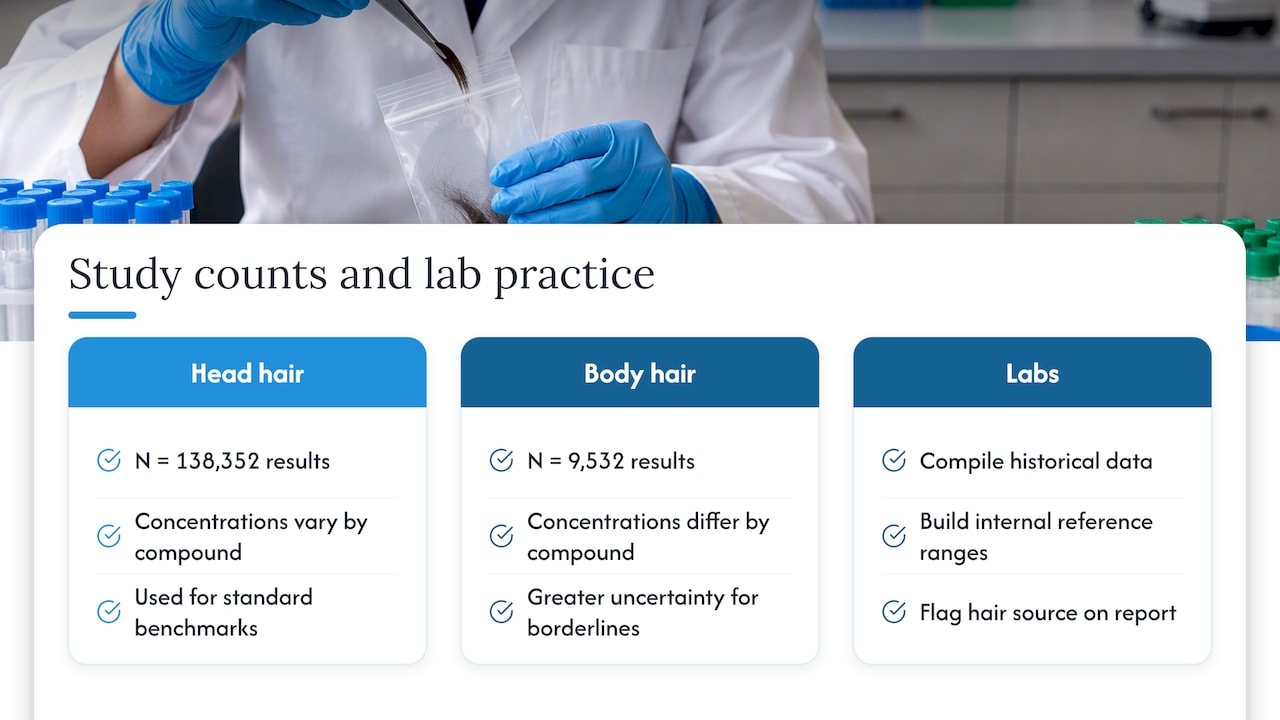
This is also why hair source gets flagged on the report itself. A notation that a specimen came from the axilla rather than the scalp signals to whoever reads the result, an employer’s medical review officer, an HR department, or an attorney, that the interpretive context is different. That flag can matter in disputes: a borderline result on body hair carries more built-in uncertainty than the same number on scalp hair, and reviewers who understand the distinction will weigh it accordingly.
If you are facing an axillary collection or reviewing a result that came from one, it is worth asking the testing lab directly what reference range it applied and whether its standard interpretive comments differ for body hair. Not every lab volunteers that detail unless asked.
Contamination risk and metabolite testing: distinguishing use from exposure
Hair does not just absorb drugs from the bloodstream. It can also pick up residue from the surrounding environment, secondhand smoke, handling contaminated surfaces, or even close contact with someone who used a drug. That dual pathway is the central challenge in hair testing: a positive result could reflect ingestion, or it could reflect surface contamination that never entered the body at all.
The distinction labs rely on is parent drug versus metabolite. A parent drug, the substance itself, can sit on the hair’s surface from external exposure. A metabolite is what the body produces after metabolizing that drug, so its presence is harder to explain through contamination alone. NIJ-funded research found that conjugated phase II metabolites, in particular, are promising markers for separating real use from environmental exposure, and the agency recommends combining that metabolite testing with mass spectrometry for more reliable discrimination.
One finding worth knowing: NIJ-funded research on hair contamination found that standard wash protocols are not fully standardized across labs, which is part of why metabolite testing has become the more trusted confirmatory step.
Decontamination washing helps but has limits. Controlled studies found that external contamination can sometimes still produce measurable metabolites even after a sample has been shampooed, and that wash effectiveness varies depending on the contaminant and how much time has passed, according to an NIJ-funded study on surface contamination. In other words, washing a hair sample reduces surface residue, but it is not a guaranteed filter, which is exactly why labs do not rely on washing alone to rule out contamination.
If you are ever unsure how a result was reached, ask the lab two direct questions: whether they tested for metabolites specifically, and what decontamination steps were applied before analysis. A lab that cannot answer either question clearly is not giving you the full picture.
Factors that change axillary hair test accuracy
Several everyday factors affect what shows up in an armpit hair sample, and not all of them work the way people assume.
- Shaving or recent trimming can force a collector to use a different body site or delay testing until hair regrows, but it does not reliably stop drugs already incorporated into existing hair from being detected elsewhere on the body.
- Chemical treatments like bleaching can lower measured analyte concentrations in hair, but heavy or repeated treatments are more likely to trigger a lab comment about sample integrity, or even rejection, than to produce a clean negative.
- Environmental exposure, including secondhand smoke or contact with contaminated surfaces, can deposit parent drugs onto hair from the outside, which is precisely the scenario decontamination washing and metabolite testing are meant to catch.
- Sweat and routine hygiene products can mildly affect surface residue but are not a substitute for the laboratory’s own wash and metabolite protocols.
Pro Tip: If you believe a result might reflect contamination rather than use, ask the lab in writing whether metabolite testing was performed, since that answer carries more weight in a dispute than any home remedy.
Anecdotal fixes, like scrubbing with household products before a test, do not have a reliable evidence base behind them and can themselves trigger a lab flag for sample tampering. Documentation and direct communication with the testing lab are a far sturdier path than guesswork.
Practical next steps after an axillary hair test
If you are facing an armpit hair collection, or reviewing a result that already came back, a few steps keep you in control of the process.
- Request the full chain-of-custody and collection documentation, confirming it names the hair source as axilla and records the collector’s details.
- Ask the lab directly whether it tested for conjugated metabolites, which decontamination wash procedure it used, and whether a confirmatory test using liquid or gas chromatography with mass spectrometry was run.
- If timing or circumstances allow, consider an independent retest, or ask whether an alternative matrix like urine or oral fluid fits your employer’s policy.
- For employment situations, follow your employer’s formal appeal or retest process exactly as written, and for anything with serious consequences, consider talking to legal or union counsel before responding.
None of these steps are complicated, but skipping them is the most common reason people end up stuck with a result they cannot meaningfully contest later.
Macujo’s role in preparing for axillary hair collection
A well-known method for hair follicle drug test preparation introduced in 2018 is a nine-step process built for high THC levels along with other drugs and alcohol. The method is designed to be used with a specific Aloe Rid Shampoo, and the number of required washes comes from a Required Washes Calculator that factors in the substance, date of last use, and frequency of use over the prior 90 days.
For readers specifically facing an axillary collection, two resources are worth knowing about: a Home Hair Test kit for checking your own status before an employer-administered test, and the Afterhours Personal Consultation for one-on-one planning around required washes and timing. Macujo also carries saliva screening products for situations where a near-term check makes more sense than a hair-based one.
As with any detox or preparation method, fit depends on your specific substance history and timeline, and available tools such as a calculator and consultation exist to help account for that variation rather than offering one-size-fits-all answers.
A realistic view on hair testing and its limits
Hair testing is genuinely useful for spotting long-term patterns of drug use, but it is not a precision instrument, especially once you move from scalp to axillary hair. The temptation is to treat any hair result as a fixed, timestamped fact. It is not. Growth cycles, site differences, and contamination risk all introduce real uncertainty, and the honest response to that uncertainty is more documentation and more direct questions to the lab, not less.
If you are in a high-stakes situation, a job offer, a legal matter, a custody case, treat the formal appeal and retest channels as the real path forward, and loop in professional advice where the stakes justify it. Unverified shortcuts rarely hold up once someone actually checks the paperwork.
— MIchael
Where Macujo can help if you’re facing an axillary hair test
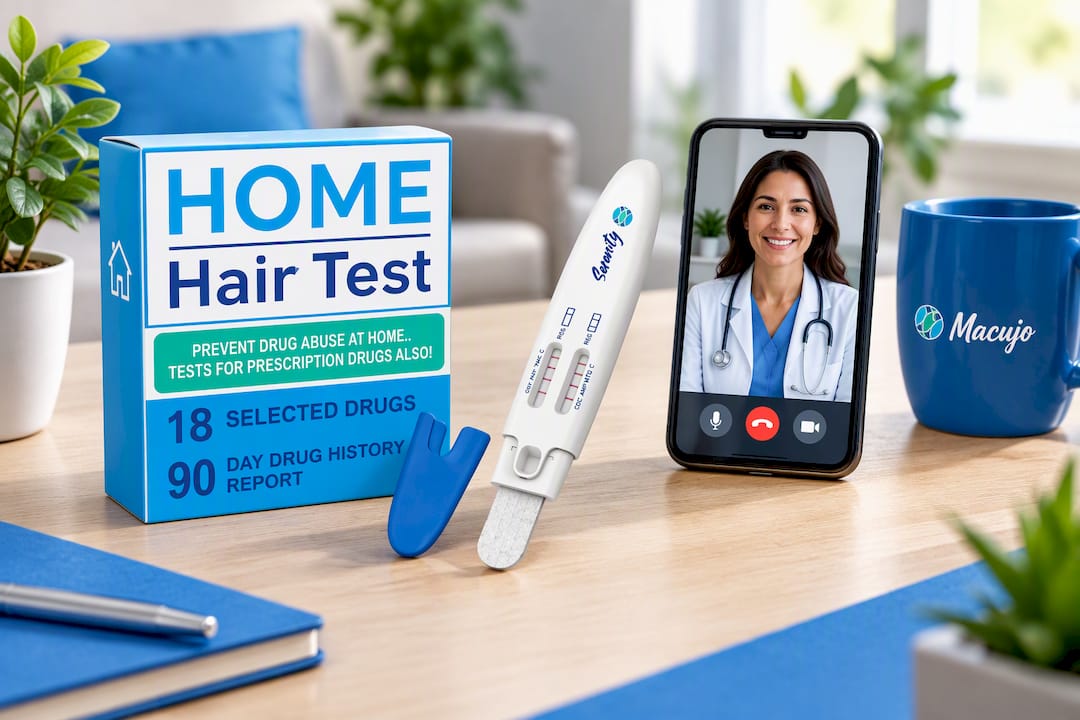
Most people do not find out they will be tested on armpit hair until the day of collection, which leaves little room to plan. A Home Hair Test kit gives you a way to check your own status beforehand, so an employer’s result is not the first time you learn where you stand. If your situation involves a longer use history or multiple substances, the Afterhours Personal Consultation, priced at $100 one-off, walks through your specific timeline and the required-wash calculation with you directly rather than leaving you to guess.
- Use a Home Hair Test kit before an employer-administered test to avoid being caught off guard by a result you did not expect.
- Book an Afterhours Personal Consultation for personalized planning based on your substance, last use date, and use frequency over the past 90 days.
- Consider a saliva screening kit, like the 12-Panel Multi-Drug Oral Fluid Test, when a near-term verification matters more than a long detection window.
Macujo’s shampoo line, including the Aloe Rid Old Formula Shampoo, is built around Mike’s Macujo Method for higher-exposure cases, and the full range of hair, urine, and saliva test products is available for anyone weighing which specimen type fits their timeline. If an axillary collection is upcoming, consulting with an expert now can be a more reliable starting point than guessing after the fact.
Sources
- Hair testing - FAQ (Quest Diagnostics)
- Detecting drugs in hair: Is it drug use or environmental contamination? (NIJ)
- Comparison of patterns of drug levels in head and body hair for medico-legal and workplace testing (PubMed)
- Analysis of heroin and methamphetamine in human hair: surface contamination and localization of analytes (NIJ grant report)
FAQ
Is armpit hair good for a drug test?
Armpit hair is an acceptable substitute when scalp hair is unavailable, and labs document it as a different specimen source on the chain of custody. It can reveal long-term drug use, but it provides a less precise timeline than scalp hair because of how body hair grows, according to Quest Diagnostics’ collection guidance.
What can throw off a hair follicle test?
Environmental contamination, such as secondhand smoke or contact with residue on surfaces, can deposit drugs on the hair’s surface without any actual use occurring. Heavy chemical treatments like bleaching can also lower measured concentrations or trigger a lab comment, which is part of why labs increasingly rely on metabolite testing described in NIJ-funded research to separate exposure from ingestion.
How far back can a hair drug test detect?
A standard scalp hair test using a 3.9 centimeter segment close to the root typically covers about 90 days of history, based on an average scalp growth rate of 1.3 centimeters per month, according to Quest Diagnostics. Axillary and other body hair does not follow that same predictable growth pattern, so results from those sites reflect a longer, less precisely dated exposure window.
What disqualifies you from a hair follicle test?
Having too little hair at any approved collection site, scalp or body, can make a standard sample impossible to collect and may require substituting another specimen type. Heavily treated or chemically altered hair can also lead a lab to flag or reject a sample rather than report a standard result, based on documented concentration effects in comparative hair testing research.